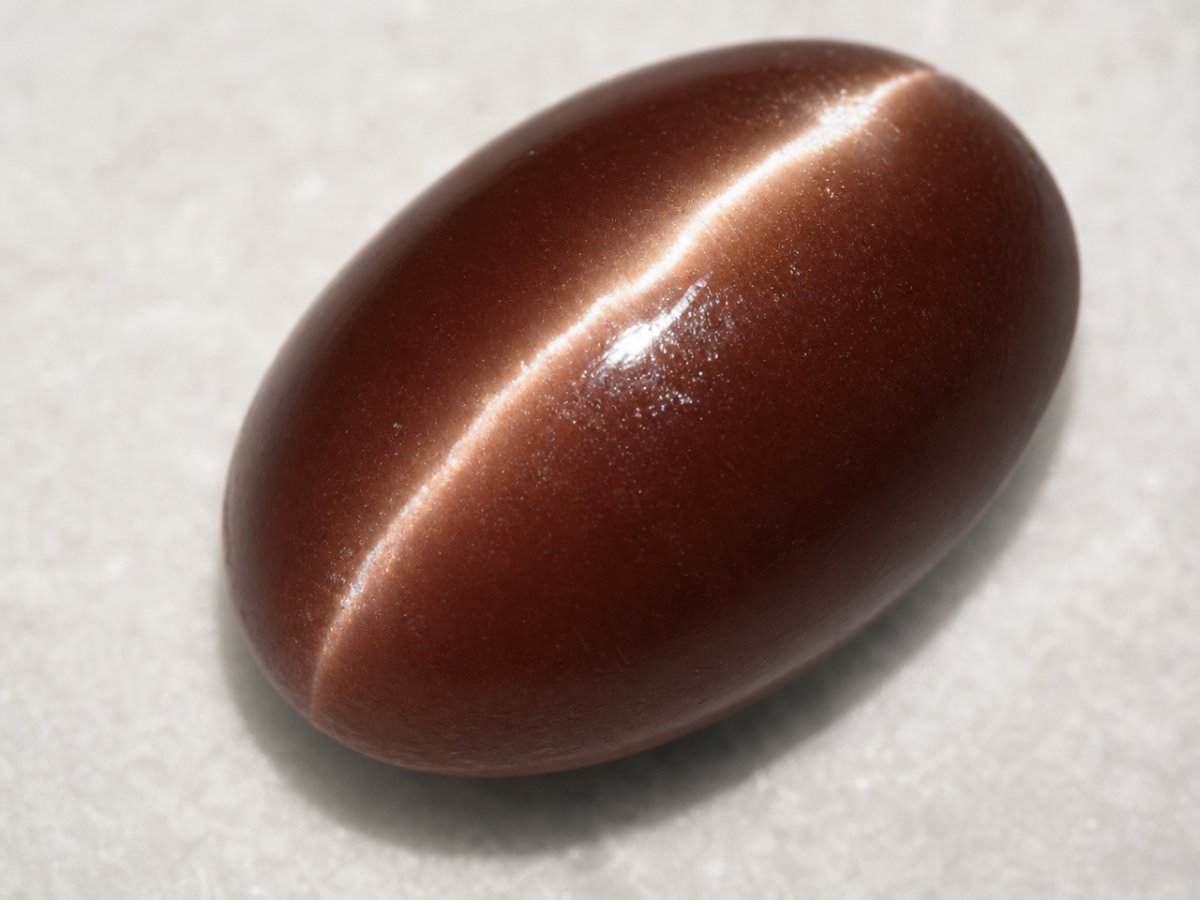


Sillimanite cat's eye is a chatoyant variety of sillimanite, an aluminosilicate gemstone with the chemical formula Al₂SiO₅. Buyers choose it for its distinctive cat's eye effect: a narrow band of light that appears to glide across the surface when the stone is moved under a direct light source.
Because the visual effect is the main attraction, buying sillimanite cat's eye is different from buying a transparent faceted gemstone. Color matters, but the quality of the eye, the cabochon cut, polish, durability and treatment disclosure are the key points to check before purchase.
What Makes a Good Sillimanite Cat's Eye?
The most important feature is chatoyancy. A well-cut cat's eye gemstone should show a clean, visible line of reflected light across the dome of the stone. The eye should be easy to see, reasonably centered and responsive when the gem is turned.
Look for these practical quality factors:
- Sharpness of the eye: A distinct, narrow line is usually more attractive than a broad or blurred band.
- Position: The eye should run across the center of the cabochon when viewed from above.
- Movement: Under a single direct light, the eye should shift smoothly as the stone moves.
- Cabochon dome: A balanced dome helps display the cat's eye effect clearly.
- Polish: A clean polish improves the visibility of the moving line of light.
Cat's eye gems are best assessed under directional light. Diffused lighting can make the effect appear softer, while a focused light source reveals how sharp and lively the eye really is.
Color and Appearance
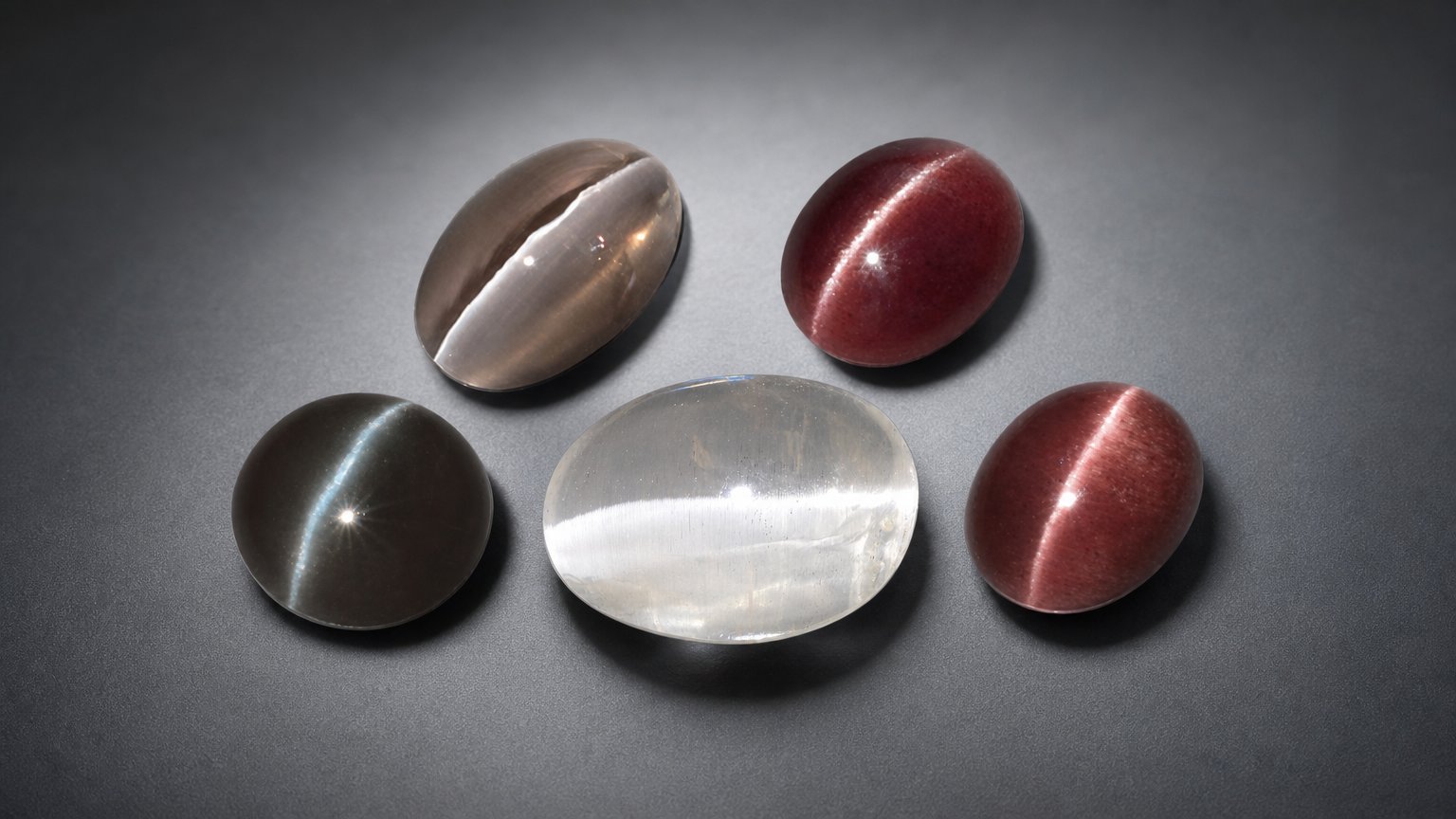
Sillimanite cat's eye is known in white, brown, gray, green and yellow. White is especially associated with this gemstone, while brown and gray are also common appearance choices. Green and yellow examples may appeal to buyers looking for a warmer or more unusual look.
For buying purposes, color should be considered together with the eye effect. A pleasing body color is valuable, but a weak or poorly placed eye can reduce the appeal of a cat's eye gemstone. If choosing between stones, compare them in similar lighting so the strength of the chatoyancy can be judged fairly.
Cut, Shape and Proportion
Sillimanite cat's eye is most commonly cut as a cabochon. This smooth, domed cut is essential because it allows the cat's eye effect to reflect across the surface. Faceting is not the usual choice for a cat's eye gem because it interrupts the continuous line of light.
Oval and round cabochons are especially common and practical. Oval shapes often give a classic ring or pendant appearance, while round cabochons create a balanced, compact look. Cushion and freeform shapes may also be available and can suit custom jewelry designs.
When comparing cabochons, check that the dome is not too flat. A low dome may show a weaker eye, while an overly high dome can add weight without necessarily improving face-up appearance. Symmetry, polish and correct orientation of the eye are more important than shape alone.
Durability and Jewelry Suitability
Sillimanite cat's eye has a Mohs hardness of 6.5 to 7.5. This gives it useful wearability, but it still deserves sensible protection in jewelry, especially in rings and bracelets that receive more contact during daily wear.
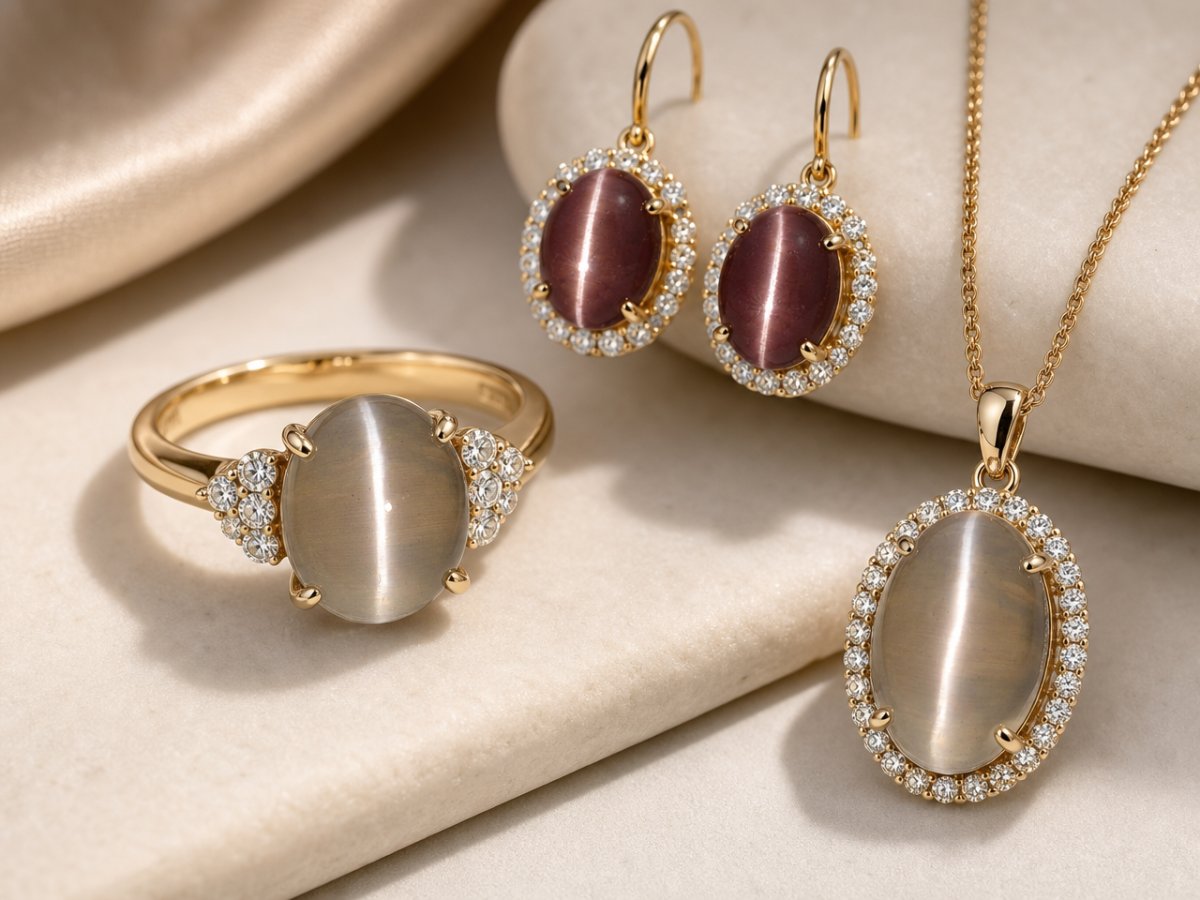
It is suitable for rings, bracelets, earrings, brooches and pendants. Rings are a popular choice because the eye effect is easy to appreciate on the hand, but a protective setting is recommended for frequent wear. Earrings, pendants and brooches are lower-impact options and can show the cabochon's glow with less risk of knocks.
For rings, consider bezel or protective settings, particularly if the stone will be worn often. For bracelets, avoid designs where the gem is highly exposed. As with many cabochon gems, store sillimanite cat's eye separately from harder gemstones to help prevent surface abrasion.
Treatments and Buying Confidence
Sillimanite cat's eye is commonly offered untreated. For buyers, this makes disclosure straightforward: ask whether the gem is untreated and check that the seller provides clear information about the stone.
When purchasing online, prioritize listings with accurate photos, measurements, carat weight and treatment status. For a cat's eye gem, photographs should ideally show the cabochon face-up so the eye can be evaluated. If the eye effect is the primary reason for purchase, choose a stone where the chatoyancy is visible in the listing rather than relying only on a written description.
Origin: How Much Should It Matter?
Sillimanite cat's eye is associated with origins including India, Sri Lanka, Madagascar, Kenya, Myanmar and Tanzania, with India and Sri Lanka especially important sources. Origin can be interesting to collectors, but for most buyers the visible quality of the eye, color, cut and condition are more important than locality.
If origin is important to you, look for seller documentation rather than assuming origin from appearance. Similar-looking stones can come from different sources, and appearance alone is not a reliable proof of locality.
Gemological Properties
Sillimanite cat's eye belongs to the aluminosilicate group and crystallizes in the orthorhombic crystal system. Its refractive index is 1.658 to 1.680, and its specific gravity is 3.23 to 3.27. These properties are most useful for gemological identification rather than everyday buying, but they help distinguish sillimanite from other cat's eye gemstones when tested by a qualified gem professional.
Practical Buying Checklist
- Choose a stone with a clearly visible cat's eye under direct light.
- Look for a centered, straight and smoothly moving eye.
- Check that the cabochon has a good dome, symmetry and polish.
- Select color by personal preference, but do not sacrifice eye quality unnecessarily.
- Confirm that the stone is described as untreated if that is important to you.
- Match the setting to the intended use: protective settings for rings and bracelets, more open designs for earrings or pendants.
- Buy from a seller that provides clear photos, dimensions, carat weight and treatment information.
Summary
The best sillimanite cat's eye gemstones combine appealing body color with a strong, well-positioned eye in a polished cabochon. White, brown and gray stones are common choices, with green and yellow options also available. Since the cat's eye effect is the defining feature, buyers should focus first on the sharpness, centering and movement of the eye, then consider color, shape, size and jewelry use.
For confident purchasing, choose transparent sellers such as GemSelect that provide practical gemstone details, clear imagery and treatment disclosure. A carefully chosen sillimanite cat's eye can make distinctive rings, earrings, pendants, brooches and bracelets when set with appropriate protection.