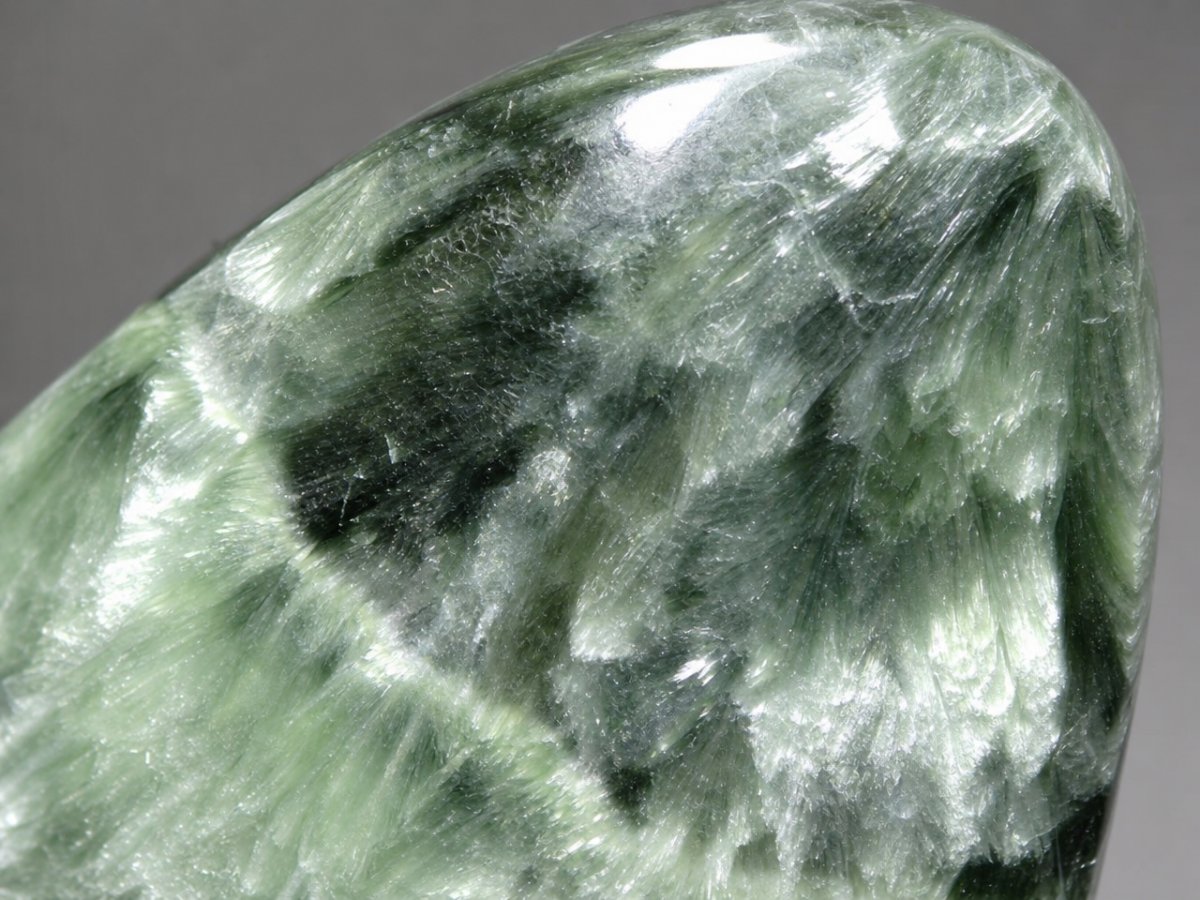


Seraphinite is a distinctive green gemstone variety associated with the mineral species clinochlore. Buyers usually choose it for its natural green appearance, smooth cabochon cutting style and decorative character rather than for high hardness or everyday wear performance. A good purchase starts with understanding what the stone is best suited for: pendants, necklaces, brooches, earrings and collector pieces.
This guide explains the main factors to consider before buying seraphinite, including color, cut, size, durability, treatments and jewelry suitability.
What Is Seraphinite?
Seraphinite is a gemstone associated with clinochlore, a mineral with the chemical formula (Mg,Fe,Al)₆(Si,Al)₄O₁₀(OH)₈. It has a monoclinic crystal system, a refractive index of 1.560-1.600 and a specific gravity of 2.60-2.90.
For buyers, the most important gemological fact is its hardness: seraphinite is only 2-2.5 on the Mohs scale. That makes it much softer than many common jewelry gemstones. It can be beautiful in the right setting, but it should be chosen with realistic expectations about care and wear.
Color and Face-Up Appearance
Seraphinite is known as a green gemstone. When comparing stones, look first at the face-up appearance: the color should be attractive to you, the surface should be well polished and the overall look should suit the jewelry design you have in mind.
Because seraphinite is commonly cut as cabochons rather than faceted gems, brilliance is not the main quality factor. Instead, buyers should focus on the smoothness of the dome, the quality of the polish, the balance of the shape and whether the stone presents well from the front.
Cut and Shape: What to Look For
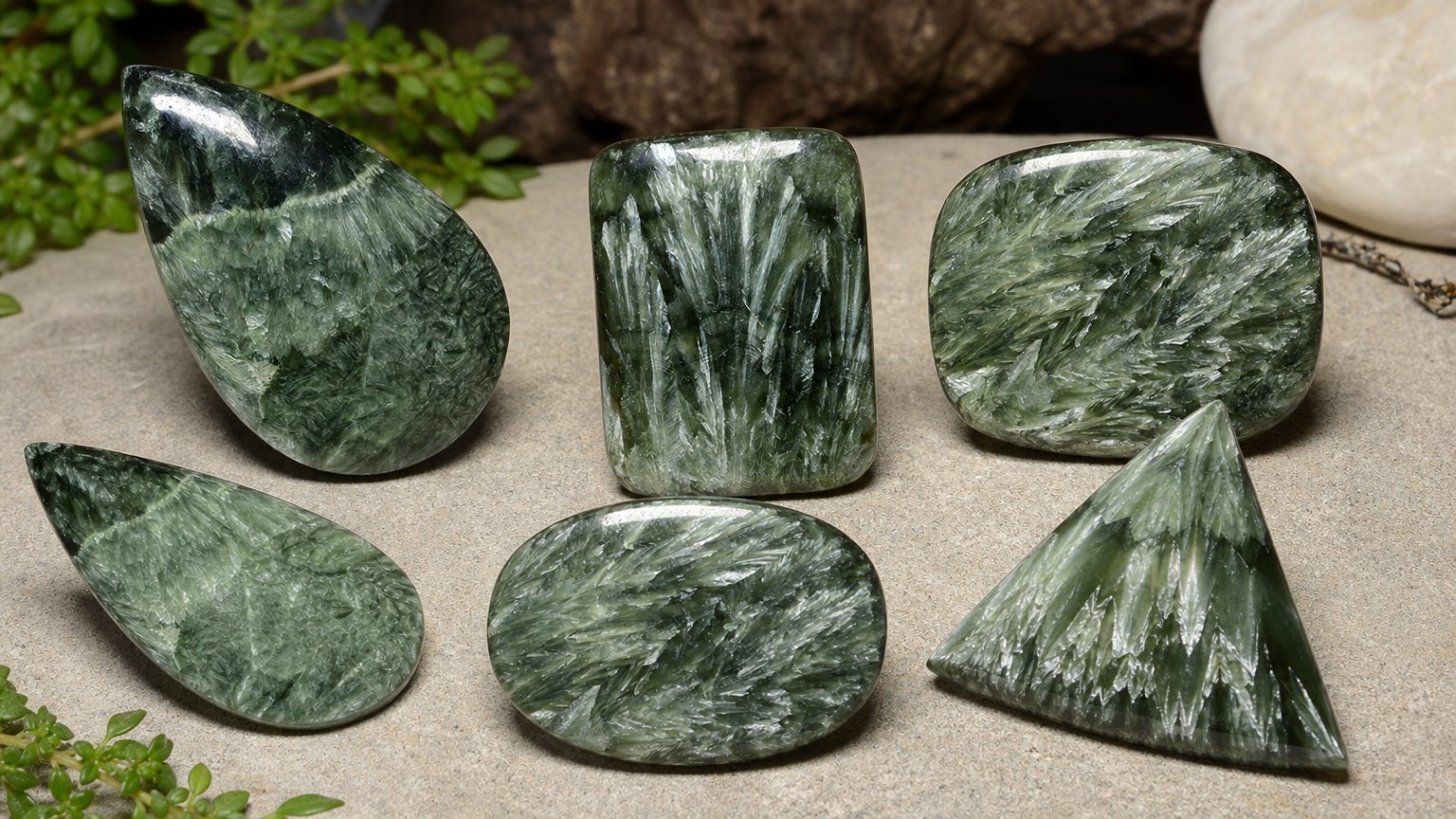
The most common cut for seraphinite is the cabochon. Cabochons have a polished, rounded top and a flat or gently curved back, which is appropriate for softer and ornamental gemstones. A well-cut cabochon should have an even outline, a pleasing dome and no awkward flat spots on the crown.
Oval shapes are especially common and practical because they work well in pendants, necklaces and earrings. Other available shapes may include baguette, cushion, pear, round, square, ball and freeform forms. Sugarloaf cabochons and carving cuts may also be seen. These can be attractive choices when the design calls for more height, sculptural interest or a less traditional outline.
For matched earrings or symmetrical jewelry, pay close attention to size, shape and visual pairing. For one-of-a-kind pendants or brooches, a freeform or carved stone may be more suitable if the design benefits from a unique outline.
Origin: Russian Seraphinite
Russia is an important origin for seraphinite. When origin matters to you, check the seller's product details and buy from a source that provides clear gemstone information. Origin can be part of the appeal for collectors, but appearance, condition, cut quality and suitability for the intended jewelry use should remain central to the buying decision.
Treatments and Disclosure
Seraphinite is commonly offered as untreated. This is useful for buyers who prefer gemstones that have not been enhanced. As with any gemstone purchase, look for clear treatment disclosure in the product description. GemSelect lists gemstone details so buyers can review treatment information before purchasing.
Durability and Care Before You Buy
Durability is the most important practical consideration when buying seraphinite. With a Mohs hardness of 2-2.5, it is vulnerable to scratches from harder materials and should be protected from rough handling. This does not mean it cannot be used in jewelry, but it does mean the jewelry style and setting should be chosen carefully.
Seraphinite is best suited to pieces that avoid frequent knocks and abrasion. Pendants and necklaces are excellent choices because they are less exposed than rings. Brooches and earrings can also work well, especially when worn with care. Rings should generally be treated as collector or occasional-wear pieces rather than everyday rings.
Store seraphinite separately from harder gems and jewelry. Avoid abrasive cleaners, ultrasonic cleaning and harsh handling. A soft cloth and gentle cleaning approach are the safest choice.
Best Jewelry Uses for Seraphinite
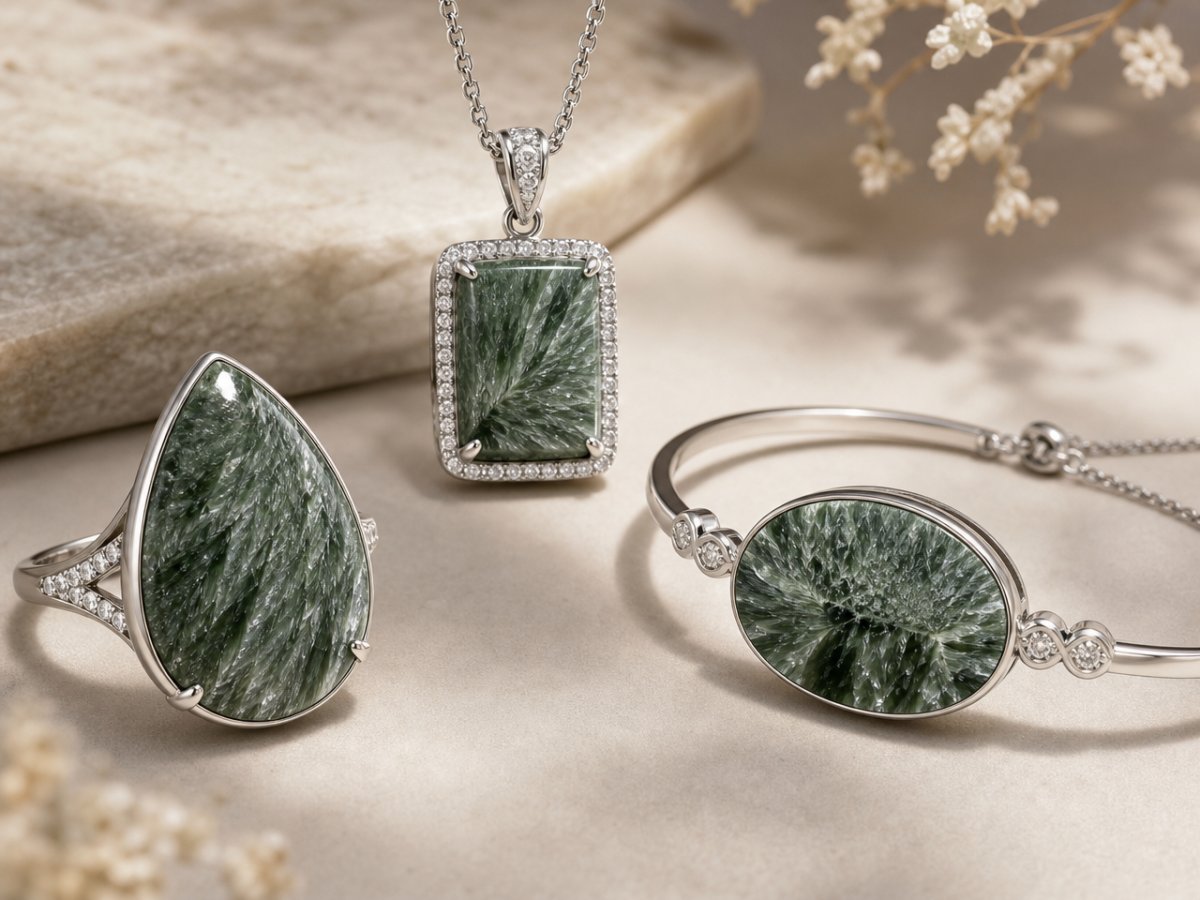
Seraphinite is especially suitable for necklaces and pendants, where its green color can be displayed while minimizing impact risk. Cabochon pendants are a practical way to enjoy the gem while keeping it relatively protected.
Earrings and brooches are also good options for buyers who want decorative jewelry with less hand contact than a ring. If choosing seraphinite for a ring, consider protective settings and reserve it for careful, occasional wear.
Seraphinite Buying Checklist
- Choose by appearance first: Select a green stone with an attractive face-up look and good polish.
- Prefer suitable cuts: Cabochons are the standard choice; sugarloaf cabochons and carvings suit more distinctive designs.
- Check the shape: Ovals are especially common, while pear, cushion, round, baguette, square and freeform shapes offer different design possibilities.
- Respect the hardness: At 2-2.5 Mohs, seraphinite needs gentle wear and careful storage.
- Use it in the right jewelry: Pendants, necklaces, brooches and earrings are better choices than everyday rings.
- Review treatment information: Seraphinite is commonly untreated, but disclosure should still be checked before buying.
- Buy from a transparent seller: Look for clear details on size, shape, treatment and origin where available.
Final Thoughts
Seraphinite is a green gemstone for buyers who appreciate decorative cabochons and natural character. Its main buying advantage is visual appeal, while its main limitation is softness. Choose a well-polished stone, match the cut and shape to the jewelry design, and reserve it for pieces that can be worn with care. When selected thoughtfully, seraphinite can be an appealing choice for pendants, necklaces, earrings, brooches and collector jewelry.