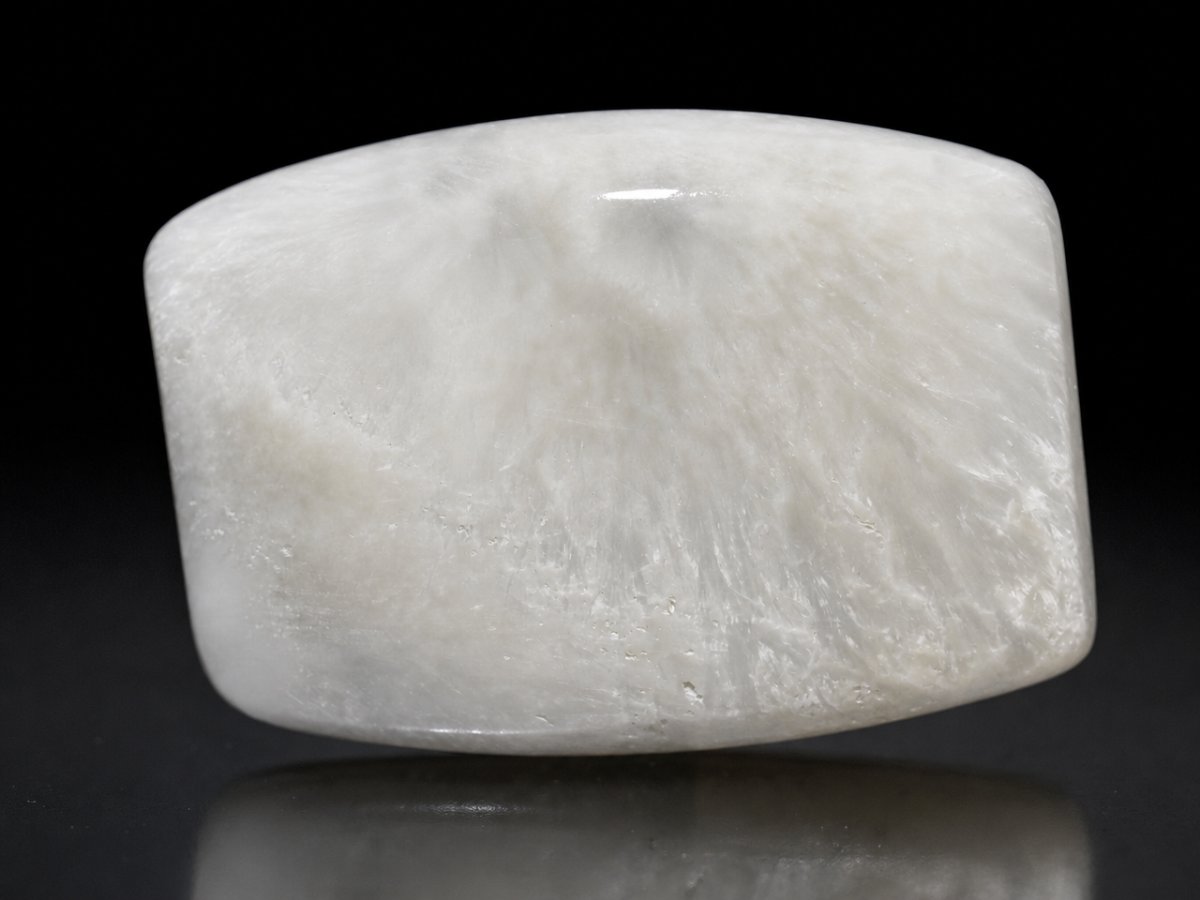


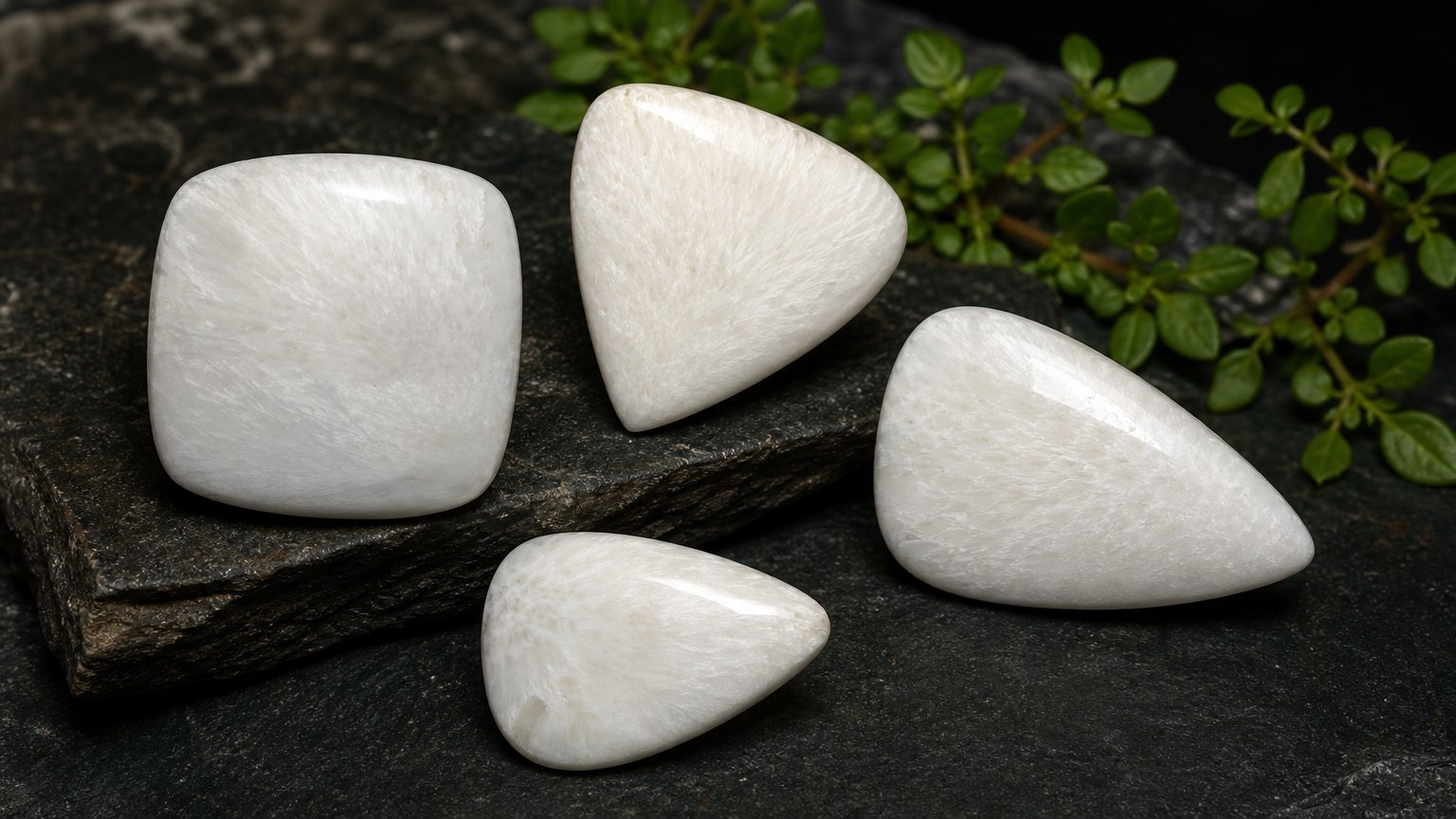
Scolecite is a delicate-looking silicate gemstone best appreciated for its soft white, gray and occasional pink colors. For buyers, the main considerations are appearance, cut quality, intended jewelry use and durability. It is not a hard everyday ring stone, but it can be a rewarding choice for pendants, earrings, necklaces, brooches and collector-focused jewelry.
This guide explains what to look for when choosing loose scolecite gemstones, including color, cut, treatments, origin and practical wearability.
What Is Scolecite?
Scolecite is a silicate mineral with the chemical formula CaAl₂Si₃O₁₀·3H₂O. It crystallizes in the monoclinic crystal system and has gemological properties that help distinguish it from other light-colored gems, including a refractive index of 1.507-1.521 and a specific gravity of 2.16-2.40.
From a buying perspective, scolecite is usually chosen for its gentle color and uncommon character rather than for brilliance or high durability. Most cut stones are fashioned as cabochons, which suit its typical appearance and provide a smooth, wearable surface.
Color and Appearance: What to Look For
White is the most important and commonly encountered color for scolecite. Good white stones should have an attractive, even appearance and a clean overall face-up look. Gray scolecite is also known and can be appealing when the tone looks intentional rather than dull or patchy. Pink scolecite occurs less prominently, but it can be attractive for buyers who prefer a softer, warmer look.
When comparing scolecite gemstones, focus on the visual balance of the stone rather than expecting the saturated color seen in many other gem varieties. Check the stone under normal lighting and look for pleasing body color, symmetry and surface finish. Avoid pieces with chips, obvious cracks or uneven polishing, especially if the stone will be set in jewelry.
Cut and Shape Choices
Cabochon is the most common cut style for scolecite. A cabochon has a smooth domed top instead of facets, making it a practical choice for stones valued for color and surface appearance. In a well-made scolecite cabochon, the dome should be even, the outline should be balanced and the polish should look smooth across the top.
Oval cabochons are especially common and versatile. Cushion and pear shapes are also useful for pendants and earrings, while round, fancy and square shapes may appeal when a specific design calls for them. Faceted scolecite exists, but it is less central to the buying decision than cabochon material. If choosing a faceted stone, inspect the facet junctions and surface carefully, as the gem's moderate hardness makes finish quality important.
Durability and Wearability
Scolecite has a Mohs hardness of 5-5.5. This means it is softer than many mainstream jewelry gemstones and requires thoughtful use. It is suitable for jewelry that receives less impact, but it should not be treated like sapphire, spinel or quartz in daily-wear settings.
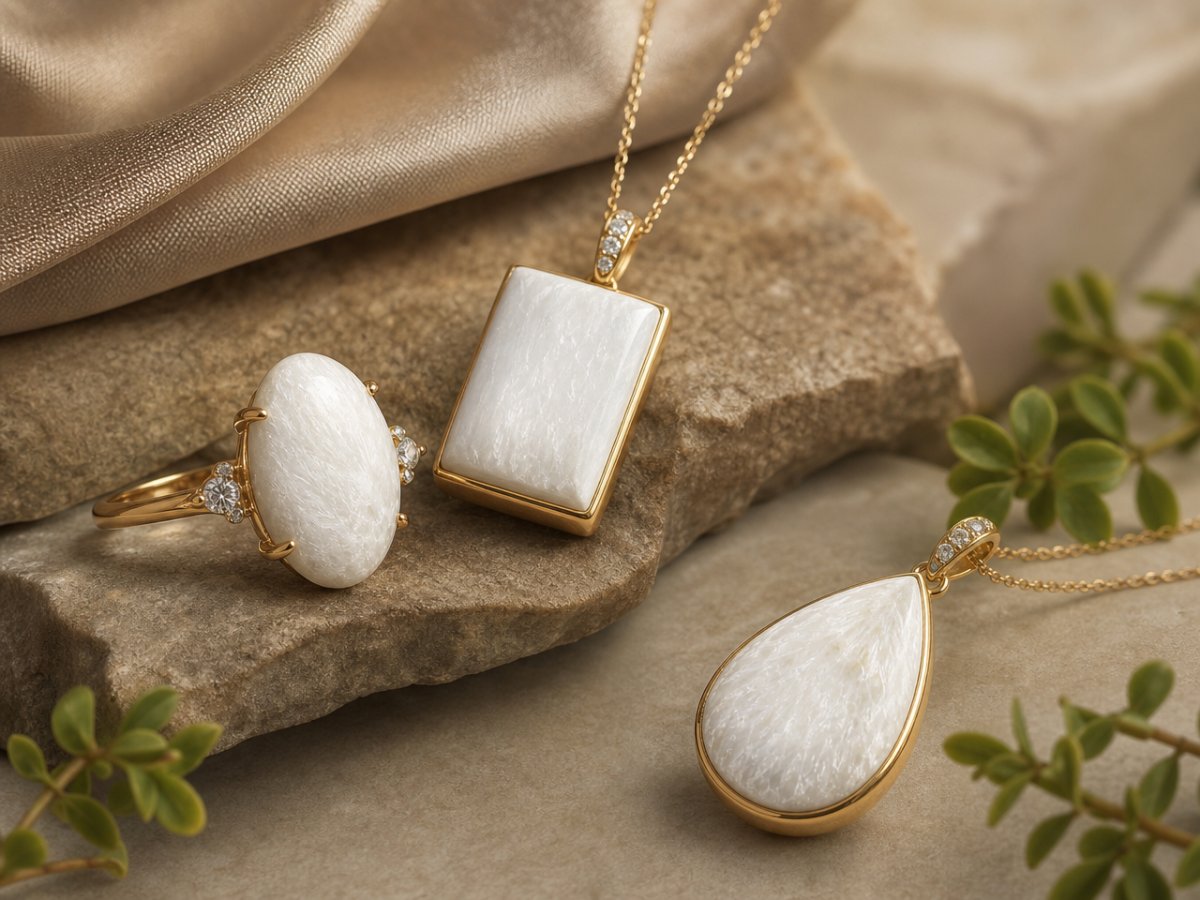
The safest jewelry uses are pendants, earrings and necklaces, where the gem is less likely to be struck or scraped. Brooches can also work well when the setting protects the stone. Collector rings are possible, but they should be reserved for occasional wear and protective designs. For rings, a bezel or other protective setting is preferable to an exposed design.
Treatments and Buying Confidence
Scolecite is commonly offered untreated. For buyers, this is straightforward: ask for treatment disclosure and choose sellers who clearly state whether a stone is untreated. Because scolecite is generally bought for its natural soft color and mineral character, clear disclosure is more important than chasing a commercial grading label.
When shopping at GemSelect or comparing any loose gemstone, review the individual stone details rather than relying on the gem name alone. Color, shape, size, cut style and condition can vary from stone to stone.
Origin: Does It Matter?
Scolecite is known from India and South Africa, with additional sources including the United States, Australia, Brazil and Canada. Origin can interest collectors, but for most jewelry buyers it should be secondary to visible quality and suitability for the intended design.
If origin is important to you, look for it in the seller's stone description. If it is not stated, make your decision based on appearance, measurements, cut, condition and treatment disclosure.
How to Choose Scolecite for Jewelry
For pendants and necklaces
Pendants and necklaces are among the best uses for scolecite. Choose an oval, pear or cushion cabochon with a pleasing face-up color and a smooth polish. Larger cabochons can work well because the position on the body is usually protected from direct knocks.
For earrings
For earrings, matched pairs are the key consideration. Look for similar color, shape, size and dome height so the pair appears balanced when worn. Scolecite's soft white or gray tones can create a subtle, elegant look.
For brooches and collector rings
Brooches can showcase scolecite attractively if the mounting protects the edges. Collector rings should be worn with care and chosen for occasional use rather than daily wear. Avoid high, exposed settings where the stone is more likely to be hit.
Practical Scolecite Buying Checklist
- Color: Choose attractive white, gray or pink material with an even face-up look.
- Cut: Favor well-polished cabochons, especially oval, cushion and pear shapes.
- Condition: Inspect for chips, cracks, scratches and uneven polish.
- Durability: Use scolecite in protected jewelry, especially pendants, earrings and necklaces.
- Treatment: Look for clear disclosure; scolecite is commonly sold untreated.
- Origin: Consider origin if you collect locality-based gems, but prioritize visible quality for jewelry.
Summary
Scolecite is best chosen by appearance and intended use. Its soft white, gray and occasional pink colors suit cabochon cuts, especially in pendants, earrings and necklaces. With a Mohs hardness of 5-5.5, it needs more care than harder jewelry stones, so protective settings and occasional-wear designs are wise. Buyers who focus on cut quality, condition, treatment disclosure and appropriate jewelry use can choose scolecite with confidence.