


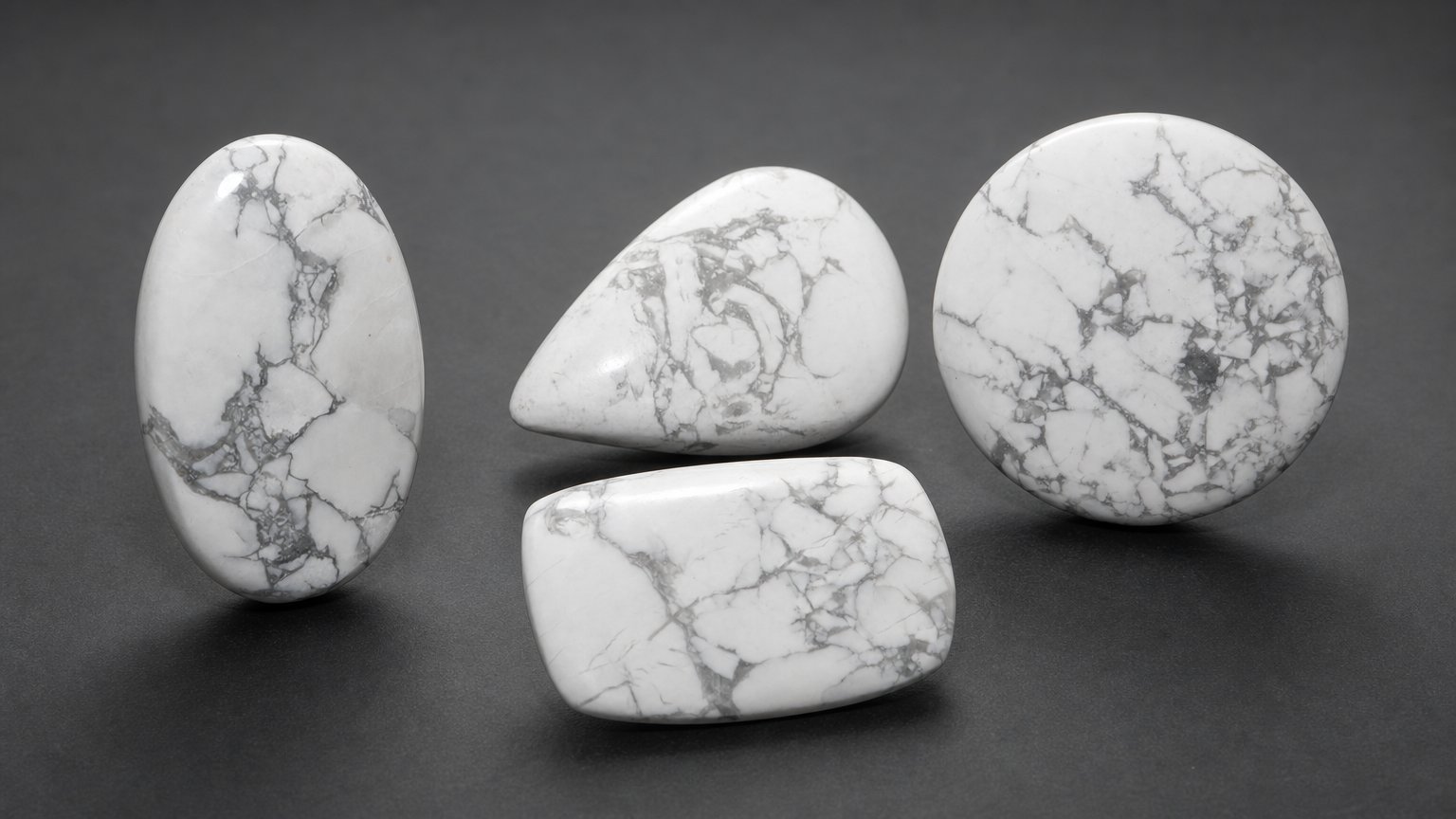
Howlite is a white borate gemstone chosen for its clean, understated appearance and its suitability for simple cabochon jewelry, pendants, necklaces and artisan designs. For buyers, the main considerations are straightforward: select an attractive white stone, choose a cut and shape that suits the design, understand its modest hardness, and check whether the gem is untreated or stabilized.
This guide focuses on the practical details that matter when comparing loose howlite gemstones or finished jewelry.
What Is Howlite?
Howlite is a borate mineral with the chemical formula Ca₂B₅SiO₉(OH)₅. It crystallizes in the monoclinic crystal system and has gemological properties that help identify it, including a refractive index of 1.583-1.600 and a specific gravity of 2.53-2.59.
For jewelry buyers, the most important property is its Mohs hardness of 3.5. This means howlite is much softer than many everyday jewelry stones and should be used and worn with appropriate care.
Color and Appearance
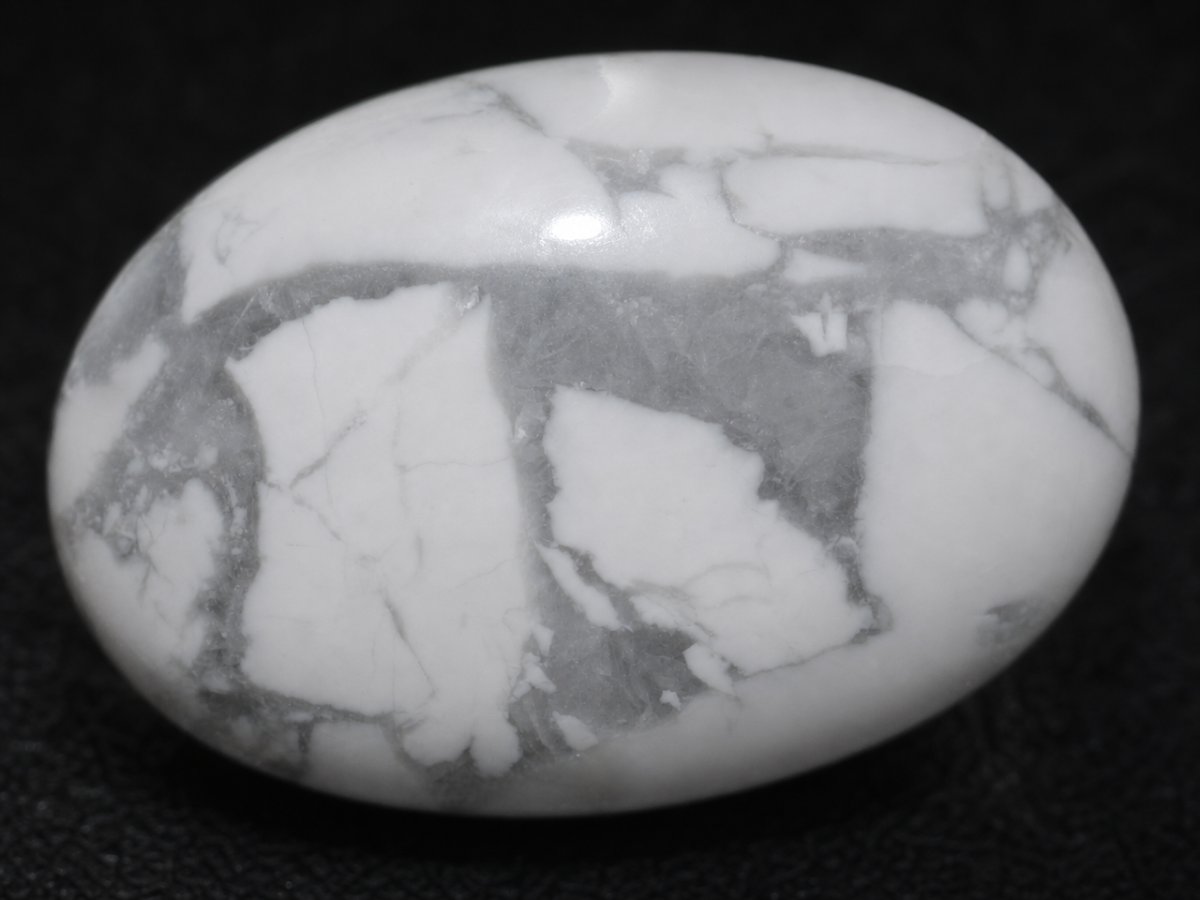
Howlite is known for its white color. When buying, look for a tone and surface appearance that suit your design: some buyers prefer a clean, even white look, while others choose stones for their natural-looking character and handmade appeal.
Because howlite is usually appreciated for its surface appearance rather than sparkle, cut quality is mostly about shape, polish, symmetry and how well the stone presents face-up. A smooth polish and a pleasing outline are more important than brilliance.
Common Cuts and Shapes
Cabochons are the most common and practical cut for howlite. A cabochon has a smooth, domed top and a flat or slightly curved back, making it well suited to pendants, necklaces, earrings and bracelet settings.
Howlite is also used for carvings, especially in artisan jewelry, and may be found as slices for designs that emphasize surface pattern and shape. Popular shapes include oval and round, with cushion and pear shapes also common. Freeform, ball and trillion shapes may be chosen for more individual or creative designs.
Durability and Jewelry Suitability
With a Mohs hardness of 3.5, howlite needs more protection than harder gemstones. It can be scratched by harder materials and is best suited to jewelry that is not exposed to heavy impact or constant abrasion.
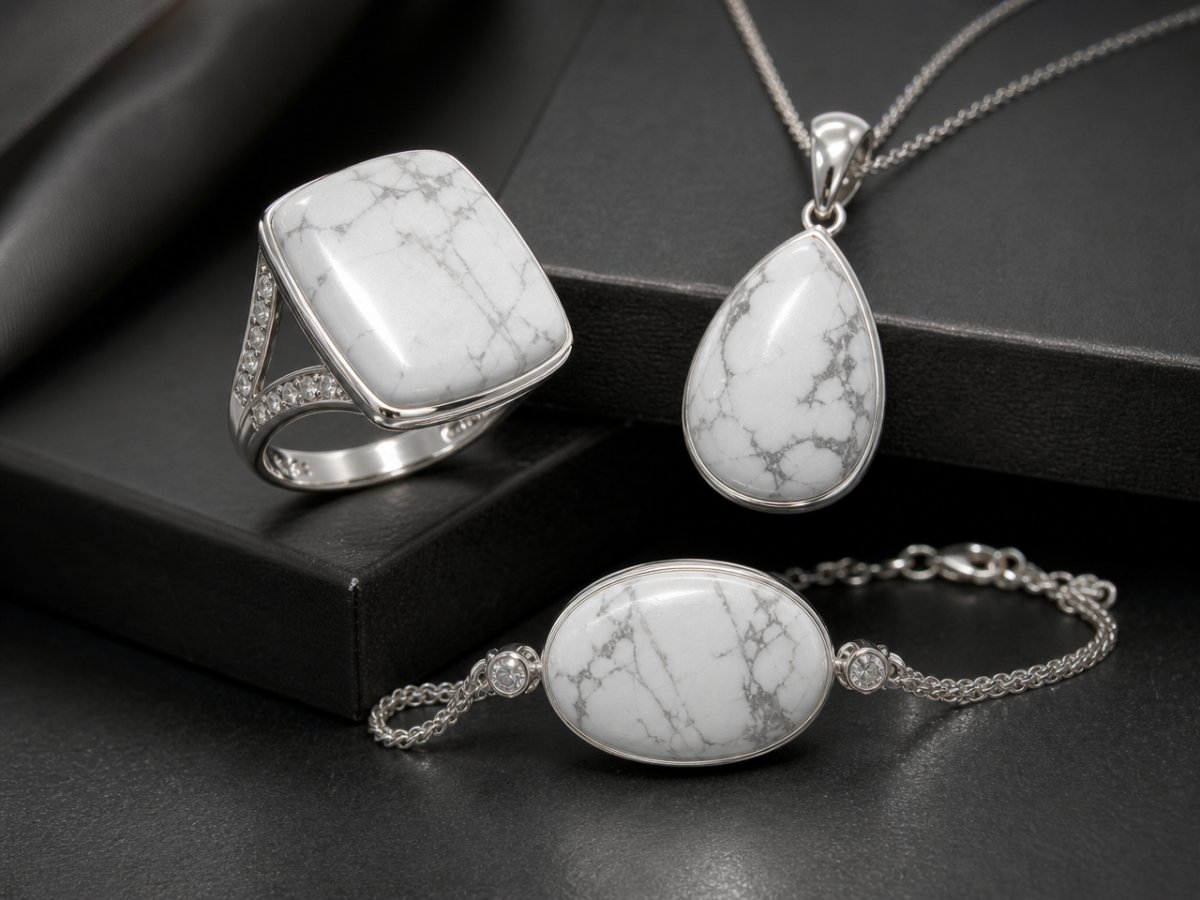
Necklaces and pendants are excellent choices because they usually receive less wear than rings or daily bracelets. Earrings are also a good option because they are generally protected during wear. Bracelets can be attractive, but they should be worn with care, especially if the stones are exposed rather than protected by the design.
If choosing howlite for jewelry, consider settings that protect the edges and surface. Avoid wearing howlite during activities that may knock, scrape or expose the stone to harsh conditions.
Treatments: Untreated and Stabilized Howlite
Howlite is commonly available untreated. Stabilization is also known and may be used to improve the durability or handling of material that benefits from added support.
When buying, ask whether the howlite is untreated or stabilized, especially if treatment status matters to you. Treatment disclosure is useful for comparison and care expectations, even when the appearance is the primary reason for purchase.
Origins
Howlite is associated with several origins, including the United States, Canada, Mexico and Turkey. For most buyers, origin is usually less important than the individual gemstone's appearance, cut, size, treatment status and suitability for the intended jewelry design.
If origin is important for collecting or design storytelling, choose a seller that provides clear origin information when available.
How to Choose Howlite
1. Start with the intended jewelry use
For pendants and necklaces, you can choose larger cabochons, carved pieces or slices because these designs are generally better protected during wear. For earrings, consider matched round, oval or pear shapes that balance well. For bracelets, look for secure settings or designs that reduce direct impact.
2. Check the polish and surface
A good howlite should have a smooth, even polish without obvious surface damage. Since howlite is not bought for high brilliance, a clean finish and appealing face-up appearance make a major difference.
3. Choose the right shape and size
Oval and round cabochons are versatile and easy to design around. Cushion and pear shapes offer a more distinctive look, while freeform shapes work well in artisan jewelry. Larger pieces can be visually effective, but they should still be appropriate for the jewelry setting and protected during wear.
4. Confirm treatment information
Ask whether the stone is untreated or stabilized. This is especially useful when comparing similar-looking stones or when buying for a customer who requires treatment disclosure.
5. Buy from a seller who provides clear details
Useful product information should include the gemstone name, dimensions or weight, shape, cut style and any disclosed treatment. GemSelect listings are designed to help buyers compare gemstones by practical details, making it easier to select howlite for a specific jewelry project.
Care Tips for Howlite
Because howlite is relatively soft, store it separately from harder gemstones and metals that may scratch it. Clean it gently with a soft cloth and avoid abrasive cleaners. Remove howlite jewelry before physical work, sports or situations where it may be knocked or rubbed against harder surfaces.
Summary
Howlite is a white borate gemstone best chosen for its soft visual appeal, smooth cabochon surfaces and suitability for pendants, necklaces, earrings and artisan jewelry. The most important buying factors are appearance, cut quality, appropriate jewelry use, treatment disclosure and careful handling due to its 3.5 Mohs hardness.
