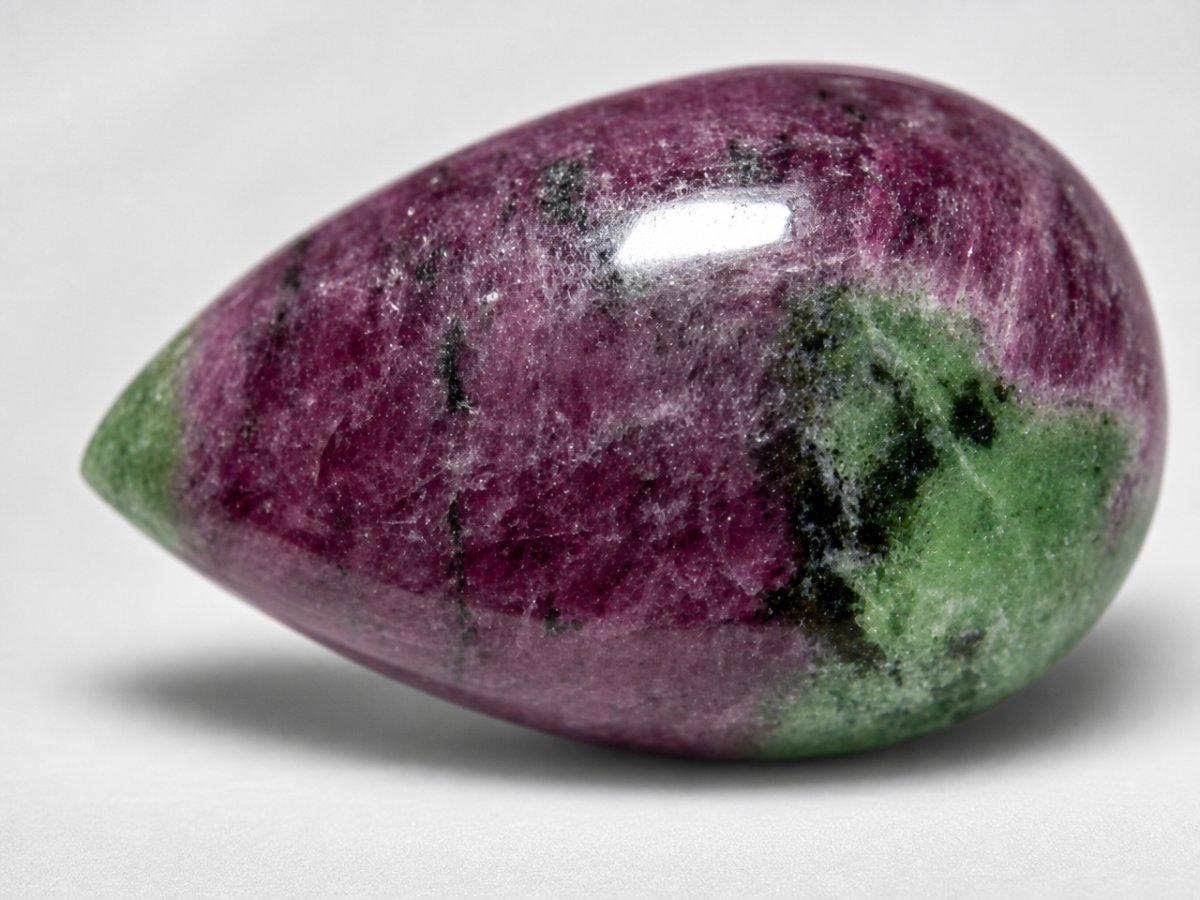


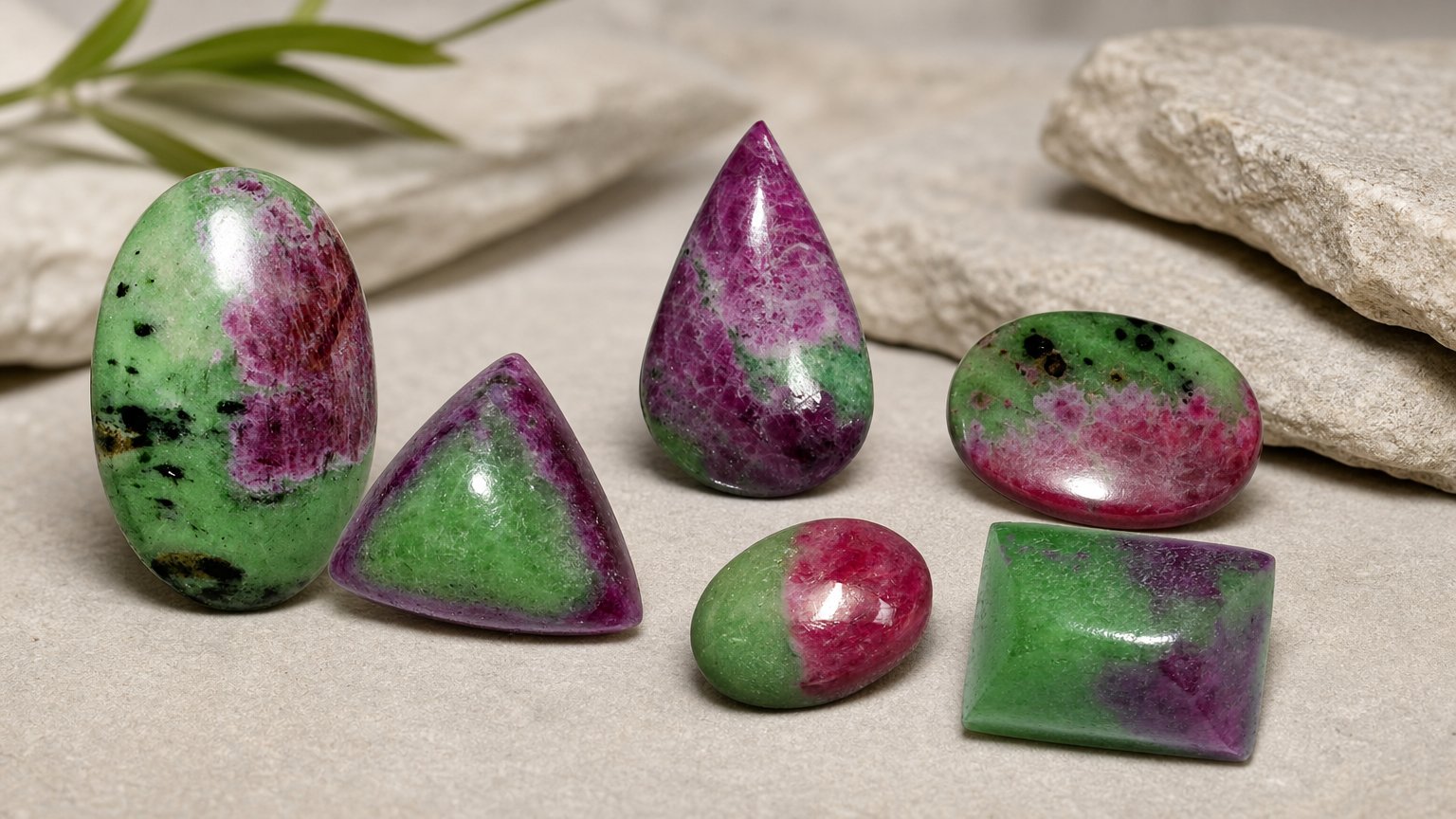
Ruby-zoisite is a distinctive multicolor gemstone valued for its natural contrast: green zoisite with red to purplish ruby areas. For buyers, its appeal is less about formal grading and more about choosing a stone with the right color balance, pattern, shape and durability for the intended jewelry design.
This guide explains the practical points that matter when buying ruby-zoisite, including appearance, cuts, treatments, origin, care and jewelry suitability.
What Is Ruby-Zoisite?
Ruby-zoisite is associated with two mineral components: zoisite, an aluminum silicate, and ruby, which belongs to the corundum mineral species. This combination gives the gemstone its recognizable multicolor look, typically mixing green body color with red and sometimes purple areas.
Because each piece has a different natural color pattern, ruby-zoisite is often chosen by collectors, jewelry designers and buyers who want a gemstone with individuality rather than a uniform single-color appearance.
Color and Appearance: What to Look For
Color is the most important buying factor for ruby-zoisite. The classic appearance is multicolor, with green and red as the dominant tones. Purple may also appear, adding extra depth and contrast.
When comparing stones, look for a pleasing distribution of color rather than expecting perfect symmetry. Some buyers prefer a strong red ruby presence against a green background, while others prefer more even green and red patterning. Since ruby-zoisite is naturally varied, the best choice is often the stone that fits the design or personal taste most closely.
Pattern and Contrast
Strong contrast can make ruby-zoisite especially attractive in pendants, rings and artisan jewelry. A stone with visible red or purple areas can become a focal point, while greener stones may suit larger, calmer designs. In carved pieces, the cutter may use the color pattern to enhance the shape, making each carving unique.
Cut, Shape and Carving Options
Ruby-zoisite is most commonly cut as a cabochon. Cabochons have a smooth, domed top rather than facets, which suits the gemstone's natural color pattern and gives the surface a clean, polished look.
Oval cabochons are especially common and practical because they work well in rings, pendants and earrings. Other available shapes can include baguette, marquise, square, pear, round, trillion and freeform. Freeform shapes are a good choice when the buyer wants a more organic or one-of-a-kind design.
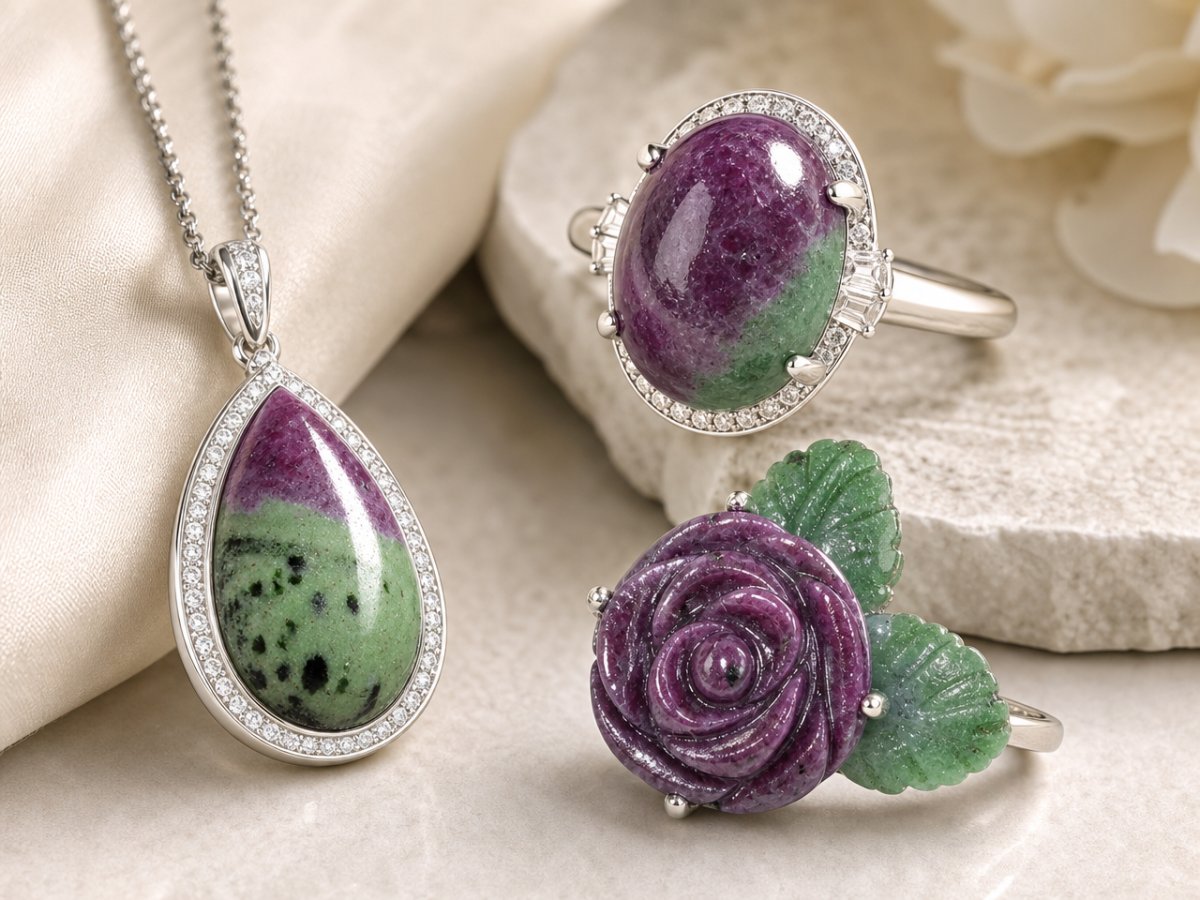
Ruby-zoisite is also well suited to carved designs, including carved animals and carved flowers. These pieces are popular in artisan jewelry and collectible gemstone objects. Sugarloaf cabochons may also be available; their higher, rounded pyramid-like shape can create a bold profile in a ring or pendant.
Origin: Tanzania
Tanzania is an important origin for ruby-zoisite. For most buyers, origin is useful as part of the gemstone's identity, but appearance, cutting quality, size and suitability for the jewelry piece should remain the main buying priorities.
Gemological Properties and Durability
Ruby-zoisite has a Mohs hardness of 6.5 to 7. This makes it durable enough for many jewelry uses, but it should still be worn and stored with reasonable care. It is generally suitable for pendants, earrings, necklaces, brooches and artisan jewelry. It can also be used in rings, especially when the setting provides protection and the wearer avoids rough impact.
Relevant gemological properties include a refractive index of 1.691 to 1.700 and a specific gravity of 3.35. Its crystal system is orthorhombic, and its chemical formula is Ca2Al3(Sio4)3(OH). These details are most useful for gem identification and gemological documentation rather than everyday buying decisions.
Treatments and Buying Confidence
Ruby-zoisite is commonly available untreated. For buyers, this is an important point because treatment status can affect expectations and disclosure. When purchasing, check the product details and ask for treatment information if it is not clearly stated.
GemSelect provides gemstone listings with details such as size, shape and treatment information where applicable, helping buyers compare stones more confidently.
Best Jewelry Uses for Ruby-Zoisite
Ruby-zoisite works especially well in pendants and rings because its multicolor pattern is easy to appreciate when shown as a focal stone. For rings, choose settings that protect the edges of the gem, particularly for larger cabochons or raised sugarloaf cuts.
Earrings are another good option, especially when matching stones by general color balance rather than expecting identical patterns. In artisan jewelry, ruby-zoisite is valued for its natural variation, and freeform or carved pieces can highlight its green, red and purple combinations. Brooches and necklaces can also make good use of larger or more decorative stones.
Practical Ruby-Zoisite Buying Checklist
- Choose the color balance first: Decide whether you prefer more green, more red, visible purple, or a strong multicolor contrast.
- Inspect the pattern: Look for a natural arrangement that suits the jewelry design. No two stones will look exactly alike.
- Match the cut to the use: Cabochons are versatile, carved animals and flowers suit decorative designs, and sugarloaf cabochons create a bolder profile.
- Consider the shape: Oval is a practical standard, while freeform shapes are useful for custom and artisan work.
- Think about durability: With hardness of 6.5 to 7, ruby-zoisite is suitable for many jewelry types, but rings should be worn with care.
- Confirm treatment status: Ruby-zoisite is commonly untreated, but buyers should still review treatment disclosure before purchase.
- Buy for visual character: This gemstone is appreciated for natural individuality, not strict uniformity.
Summary
Ruby-zoisite is a practical choice for buyers who want a colorful, natural-looking gemstone with strong personality. The most important decisions are color balance, pattern, cabochon or carved style, shape and intended jewelry use. With sensible care and clear treatment disclosure, ruby-zoisite can be a confident choice for pendants, rings, earrings and artisan designs.