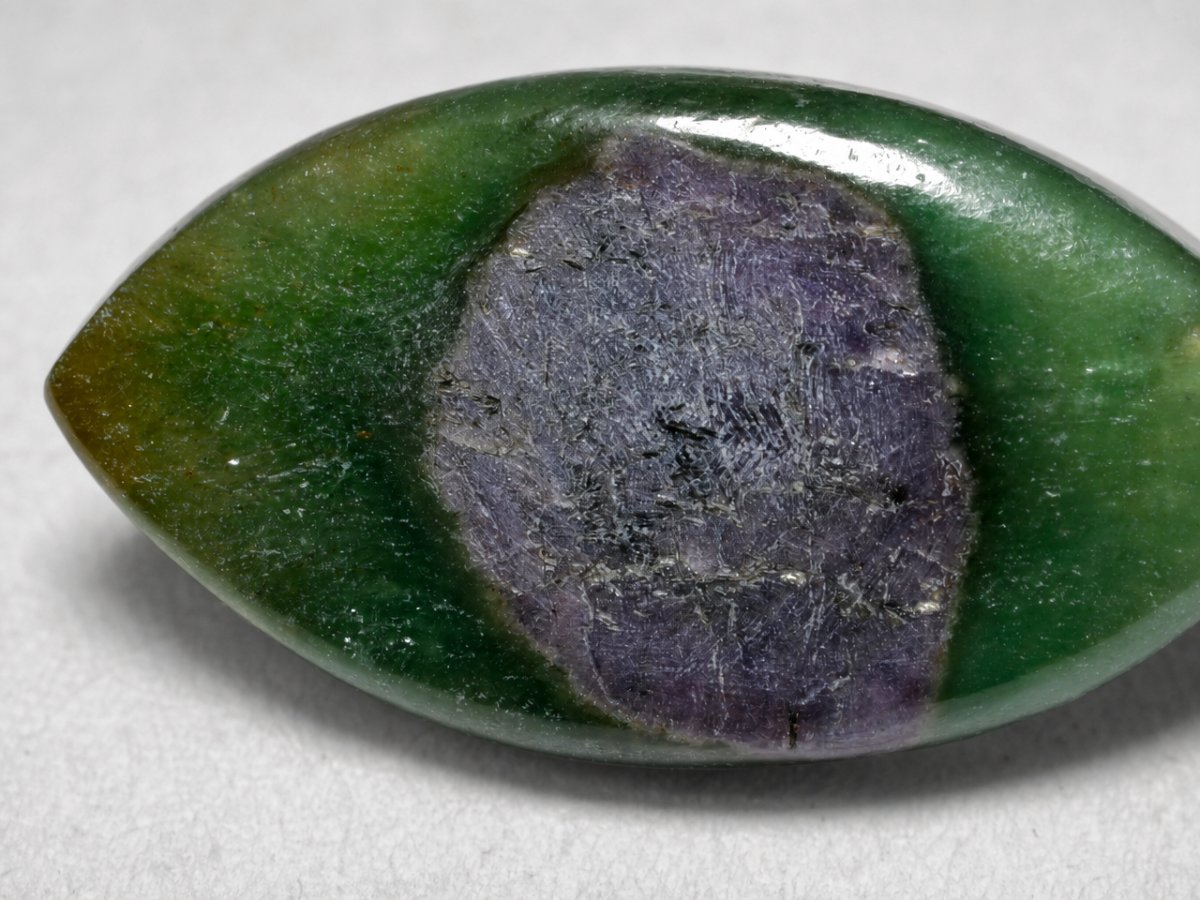


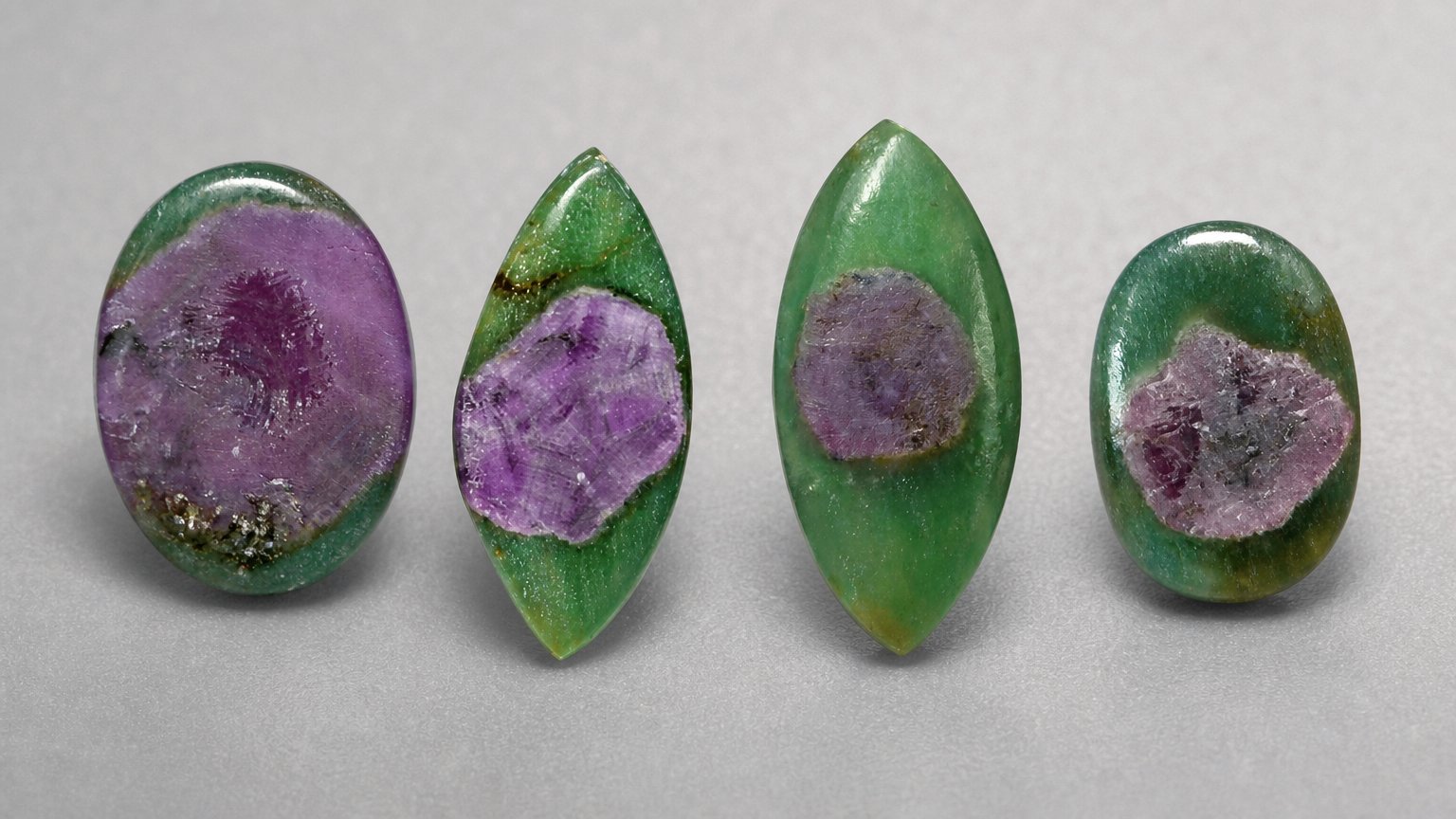
Ruby in Fuchsite is a colorful gemstone material that combines red to pink or purplish ruby with green fuchsite mica. Buyers usually choose it for its natural contrast, bold patterns and attractive large face-up sizes rather than for transparent, faceted brilliance. Each piece is individual, so the best purchase is the one with the color balance, shape and durability suited to your jewelry or collection plans.
This guide explains what to look for when comparing Ruby in Fuchsite gemstones, including color, cut, treatments, hardness differences and the jewelry styles where this material performs best.
What Is Ruby in Fuchsite?
Ruby in Fuchsite is a mixed gemstone material made from ruby, the red variety of corundum, occurring together with fuchsite, a green variety of muscovite mica. This combination gives the stone its distinctive multicolor appearance: areas of ruby set within a softer green mica matrix.
Because the material contains two minerals with very different properties, it should not be judged in the same way as a transparent ruby. A fine-looking Ruby in Fuchsite is appreciated for pattern, contrast, polish, shape and overall visual appeal.
Color and Pattern: The Main Buying Factor
Color is the first feature most buyers notice. The classic look is green fuchsite with red ruby areas, sometimes showing pink or purple tones. Since Ruby in Fuchsite is naturally multicolored, the most appealing gems usually have a pleasing distribution of color rather than one uniform body color.
When choosing a stone, consider these visual points:
- Ruby visibility: Look for red, pink or purplish ruby areas that are clearly visible from the front.
- Green contrast: The green fuchsite should provide an attractive background and make the ruby stand out.
- Pattern balance: Some buyers prefer a strong ruby focal area, while others prefer scattered ruby markings across the stone.
- Face-up appeal: Since this material is often cut as slices or cabochons, judge the whole surface pattern, not just a small area.
There is no single "best" pattern. For jewelry, designers often choose a stone that complements the setting. For collectors, unusual natural patterning may be the main attraction.
Cut, Shape and Size
Ruby in Fuchsite is commonly cut as slices, which show broad areas of the natural material and maximize the visible pattern. Cabochons are also common, especially when a smoother, domed surface is preferred for jewelry.
Oval shapes are especially common, with marquise, cushion, round and freeform shapes also seen. Freeform cuts can be attractive for artisan jewelry because they follow the natural color arrangement of the rough material.
When comparing cut quality, look for a neat outline, comfortable proportions and a well-polished surface. For slices, check that the stone has enough structural integrity for the intended setting. For cabochons, look for an even dome and a shape that sits well in the design.
Durability and Wearability
Durability is one of the most important buying considerations for Ruby in Fuchsite. Ruby itself is very hard, ranking 9 on the Mohs scale, but fuchsite is much softer at 2 to 2.5. Since the visible stone includes both minerals, the overall wear behavior is controlled by the softer fuchsite areas.
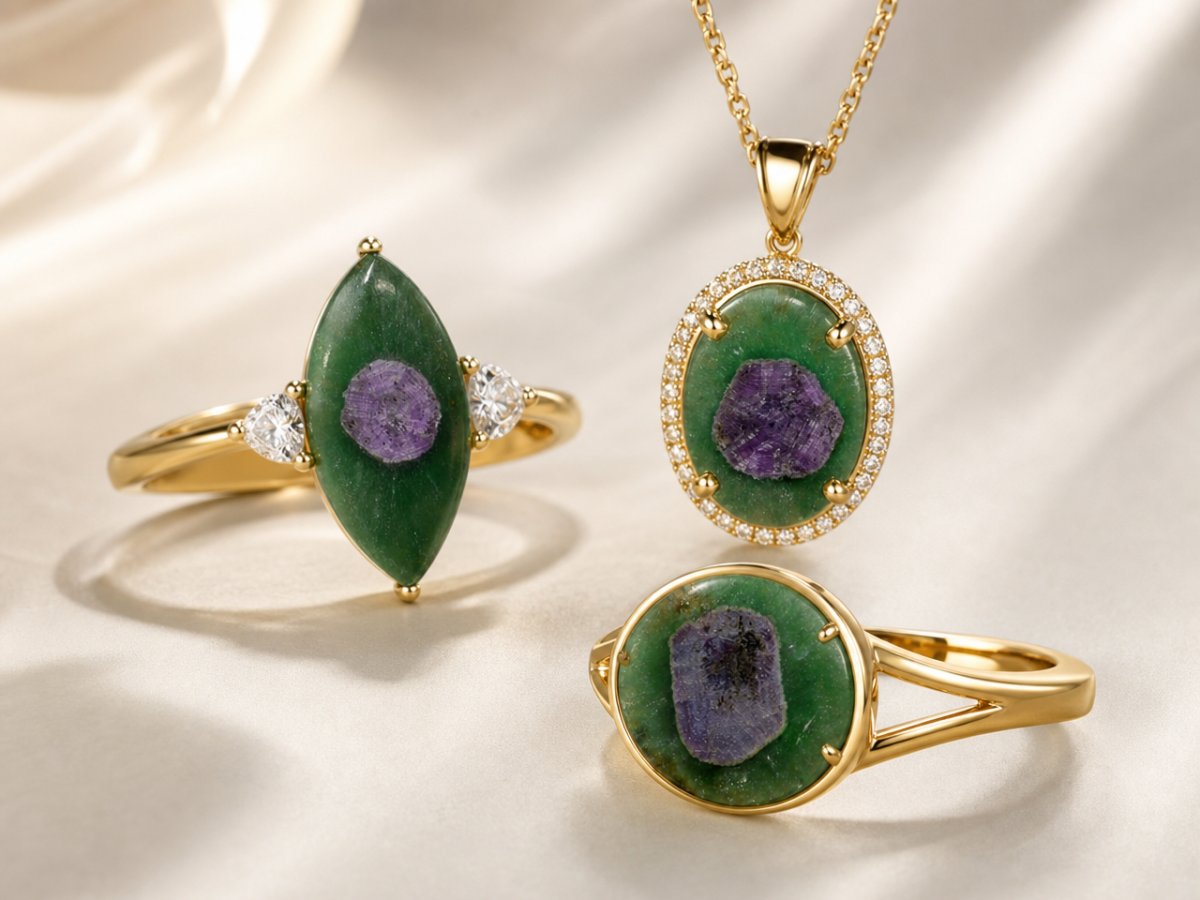
This means Ruby in Fuchsite is best for jewelry that is not exposed to constant abrasion or impact. Pendants and necklaces are excellent choices. Brooches and artisan jewelry are also suitable because they are usually worn with less direct contact than rings or bracelets. Earrings can work well when the stones are not too heavy and are set securely.
If you want a gemstone for everyday, high-contact jewelry, choose the setting carefully. Protective bezels and designs that keep the stone away from knocks are preferable. Avoid treating Ruby in Fuchsite as though it has the same practical toughness as a single-crystal ruby.
Treatments and Buying Confidence
Ruby in Fuchsite is commonly offered as untreated material. Treatment disclosure still matters, especially when buying any gemstone online. A reputable seller should clearly describe the gemstone and provide accurate information about the material being sold.
At GemSelect, buyers can compare individual gemstones by photo, dimensions, shape and listed details, which is especially useful for a patterned gemstone where every piece is visually different.
Origin
India is an important source associated with Ruby in Fuchsite. Ethiopia is also known for this material. For most buyers, origin is secondary to appearance, cut, size and suitability for the intended jewelry use, unless the origin is specifically part of the collecting interest.
Gemological Properties
Ruby in Fuchsite combines the properties of two mineral species: corundum for the ruby and muscovite mica for the fuchsite. Ruby has the chemical formula Al₂O₃, while fuchsite has the formula KAl₂(AlSi₃O₁₀)(OH)₂. Their crystal systems also differ: ruby is trigonal, while fuchsite is monoclinic.
The refractive index is 1.762 to 1.770 for ruby and 1.56 to 1.60 for fuchsite. Specific gravity is about 4.0 for ruby and 2.8 to 2.9 for fuchsite. These details are more useful for identification than for everyday buying, but they help explain why Ruby in Fuchsite should be understood as a mixed natural gemstone material rather than a standard transparent ruby.
Best Jewelry Uses
Ruby in Fuchsite is particularly well suited to pendants and necklaces because these designs display its color pattern while reducing exposure to wear. Larger slices can make striking focal pieces, while cabochons can offer a more finished, classic jewelry look.
Brooches are another practical option because they allow for larger stones and artistic settings. Earrings can be attractive, especially in matched or complementary pairs, although buyers should check size and weight for comfort. Artisan jewelry is a natural fit because the stone's irregular patterns invite custom design choices.
Practical Buying Checklist
- Choose the color balance you like: Decide whether you want bold ruby areas, a strong green background or a more mixed appearance.
- Inspect the full face of the stone: Pattern matters more than conventional clarity grading.
- Match cut to use: Slices show broad natural patterning; cabochons offer a smoother jewelry-ready surface.
- Consider durability: The fuchsite portion is soft, so pendants, necklaces, brooches and protected designs are sensible choices.
- Check size and dimensions: Patterned stones can look larger or smaller depending on shape and color distribution.
- Review treatment information: Ruby in Fuchsite is commonly untreated, but clear seller disclosure is still important.
- Buy the individual stone, not just the name: Two Ruby in Fuchsite gems can look very different, so photos and measurements are essential.
Summary
Ruby in Fuchsite is a distinctive multicolor gemstone material for buyers who appreciate natural pattern, strong green and red contrast, and creative jewelry possibilities. The most important buying factors are color distribution, cut, polish, size and the intended jewelry use. Because the material contains soft fuchsite as well as hard ruby, it is best suited to pendants, necklaces, brooches, earrings and protected artisan designs.