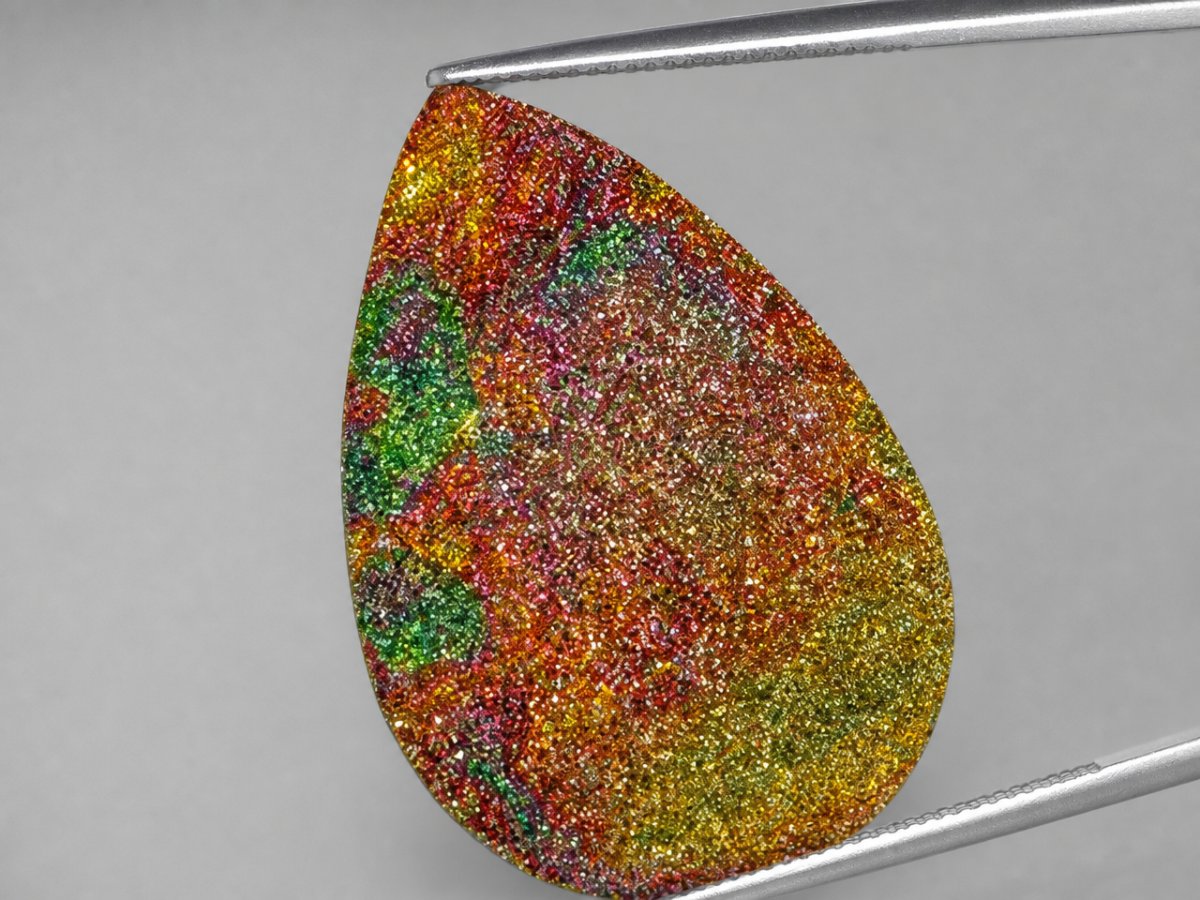


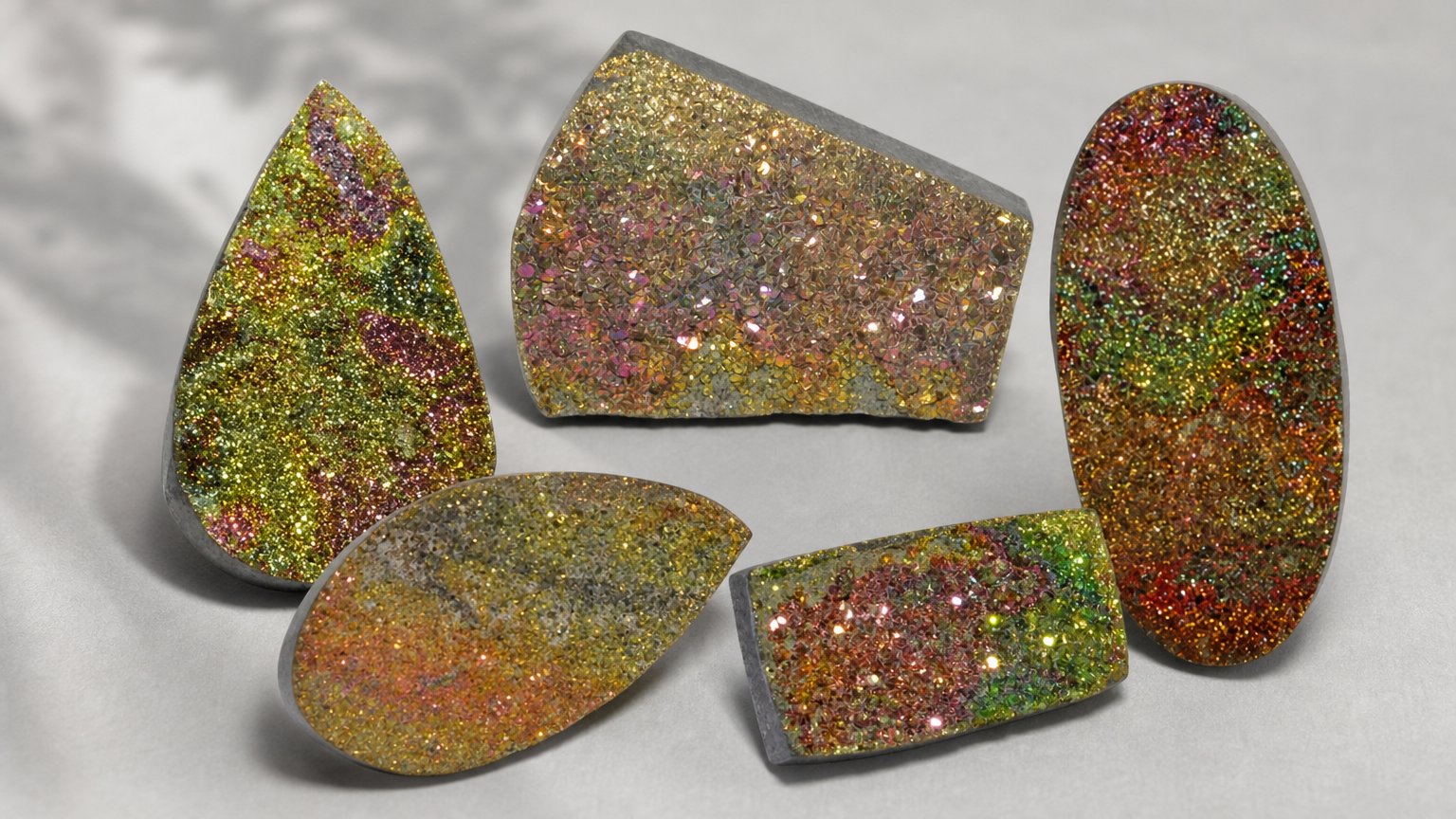
Rainbow Pyrite is chosen for its bold metallic look and multicolor appearance, often showing gold and yellow tones along with rainbow-like color effects. For buyers, the most important decisions are visual: the strength and distribution of color, the quality of the surface, the cut style and whether the piece is suitable for the jewelry design you have in mind.
This guide explains what to look for when buying Rainbow Pyrite, with practical advice for gemstone buyers, jewelry designers and collectors who want an attractive and appropriate stone.
What Is Rainbow Pyrite?
Rainbow Pyrite is a variety of pyrite, an iron sulfide mineral with the chemical formula FeS₂. It has an isometric crystal system and is opaque, so it is appreciated for surface color, metallic character and form rather than transparency or brilliance.
Unlike transparent faceted gems, Rainbow Pyrite is usually selected by eye. Buyers should pay close attention to the face-up appearance, surface condition and how the stone will sit in a finished piece of jewelry.
Color and Appearance: The Main Buying Factor
Color is the first feature most buyers notice. Rainbow Pyrite is known for a multicolor appearance, often with gold and yellow as important base tones. The most desirable stone for you is usually the one with the color pattern that best suits your design, because each piece can look quite individual.
When comparing stones, look for:
- Strong face-up color: Choose a stone that shows attractive color when viewed from the front, not only at a steep angle.
- Balanced color distribution: Some buyers prefer broad areas of color, while others like a more natural, varied pattern.
- Surface appeal: Since Rainbow Pyrite is opaque, the visible surface is especially important.
- Compatible tone: Gold and yellow tones can work especially well with warm metal colors, while multicolor pieces may suit more artistic or collector-style designs.
Because Rainbow Pyrite is not judged like transparent gems, there is no need to focus on internal clarity in the same way you would for sapphire, tourmaline or quartz. Instead, evaluate whether the surface looks appealing and intact for the intended use.
Cut Styles and Shapes
Rainbow Pyrite is commonly offered as cabochons or with a natural druzy surface. These styles preserve the stone's visual character and allow the color and texture to be seen clearly.
Cabochons
A cabochon has a smooth, polished surface rather than facets. This is a practical choice for pendants, earrings, brooches and necklaces because it gives a finished appearance and is easier to set securely in many jewelry styles.
Natural Druzy Surfaces
A natural druzy surface keeps the small crystal texture visible. Buyers choose this style for a more natural, mineral-like look. When buying druzy Rainbow Pyrite, inspect the surface carefully and choose pieces that appear stable and suitable for the setting type.
Common Shapes
Freeform shapes are especially common and suit the natural character of Rainbow Pyrite. Oval and marquise shapes are also seen, with cushion, pear and trillion forms available in some stones. For jewelry projects, choose the shape based on setting availability, orientation and the overall balance of the design.
Size, Weight and Practical Fit
Rainbow Pyrite has a relatively high specific gravity of 4.95 to 5.10, meaning it can feel heavier than some gemstones of similar size. For jewelry design, millimeter dimensions are often more useful than carat weight alone, especially when matching stones to a setting.
For earrings, consider overall weight and comfort. For pendants, brooches and collector jewelry, larger or freeform pieces can be effective because they allow more surface pattern to be displayed.
Durability and Wearability
Rainbow Pyrite has a Mohs hardness of 6 to 6.5. This gives it moderate scratch resistance, but it should still be protected from hard knocks, abrasion and rough handling. The natural surface, especially on druzy pieces, can be more vulnerable than a smooth cabochon surface.
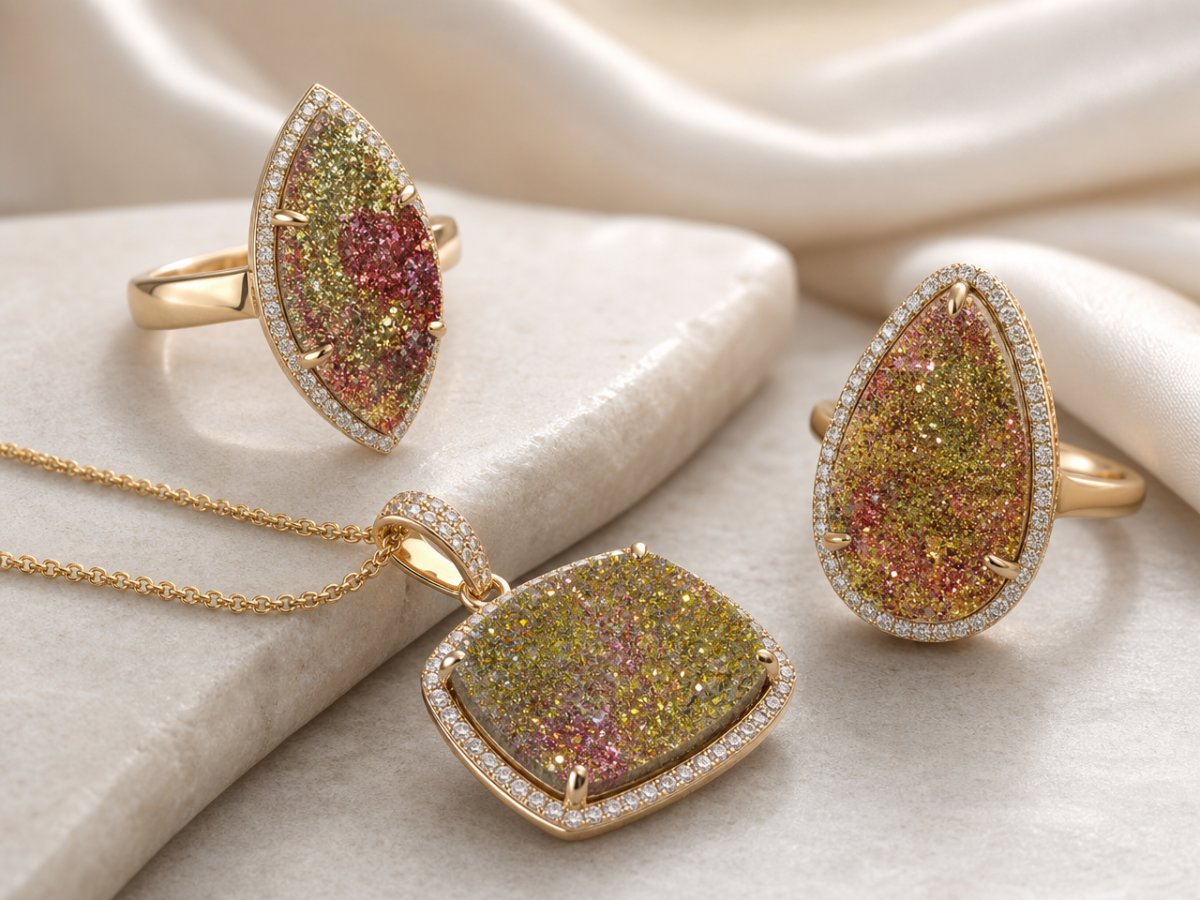
For this reason, Rainbow Pyrite is best suited to jewelry that is not exposed to constant impact. Pendants are an excellent choice, and earrings, necklaces and brooches are also appropriate. Collector jewelry is another natural use, especially for unusual shapes or strong color patterns.
If used in a ring or bracelet, a protective setting and careful wear would be important, but pendants and earrings are generally more practical choices.
Treatments and Buying Confidence
Rainbow Pyrite is commonly sold untreated. When purchasing, ask for clear treatment disclosure and buy from a seller that provides accurate gemstone descriptions. Treatment information matters because buyers should know whether the color and surface are natural or altered.
At GemSelect, gemstone listings are intended to provide practical details such as measurements, weight, shape and treatment status so buyers can compare stones more confidently.
Origin: Useful, But Not the Only Decision
Rainbow Pyrite is associated with several origins, with Peru being an important source. Other known origins include Russia, Spain, Bolivia, Mexico and the United States.
Origin can be interesting for collectors, but buyers should avoid choosing by country alone. For most jewelry and design purposes, appearance, surface quality, size, shape and suitability for the setting are more important than origin.
How to Choose Rainbow Pyrite: Buyer's Checklist
- Start with color: Choose a multicolor, gold or yellow appearance that appeals to you face-up.
- Inspect the surface: Look for an attractive surface without distracting damage.
- Match the cut to the use: Cabochons are practical for many jewelry settings; natural druzy surfaces offer a more mineral-like look.
- Check the dimensions: Use millimeter size, not only carat weight, when planning a setting.
- Consider durability: Prefer pendants, earrings, brooches, necklaces or collector jewelry for safer wear.
- Confirm treatment status: Rainbow Pyrite is commonly untreated, but disclosure is still important.
- Do not overpay for origin alone: Choose the stone that looks best and fits your design.
Care Tips for Rainbow Pyrite
Clean Rainbow Pyrite gently with a soft cloth. Avoid harsh chemicals, abrasive cleaners and rough brushing, especially on natural druzy surfaces. Store pieces separately from harder gemstones to reduce the chance of scratches or surface wear.
For finished jewelry, remove Rainbow Pyrite pieces before activities that may expose them to impact, pressure or chemicals. This is especially important for textured stones and larger freeform pieces.
Summary
Rainbow Pyrite is a distinctive opaque gemstone valued for its multicolor, gold and yellow surface appearance. The best purchase is not necessarily the largest stone, but the one with the most appealing color, appropriate surface condition and suitable shape for your intended jewelry use.
For most buyers, cabochons and natural druzy pieces used in pendants, earrings, brooches, necklaces or collector jewelry offer the best balance of appearance and practicality.