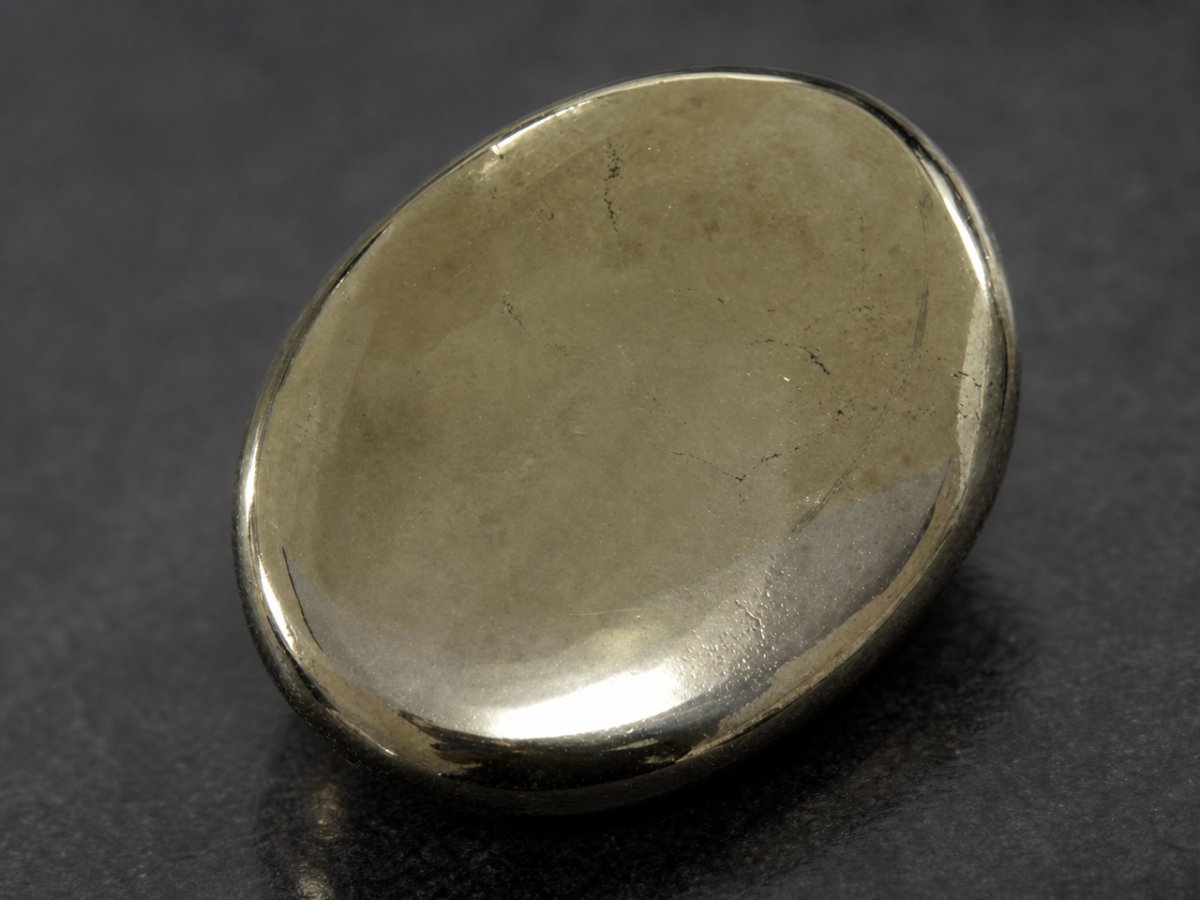


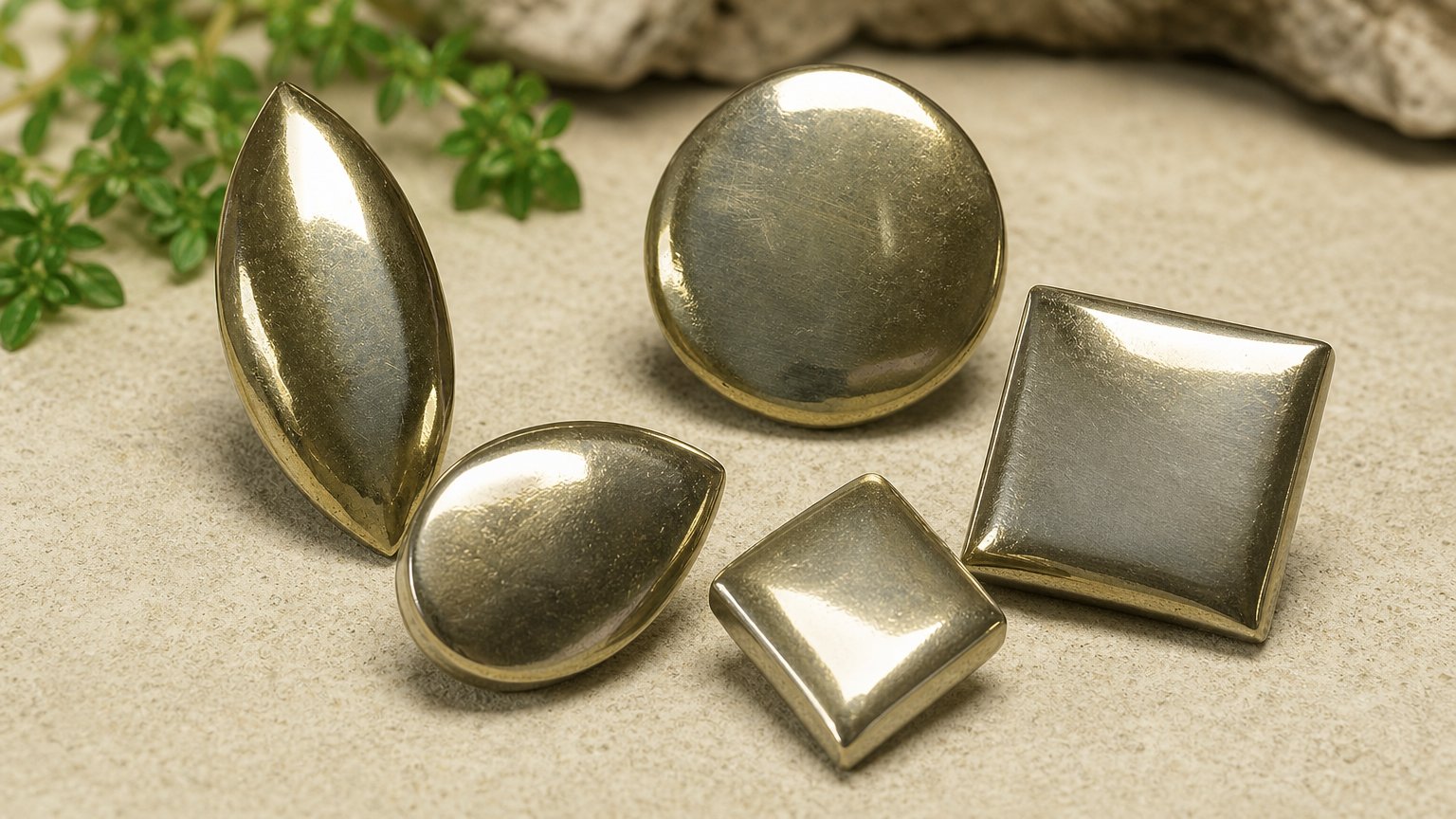
Pyrite is a distinctive opaque gemstone chosen for its gold to yellow appearance and bold decorative style. For buyers, the most important considerations are visual appeal, cutting style, intended jewelry use, durability and whether the stone is disclosed as untreated. Pyrite is not usually purchased by the same criteria as transparent faceted gems; instead, the best choice is the stone that offers the shape, surface appearance and size that suits your design.
What Is Pyrite?
Pyrite is an iron sulfide mineral with the chemical formula FeS₂. It forms in the isometric crystal system and is opaque, so its refractive index is not typically measured for normal gem-buying purposes. Instead of judging pyrite by internal brilliance or transparency, buyers should focus on body color, polish, cut quality, symmetry and overall presentation.
Pyrite has a relatively high specific gravity of 4.95 to 5.10, meaning it can feel heavier than many gemstones of similar size. This can be a useful practical point when choosing larger pieces for earrings or substantial pendant designs.
Color and Appearance: What to Look For
The most desirable visual feature of pyrite is its gold-colored appearance. Yellow tones are also common, while some stones may show brownish overtones. When comparing stones, look for a color that appears attractive and even across the face of the gem, especially if the stone will be used as a centerpiece.
Because pyrite is opaque, clarity is not judged by transparency. Instead, examine the visible surface. A well-presented pyrite gem should have a pleasing polish and a shape that shows the material cleanly. Surface marks, uneven areas or distracting color patches may matter more in larger stones or simple jewelry designs where the gem is fully exposed.
Cut and Shape Choices
Pyrite is commonly available in faceted cuts and cabochons. Faceted pyrite can give a more geometric, reflective look, while cabochons offer a smoother, rounded appearance. The right choice depends mostly on the jewelry style you want to create.
Freeform and oval shapes are especially common and useful. Freeform pyrite works well for unique, natural-looking pendants and necklaces, while oval stones are easier to match with classic jewelry settings. Marquise, pear and trillion shapes can add a more designed or contemporary look. Cushion, heart and round shapes may also be found and are good options when the setting requires a more familiar outline.
When buying, check that the cut supports the design. A symmetrical oval may be important for a matched pendant or pair of earrings, while an expressive freeform stone may be better for a one-of-a-kind necklace.
Origins and Buying Relevance
Pyrite is associated with several origins, including Peru, Russia, Spain, China and the United States. Peru and Russia are especially important sources in the market information available for pyrite, with Spain also notable.
For most buyers, origin is secondary to appearance, cutting and suitability for the intended jewelry use. If origin matters to you as a collector or designer, choose a seller that clearly identifies the source when it is known. For jewelry buyers, an attractive and well-cut stone will usually be the more practical priority.
Durability and Wearability
Pyrite has a Mohs hardness of 6 to 6.5. This gives it reasonable resistance to scratching for many jewelry uses, but it should still be treated with care. Hardness is only one part of durability; jewelry design, exposure and daily wear habits also matter.
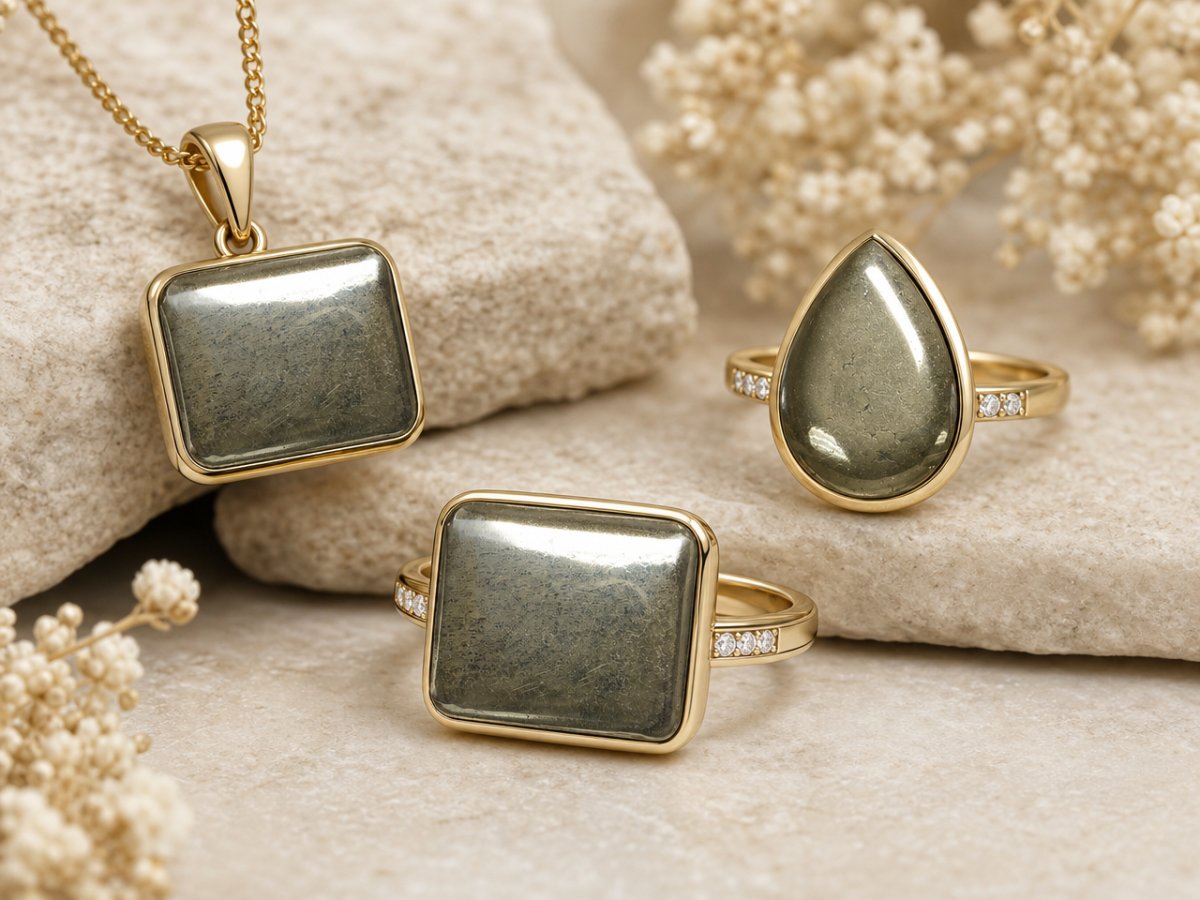
Pyrite is particularly suitable for necklaces and pendants, where the stone is less likely to receive knocks than in hand-worn jewelry. Earrings can also be a good choice, especially when the weight of larger stones is considered. Bracelets are possible, but they are more exposed to impact and abrasion, so protective settings are recommended. Rings are best reserved for occasional wear or designs that shield the stone from hard contact.
Treatments and Disclosure
Pyrite is commonly sold as untreated. This is a helpful point for buyers who prefer natural, unenhanced gemstones. When purchasing pyrite, look for clear treatment disclosure from the seller. If a listing states that the stone is untreated, that information should be easy to find and consistent with the gem description.
At GemSelect, treatment information is an important part of gemstone listings, helping buyers compare stones with confidence.
How to Choose the Right Pyrite Gemstone
For pendants and necklaces
Choose a stone with strong face-up color and a shape that suits the design. Freeform and oval pyrite are especially practical choices. Larger stones can work well in pendants because weight is less of a concern than it would be in earrings.
For earrings
Pay attention to size and weight. Because pyrite has a high specific gravity, matched earrings should be comfortable as well as visually balanced. Smaller ovals, pears or rounds can be easier to wear than very large pieces.
For bracelets and rings
Prioritize protective settings. Bracelets and rings experience more contact during wear, so exposed corners and high settings are less practical. If choosing pyrite for a ring, consider it an occasional-wear gemstone rather than a daily-use option.
For collectors and designers
Look for a combination of distinctive shape, pleasing gold to yellow color and good surface presentation. Freeform stones can be especially appealing for custom jewelry, while well-cut faceted pieces may suit more structured designs.
Final Buying Advice
The best pyrite gemstone is one that matches your design needs and shows attractive gold or yellow color with a clean, well-finished appearance. Since pyrite is opaque and generally untreated, buyers should focus less on traditional clarity grading and more on visible surface quality, cut, shape, size and jewelry practicality.
For everyday wear, pendants, necklaces and earrings are the safest choices. Bracelets and rings can be beautiful, but they require more care and thoughtful setting design. Buy from a seller that provides accurate photos, dimensions, treatment information and, where available, origin details.