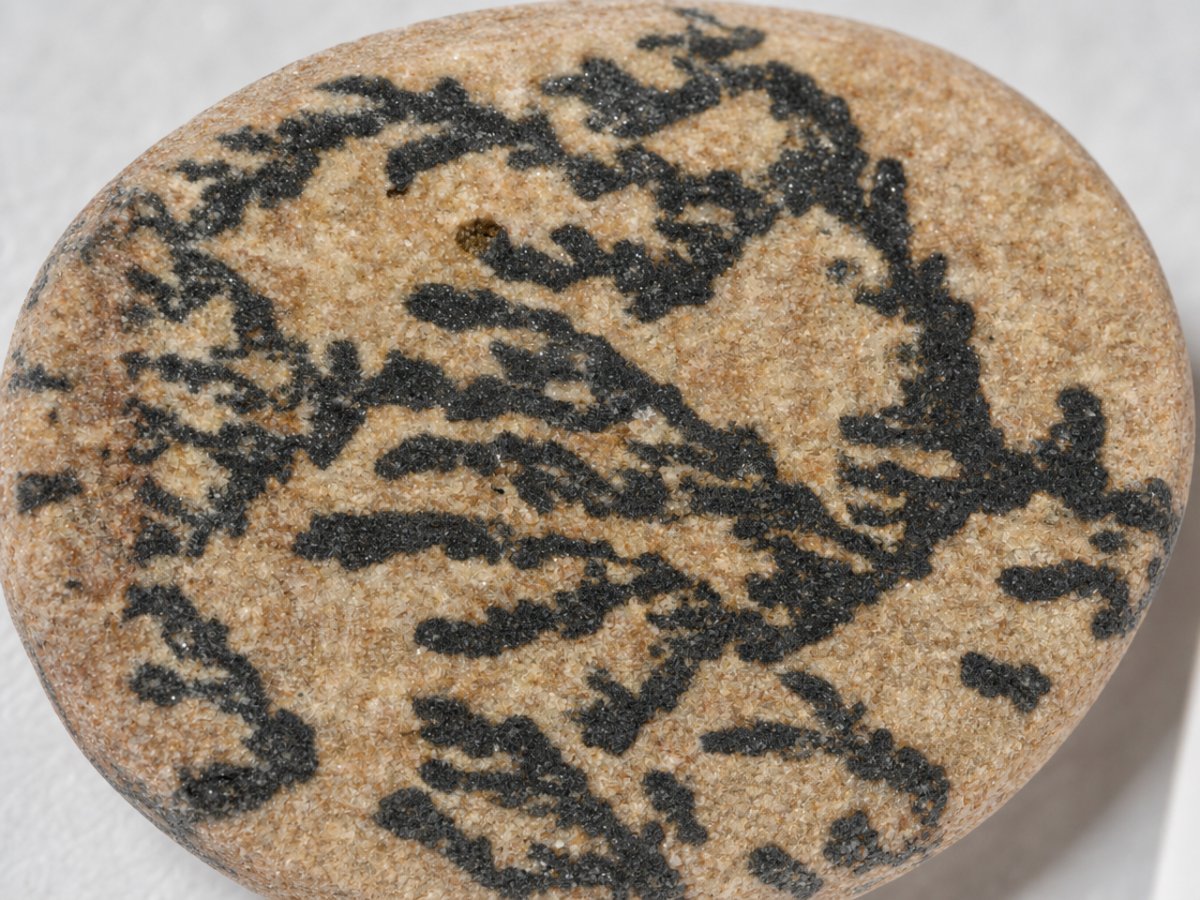


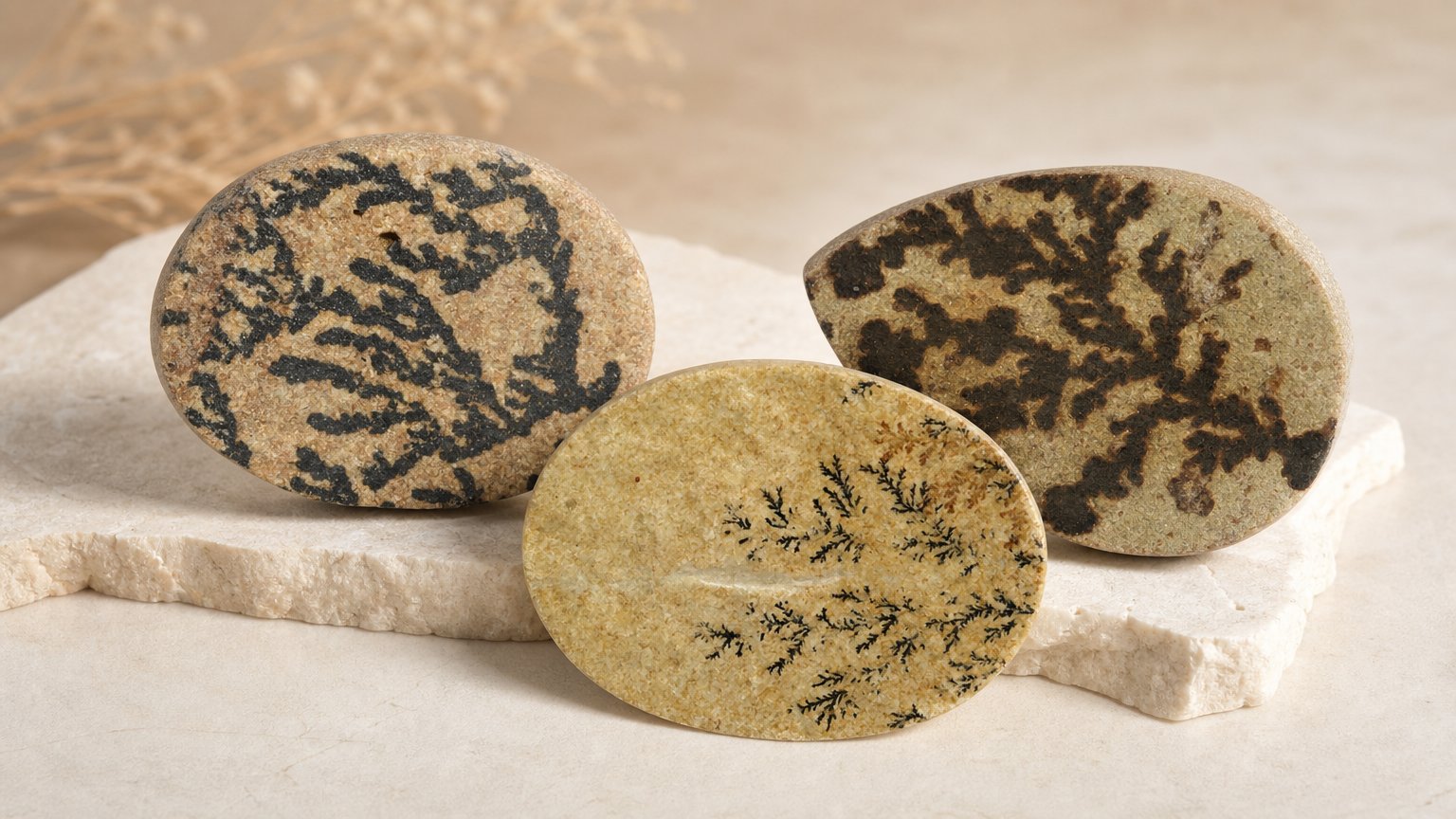
Psilomelane Dendrite is bought for its distinctive natural appearance rather than for sparkle or conventional faceted brilliance. Buyers usually compare stones by pattern, contrast, shape, polish and suitability for the intended jewelry design. This guide explains the practical details that matter when choosing a Psilomelane Dendrite gemstone.
What Is Psilomelane Dendrite?
Psilomelane Dendrite is associated with manganese-oxide material and has the chemical formula (Ba,H₂O)₂Mn₅O₁₀. Its crystal structure is described as poorly crystalline to amorphous, which helps explain why it is usually cut to show surface pattern and form rather than faceted optical effects.
For buyers, the most important point is simple: each gemstone should be judged individually. Patterned gems vary from piece to piece, so photos, dimensions and the face-up appearance are more useful than relying on a name alone.
Color and Appearance
Psilomelane Dendrite is known for multicolor appearances, commonly involving black and brown tones. The best choice depends on the look you want: some stones may have strong dark contrast, while others may show softer earthy color combinations.
When comparing stones, look for a pleasing distribution of color across the face of the gem. A strong pattern can make a simple cabochon visually interesting, while a more subtle pattern may suit understated jewelry. There is no universal "best" layout; balance, contrast and personal preference are the key buying factors.
Cut, Shape and Finish
Cabochon is the most common cut for Psilomelane Dendrite. A cabochon's smooth domed surface is well suited to showing color and pattern clearly. Check that the dome is even, the outline is symmetrical if the shape calls for it, and the polish is clean.
Oval shapes are especially common and versatile for jewelry. Freeform and pear shapes are also popular choices when the cutter wants to preserve or emphasize an attractive natural pattern. Cushion, round and trillion shapes may also be found. Slice cuts and carving cuts can be interesting for designers who want a more organic or artistic look.
Clarity and Surface Quality
For this gemstone, clarity is not judged in the same way as it would be for a transparent faceted stone. Instead, buyers should focus on surface condition and overall presentation. Look for chips, cracks, pits or uneven polishing, especially near the edge where a stone will be set.
If the stone is for jewelry, make sure the face-up pattern remains attractive once the gem is viewed at normal wearing distance. Close-up photos are helpful, but the overall design impact matters most.
Durability and Wearability
Psilomelane Dendrite has a Mohs hardness of 5-6. This gives it moderate wearability, but it is not as scratch-resistant as harder jewelry stones. It is best suited to jewelry that is less exposed to knocks and abrasion.
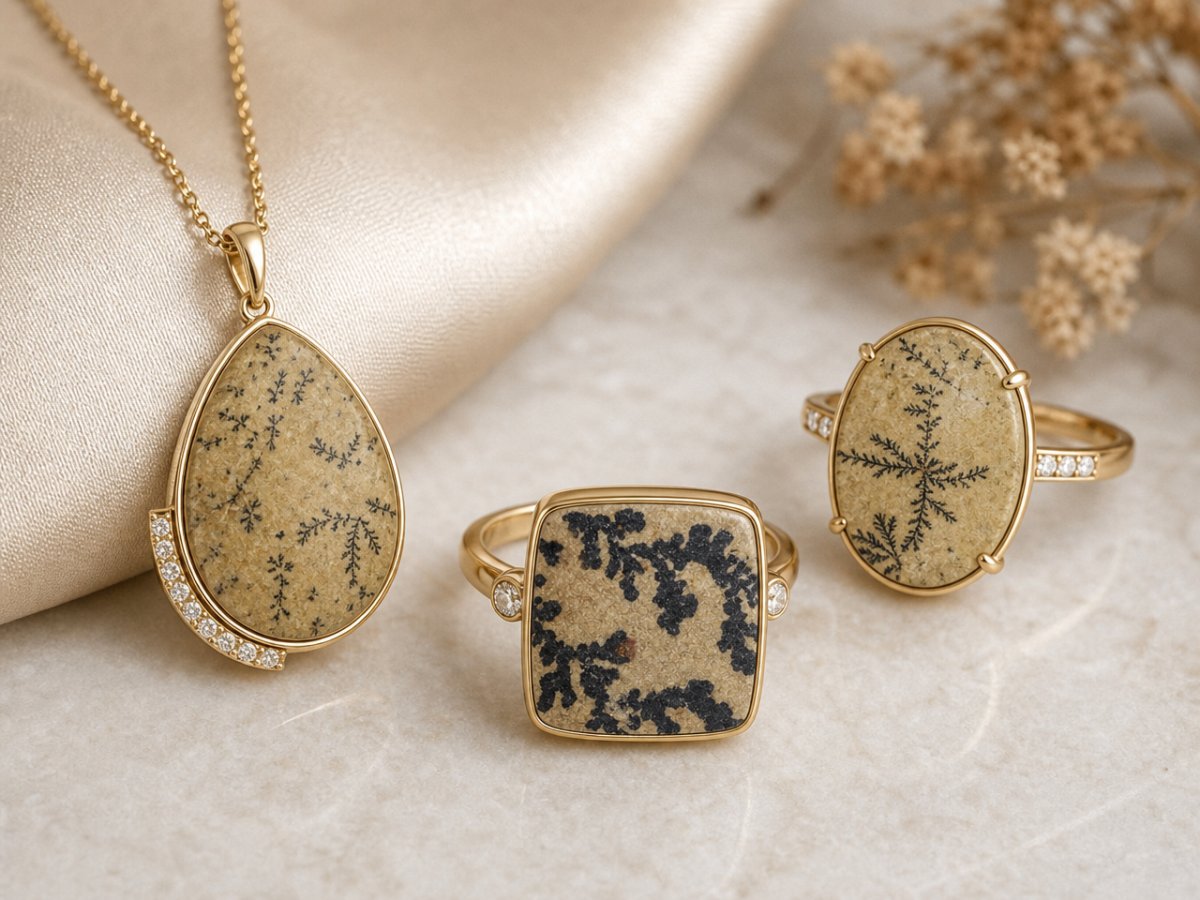
Necklaces and pendants are excellent uses because they protect the stone from much of the impact that rings and bracelets receive. Earrings are also a practical choice. Bracelets and collector rings can be used, but protective settings and careful wear are recommended. Brooches are another suitable option because they are usually worn with less direct impact.
Treatments and Disclosure
Psilomelane Dendrite is commonly offered as untreated. When buying, look for clear treatment disclosure from the seller. Untreated status is appealing to many collectors and jewelry buyers because it means the stone's appearance has not been altered by enhancement.
Origins
Important sources for Psilomelane Dendrite include Mexico, with material also associated with India, Morocco, the United States, Australia and Brazil. Origin can be interesting to collectors, but it should not be the only reason to buy a stone. For most jewelry buyers, pattern, cut quality, size and condition are more important than country of origin.
Gemological Properties
Psilomelane Dendrite has a refractive index of 2.11-2.26 and a specific gravity of 3.5-4.7. These properties are mainly useful for gemological identification rather than everyday buying decisions. Because the material is poorly crystalline to amorphous, buyers should expect it to be presented in cuts that emphasize surface beauty and shape.
How to Choose the Right Psilomelane Dendrite
Start with the intended use. For a pendant or necklace, you can choose a larger cabochon or an expressive freeform shape. For earrings, matching size, color balance and general pattern style are important. For rings or bracelets, choose a stone with a secure setting design and avoid pieces with vulnerable edges.
Next, compare the face-up appeal. Look at how the black, brown and multicolor areas interact. A well-chosen stone should have a pattern that feels intentional and attractive, even if it is completely natural and unique.
Finally, check practical details: dimensions, shape, polish, edge condition and treatment disclosure. When browsing GemSelect or any specialist gemstone seller, clear photos and accurate measurements are especially valuable for patterned cabochons because every piece is different.
Care Tips
Clean Psilomelane Dendrite gently with a soft cloth and mild soapy water when needed. Avoid abrasive cleaners and rough handling. Store it separately from harder gemstones to reduce the chance of scratching.
Summary
Psilomelane Dendrite is a distinctive gemstone for buyers who appreciate natural pattern, earthy color and cabochon-style jewelry. The best purchase is not simply the largest stone or the most unusual shape, but the one with the right balance of pattern, polish, durability and design suitability for your project.