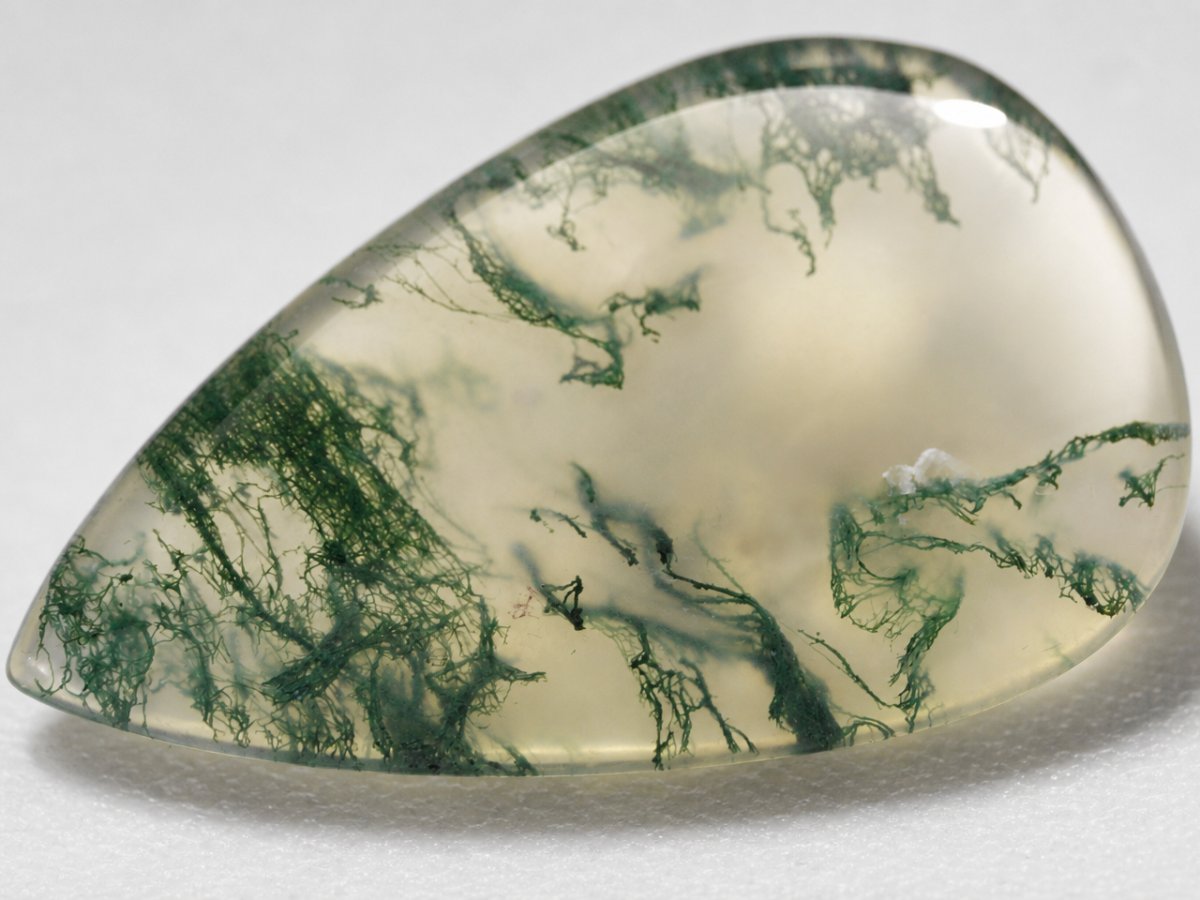


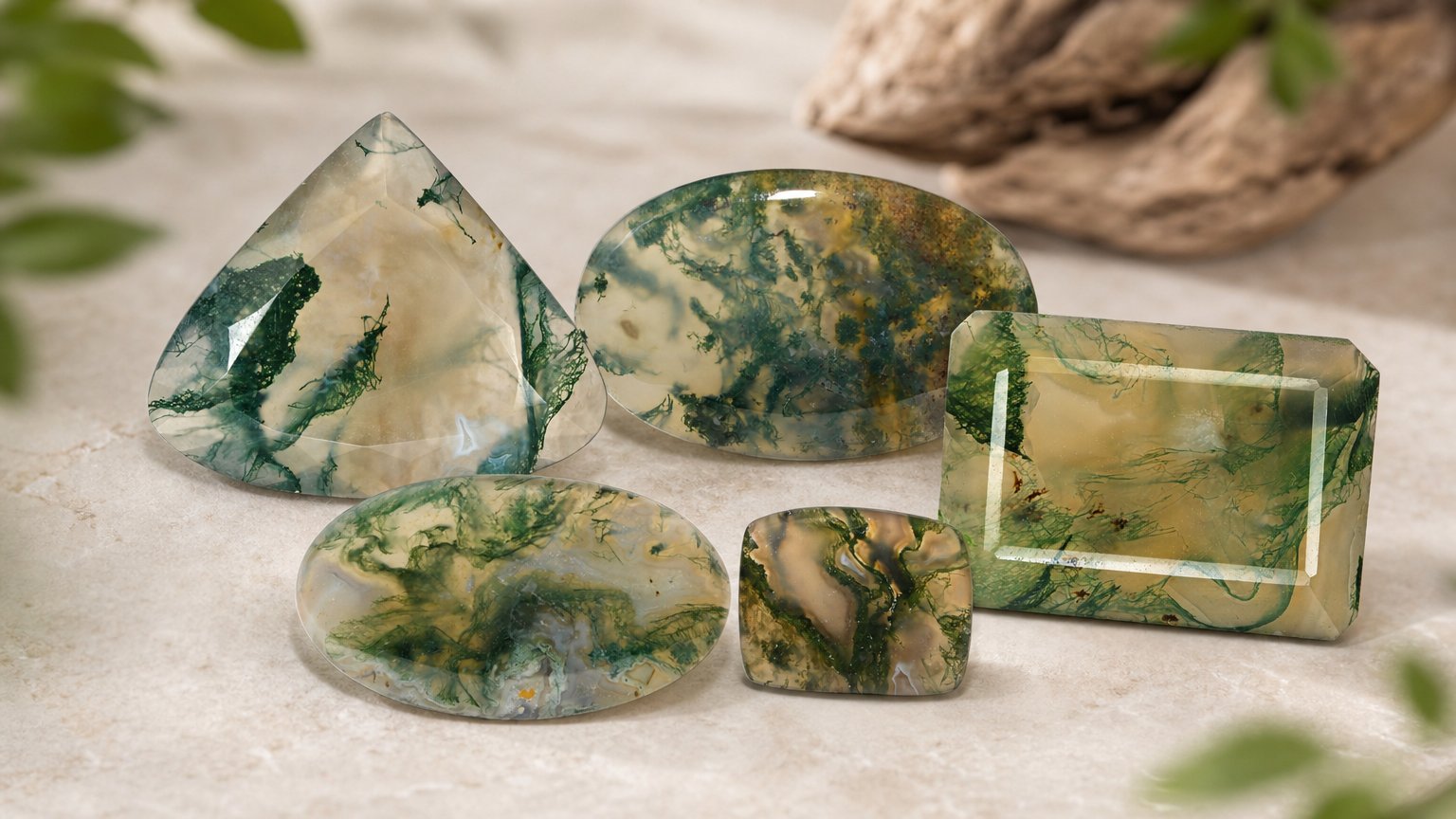
Moss agate is a distinctive variety of agate in the quartz family, chosen by many buyers for its natural-looking green and multicolor appearance. Unlike gemstones that are judged mainly by brilliance or a single body color, moss agate is appreciated for pattern, contrast, shape and overall visual character. Two stones of the same size can look very different, so buying moss agate is often a matter of selecting the individual gem that best suits the jewelry design or collection.
This guide explains the main points to consider before buying moss agate, including color, appearance, cut, size, treatments, durability, origin and jewelry suitability. Whether you are choosing a single cabochon for a statement ring, matching stones for earrings, or a pendant stone with an interesting natural pattern, understanding these factors will help you buy with confidence.
What Is Moss Agate?
Moss agate is a variety of agate associated with the quartz mineral species. Its chemical formula is SiO₂, and it belongs to the trigonal crystal system. As a quartz-family gemstone, it has practical durability and is widely used in jewelry and ornamental gem cutting.
The key attraction of moss agate is its appearance. Buyers commonly look for green and multicolor areas that create a natural, organic effect. White, red, brown, gray, yellow and colorless areas may also be present, contributing to the individuality of each stone. Because pattern is central to the appeal, moss agate is different from gems where the goal is a completely even color. In moss agate, an attractive distribution of color and internal scenery is often more important than uniformity.
Color and Appearance: What to Look For
The most recognized moss agate colors are green and multicolor. Green patterns are especially important because they are strongly associated with the moss-like look that gives the gemstone its name. Multicolor stones may show combinations of green with white, red, brown, gray, yellow or nearly colorless areas.
When buying moss agate, evaluate the whole visual composition rather than looking for one standard grade. A desirable stone may have bold green areas, delicate branching patterns, soft cloudy zones, or strong contrast between lighter and darker sections. The best choice depends on the intended use. A dramatic stone can be excellent for a statement ring or pendant, while a more balanced pattern may be easier to match in earrings or a necklace layout.
Pattern and Contrast
Pattern is one of the most important buying factors. Look at whether the design within the stone is centered, balanced, scenic, bold or subtle. Some buyers prefer dense green patterning, while others like open areas that make the pattern stand out. For jewelry, consider how the setting will frame the stone. A pattern that looks attractive loose may be partly hidden by a bezel or prongs if it is too close to the edge.
Contrast also affects the visual impact. Green markings against a pale or white background tend to be easy to see, while darker multicolor stones can have a richer but less sharply defined appearance. Neither is automatically better; the key is whether the stone’s pattern remains attractive at the size and viewing distance required for the design.
Color Consistency and Matching
Because moss agate is naturally varied in appearance, exact matching can be challenging. If you are buying pairs or sets for earrings, bracelets or multi-stone necklaces, compare the overall impression of the stones rather than expecting identical patterns. A good match may mean similar tone, size, shape and general color balance, even if the internal patterns differ.
Clarity and Surface Quality
Clarity in moss agate should be understood differently from clarity in transparent faceted gemstones. For a patterned gemstone, the important questions are: Is the design clearly visible? Is the surface well polished? Are there distracting pits, cracks, chips or dull areas? Does the stone look attractive from the viewing angle that will be used in jewelry?
Before buying, inspect the face-up view of the gemstone and then check the sides and back. Cabochons and slices can have broad surfaces, so polish quality matters. A smooth, even polish helps the color and pattern appear clean and appealing. Surface-reaching fractures, edge chips or uneven polishing may affect appearance and setting security, especially in rings and bracelets.
Cut Styles and Shapes
Moss agate is most commonly cut as a cabochon. A cabochon has a smooth, domed top rather than facets. This style is well suited to patterned stones because it gives an uninterrupted view of the internal design. Cabochons are popular for rings, statement rings and pendants, where the face-up pattern can be displayed clearly.
Carvings and slice cuts are also used. Carvings can emphasize the artistic side of the material, while slices can preserve broad areas of natural-looking pattern. Faceted moss agate exists but is less central to the way this gemstone is usually appreciated. Faceting is generally more important for gems valued for sparkle, while moss agate is usually selected for color pattern and visual scene.
Popular Shapes
Freeform and oval shapes are especially common and useful for moss agate. Freeform cuts can follow the most attractive areas of pattern, creating one-of-a-kind stones. Ovals are practical, elegant and easy to set in many jewelry styles. Cushion and pear shapes are also seen and can work well for rings, pendants and designer pieces. Round, marquise, baguette and pyramid shapes may appear in specific designs, but the main buying priority should remain the pattern and how well the shape displays it.
Cut Quality
For cabochons, check that the dome is even, the outline is pleasing, and the base is suitable for setting. The stone should not look lopsided unless it is intentionally freeform. The polish should be bright and smooth across the surface. In slices, check the edges and thickness, especially if the stone will be set into jewelry. For carvings, examine the detail, symmetry where relevant, and any thin areas that may be vulnerable during wear.
Size and Practical Selection
Moss agate is often chosen in sizes large enough to show its pattern. A small stone may still be attractive, but very fine details can be harder to appreciate once set. Larger cabochons, freeforms and slices can make excellent statement pieces because they allow the pattern to become the focus of the design.
When choosing size, consider wearability as well as appearance. A large cabochon can be striking in a statement ring, but it will sit higher or cover more of the finger depending on the setting. For pendants, larger stones are often easier to wear because they are less exposed to knocks than rings. For earrings, weight and comfort become important, especially with larger matching stones.
Gemological Properties
The following properties are useful for buyers, jewelers and designers when identifying moss agate as a quartz-family gemstone and considering jewelry use:
| Chemical formula | SiO₂ |
| Mineral species | Quartz |
| Crystal system | Trigonal |
| Mohs hardness | 6.5–7 |
| Refractive index | 1.530–1.540 |
| Specific gravity | 2.60–2.65 |
For most buyers, the Mohs hardness is the most practical property. Refractive index and specific gravity are more often used by gemologists and professionals for identification and comparison.
Durability and Everyday Wear
With a Mohs hardness of 6.5–7, moss agate has useful durability for many types of jewelry. It is suitable for rings, statement rings, pendants, necklaces and earrings when set and worn with reasonable care. However, hardness is not the same as indestructibility. Rings and bracelets are more exposed to knocks and abrasion than pendants and earrings, so protective settings and careful wear are important.
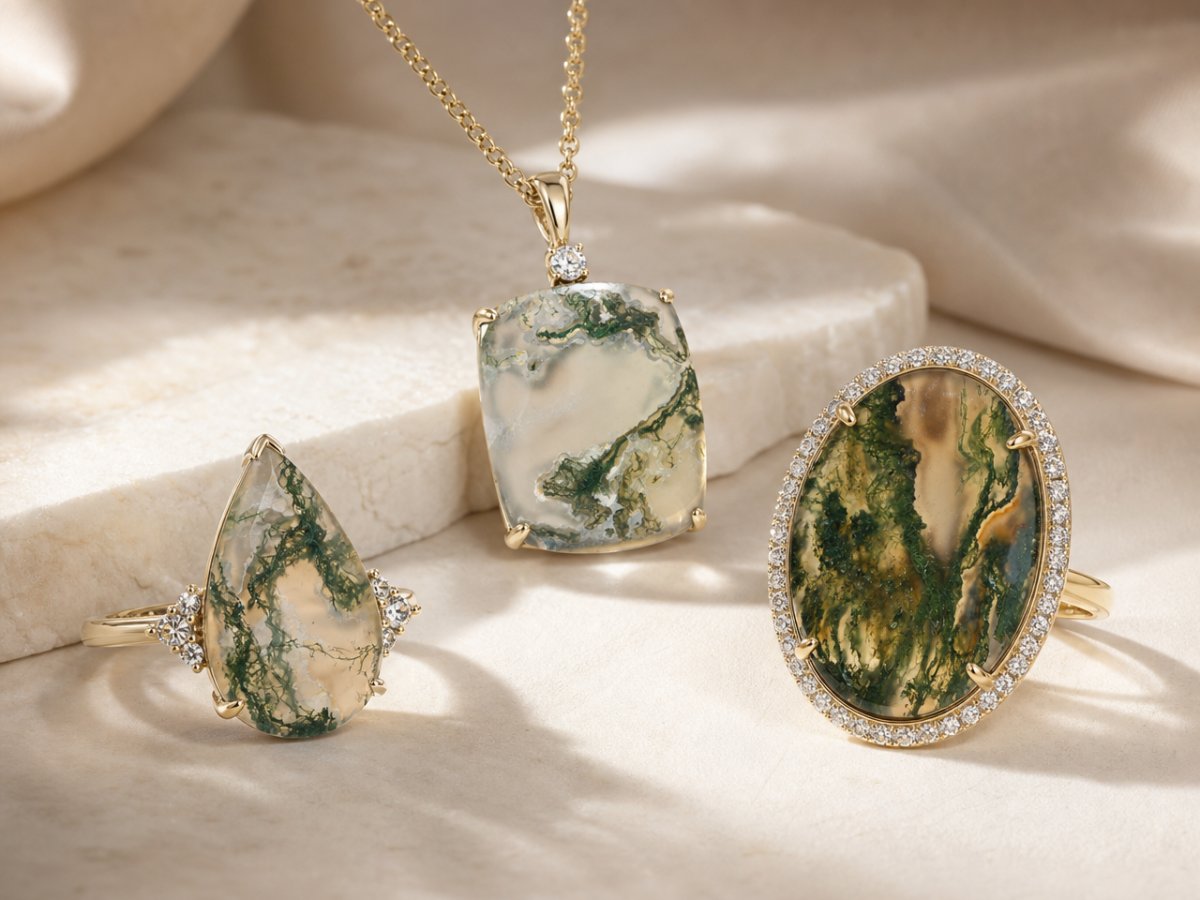
For rings, consider settings that protect the edges of the stone, especially for larger cabochons, slices or freeform shapes. Bezel settings can be practical because they surround the gem’s outline, while prong settings can show more of the stone but may leave edges more exposed. For bracelets, choose designs that reduce direct impact against hard surfaces.
Basic care is straightforward: clean moss agate jewelry with mild soap, water and a soft cloth, and avoid harsh chemicals or rough handling. Store it separately from harder gemstones to reduce the chance of scratches.
Treatments: Untreated, Dyed and Heat-Treated Moss Agate
Moss agate is commonly available untreated, and untreated stones are important to many buyers who prefer natural color and pattern. Dyed and heat-treated material may also be encountered. These treatments can affect color appearance, so disclosure is an important part of a confident purchase.
When buying, check the treatment information supplied by the seller. If a stone is listed as untreated, dyed or heat-treated, that information helps you compare options fairly. Treatment does not automatically make a gem unsuitable for jewelry, but buyers should know what they are purchasing. If you are selecting stones for a custom design or collection, consistent treatment status may also matter when matching multiple gems.
Origin: Does Source Matter?
Moss agate is associated with several origins, including India, Brazil, the United States, Australia and Madagascar. Origin can be interesting to collectors and may be relevant for buyers who prefer stones from a particular source, but the most practical buying factors are usually appearance, cut, size, treatment disclosure and condition.
Unless origin is documented and important to your collecting goals, do not rely on source alone as a measure of quality. A beautiful moss agate from any recognized origin can be suitable for jewelry if the pattern, polish and durability meet your needs.
Jewelry Uses
Moss agate is especially well suited to rings and statement rings because its patterns can create a strong focal point. A single oval, cushion or freeform cabochon can make a distinctive ring without needing additional gemstones. For statement rings, pay attention to size, edge protection and comfort, since larger stones receive more contact during wear.
Pendants and necklaces are also excellent uses for moss agate. These jewelry types allow larger or more scenic stones to be displayed with less exposure to impact than a ring. Pear, oval, freeform and slice cuts can all work well in pendant designs.
Earrings are a good option when you can find stones with compatible size, tone and shape. Exact pattern matching is not necessary, but the pair should look harmonious when worn. Bracelets can also use moss agate, although bracelet stones experience more contact with surfaces, so secure settings and careful wear are especially important.
How to Buy Moss Agate: Practical Checklist
1. Choose the Appearance First
Start with the face-up look. Decide whether you prefer strong green patterning, a multicolor effect, high contrast or softer natural tones. Since each stone is visually individual, photographs and measurements are especially important when buying online.
2. Match the Cut to the Jewelry Design
For rings and pendants, cabochons are a reliable choice. For artistic jewelry, freeform shapes, carvings and slices can provide more individuality. If the stone will be used in a standard calibrated setting, check the exact dimensions carefully.
3. Inspect Polish and Condition
Look for a smooth polish, clean outline and no obvious damage that will affect beauty or setting. Pay attention to edges, especially on slices and freeforms.
4. Confirm Treatment Information
Ask whether the moss agate is untreated, dyed or heat-treated. Treatment disclosure helps you compare stones honestly and choose according to your preferences.
5. Consider Durability for the Intended Use
Moss agate’s hardness of 6.5–7 makes it practical for many jewelry types, but rings and bracelets need more protection than pendants and earrings. Choose settings accordingly.
6. Buy the Stone, Not Just the Description
Because moss agate is pattern-driven, two gems with the same color name, origin and size can look completely different. Review the actual stone whenever possible. GemSelect provides individual gemstone details to help buyers compare options for their design, collection or jewelry project.
Summary
Moss agate is a quartz-family agate valued for green and multicolor patterning, individuality and versatility in jewelry. The best purchase is not determined by a single grade or origin, but by a combination of visual appeal, cut quality, condition, treatment disclosure and suitability for the intended setting. Focus on the pattern you love, choose a shape that displays it well, and match the stone’s size and durability to the jewelry piece you plan to create.