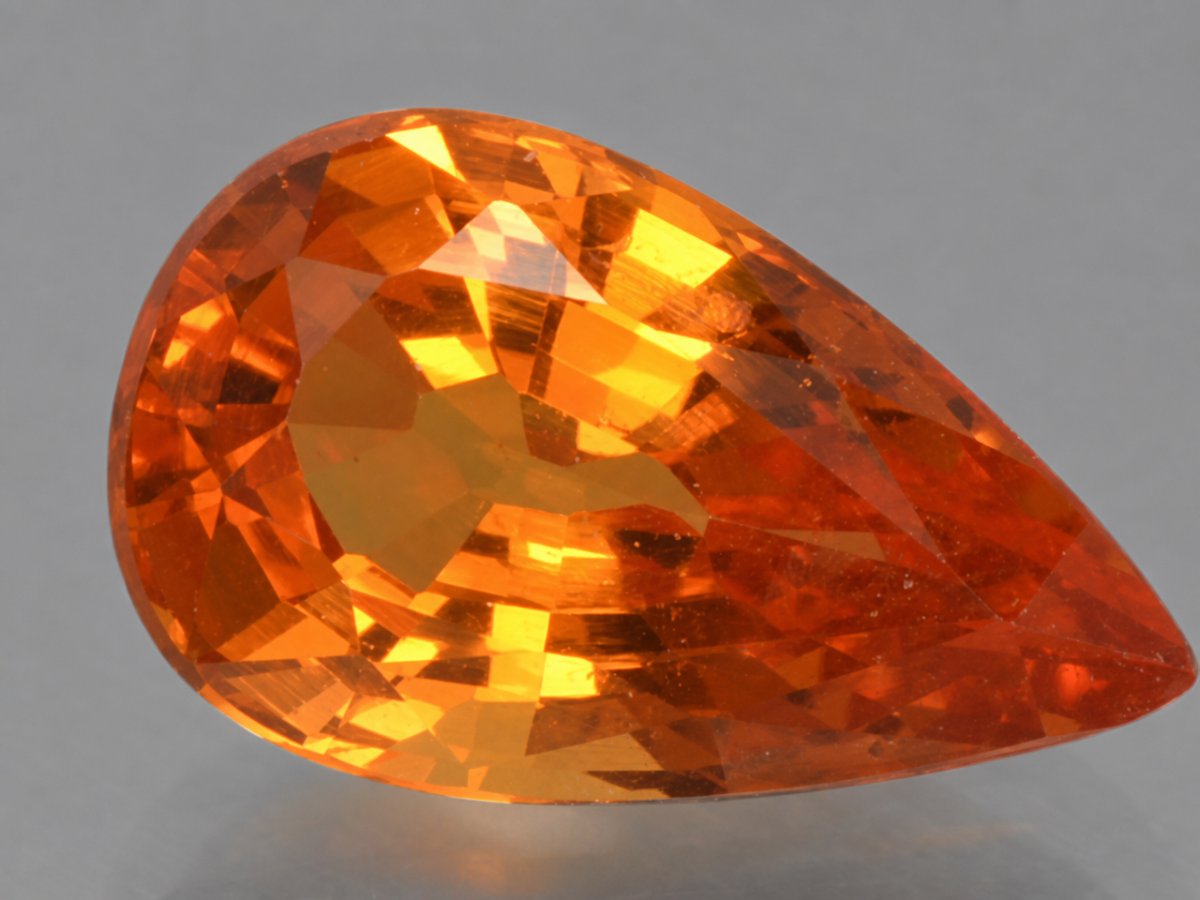


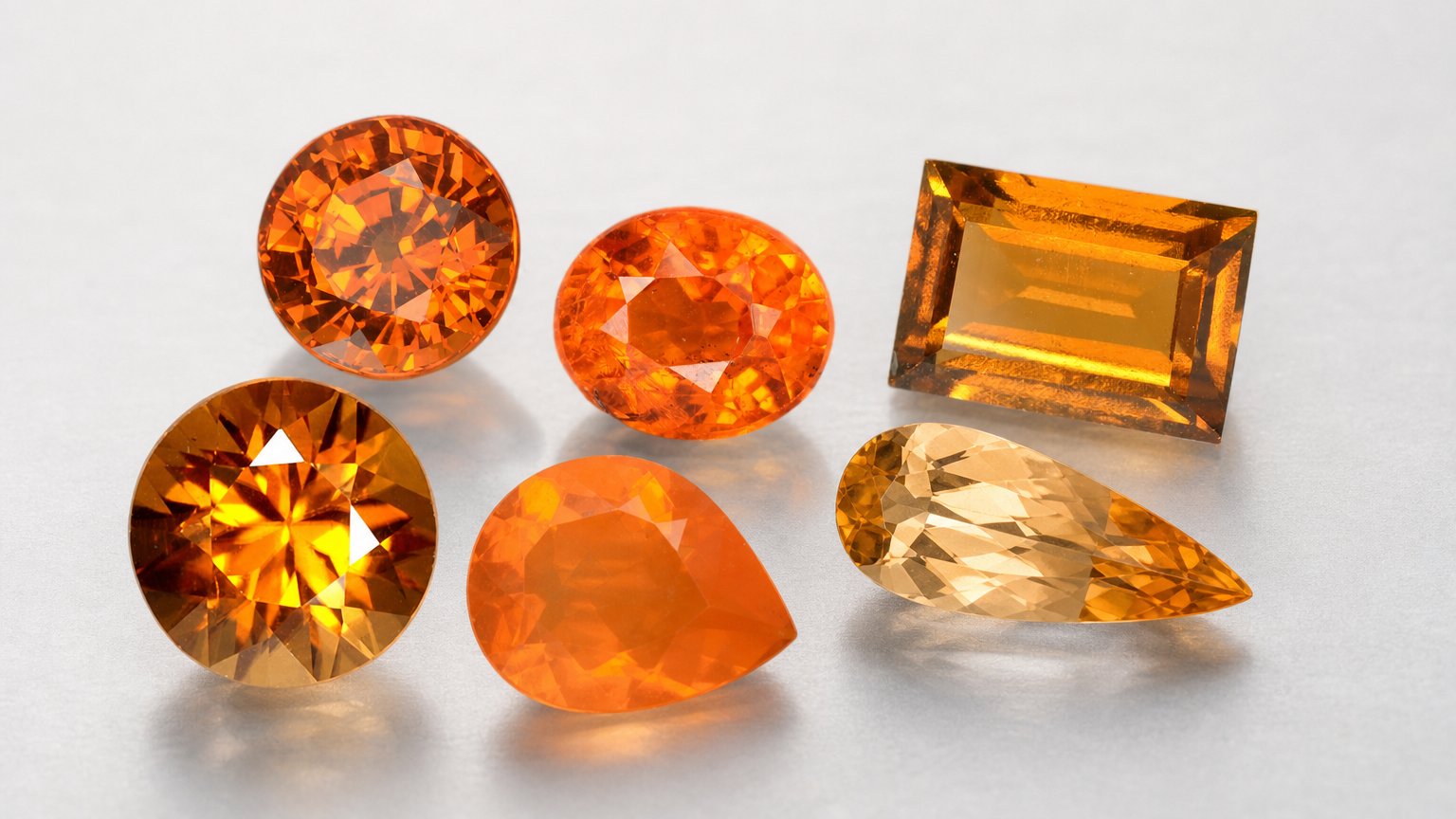
Orange gemstones bring warmth, individuality and strong color presence to engagement rings. The best choice depends on how the ring will be worn, the exact shade of orange you want and how much care you are willing to give the stone. For frequent wear, orange sapphire is one of the strongest options. For vivid mandarin color and lively brilliance, spessartite garnet is a favorite. For exceptional sparkle, orange zircon is hard to ignore, while fire opal offers a completely different glowing orange look for more careful wearers.
This guide focuses on natural loose orange gemstones that are realistic candidates for engagement rings and explains how to compare them by color, durability, sparkle, setting style, treatment disclosure and visual size.
Understanding Orange Gemstone Color
Orange is not a single color. In gemstones it may appear as pale peach, peach-orange, yellowish orange, golden orange, pure vivid orange, mandarin orange, pumpkin orange, reddish orange, cinnamon orange, brownish orange or pinkish orange. Many orange gems sit between neighboring color families, especially yellow, red, pink and brown.
Three color factors matter when choosing an engagement-ring gemstone:
- Hue: the basic color direction, such as yellowish orange, reddish orange or pinkish orange.
- Tone: how light or dark the stone appears. Pale peach gems look delicate, while deeper pumpkin or cinnamon tones appear richer and more autumnal.
- Saturation: the strength or purity of color. A vivid orange stone will stand out strongly, while brownish or grayish modifiers create a softer or earthier look.
Always compare individual gemstone photos rather than relying only on a variety name. Two orange sapphires, garnets or tourmalines can look noticeably different side by side.
Durability: Mohs Hardness Is Only Part of the Story
The Mohs scale measures resistance to scratching. This is important for engagement rings because rings contact desks, handles, jewelry boxes and other hard surfaces during daily life. However, hardness is not the only durability factor. Toughness, cleavage, brittleness, abrasion resistance and vulnerability to impact also matter.
A gemstone can be quite hard but still require protection if it has cleavage, as with topaz. Another gemstone may be brilliant but more prone to facet-edge wear or chipping, as can be the case with zircon. For active daily wear, setting design and care habits are just as important as the gemstone species.
Comparison of Natural Orange Gemstones for Engagement Rings
| Gemstone | Typical Orange Color Range | Mohs Hardness | Everyday-Wear Suitability | Brilliance / Sparkle | Relative Value and Size Notes | Treatment and Setting Notes |
|---|---|---|---|---|---|---|
| Orange Sapphire | Yellowish orange, golden orange, vivid orange, reddish orange | 9 | Excellent choice for frequent wear | Good to very good, depending on cut | Often available in ring-friendly sizes; fine vivid stones can be more costly | Heat treatment and diffusion treatment may be encountered; check disclosure. Works in most ring settings. |
| Padparadscha Sapphire | Pink-orange to orange-pink | 9 | Excellent physically, but requires careful buying | Good to very good | Valuable stones should be evaluated individually; larger fine examples may command significant premiums | The name is not for any orange sapphire. Laboratory reports, origin and treatment disclosure are especially important for valuable stones. |
| Spessartite Garnet | Mandarin orange, vivid orange, reddish orange, deeper orange | About 7 to 7.5 | Good with sensible care; less scratch-resistant than sapphire | Very attractive brilliance | Can offer strong color and presence; fine mandarin stones are valued individually | No cleavage is a useful ring advantage. Protective prongs or halo settings are sensible for daily wear. |
| Hessonite Garnet | Cinnamon, honey-orange, brownish orange, reddish orange | About 6.5 to 7.5 | Moderate to good with care | Warm glow; often less electric than spessartite | Useful for warm vintage or earthy designs | Best protected from abrasion and heavy knocks, especially in raised rings. |
| Orange Zircon | Golden orange, reddish orange, brownish orange | About 6 to 7.5 | Beautiful but care-intensive for engagement rings | Excellent; strong dispersion and lively fire | Can deliver impressive sparkle and face-up impact | More brittle than many ring stones; consider protective settings and avoid hard impacts. |
| Imperial Topaz / Orange Topaz | Golden orange, peach-orange, reddish orange | 8 | Good scratch resistance, but impact care is important | Good when well cut | Appealing in larger sizes when suitable stones are available | Topaz has perfect cleavage; protect from sharp blows. Verify color origin and treatment disclosure. |
| Orange Tourmaline | Peach, yellowish orange, brownish orange, reddish orange | 7 to 7.5 | Moderate to good with appropriate care | Good, often with attractive color depth | Less common in strong orange; compare individual stones closely | Works well in protected prong, halo or bezel-influenced designs. |
| Fire Opal | Yellow-orange to intense pure orange or reddish orange | About 5 to 6.5 | Care-intensive; not ideal for hard daily wear | May be transparent, translucent or opaque; not all fire opal has play-of-color | Chosen for glowing body color rather than maximum durability | Best in protective settings and for wearers who accept extra care. |
| Carnelian | Translucent to opaque orange, reddish orange, brownish orange | About 6.5 to 7 | More care-intensive for engagement rings | Waxy to glassy luster rather than high sparkle | Useful for bold cabochon or signet-style designs | Often cut as cabochons; confirm treatment if important, as color enhancement may occur. |
Orange Sapphire: The Strongest Frequent-Wear Choice
Orange sapphire is a variety of corundum, the same mineral family as blue sapphire and ruby. With a Mohs hardness of 9, sapphire is highly resistant to scratching, making it one of the most practical natural colored gemstones for an engagement ring worn often.
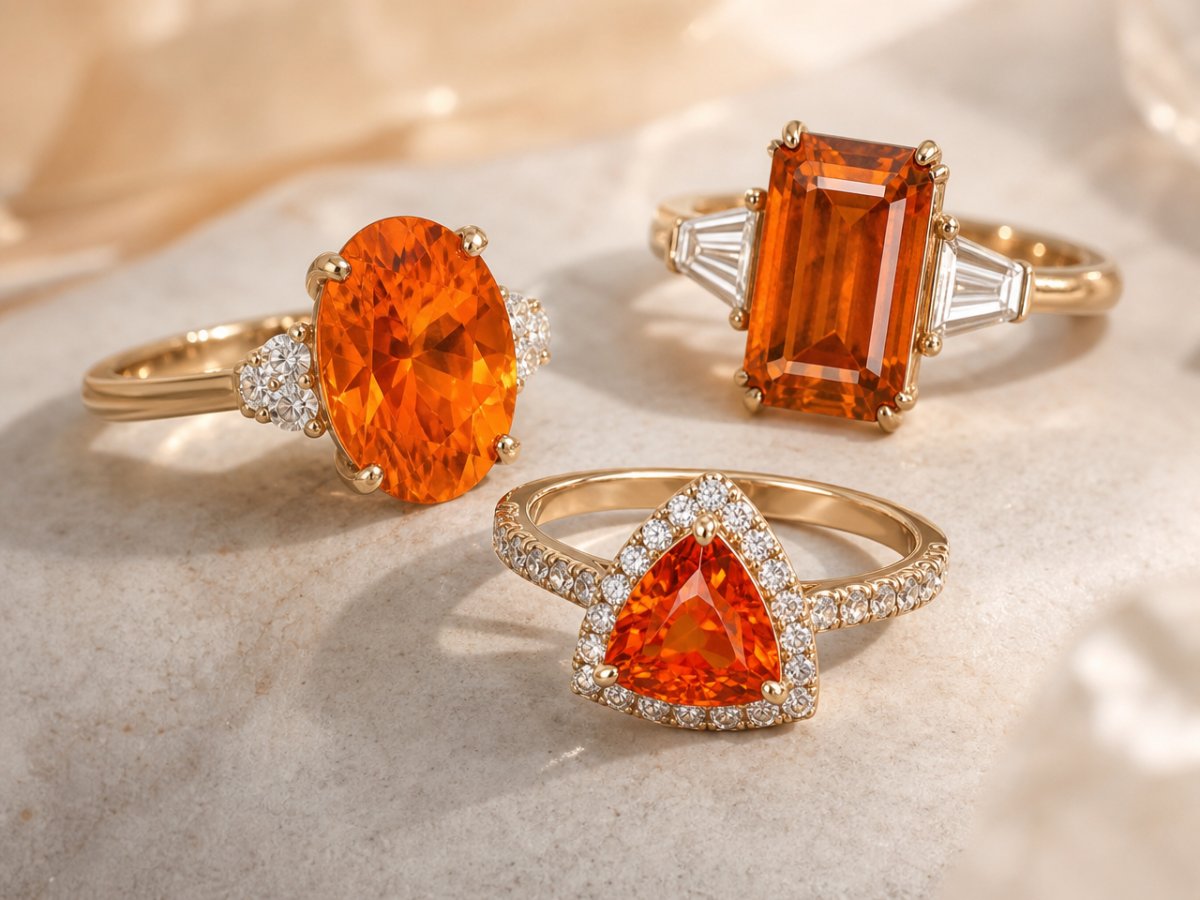
Orange sapphire can range from yellowish orange and golden orange to vivid orange or reddish orange. This range makes it suitable for many design directions: sunny yellow-gold solitaires, modern platinum halos, autumnal three-stone rings and warm rose-gold settings.
For buying, color and treatment disclosure are especially important. Many sapphires are heat treated, and orange or yellow-orange sapphire may also be associated with diffusion treatment in the market. Treatment does not automatically make a stone unsuitable, but it should be clearly disclosed and reflected in the purchasing decision. For a valuable stone, a laboratory report can add confidence.
Padparadscha Sapphire: Pink-Orange, Not Simply Orange
Padparadscha sapphire belongs in this discussion because many stones described this way sit in the pink-orange to orange-pink spectrum. However, padparadscha is not a name for any orange sapphire. It is associated with a distinctive combination of pink and orange, and exact boundaries can vary by seller, market and laboratory opinion.
Because the term can carry a premium, buyers should be cautious with valuable stones sold as padparadscha. Compare the actual color carefully, check treatment disclosure and consider an independent laboratory report. Provenance may also matter for higher-value stones, but color, transparency, cut and treatment remain central buying factors.
Spessartite Garnet: Vivid Orange and Lively Brilliance
Spessartite garnet, also called spessartine, is one of the most important natural orange gemstones for engagement rings. Its color can include bright mandarin orange, vivid pure orange, reddish orange and deeper orange tones. Well-cut stones can be very lively, making spessartite appealing for buyers who want strong color and sparkle rather than a traditional diamond-like look.
Spessartite garnet has no cleavage, which is helpful for rings, and its hardness is generally around 7 to 7.5. It is suitable for many engagement-ring designs with sensible care, although sapphire offers greater scratch resistance. For someone who loves mandarin orange, spessartite is often the first gemstone to compare against orange sapphire.
Spessartite vs Hessonite Garnet
"Orange garnet" can refer to very different-looking gemstones. Spessartite is often brighter and more electric, especially in mandarin or vivid orange examples. Hessonite garnet, a variety of grossular garnet, usually has a warmer cinnamon, honey-orange, brownish-orange or reddish-orange appearance. Hessonite can have a distinctive mellow glow and is especially attractive in vintage-inspired or earthy ring designs.
Choose spessartite if you want a cleaner, brighter orange statement. Choose hessonite if you prefer warm, spicy, antique or autumnal color character.
Orange Zircon: Exceptional Sparkle with Extra Care
Natural zircon is known for high brilliance and strong dispersion, the optical effect that creates flashes of spectral fire. Orange zircon can be a striking center stone for someone who wants sparkle and a lively appearance in a natural gemstone.
The trade-off is care. Zircon can be brittle compared with tougher ring stones, and facet edges may show wear over time if the ring is worn hard. It is best suited to wearers who remove their ring during manual activity and choose protective settings such as halos, low-profile prong settings or partial bezels.
Imperial Topaz and Orange Topaz
Imperial topaz and naturally orange topaz can show golden-orange, peach-orange and reddish-orange colors that are very attractive in engagement rings. Topaz has a Mohs hardness of 8, so it resists scratching reasonably well, but it also has perfect cleavage. That means a sharp blow in the wrong direction can split or damage the stone.
Topaz can be a beautiful ring gemstone when set and worn thoughtfully. Avoid exposed high settings for active wear, and protect corners on elongated shapes. Because topaz color may be natural or treatment-related depending on the individual stone, buyers should check the treatment disclosure carefully.
Orange Tourmaline, Fire Opal and Carnelian
Orange tourmaline is less common than many better-known orange gems and may lean peach, yellowish orange, brownish orange or reddish orange. With hardness around 7 to 7.5, it can work in engagement rings with appropriate care, especially in designs that protect the stone from hard knocks.
Fire opal is visually distinctive because of its intense orange body color. It may be transparent, translucent or opaque, and it does not necessarily display play-of-color. It is much more care-intensive than sapphire, garnet or many other conventional engagement-ring gemstones. Fire opal is best for buyers who value its glowing color and understand that the ring may need gentler, less constant wear.
Carnelian is a translucent to opaque orange chalcedony often used in cabochons, signet-style rings and bold vintage-inspired designs. It is not a high-sparkle transparent center stone, but it can offer strong orange color and a distinctive design personality. For an engagement ring, it should be treated as a more care-intensive choice than sapphire or garnet.
Orange Sapphire vs Spessartite Garnet
Orange sapphire and spessartite garnet are two of the most practical orange center-stone choices, but they appeal to different priorities.
- Color: orange sapphire can show yellowish orange, golden orange, vivid orange and reddish orange. Spessartite is especially associated with bright mandarin orange and lively reddish-orange tones.
- Durability: sapphire is harder at Mohs 9 and is the stronger choice for maximum everyday scratch resistance. Spessartite has no cleavage and is ring-suitable, but it is less scratch-resistant.
- Brilliance: both can be attractive, but spessartite often has a lively, glowing brilliance that many buyers love. Sapphire can be very bright when well cut, with durability as its main advantage.
- Rarity and value: fine examples of either can be valuable. Compare individual stones by color quality, cut, clarity, size and treatment rather than assuming one variety is always less expensive.
- Treatments: sapphire treatments are important to check, especially heat and diffusion disclosure. Garnets are commonly valued for natural color, but treatment disclosure should still be reviewed for the specific stone.
- Size availability: both can be found in engagement-ring sizes, but face-up dimensions vary by cut and stone depth. Compare millimeter size, not carat weight alone.
Choose orange sapphire if daily durability is the top priority. Choose spessartite garnet if vivid mandarin color and lively orange brilliance are more important and you are comfortable with normal colored-stone care.
Cut, Clarity and Visual Size
Cut strongly affects the appearance of transparent orange gemstones. Brilliant-style cuts, including rounds, ovals, cushions and pears with many facets, can emphasize sparkle. Step cuts, such as emerald cuts, may emphasize color, clarity and geometric form. Neither approach is universally better; the right cut depends on the gemstone, the color depth and the ring design.
Clarity expectations differ by gemstone species and variety. For many buyers, an eye-clean appearance, pleasing transparency, attractive color and balanced cut are more useful than searching for technically flawless material. Some inclusions may be acceptable if they do not weaken the stone or distract from its beauty.
Carat weight should not be compared directly across sapphire, garnet, zircon, topaz, tourmaline, opal and carnelian. Each has different specific gravity, and each cut has different depth and proportions. A one-carat sapphire and a one-carat zircon may not face up the same size. When selecting a loose gemstone for a ring setting, compare the actual millimeter dimensions as well as carat weight.
Settings and Metal Colors for Orange Engagement Rings
Orange gemstones respond strongly to their surroundings. The same stone can appear warmer, cooler, more saturated or more contrasted depending on metal color and accent stones.
- Yellow gold: emphasizes golden, honey, pumpkin and autumnal tones. It is especially flattering for yellowish orange sapphire, hessonite, golden zircon and imperial topaz.
- Rose gold: complements peach, pinkish-orange and reddish-orange gemstones. It can soften the look of padparadscha sapphire, peach tourmaline or reddish-orange garnet.
- White gold and platinum: create stronger contrast and a cleaner contemporary look. Vivid orange sapphire, mandarin garnet and fire opal can stand out dramatically against white metal.
Colorless diamonds or colorless gemstones used as accents can increase contrast and make a vivid orange center stone appear stronger. Halo settings are useful for adding sparkle and perceived size, while three-stone rings can balance an orange center with white or complementary side stones.
Solitaire settings keep the focus on the center stone and work particularly well with durable choices such as sapphire. Bezel settings add protection, especially for zircon, topaz, opal and softer or more brittle stones. Vintage-inspired designs suit hessonite, carnelian, imperial topaz and warm garnets. Cluster designs can use smaller orange gemstones creatively, but the setting should still protect exposed corners and edges.
Which Orange Gemstone Is Best for an Engagement Ring?
There is no universal winner. The best orange gemstone depends on the wearer and the design goal:
- Maximum everyday durability: orange sapphire or padparadscha sapphire.
- Vivid orange color: orange sapphire or spessartite garnet.
- Mandarin orange: spessartite garnet.
- Peach or pinkish-orange: padparadscha sapphire, peach-orange sapphire, orange tourmaline or imperial topaz.
- High brilliance and fire: orange zircon, with extra care; spessartite garnet is also a lively option.
- Larger visual presence for the budget: compare individual garnet, topaz, tourmaline, zircon and opal options by millimeter size and price.
- Warm cinnamon or honey tones: hessonite garnet or golden-orange topaz.
- Unusual or distinctive choice: orange tourmaline, fire opal or carnelian, depending on the desired look and care level.
GemSelect shoppers can compare loose gemstones by actual photographs, dimensions, color, cut, clarity, treatment disclosure and price. This is more reliable than choosing only by variety name or carat weight.
Orange Gemstones That Require More Care
If the ring will be worn every day through work, travel and household activity, sapphire is the safest orange gemstone choice in this group. Spessartite garnet is also realistic for many rings with sensible care.
Zircon, topaz and opal require more caution. Zircon is brilliant but can be brittle and may show facet-edge wear. Topaz is hard but has perfect cleavage, so impacts are a concern. Fire opal is significantly softer and more vulnerable than sapphire or garnet, so it should be chosen only by someone prepared for careful wear. Carnelian is durable enough for many jewelry styles but is usually better suited to protected, lower-profile or occasional-wear engagement designs than to hard daily wear.
Final Buying Advice
Start with the color you truly want, then match that color to the right durability level and setting. For a ring intended for constant wear, orange sapphire offers the best combination of orange color and practical toughness. For vivid mandarin personality, spessartite garnet is a compelling alternative. For maximum sparkle, orange zircon is beautiful but needs protection. For glowing color rather than conventional durability, fire opal and carnelian can create memorable rings when chosen with realistic expectations.
Before buying, review photos, millimeter dimensions, cut, clarity, treatment disclosure and return terms for the individual loose gemstone. In colored gemstones, the best engagement-ring choice is rarely just the hardest stone or the largest carat weight; it is the stone that fits the wearer, the setting and the intended level of everyday use.