


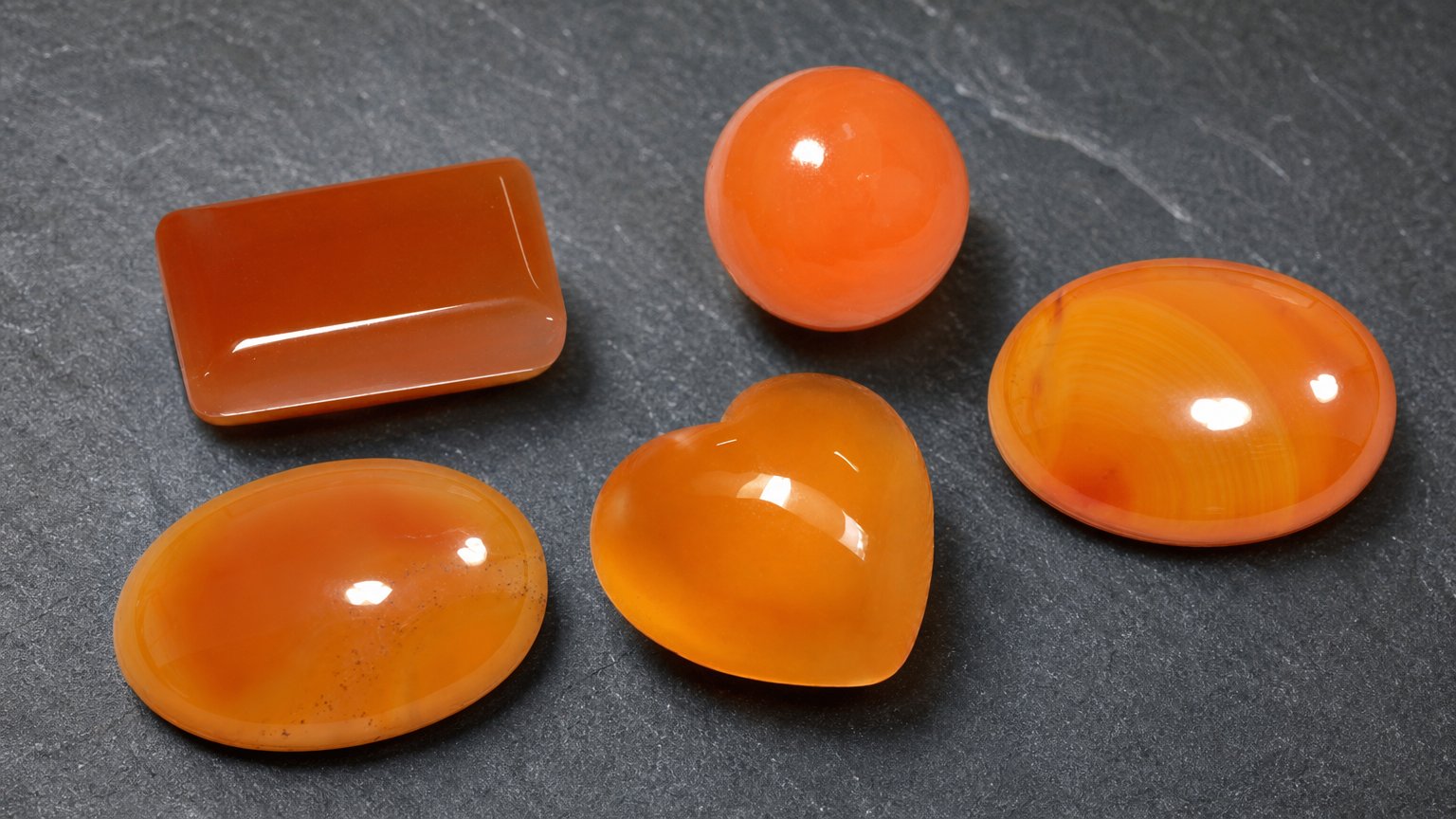
Orange Agate is an appealing choice for buyers who want a warm orange gemstone with practical durability and versatile jewelry use. It is a variety of agate, which belongs to the quartz family, and is most often selected for its color, polished surface and decorative character rather than for brilliance.
For most buyers, the key decisions are straightforward: choose the shade of orange you like, check whether the stone has been dyed or otherwise treated, select a cut and size that suit the jewelry design, and make sure the surface and polish meet your expectations.
What Is Orange Agate?
Orange Agate is an orange variety of agate, a gemstone associated with quartz. Its chemical formula is SiO₂, and it has a trigonal crystal system. Like other quartz-family gemstones, it combines attractive appearance with useful wearability, making it suitable for many jewelry styles.
Orange Agate is commonly seen in polished forms, especially cabochons. The smooth domed surface of a cabochon works well for agate because it emphasizes body color, surface polish and the natural decorative look of the material.
Color and Appearance: What to Look For
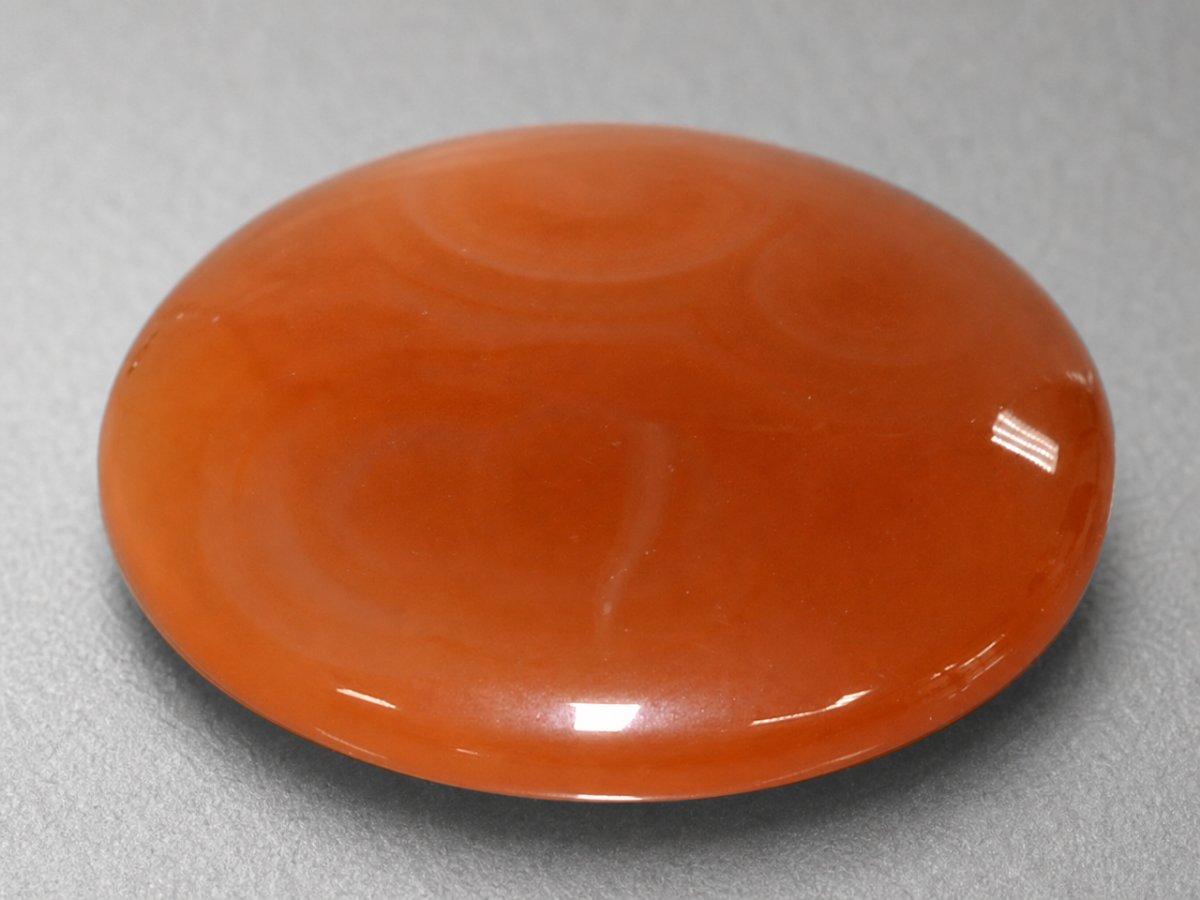
Color is the most important visual factor when buying Orange Agate. The expected body color is orange, but individual stones can vary in depth, brightness and distribution of color. Some buyers prefer a rich, saturated orange, while others prefer a softer or more translucent-looking appearance.
When comparing stones, look at the gem in the type of lighting where it will be worn. Orange gems can appear warmer in indoor light and different in daylight. If you are buying for a matching pair of earrings, a multi-stone necklace or a calibrated jewelry layout, compare stones side by side for similar color and tone.
Surface condition is also important. A well-finished Orange Agate should have a clean polish, pleasing outline and no obvious chips, scratches or distracting surface-reaching fractures. Because agate is often valued for its decorative appearance, choose the stone that looks attractive to you rather than relying on a formal grading scale.
Common Cuts and Shapes
Cabochons are the most common and practical cut for Orange Agate. A cabochon has a rounded, polished top and a flat or slightly curved base, making it ideal for rings, pendants and brooches. When inspecting a cabochon, check that the dome is even, the outline is balanced and the polish is smooth.
Checkerboard cuts and sugarloaf cabochons are also seen. A checkerboard cut adds a patterned faceted surface that can give the gem a livelier look, while a sugarloaf cabochon has a higher, more geometric dome. Faceted Orange Agate is less typical, but it may suit designs that call for a more angular or reflective style.
Oval and round shapes are especially common and easy to use in jewelry. Cushion and pear shapes are also practical options, particularly for pendants and statement rings. Square, baguette and trillion shapes may be chosen for more geometric designs or custom jewelry layouts.
Treatments: A Key Buying Consideration
Treatment disclosure is one of the most important points when buying Orange Agate. Dyed Orange Agate is common, and heat treatment and untreated material may also be encountered. These treatments can affect how buyers evaluate the stone and how they compare one gem with another.
Dyed gemstones are widely used in jewelry, but they should be represented accurately. If treatment status matters to you, check the product description carefully and ask the seller for confirmation before purchase. At GemSelect, treatment information is provided where applicable so buyers can make informed choices.
There is no need to avoid treated Orange Agate if the color, price and disclosure meet your expectations. The most important issue is transparency: a dyed stone and an untreated stone should not be considered the same buying proposition unless the treatment has been clearly stated.
Durability and Jewelry Suitability
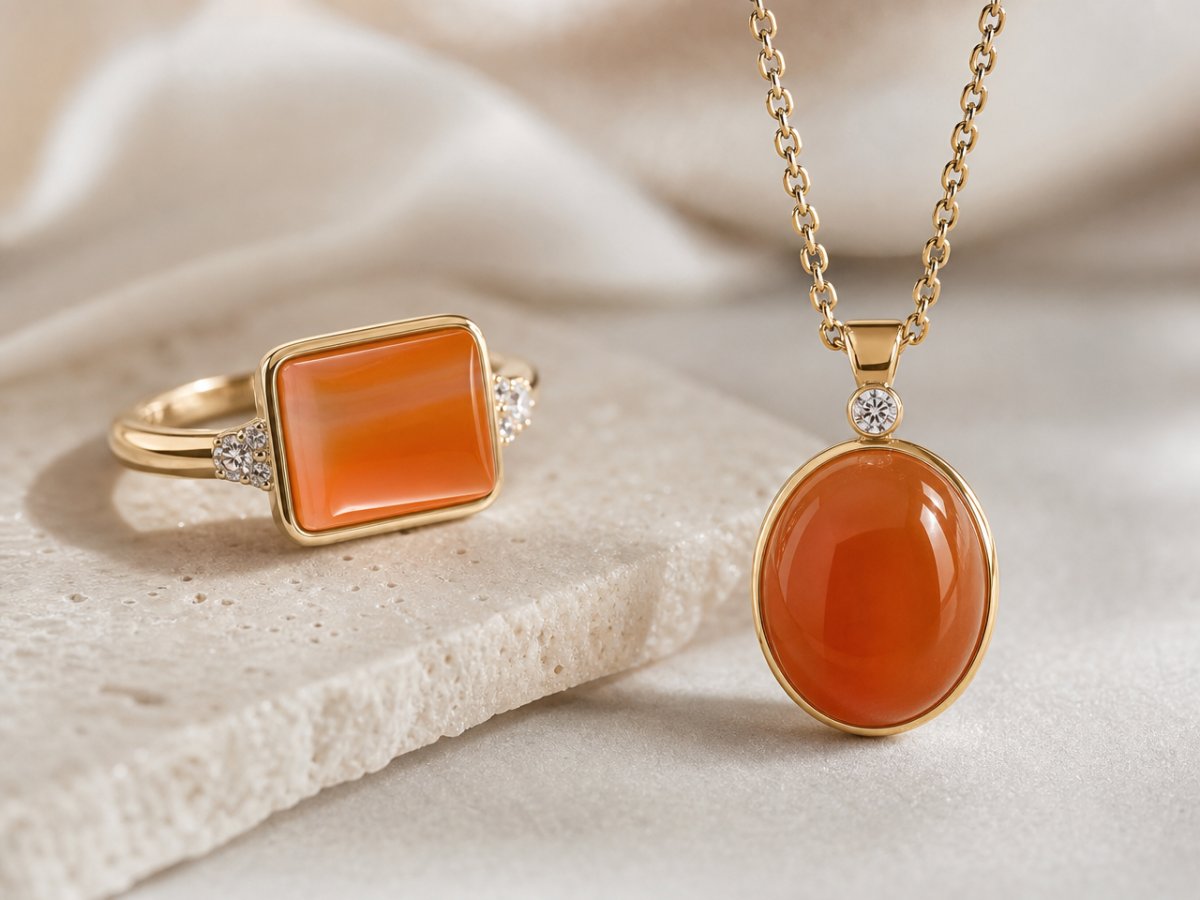
Orange Agate has a Mohs hardness of 6.5 to 7. This gives it good general durability for many jewelry uses, including pendants, earrings, necklaces, brooches and cufflinks. It is also suitable for rings, but rings receive more knocks and abrasion than most other jewelry, so setting style and wear habits matter.
For rings, consider a protective setting if the gem will be worn often. Bezel settings or designs that do not leave the edges overly exposed can help reduce the risk of accidental chipping. Pendants and earrings are lower-impact choices and are excellent uses for attractive cabochons or larger decorative stones.
For care, clean Orange Agate with mild soap, water and a soft cloth. Avoid abrasive cleaning methods and protect the stone from hard knocks. If the stone is dyed or otherwise treated, cautious cleaning is especially sensible.
Origins: India and Brazil
Orange Agate is associated with important sources including India and Brazil. Origin can be interesting for collectors and buyers who prefer gemstones from known producing countries, but it should not be the only factor in selection.
For most jewelry buyers, appearance, treatment disclosure, cut quality and suitability for the intended design are more important than origin alone. Two stones from the same country can still differ noticeably in color, finish and overall appeal.
Gemological Properties
The following properties are useful for gem identification and for understanding Orange Agate as a quartz-family gemstone:
- Gem family: Agate, associated with quartz
- Chemical formula: SiO₂
- Crystal system: Trigonal
- Mohs hardness: 6.5-7
- Refractive index: 1.530-1.540
- Specific gravity: 2.58-2.64
For everyday buyers, hardness and treatment status are usually the most practical properties. Refractive index and specific gravity are more relevant to gemologists, appraisers and identification work.
How to Choose Orange Agate: Practical Buying Checklist
1. Start with the color
Choose an orange tone that fits your design or personal taste. For matched jewelry, prioritize consistent color across all stones.
2. Check treatment disclosure
Because dyed Orange Agate is common, confirm whether the stone is dyed, heat treated or untreated. Clear disclosure helps you compare options fairly.
3. Inspect the cut and polish
For cabochons, look for an even dome, symmetrical outline and smooth polish. For checkerboard or faceted styles, check that the pattern or facets are well aligned and not visibly uneven.
4. Match the shape to the jewelry
Oval and round stones are versatile for rings and pendants. Pear and cushion shapes are excellent for more distinctive designs, while geometric shapes such as square, baguette or trillion can suit modern jewelry.
5. Consider wear and setting
For pendants, earrings and necklaces, Orange Agate is a practical choice. For rings, choose a setting that gives the stone reasonable protection, especially if it will be worn frequently.
6. Buy from a seller with clear information
Reliable product details should include size, shape, cut, treatment information and, when available, origin. Clear photos and accurate descriptions are especially helpful when choosing color-based gemstones such as Orange Agate.
Summary
Orange Agate is a versatile quartz-family gemstone best chosen by color, cut quality, treatment disclosure and intended jewelry use. Cabochons are the classic choice, especially in oval and round shapes, while checkerboard and sugarloaf styles offer a different look. For confident buying, focus on the appearance you prefer, confirm whether the stone has been dyed or treated, and choose a setting appropriate for how the jewelry will be worn.
