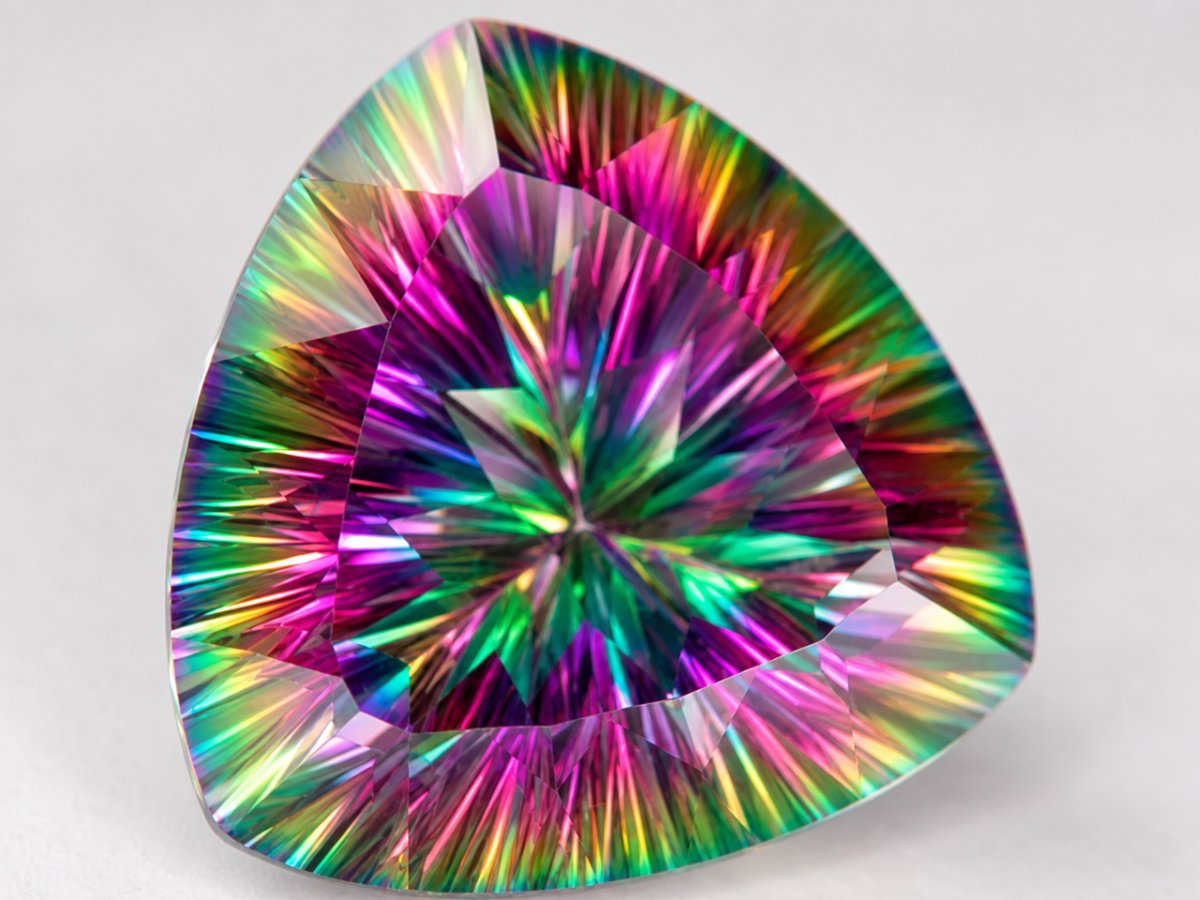


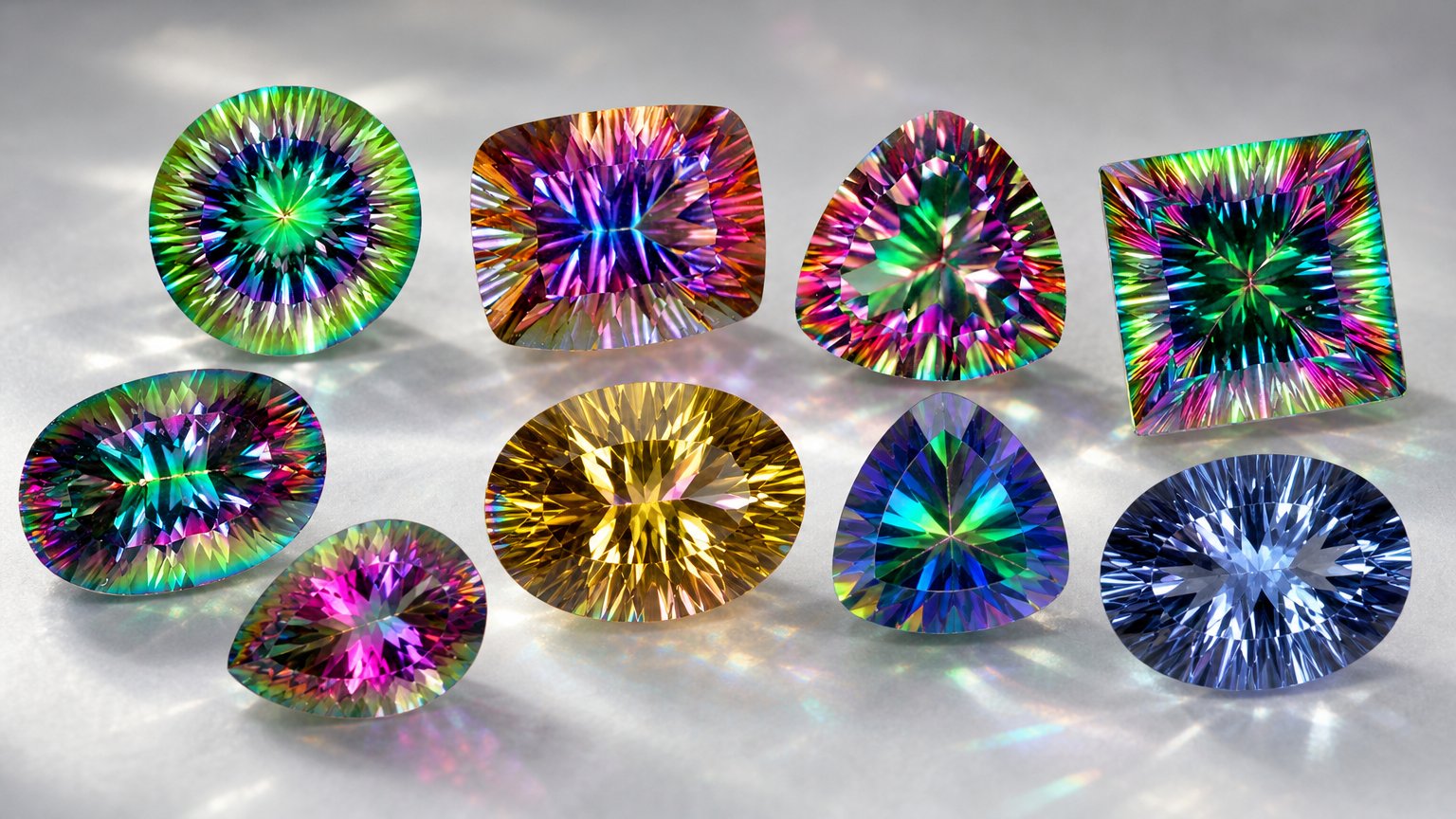
Mystic Quartz is chosen for its lively multicolor appearance and the practical familiarity of quartz. For buyers, the most important point to understand is that Mystic Quartz is quartz with a coated treatment that creates its distinctive play of blue, green, pink, purple and red tones. This makes it visually striking, especially in faceted gems, but it also means the surface condition and care requirements deserve close attention before purchase.
This buying guide explains what to look for when comparing Mystic Quartz gemstones, including color, clarity, cut, shape, durability, treatment disclosure, origin and jewelry suitability. Whether you are choosing a single gemstone for a pendant, matching stones for earrings, or a bright center stone for a fashion ring, the goal is to help you buy with confidence and realistic expectations.
What Is Mystic Quartz?
Mystic Quartz is a variety of quartz. Its gemological identity is quartz, with the chemical formula SiO₂ and a trigonal crystal system. What distinguishes Mystic Quartz in the marketplace is its coated treatment, which gives the gem its characteristic multicolor appearance.
Unlike a naturally single-color quartz gemstone, Mystic Quartz is appreciated for color movement and surface brilliance. The colors can appear as a mix of blue and green, often with flashes of pink, purple or red depending on the individual stone, the cutting style and the viewing angle. This makes each gem visually dynamic and well suited to jewelry designs that need strong color without relying on a single hue.
For buyers, the key distinction is simple: you are purchasing a quartz gemstone with an added coating that affects its appearance. That treatment is central to the gem’s look, so it should be understood as part of the buying decision rather than treated as a minor detail.
Color and Appearance: What Buyers Should Look For
Color is the main reason most buyers choose Mystic Quartz. The most typical appearance is multicolor, with blue and green often being prominent. Pink, purple and red flashes may also appear, adding contrast and depth. Because the gem is not judged by a single body color in the way many traditional gemstones are, buyers should focus on the overall visual effect.
Look for balanced multicolor appeal
A good buying approach is to view the gemstone as a design element. Ask whether the colors work well together, whether the dominant tones suit the jewelry project, and whether the flashes appear attractive from multiple angles. Some stones may lean more blue-green, while others show more pink, purple or red highlights. Neither is automatically better; the best choice depends on personal taste and jewelry style.
Consider lighting and viewing angle
Like many faceted gemstones, Mystic Quartz can look different under different lighting conditions. The coated surface and faceted structure can make color appear stronger, softer or more mixed as the stone is moved. When possible, examine photos or videos carefully, or view the gem under more than one lighting condition. For online buying, choose sellers who provide clear images and accurate descriptions.
Check the surface, not only the color
Because Mystic Quartz is coated, surface condition is especially important. Look for a clean, attractive face-up appearance and avoid stones with obvious abrasions, scratches, chips or worn-looking areas. Minor internal features may be less important than the overall surface appearance, because the visual appeal of Mystic Quartz depends strongly on the finish and coating.
Clarity and Transparency
The supplied gemological identity of Mystic Quartz is quartz, and quartz gems are commonly appreciated for their ability to take a bright polish and show attractive brilliance when faceted. For buying purposes, focus on whether the stone looks clean and appealing to the unaided eye. Avoid being distracted by technical clarity language if the gem is intended for normal jewelry wear rather than laboratory comparison.
When evaluating clarity, inspect the gemstone face-up first, as it will appear in jewelry. Then look more closely for issues that affect beauty or durability, such as chips along edges, scratches on the surface, damage near points or corners, or uneven-looking areas of coating. A gem does not need to be completely free from every tiny feature to be attractive, but visible flaws that interrupt the multicolor effect can reduce its suitability for a prominent setting.
Cut Styles and Shapes
Cut has a major effect on the appearance of Mystic Quartz. Faceted cuts are especially common and are well suited to showing brightness, color flashes and the contrast between different tones. A well-executed facet pattern can make the gem look crisp and lively, while poor cutting may make it appear dull or uneven.
Faceted Mystic Quartz
Faceted Mystic Quartz is the most important cut style for buyers to understand. Facets act like small mirrors, reflecting light through the gemstone and across the coated surface. This can enhance the multicolor effect, especially in stones with good symmetry, a clean polish and pleasing proportions.
When comparing faceted stones, look for even outline shape, well-aligned facets and an attractive face-up view. The gemstone should not look overly deep, overly shallow or visually unbalanced. Practical buyers should also consider whether the shape will fit standard jewelry settings or require a custom design.
Checkerboard and concave cuts
Checkerboard cuts and concave cuts are also seen in Mystic Quartz. A checkerboard cut can create a tiled, reflective surface that emphasizes flashes of color. Concave cutting uses curved facets, which can produce a distinctive light pattern. These cuts may appeal to designers and collectors who want something more unusual than a standard faceted gem.
With decorative cut styles, inspect the precision of the cutting and the condition of the facet junctions. The beauty of these cuts depends on crisp workmanship and an undamaged surface.
Popular shapes
Oval and round shapes are especially common choices for Mystic Quartz. Both are versatile for rings, pendants and earrings, and they allow the multicolor appearance to be seen easily. Cushion, octagon and pear shapes are also attractive options, offering different design moods: cushion shapes feel softer, octagons can look more structured, and pears are useful for drops and pendants.
Other shapes such as baguette, heart, marquise and trillion may be selected for more specific design needs. When choosing a shape, think about the final jewelry piece first. A round or oval gem may be easier to use in classic settings, while a pear, marquise or trillion may require more careful setting design to protect pointed ends.
Size Considerations
Mystic Quartz can be selected in sizes appropriate for many jewelry designs, but the right size depends on how the gemstone will be worn. A pendant can often accommodate a larger focal stone, while earrings usually benefit from comfortable size and weight. Rings require a balance between visibility and everyday practicality, especially if the gem will sit high above the finger.
When choosing size, consider the visual spread of the stone rather than carat weight alone. Two gems of the same weight can look different in size depending on shape and cut proportions. For matched pairs or sets, compare dimensions, outline shape and color appearance, not just weight.
Gemological Properties
Understanding the basic gemological properties of Mystic Quartz helps buyers make practical decisions about durability, identification and jewelry use. The following properties describe Mystic Quartz as quartz:
| Property | Mystic Quartz |
|---|---|
| Gemstone family | Quartz |
| Chemical formula | SiO₂ |
| Crystal system | Trigonal |
| Mohs hardness | 7 |
| Refractive index | 1.544–1.553 |
| Specific gravity | 2.65 |
| Common treatment | Coated |
The Mohs hardness of 7 means quartz has good resistance to scratching compared with softer gem materials. However, hardness is not the same as toughness or resistance to all damage. Jewelry still needs sensible care, especially because Mystic Quartz has a coating that affects its appearance.
Durability and Everyday Wear
Mystic Quartz is durable enough for many types of jewelry, including pendants, rings, earrings and necklaces. Its Mohs hardness of 7 is useful for jewelry wear, but buyers should remember that the coated surface is the feature that gives Mystic Quartz its distinctive look. Protecting that surface is important.
Rings and fashion rings
Rings place gemstones in a more exposed position than pendants or earrings. If you choose Mystic Quartz for a ring, consider a setting that protects the edges and reduces direct impact. Fashion rings are a natural use for Mystic Quartz because the gem’s multicolor effect works well in bold, decorative designs. For frequent wear, avoid harsh contact, rough handling and abrasive cleaning.
Pendants, necklaces and earrings
Pendants and necklaces are excellent uses for Mystic Quartz because they allow the stone to be seen clearly while usually exposing it to less impact than a ring. Earrings are also a practical choice, especially when the stones are matched for size, shape and color balance. In all cases, choose secure settings and avoid storage conditions where gemstones can rub against each other.
Bracelets
Mystic Quartz can be used in bracelets, but bracelets generally receive more knocks and surface contact than earrings or pendants. If selecting Mystic Quartz for a bracelet, protective setting design and careful wear are especially important.
Treatments: Why Coating Disclosure Matters
The defining treatment for Mystic Quartz is coating. In gemstone buying, a coating is a surface-applied treatment that changes or enhances appearance. For Mystic Quartz, the coated treatment is responsible for the recognizable multicolor effect.
Treatment disclosure matters because it affects expectations and care. A coated gemstone should be handled with more surface awareness than an uncoated gem of the same mineral species. Buyers should avoid assuming that the color effect is the natural body color of quartz. Instead, evaluate the gem as a treated quartz gemstone whose beauty depends on both the underlying quartz and the condition of the coating.
Care for coated Mystic Quartz
Use gentle cleaning methods. A soft cloth and mild cleaning approach are preferable to abrasive materials. Avoid harsh chemicals, aggressive scrubbing and situations where the gemstone surface may be scraped. Store Mystic Quartz separately from harder gemstones and from jewelry pieces that could scratch or rub the surface.
Before buying, check that the seller clearly identifies the stone as Mystic Quartz and discloses the coated treatment. GemSelect listings and product details are useful places to review gemstone identity, size, shape and treatment information before making a selection.
Origins: What They Mean for Buyers
Mystic Quartz is associated with quartz sources including Brazil, Madagascar, China and India. Brazil is a particularly important origin in the supplied data, with Madagascar also notable, while China and India are additional associated origins.
For buyers, origin can be interesting, but it should not replace practical evaluation. Since Mystic Quartz is defined by quartz material and coating treatment, the most important purchase factors are appearance, cut quality, surface condition, size, shape and treatment disclosure. If origin information is provided, treat it as part of the gemstone description rather than the only measure of desirability.
Jewelry Uses and Design Advice
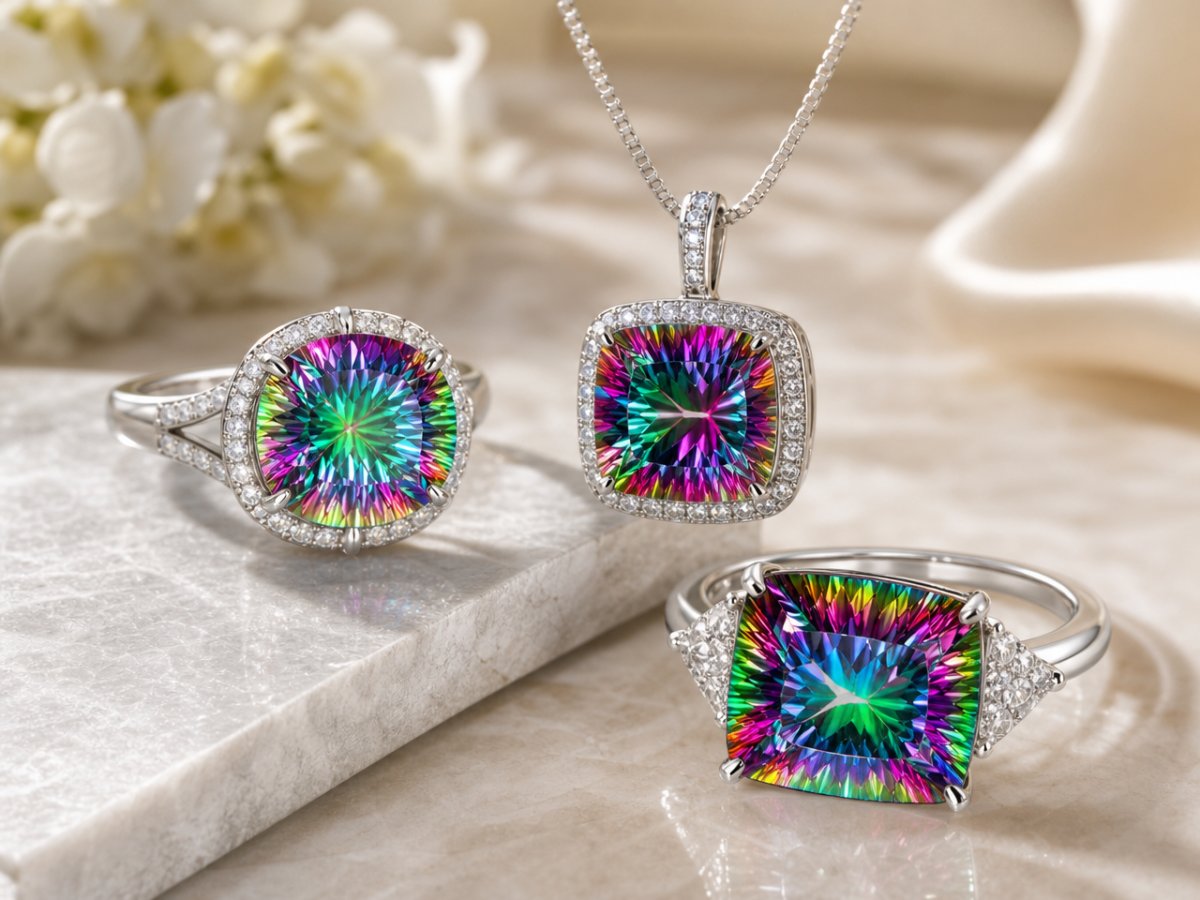
Mystic Quartz is well suited to jewelry designs where color is the focal point. Pendants and rings are especially common uses, and the gemstone also works well in earrings and necklaces. Bracelets and fashion rings can also be attractive choices when the design protects the stone and suits the intended wear.
Choosing Mystic Quartz for pendants
A pendant gives Mystic Quartz room to show its multicolor effect. Oval, pear, cushion and octagon shapes can all work well, depending on whether the design is classic, romantic, modern or geometric. Because pendants are less exposed to impact than rings, they are often a practical way to showcase a larger or more decorative cut stone.
Choosing Mystic Quartz for rings
For rings, prioritize setting security and protection. Round and oval stones are versatile, while cushion and octagon shapes can create a strong center-stone look. If choosing shapes with points, such as pear, marquise or trillion, make sure the setting protects vulnerable tips.
Choosing Mystic Quartz for earrings and matched sets
When buying Mystic Quartz for earrings, matching is important. Look for similar dimensions, shape, depth, color balance and overall brightness. Because each stone can show color differently, two gems of the same shape and weight may not look perfectly matched unless their face-up color effect is also similar.
Practical Mystic Quartz Buying Checklist
Use the following checklist when comparing Mystic Quartz gemstones:
- Color: Choose a multicolor appearance you personally like, whether it leans blue-green or shows stronger pink, purple or red flashes.
- Surface condition: Check for scratches, chips, abrasions or worn-looking areas, especially because Mystic Quartz is coated.
- Cut: Look for good symmetry, a bright face-up appearance and a cut style that supports the color effect.
- Shape: Match the shape to the jewelry design. Round and oval are versatile; pear, cushion, octagon and specialty shapes offer more distinctive looks.
- Size: Consider dimensions and visual spread, not only carat weight.
- Treatment disclosure: Confirm that the stone is described as coated Mystic Quartz.
- Jewelry use: Choose protective settings for rings and bracelets; pendants and earrings are often easier settings for display.
- Origin: Consider origin information if available, but prioritize appearance, condition and suitability for your jewelry project.
Common Buying Mistakes to Avoid
Ignoring the coating
The coated treatment is not a small detail; it is central to the appearance of Mystic Quartz. Buyers who understand this are better prepared to care for the gemstone properly and evaluate surface condition before purchase.
Choosing by color alone
Color is important, but cut quality, polish, outline shape and surface condition also affect beauty. A strongly colored stone with poor cutting or visible surface damage may be less satisfying than a better-cut stone with a more balanced color display.
Forgetting the final jewelry design
A gemstone that looks beautiful loose still needs to suit its setting. Consider whether the shape is practical, whether the size is comfortable, and whether the design protects the stone appropriately.
Summary
Mystic Quartz is a coated quartz gemstone known for a vivid multicolor appearance, commonly showing blue and green with possible pink, purple and red flashes. Its Mohs hardness of 7 makes it useful for many jewelry types, including pendants, rings, earrings and necklaces, but buyers should take special care to protect the coated surface.
The best Mystic Quartz purchase is not simply the brightest stone; it is the stone whose color, cut, shape, size and condition suit your jewelry project. Look for clear treatment disclosure, inspect the surface carefully, and choose a setting that matches how the piece will be worn. With these points in mind, Mystic Quartz can be a practical and eye-catching choice for colorful jewelry designs.