


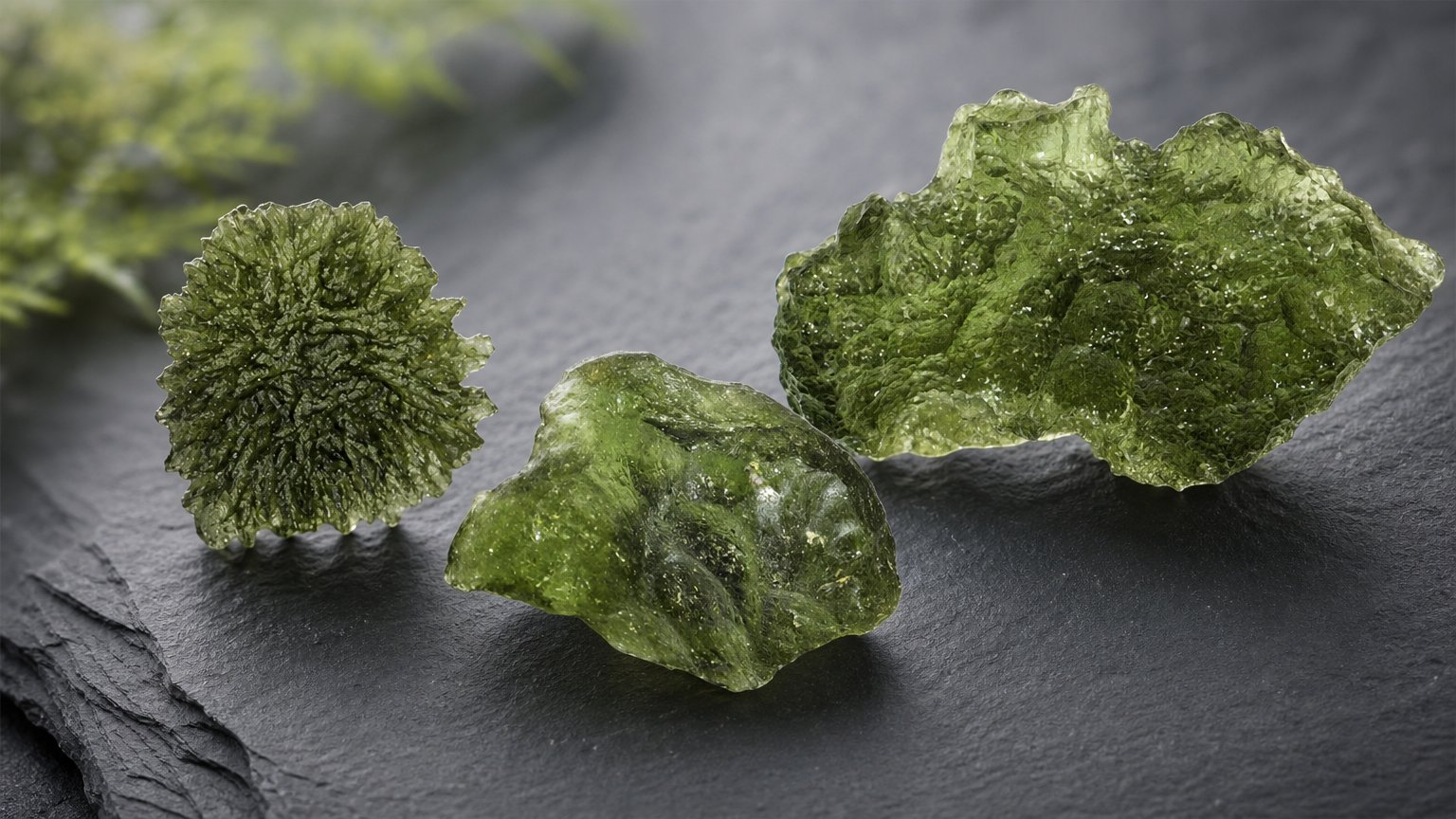
Moldavite is a distinctive green gemstone chosen for its unusual appearance, Czech origin and natural, untreated character. For buyers, the most important decisions are visual: the shade and liveliness of the green color, the cutting style, the shape, the size and whether the gem is suitable for the jewelry you have in mind.
This guide focuses on the practical points that help you compare Moldavite gemstones confidently, whether you are buying a cabochon for a pendant, a faceted stone for a design project or a collector piece with an interesting freeform outline.
What Is Moldavite?
Moldavite is an amorphous, silica-rich gemstone with the chemical formula SiO 2(+Al 2O 3). "Amorphous" means it does not have the orderly internal crystal structure found in crystalline gemstones such as quartz or sapphire.
Gemologically, Moldavite has a refractive index of 1.48-1.54 and a specific gravity of 2.32-2.38. These measurements are mainly useful for gem identification and can help support a confident purchase when buying from a knowledgeable gemstone seller.
Color and Appearance
Green is the defining color of Moldavite. When comparing stones, look first at the overall tone and how attractive the green appears to you in normal viewing conditions. Some buyers prefer lighter, brighter material, while others are drawn to deeper or more subdued green tones.
Because Moldavite is often cut in freeform shapes, appearance is not only about color. The outline, surface character, thickness and transparency all influence how the gem looks when worn or set. A stone that appears interesting as a loose gem may also need to be practical for the intended setting, especially if the design requires symmetry or matched proportions.
Cut and Shape: Cabochon, Faceted and Freeform Choices
Cabochons are the most common cut style for Moldavite. A cabochon has a smooth, polished, domed surface rather than facets. This style works well for pendants, necklaces and earrings because it presents the green body color clearly and can accommodate organic or irregular outlines.
Faceted Moldavite is also available, though it is less strongly associated with the gemstone than cabochon cutting. Facets can add brightness and a more traditional gemstone appearance, especially in shapes such as octagon, oval, pear or round.
Freeform shapes are especially important when buying Moldavite. They can give each stone an individual character, but they also require more planning if you intend to set the gem in jewelry. Standard shapes such as oval and octagon are usually easier for jewelers to mount, while freeform pieces may require a custom setting.
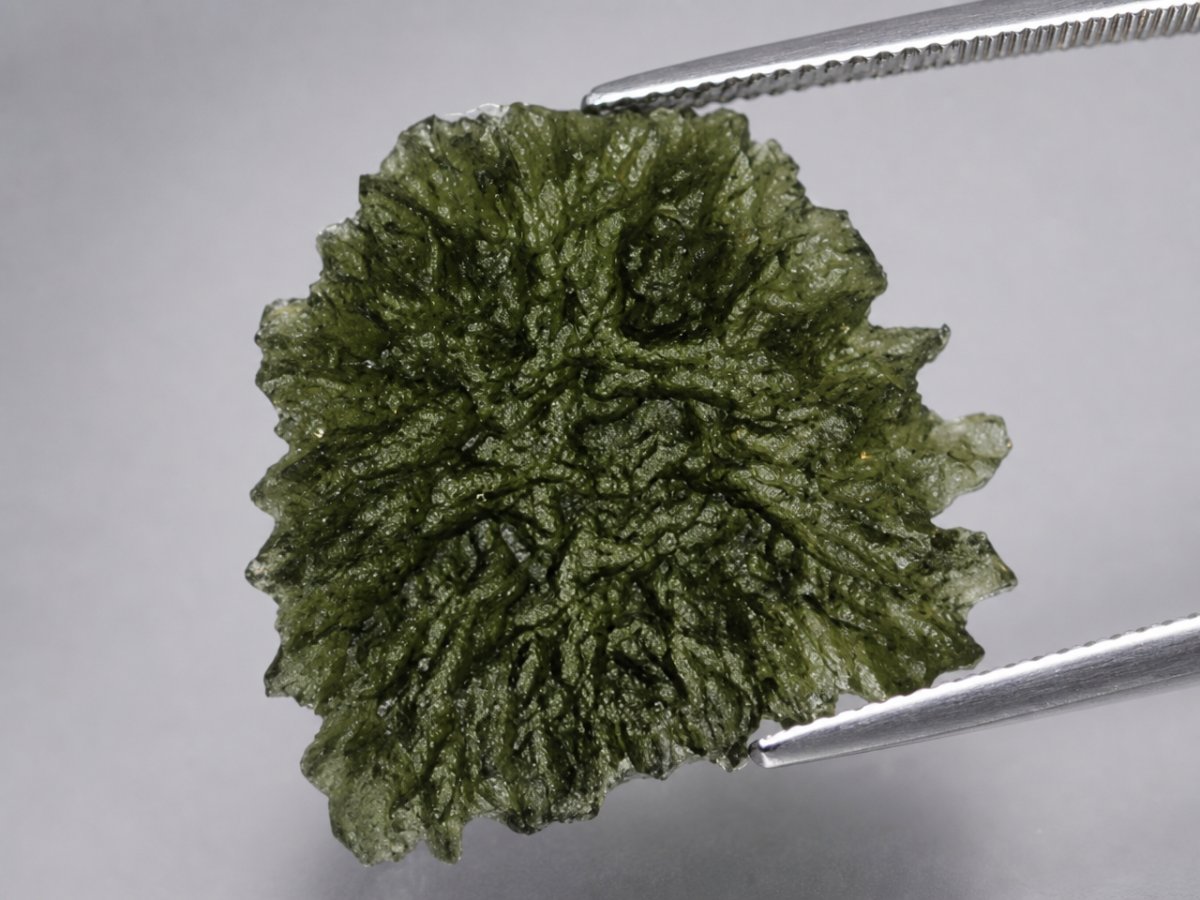
Origin: Czech Republic
The important origin for Moldavite is the Czech Republic. For buyers, origin matters because it is part of the identity of the gemstone. When purchasing, look for clear product information that identifies the gem as Moldavite and states its Czech origin where available.
If origin is important for your collection or design story, choose a seller that provides transparent descriptions and keeps gemstone identity separate from unsupported claims. GemSelect lists gemstone details clearly so buyers can compare options with greater confidence.
Treatments and Disclosure
Moldavite is commonly sold untreated. This is a useful buying point because you do not usually need to compare treatment categories or consider enhancement effects in the way you might with some other gemstones.
Even so, treatment disclosure should still be part of the purchase. A reliable listing should state that the stone is untreated when that is the case. If you are buying for resale, collection or a custom jewelry commission, keep any invoice or product information that records the gemstone identity and treatment status.
Durability and Care
Moldavite has a Mohs hardness of 5.5-7. This places it below very hard everyday jewelry stones such as sapphire, and it means Moldavite should be protected from rough wear, hard knocks and contact with abrasive surfaces.
Pendants, necklaces and earrings are especially suitable choices because they are less exposed to impact than rings or bracelets. Moldavite can be used in rings and bracelets, but these are better for occasional wear, collector jewelry or protective settings rather than constant daily use.
For care, store Moldavite separately from harder gemstones that could scratch it. Clean it gently with a soft cloth and avoid aggressive cleaning methods. If the gem is set in jewelry, follow the care needs of the metal and setting as well as the stone.
Best Jewelry Uses for Moldavite
Pendants are one of the most practical and popular ways to wear Moldavite. A pendant allows the gem to be visible while reducing the chance of accidental impact. Freeform cabochons can be especially attractive in pendant designs because the setting can be built around the natural-looking outline of the stone.
Earrings and necklaces are also good options, particularly for lighter or matched stones. Faceted or more symmetrical Moldavite shapes can work well when a cleaner, more formal design is desired.
Rings and bracelets require more care. If you choose Moldavite for a ring, consider a setting that protects the edges and avoid wearing it during activities where the stone may be knocked or scratched. Collector rings can be a good choice when the goal is occasional enjoyment rather than everyday durability.
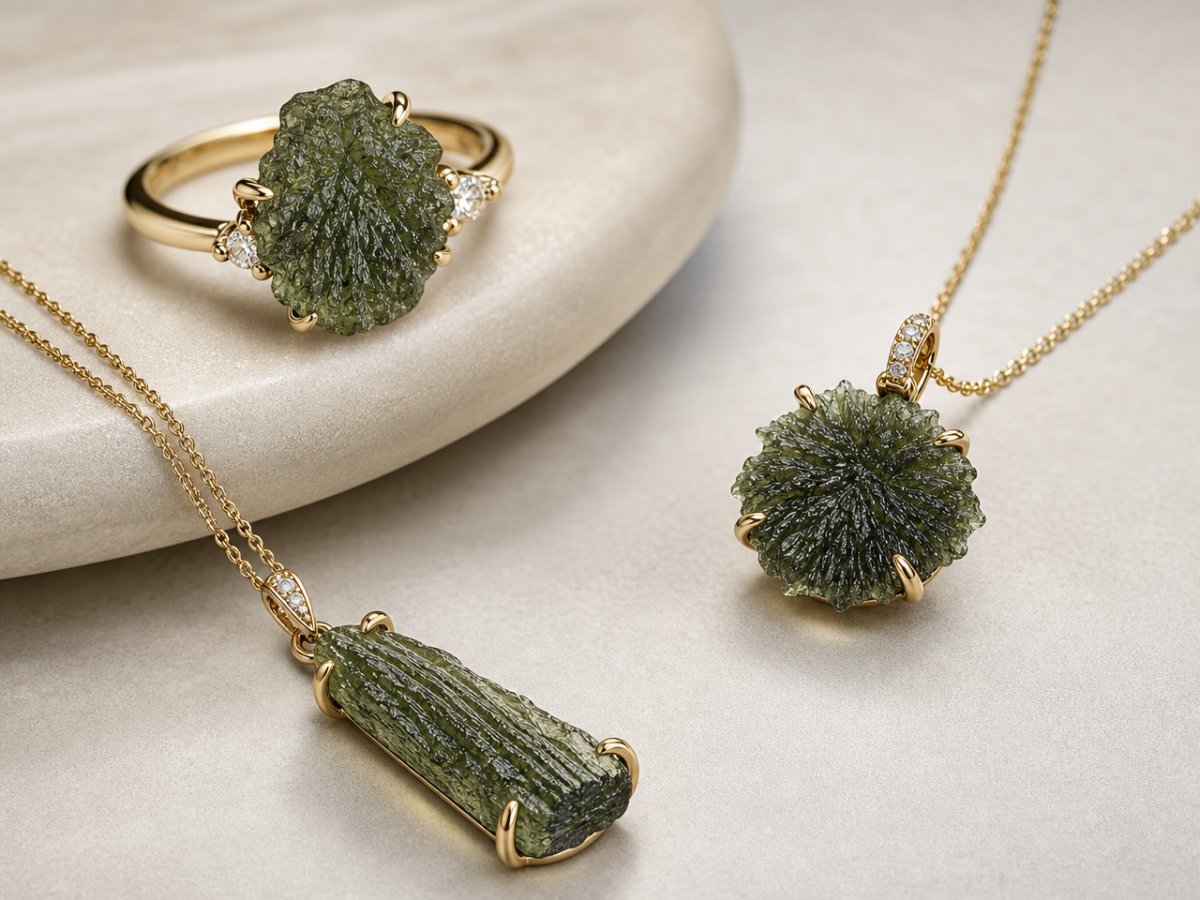
How to Choose Moldavite: Practical Buying Checklist
1. Start with the look you want
Decide whether you prefer a smooth cabochon, a faceted gem or a freeform collector-style stone. Cabochons emphasize color and shape, while faceted stones offer a more traditional cut-gem appearance.
2. Compare green color in the listing photos
Choose the green tone that appeals to you most. Since color is central to Moldavite's appeal, use clear photos to compare brightness, depth and overall visual balance.
3. Match the shape to the jewelry plan
Freeform Moldavite can be beautiful, but it may need a custom setting. If you are working with a jeweler or need a simpler mounting solution, oval, octagon, pear or round shapes may be easier to use.
4. Consider wearability before buying
For frequent wear, pendants, necklaces and earrings are the safest choices. For rings and bracelets, choose designs that protect the stone and reserve them for more careful wear.
5. Check treatment and origin information
Look for listings that clearly state the stone is untreated and identify the Czech Republic as the origin where provided. Clear disclosure is an important part of buying confidently.
6. Buy from a seller with clear gemstone details
A trustworthy seller should provide accurate descriptions, measurements, photos and relevant gemological information. This is particularly helpful for buyers comparing Moldavite by cut, shape, color and intended use.
Summary
The best Moldavite purchase is the one that balances appearance, authenticity information and practical use. Focus on green color, cabochon or faceted cutting, freeform versus standard shape, untreated status and Czech origin. For jewelry, pendants, necklaces and earrings are generally the most practical choices, while rings and bracelets should be worn with more care.
