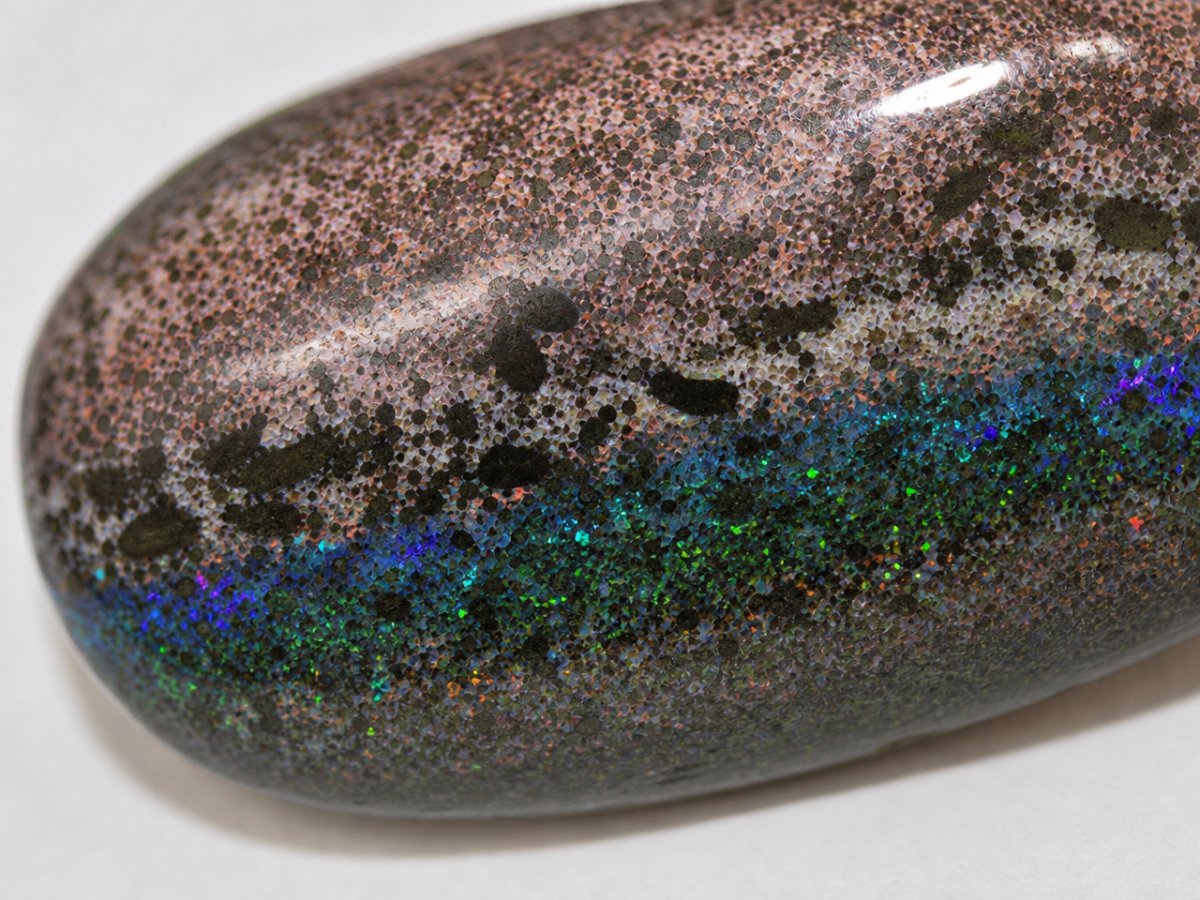


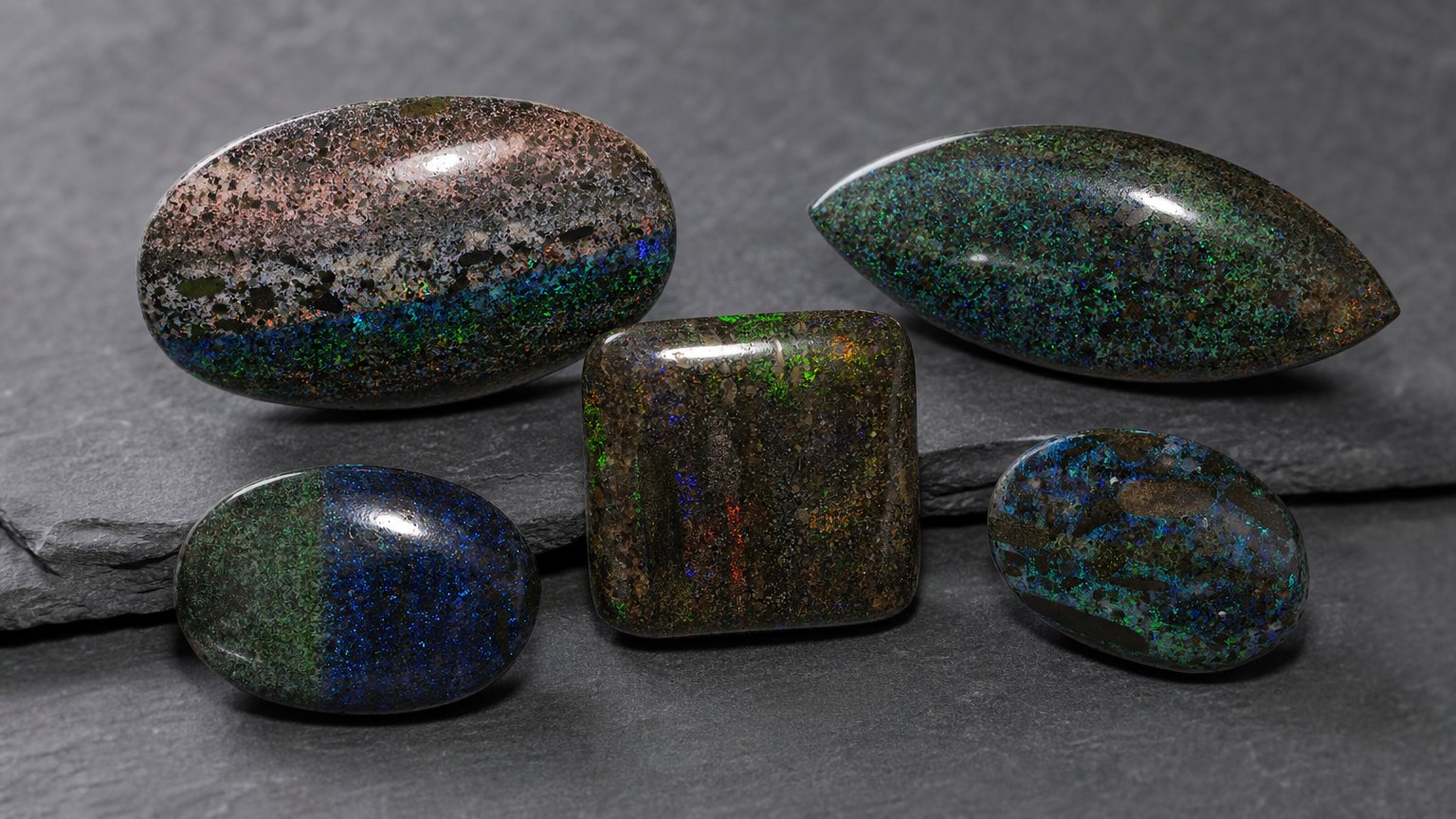
Matrix opal is chosen for its distinctive combination of opal color and natural-looking pattern. Instead of evaluating it like a transparent faceted gem, buyers should focus on overall visual appeal: the strength and distribution of color, the contrast with the surrounding matrix, the cut quality, treatment disclosure and whether the stone is suitable for the intended jewelry design.
This guide explains the practical points that matter when buying matrix opal, from color and cabochon shape to durability and care.
What Is Matrix Opal?
Matrix opal is a variety of opal associated with the mineral species opal. Its chemical formula is SiO₂·nH₂O, and it has an amorphous crystal system, meaning it does not form crystals in the same way many other gemstones do.
For buyers, the important point is that matrix opal is valued as a patterned opal material. The appeal usually comes from multicolor opal effects seen with black, gray or white matrix tones. Because every piece has its own pattern, matching stones can be more difficult than selecting a single feature stone for a pendant, necklace or artisan jewelry design.
Color and Appearance: What to Look For
Color is the first buying consideration for most matrix opal. Multicolor appearance is especially important, with black, gray and white tones also commonly seen. A darker background can make bright opal colors appear more dramatic, while lighter material can create a softer look.
When comparing stones, look at the gem under normal lighting and from several angles. A good matrix opal should have an attractive pattern, pleasing color contrast and a face-up appearance that suits the jewelry design. Some stones show broad areas of color; others have a more scattered or speckled effect. Neither style is automatically better, but the pattern should look intentional and balanced rather than dull or visually confusing.
Practical color buying tips
- Choose color you can see easily: Avoid stones where the color is too weak to notice without very strong lighting.
- Check contrast: Multicolor flashes often stand out best when the surrounding matrix tone provides contrast.
- Consider the setting: Darker matrix opal can look striking in simple metal settings, while lighter stones may suit more delicate designs.
- Buy pairs carefully: For earrings, check that the two stones have compatible color strength, pattern and size.
Cut, Shape and Size
Matrix opal is most commonly cut as a cabochon. A cabochon has a smooth, polished dome rather than facets, which helps display opal color and natural pattern. When buying cabochon matrix opal, inspect the outline, polish and dome. The stone should sit evenly, have a clean shape and show the best color face-up.
Oval and cushion shapes are especially common choices, with pear and round shapes also popular. Fancy shapes, freeform outlines and marquise cuts can be appealing for custom and artisan jewelry where the natural pattern of the stone is part of the design. Carved matrix opal is less common but may be chosen for one-of-a-kind pieces.
Large matrix opals can make impressive pendants or brooches, while smaller cabochons are easier to use in earrings or accent-style designs. Because the pattern is part of the gem's identity, do not judge size by carat weight alone. A well-cut smaller stone with strong color and an attractive pattern may be more desirable for jewelry than a larger stone with weak visual impact.
Clarity and Surface Quality
Matrix opal is not evaluated by the clarity standards used for transparent gems. Instead, buyers should look for a pleasing surface, good polish and an attractive relationship between the opal color and matrix. Natural-looking pattern is part of the charm, but obvious surface damage, poor polish, cracks or distracting pits can affect appearance and durability.
Before purchasing, examine photos or the stone itself from the front and side. The cabochon should not look overly thin for its intended setting, and the base should be suitable for secure mounting.
Origins
Australia is an important origin for matrix opal. Honduras and Mexico are also associated with matrix opal, though they are less prominently represented. Origin can be interesting to collectors and may influence personal preference, but appearance, treatment disclosure and suitability for the design are usually more important for most buyers.
If origin matters to you, buy from a seller that clearly labels the stone and provides accurate product details. At GemSelect, the product description should be used as the primary guide for the specific gem being considered.
Treatments and Disclosure
Matrix opal may be untreated, and untreated material is commonly encountered. Buyers should also be aware that smoked treatment and sugar-acid treatment are associated with matrix opal. These treatments are used to affect the appearance of opal material, often by darkening the background or increasing visual contrast.
Treatment is not automatically a reason to avoid a stone, but it should be disclosed so you can make an informed choice. If you prefer natural appearance with no enhancement, look specifically for untreated matrix opal. If you are buying for a commercial jewelry project, treatment disclosure is also important for accurate customer communication.
Durability and Care
Matrix opal has a Mohs hardness of 5.5 to 6.5. This makes it suitable for many jewelry styles, but it should be treated with more care than harder everyday gems. Its refractive index is 1.37 to 1.52 and its specific gravity is 1.98 to 2.25; these gemological properties are mainly useful for identification rather than everyday buying decisions.
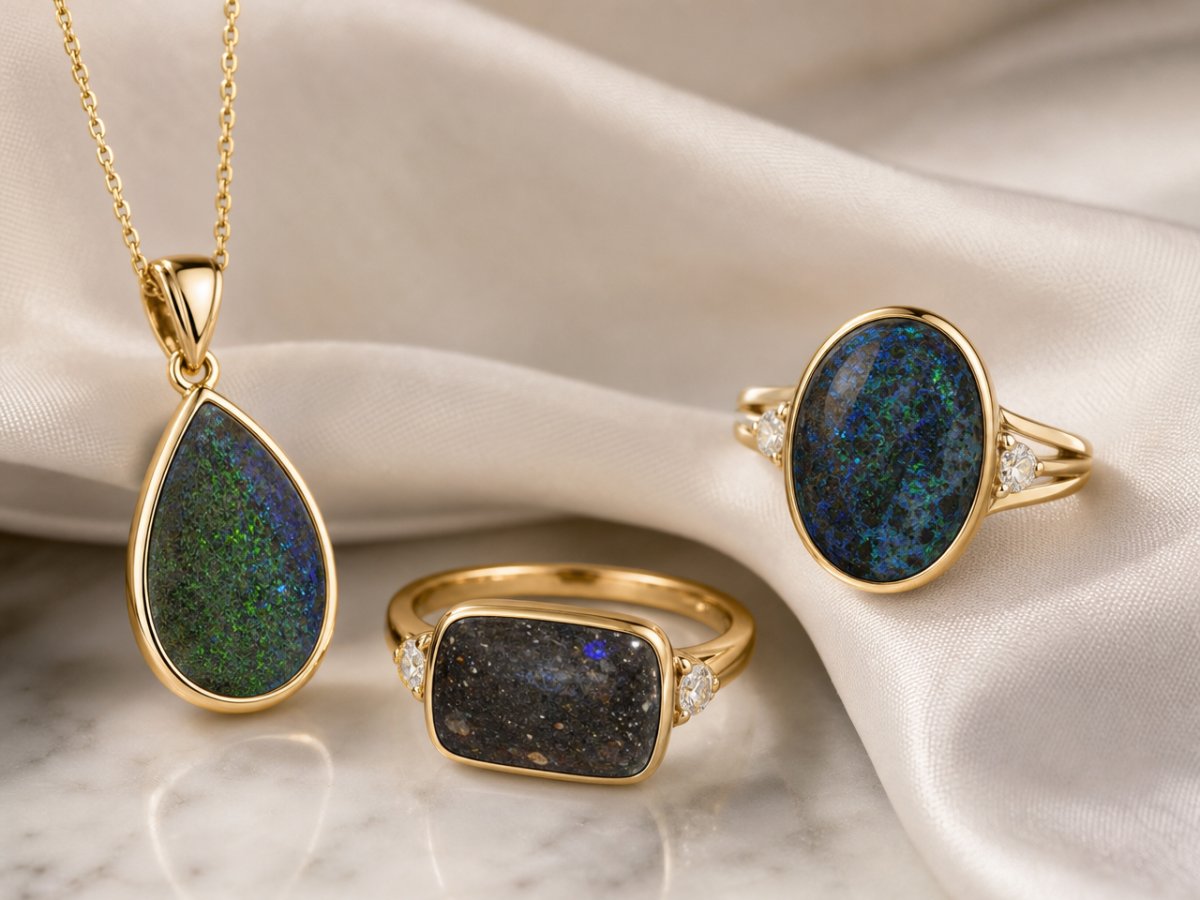
For jewelry use, matrix opal is best protected from hard knocks, abrasion and harsh cleaning. Necklaces, pendants, earrings and brooches are excellent choices because they usually receive less impact than rings. Matrix opal can be used in rings, but protective settings and occasional wear are sensible choices.
Care tips for matrix opal jewelry
- Clean gently with a soft cloth and mild soapy water when needed.
- Avoid ultrasonic cleaners, steam cleaning and harsh chemicals.
- Store separately from harder gemstones to reduce scratching.
- Remove rings before heavy work, sports or activities that may knock the stone.
Best Jewelry Uses
Matrix opal is particularly well suited to necklaces and pendants, where a single patterned cabochon can be displayed clearly. It is also a strong choice for artisan jewelry because freeform or unusual patterns can become the focal point of the design.
Earrings are a good option when a reasonably matched pair is available. Brooches allow larger or more dramatic stones to be used with less exposure to impact. Rings can be attractive, but buyers should prioritize secure settings and realistic wear expectations.
Matrix Opal Buying Checklist
- Color: Look for visible multicolor appeal and pleasing contrast with black, gray or white matrix tones.
- Pattern: Choose a stone with balanced, attractive distribution of color and matrix.
- Cut: Cabochons should have a good polish, even outline and attractive face-up orientation.
- Shape: Oval and cushion are classic; pear, round, fancy and freeform shapes suit more individual designs.
- Treatment: Confirm whether the stone is untreated, smoked or sugar-acid treated.
- Jewelry use: Favor pendants, necklaces, earrings and brooches for easier wear; protect ring stones carefully.
- Seller information: Buy from a source that provides clear photos, dimensions, treatment information and origin when known.
Summary
The best matrix opal for you is the one with the right balance of color, pattern, cut and durability for your design. Prioritize visible multicolor appearance, attractive contrast, sound cabochon cutting and clear treatment disclosure. For most buyers, matrix opal is an excellent choice for pendants, necklaces, earrings, brooches and artisan pieces where its natural pattern can be fully appreciated.