

London Blue Topaz is a blue variety of topaz chosen by many buyers for its clean, polished appearance and versatility in jewelry. It is seen in rings, pendants, earrings and necklaces, and it is also associated with December as a birthstone option. For buyers, the most important points to understand are color appearance, cut quality, shape, treatment disclosure, origin information and how the gem will be used in jewelry.
This guide explains what to look for before buying London Blue Topaz, whether you are selecting a single loose gemstone, matching stones for earrings, a pendant center stone, or a gem for a custom ring. The goal is not to create a complicated grading system, but to help you compare stones in a practical and informed way.
What Is London Blue Topaz?
London Blue Topaz is a variety of topaz known for its blue color. Topaz is the mineral species, while “London Blue” describes the blue appearance buyers are looking for in this type of gemstone. When shopping, the name should be supported by clear product information, accurate photos and treatment disclosure.
Because topaz is available in many jewelry formats, London Blue Topaz is often purchased as a loose gemstone for design flexibility. Loose stones allow buyers and jewelers to evaluate the gem before setting it, choose a mounting that suits the shape, and match color and size more precisely when multiple stones are needed.
Color and Appearance: The First Buying Factor
Color is the main reason buyers choose London Blue Topaz. The verified color for this gemstone is blue, and the buyer’s task is to choose the shade and visual character that best suits the intended jewelry design. When comparing stones, look at how the blue color appears in the product images and, if possible, under different lighting conditions.
Color preference is personal, but consistency matters. For a pendant or cocktail ring, a single strong visual impression may be the priority. For earrings, stud earrings, cufflinks or multi-stone designs, close color matching becomes more important. If two stones are meant to be worn as a pair, compare them side by side for color, tone, size and cut style.
Practical color buying tips
- Compare photos carefully: Look for images that show the gem clearly from the face-up view, since this is how it will appear in most jewelry.
- Match pairs and sets: For earrings, cufflinks or side stones, choose gems with similar blue appearance and similar cutting style.
- Consider the metal and design: The same blue gemstone can look different depending on the jewelry setting, surrounding stones and overall design.
- Check return and inspection options: When buying online, make sure you can review the stone properly after delivery.
Clarity and Transparency Considerations
When buying any faceted gemstone, clarity refers to how free the stone appears from visible internal features or surface-reaching marks. For London Blue Topaz, buyers should focus on what can be seen without magnification in normal viewing. A gem that looks clean to the unaided eye is generally easier to use in fine jewelry than one with obvious distracting features.
Clarity should also be considered together with cut and color. A beautifully cut stone with attractive blue color may be more appealing than a stone judged only by a technical description. For open settings such as pendants, rings and earrings, inspect the face-up view first, because that is the view most people will see when the jewelry is worn.
Cut Styles and Shapes
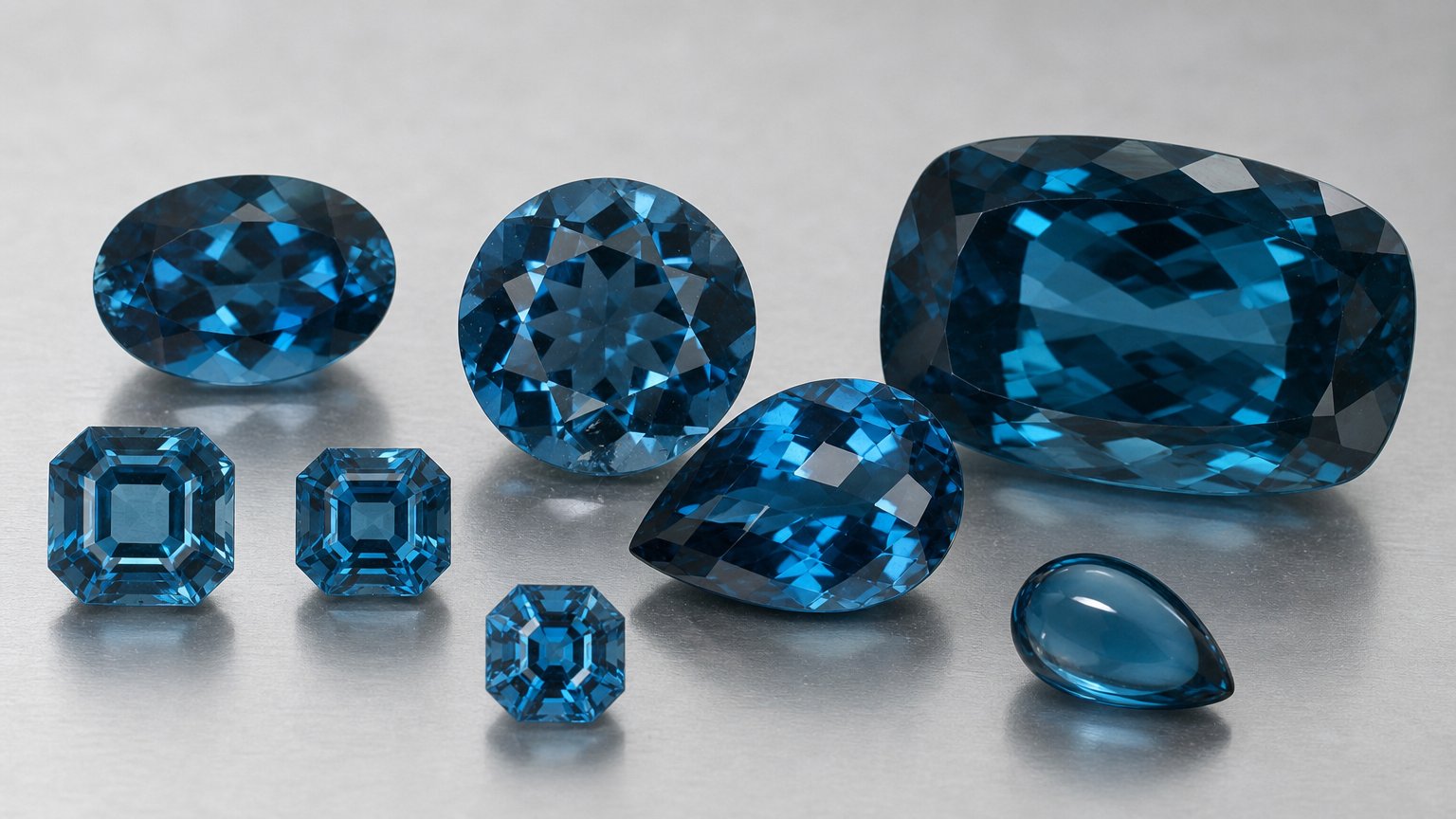
Cut has a major effect on how London Blue Topaz looks. It controls the outline, brightness, symmetry and overall style of the gemstone. London Blue Topaz is commonly seen in faceted cuts, including emerald cuts, and in popular shapes such as octagon, oval and round. These choices are especially important for buyers who are planning custom jewelry, because the cut and shape determine how the stone will fit into the setting.
Emerald cut and octagon shapes
Emerald cuts and octagon shapes are strongly associated with London Blue Topaz. These styles can create a clean, structured appearance that works well in rings, pendants and cufflinks. When choosing an emerald cut or octagon stone, look for good symmetry, even corners and an appealing face-up outline.
Oval and round shapes
Oval and round London Blue Topaz gems are also common choices. Round shapes are easy to use in many jewelry designs, while oval stones often provide a graceful outline for rings, pendants and earrings. For pairs, check that both stones have similar proportions and face-up size, not only similar carat weight.
Other shapes and designer cuts
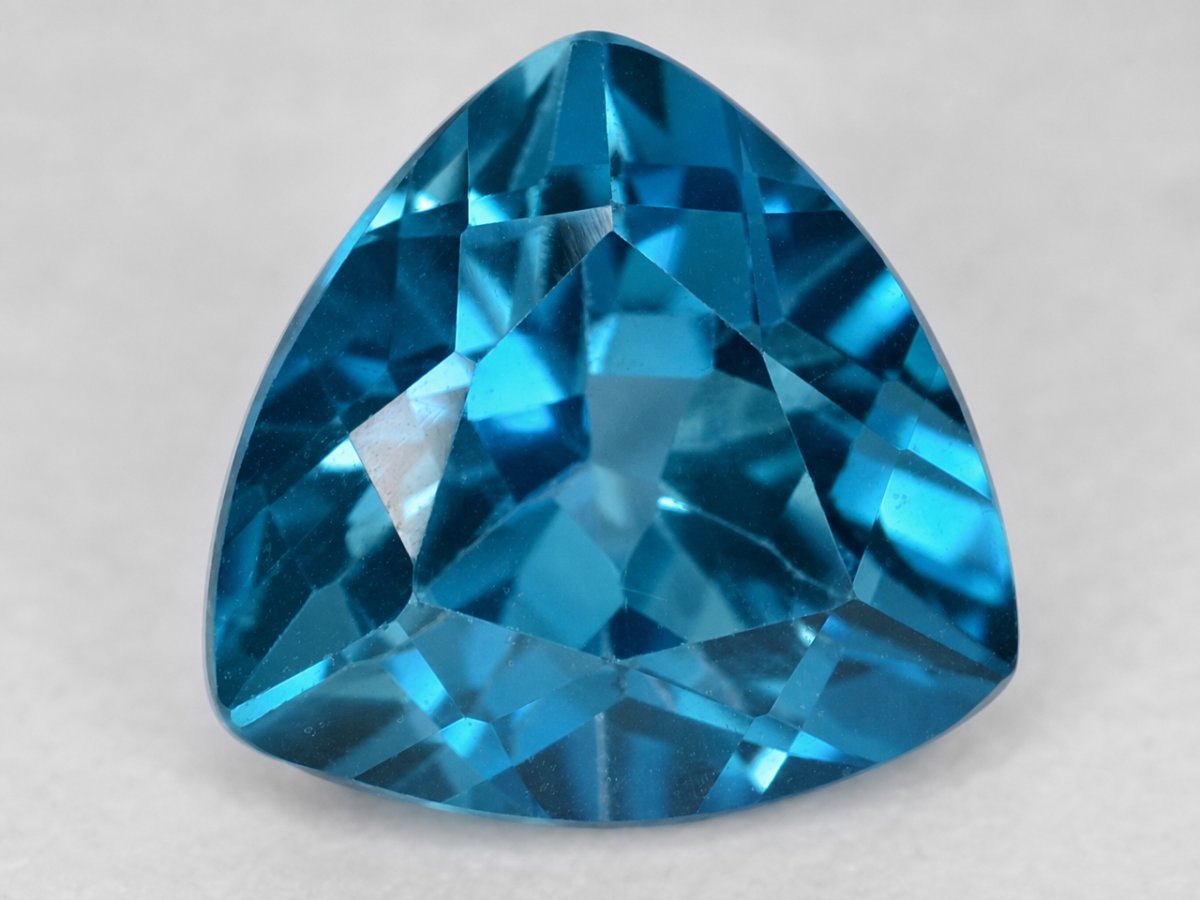
Cushion, pear and square shapes are also seen in London Blue Topaz, with baguette, heart, marquise, trillion and other fancy shapes available for more specific design needs. Buyers may also encounter checkerboard cuts, concave cuts and Portuguese cuts. These cutting styles can change how light moves across the stone, so it is worth evaluating the actual gem images rather than relying on the cut name alone.
Cabochons, buff tops and step cuts
Although faceted London Blue Topaz is especially common, cabochons are also used. A cabochon has a smooth, domed surface rather than a faceted crown. Buff top gems combine a smooth top with a faceted pavilion, while step cuts use long, parallel facets for a more architectural look. These styles are useful when the jewelry design calls for a softer or more geometric appearance.
Size and Carat Weight
Size is an important buying decision, but it should be considered together with shape, cut and jewelry use. Two stones with the same carat weight may not look the same size from the top, especially if one is deeper or has a different outline. For jewelry design, millimeter measurements are often more useful than carat weight alone because they determine how the gem fits a setting.
For earrings and stud earrings, matched dimensions are especially important. For a pendant, the buyer may prefer a larger face-up presence. For rings, the ideal size depends on the wearer’s hand, the setting style and whether the ring is intended for daily wear, occasional wear or a statement design such as a cocktail ring.
Treatments: What Buyers Should Know
Treatment disclosure is one of the most important parts of buying London Blue Topaz. Irradiation is a common treatment associated with London Blue Topaz, and heat treatment is also commonly encountered. Untreated material exists, but buyers should not assume a stone is untreated unless it is clearly represented that way by the seller.
Treatments are part of the gemstone trade, but they should be disclosed clearly. A buyer does not need to avoid treated stones simply because they are treated; instead, the key is to understand what is being offered and to buy from a seller that provides transparent product information. When browsing GemSelect or comparing stones elsewhere, check the treatment field and ask for clarification if the listing is not clear.
Questions to ask about treatment
- Is the London Blue Topaz listed as irradiated, heat treated or untreated?
- Is the treatment information clearly stated in the product details?
- If the stone is sold as untreated, is that representation explicit?
- Does the seller provide enough information for you to make a confident purchase?
Origins of London Blue Topaz
London Blue Topaz is associated with several origins, with Brazil being especially important. Other known sources include Madagascar, Myanmar, Pakistan, Nigeria and Sri Lanka. Origin information can be interesting for collectors and useful for documentation, but buyers should avoid assuming that origin alone determines the beauty or suitability of a stone.
For most jewelry buyers, appearance, cut, size, treatment disclosure and suitability for the intended setting will be more practical than origin alone. If origin is important to you, look for clear seller information and keep any purchase documentation with the gemstone or finished jewelry.
Durability and Jewelry Wear
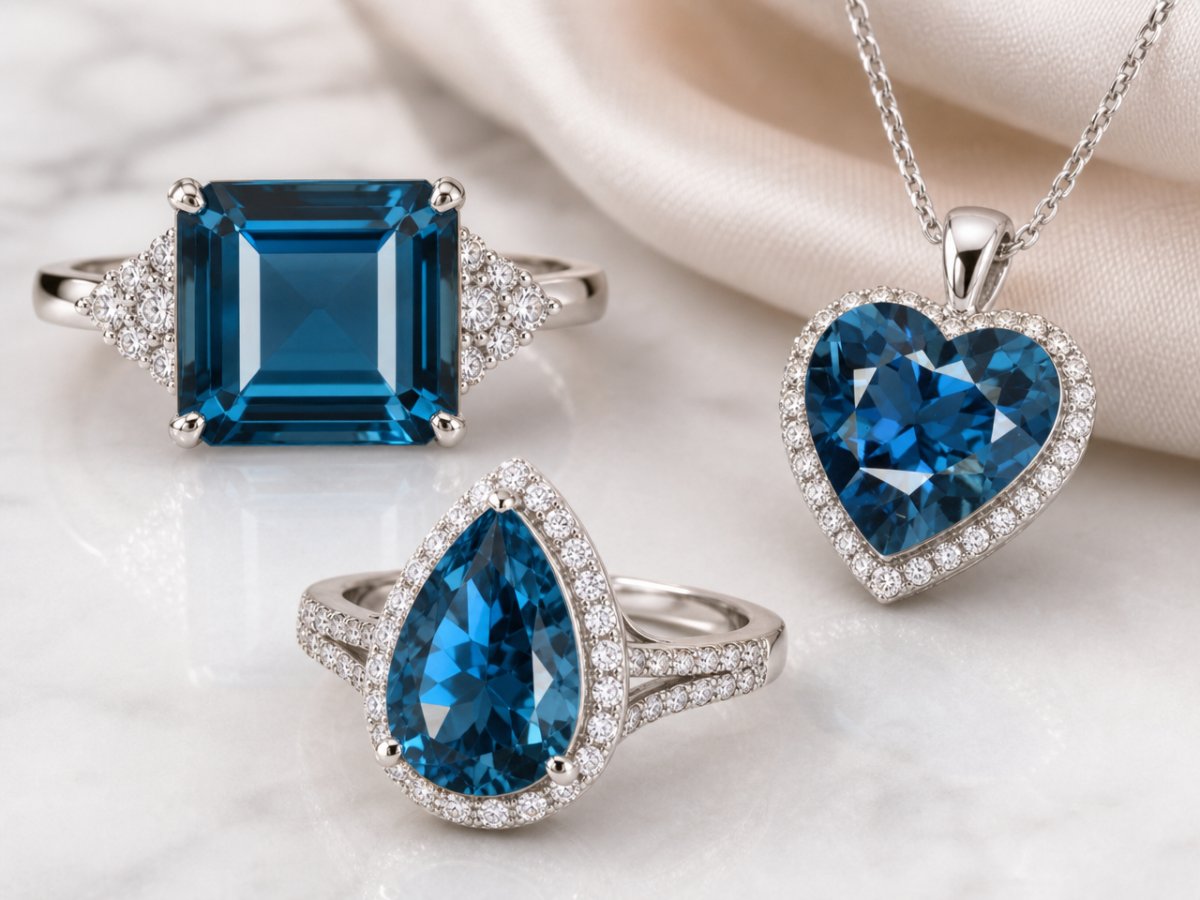
London Blue Topaz is used in rings, earrings, pendants, necklaces, bracelets, cufflinks and cocktail rings. The right setting depends on how the jewelry will be worn. Earrings and pendants are generally less exposed to knocks than rings and bracelets, while rings and bracelets require more attention to setting protection because they are worn on the hands and wrists.
For a London Blue Topaz ring, consider a setting that protects exposed edges and corners, especially for emerald cut, octagon, pear, marquise or trillion shapes. Prongs should hold the gem securely without placing unnecessary stress on corners. A bezel or partial bezel may be suitable when extra edge protection is desired. For bracelets, secure settings are particularly important because wrist jewelry often experiences more contact during wear.
Good care habits also matter. Store London Blue Topaz jewelry separately from other jewelry to reduce scratching and accidental knocks. Remove rings and bracelets before heavy activity, cleaning, sports or any situation where the gem may be struck. For cleaning, follow the jeweler’s care instructions for the complete piece, including the metal and any other gemstones in the design.
Best Jewelry Uses for London Blue Topaz
London Blue Topaz is highly versatile in jewelry. It is especially common in earrings, pendants and rings, where the blue color can be displayed clearly. It is also used in cocktail rings and necklaces, and it can be selected for bracelets, cufflinks and stud earrings when the design calls for a blue gemstone.
Earrings and stud earrings
Earrings are a strong use for London Blue Topaz because they allow the color to be visible while reducing exposure to impact. For studs or matched drop earrings, prioritize pairs with similar color, shape, dimensions and cutting style.
Pendants and necklaces
Pendants and necklaces are excellent choices for displaying a single London Blue Topaz. Oval, round, pear, cushion and octagon shapes can all work well depending on the design. Because pendants are usually viewed from the front, face-up color and outline are key buying factors.
Rings and cocktail rings
London Blue Topaz rings can range from simple everyday-style designs to larger cocktail rings. For rings, consider how often the piece will be worn and choose a setting that suits the wearer’s lifestyle. Larger gems can create a dramatic appearance, while smaller stones may be easier to incorporate into practical ring designs.
Bracelets and cufflinks
Bracelets and cufflinks can use London Blue Topaz effectively, but secure setting is important. In bracelets, the gem may experience more contact, so low-profile and protective designs are worth considering. Cufflinks often suit geometric shapes such as octagon, square, baguette or other structured cuts.
How to Buy London Blue Topaz Online
Buying London Blue Topaz online can be straightforward if you compare the right details. Start with the visual appearance, then confirm measurements, cut, shape, treatment and origin information when available. If you are buying for a specific setting, check the millimeter size carefully before purchasing.
Online buying checklist
- Color: Choose a blue appearance that suits your design and personal taste.
- Cut and shape: Emerald cut, faceted, octagon, oval and round stones are common, but many other shapes may be suitable.
- Measurements: Use millimeter dimensions, especially for custom settings or matched pairs.
- Clarity: Look for a stone that appears clean and attractive in normal viewing.
- Treatment disclosure: Confirm whether the gem is listed as irradiated, heat treated or untreated.
- Origin information: Consider origin if it matters to you, but do not use it as the only quality factor.
- Jewelry purpose: Match the stone’s size, shape and setting style to how the jewelry will be worn.
Common Buying Mistakes to Avoid
One common mistake is buying by carat weight alone. Carat weight describes weight, not face-up size, so always check measurements. Another mistake is ignoring treatment disclosure. Because irradiation and heat treatment are commonly associated with London Blue Topaz, buyers should expect clear information.
Buyers should also avoid choosing a shape without considering the final jewelry. A long marquise, pear or trillion may need more careful setting protection than a rounded outline. An emerald cut or octagon can look elegant, but the corners should be considered in the design. For pairs, do not rely only on individual listings; compare both stones for color and dimensions.
London Blue Topaz as a December Birthstone
London Blue Topaz is associated with December, making it a meaningful option for birthstone jewelry. Rings, pendants and earrings are all popular formats for a December gift. If the piece is intended as a long-term personal gift, choose a classic shape and a setting that suits the wearer’s style and daily habits.
Summary: Choosing with Confidence
A good London Blue Topaz purchase starts with the blue color you prefer and continues with practical checks: cut, shape, size, clarity, treatment disclosure and jewelry use. Brazil is an important origin, and stones are also associated with Madagascar, Myanmar, Pakistan, Nigeria and Sri Lanka. Irradiation and heat treatment are common, so transparent disclosure is essential.
Whether you are selecting a gem for earrings, a pendant, a ring or a custom design, focus on how the stone will look and perform in the finished piece. GemSelect provides loose gemstone listings that allow buyers to compare individual stones by image and product details, helping you choose the London Blue Topaz that best fits your project.