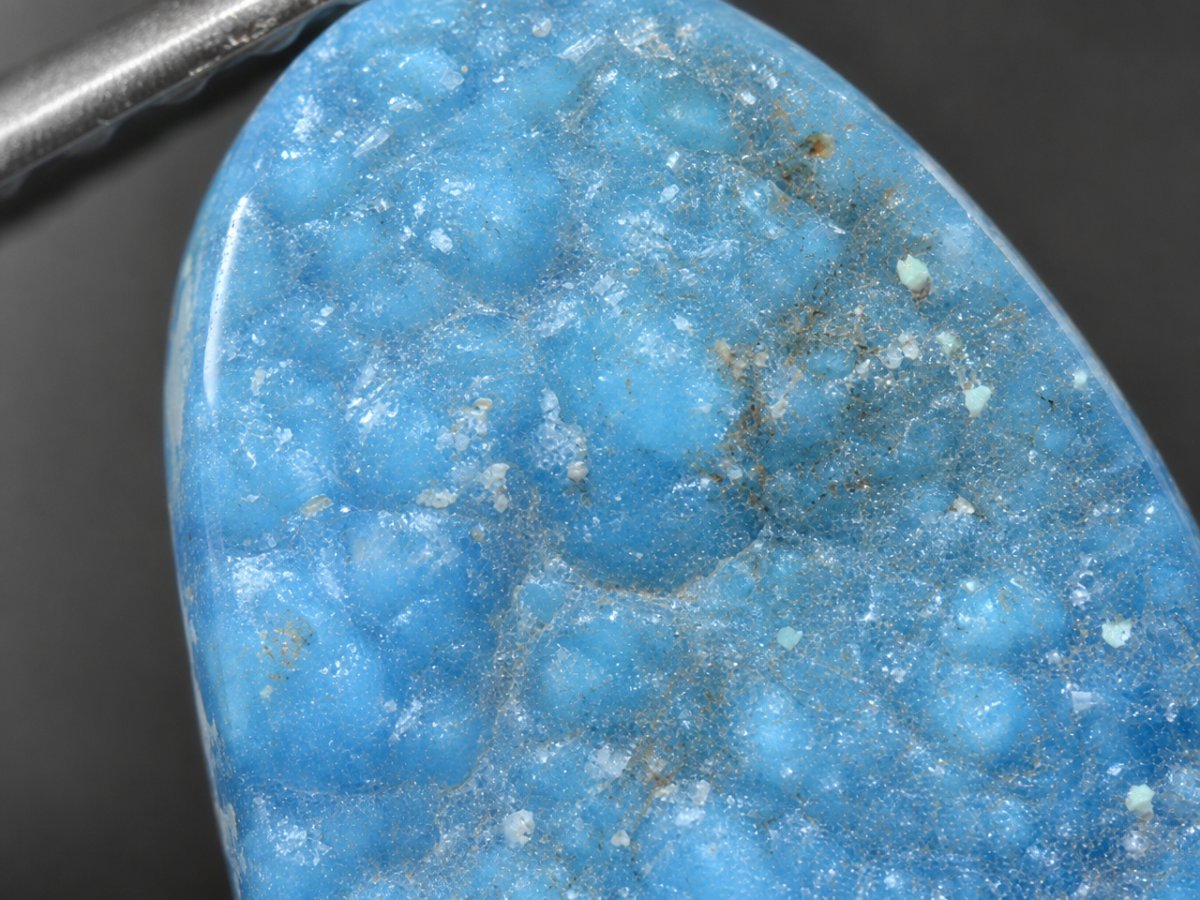


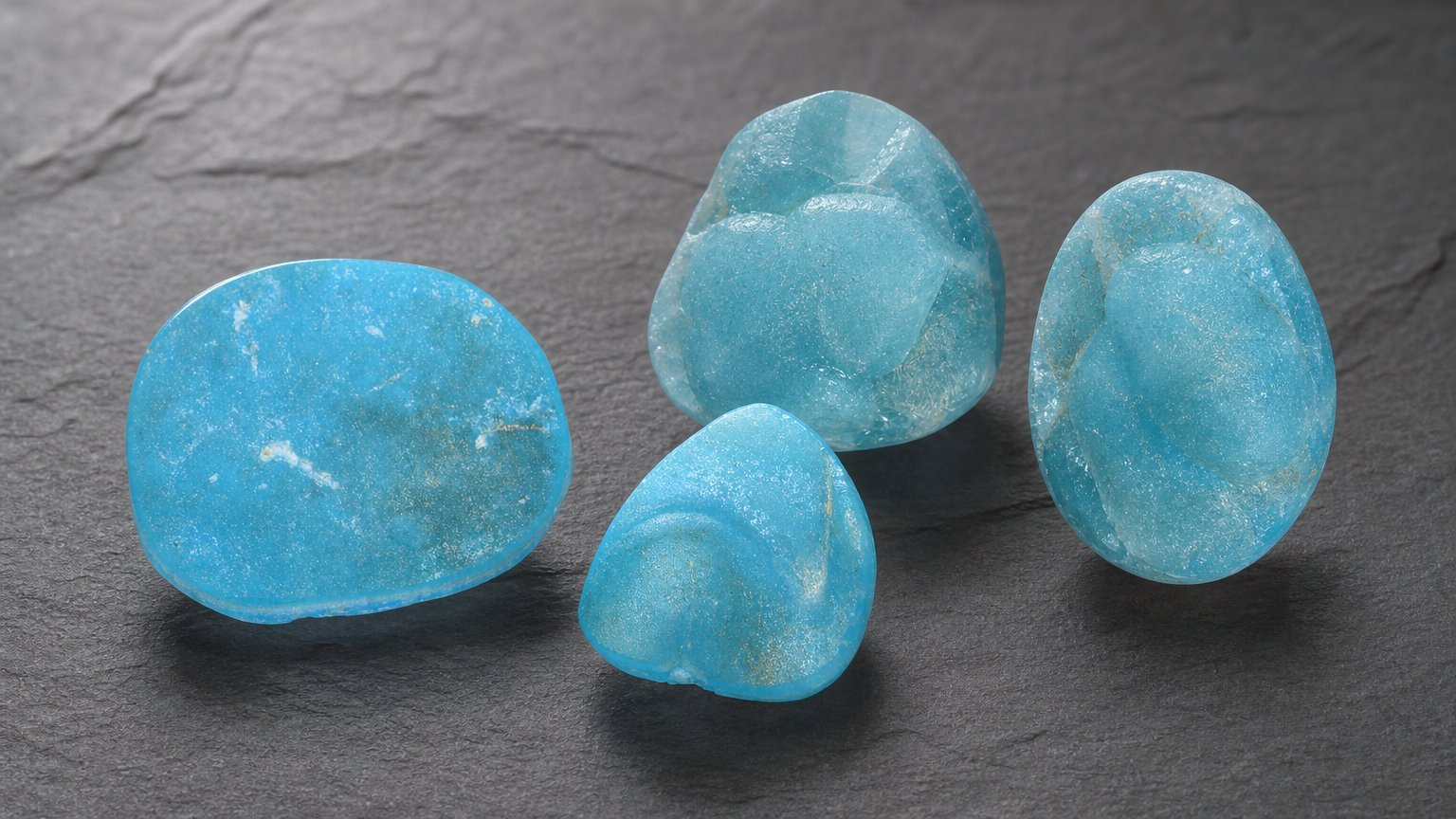
Hemimorphite druzy is chosen for its natural sparkling crystal surface, attractive blue to teal colors and organic shapes. Unlike a faceted gemstone, its beauty comes from a fine layer of tiny crystals, so buyers should focus on surface quality, color appeal, shape and suitability for the intended jewelry design.
This guide explains the practical details that matter when buying hemimorphite druzy, including appearance, durability, treatments, origin and jewelry use.
What Is Hemimorphite Druzy?
Hemimorphite druzy is a form of hemimorphite with a natural druzy surface. Druzy refers to a coating of small crystals that create a sugar-like sparkle across the surface of the gem. Because the surface itself is the feature, hemimorphite druzy is usually sold with its natural crystal texture rather than being faceted into a conventional brilliant cut.
Gemologically, hemimorphite is a silicate mineral with the chemical formula Zn₄Si₂O₇(OH)₂·H₂O. It crystallizes in the orthorhombic system and has a refractive index of 1.614-1.636 and a specific gravity of 3.40-3.50. These details are useful for identification, but most buyers will make their selection based on visible quality and jewelry suitability.
Color and Appearance: What to Look For
Color is one of the most important buying factors for hemimorphite druzy. Blue is the best-known and most sought-after appearance in many selections, with teal also highly attractive. Gray, green and brown tones may also occur and can be appealing when they suit a natural, earthy or designer jewelry style.
When comparing stones, look for color that is pleasing and well distributed across the visible face of the gem. Some pieces may show color zoning, matrix areas or natural variations. These are not automatically flaws; in druzy gems, they can add character. The key is whether the overall face-up appearance is attractive for your design or collection.
Druzy Surface Quality
Because hemimorphite druzy is valued for its natural crystal surface, inspect the texture carefully. A desirable piece should have an intact, visually appealing surface with sparkle across the main display area. Avoid pieces where the most visible section looks damaged, excessively worn or uneven in a way that distracts from the design.
Clarity is not judged in the same way as it is for transparent faceted gems. Instead of looking for eye-clean transparency, buyers should evaluate the consistency of the druzy crystals, surface sparkle, color coverage and overall presentation.
Cut, Shape and Size
The most common "cut" for hemimorphite druzy is a natural druzy surface. Rather than maximizing brilliance through facets, the cutter preserves the natural crystal layer and shapes the material for setting or display.
Fancy shapes and freeform outlines are especially common because they follow the natural form of the gem material. Oval shapes may also be available, but buyers should expect more individuality than standard calibrated gemstones. For jewelry designers, this individuality is often part of the appeal, especially for one-of-a-kind pendants, necklaces and brooches.
When choosing size, consider both visual impact and practicality. Larger freeform pieces can make impressive pendants or collector jewelry, while smaller stones are easier to use in earrings. Since druzy surfaces are textured, make sure the height and outline of the piece will work with the intended setting.
Durability and Wearability
Hemimorphite has a Mohs hardness of 4.5-5, which means it is softer than many everyday jewelry gemstones. This does not prevent it from being used in jewelry, but it does mean buyers should choose designs with reasonable protection and wear expectations.
Pendants, necklaces and earrings are generally the most practical choices because they receive less abrasion and impact than rings or daily-wear bracelets. Brooches and collector jewelry can also be suitable uses. Bracelets are possible, but they should be worn with extra care because wrist jewelry is more likely to be knocked against hard surfaces.
For care, avoid rough handling, hard knocks and abrasive cleaning. A soft cloth and gentle cleaning are preferable. Ultrasonic and steam cleaning are not recommended for druzy surfaces, as the tiny crystal texture and any natural openings are better treated gently.
Treatments and Buying Confidence
Hemimorphite druzy is commonly offered untreated. For buyers, this is a positive point because the natural surface, color and texture are central to its appeal. Still, treatment disclosure is important for any gemstone purchase, especially when color and surface appearance are key buying factors.
When purchasing from GemSelect or another reputable seller, check the product details for treatment information and make sure the stone is accurately represented in photos. For druzy gems, images are particularly useful because they show the surface, shape and color distribution better than measurements alone.
Origins
Important sources for hemimorphite druzy include Congo and Namibia, with material also associated with Mexico, the United States and Zambia. Origin can be of interest to collectors, but for most jewelry buyers, visible quality should be the priority. Color, surface condition, shape and suitability for the intended design usually matter more than country of origin alone.
Best Jewelry Uses
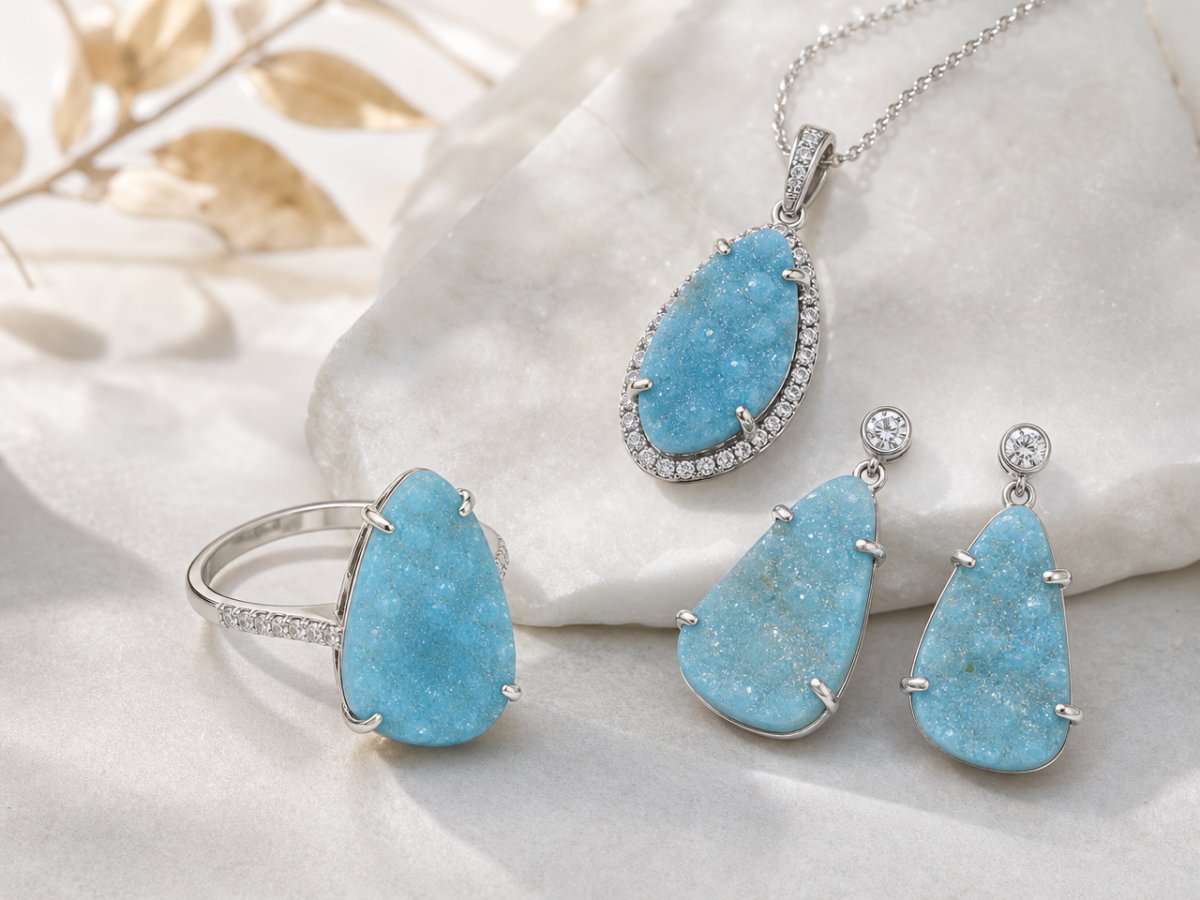
Hemimorphite druzy is especially well suited to pendants because a pendant can display the natural surface while limiting exposure to heavy wear. Necklaces are also a strong choice, particularly when the gemstone is used as a focal piece.
Earrings can work beautifully with smaller or matched pieces, although exact matches may be less common because natural druzy stones vary in shape and surface pattern. Brooches are another practical option because they allow a larger decorative surface without the constant abrasion of hand jewelry.
Bracelets should be chosen carefully. If you like hemimorphite druzy for a bracelet, consider designs that protect the edges and avoid wearing it during activities where it may be struck or scraped.
Practical Buying Checklist
- Choose the color first: Blue and teal are especially attractive, while gray, green and brown tones can suit natural or earthy designs.
- Inspect the druzy surface: Look for appealing sparkle, intact crystals and a pleasing face-up texture.
- Match the shape to the design: Fancy and freeform shapes are common, so plan the setting around the actual stone.
- Consider durability: With hardness of 4.5-5, hemimorphite druzy is best for jewelry that avoids heavy impact and abrasion.
- Check treatment disclosure: Hemimorphite druzy is commonly untreated, but clear seller information is still important.
- Use photos carefully: For druzy gems, photographs help reveal surface quality, color distribution and overall character.
Summary
The best hemimorphite druzy for you is the piece with the most appealing combination of color, natural crystal texture, shape and practical wearability. Blue and teal pieces are especially popular, but other colors can be excellent choices when they complement a design. Because hemimorphite is moderately soft, it is best used in pendants, necklaces, earrings, brooches and carefully worn jewelry rather than high-impact everyday pieces.
Buy with attention to the actual surface and outline of the stone, not just carat weight or dimensions. A well-chosen hemimorphite druzy should look distinctive, natural and suitable for the jewelry or collection you have in mind.