


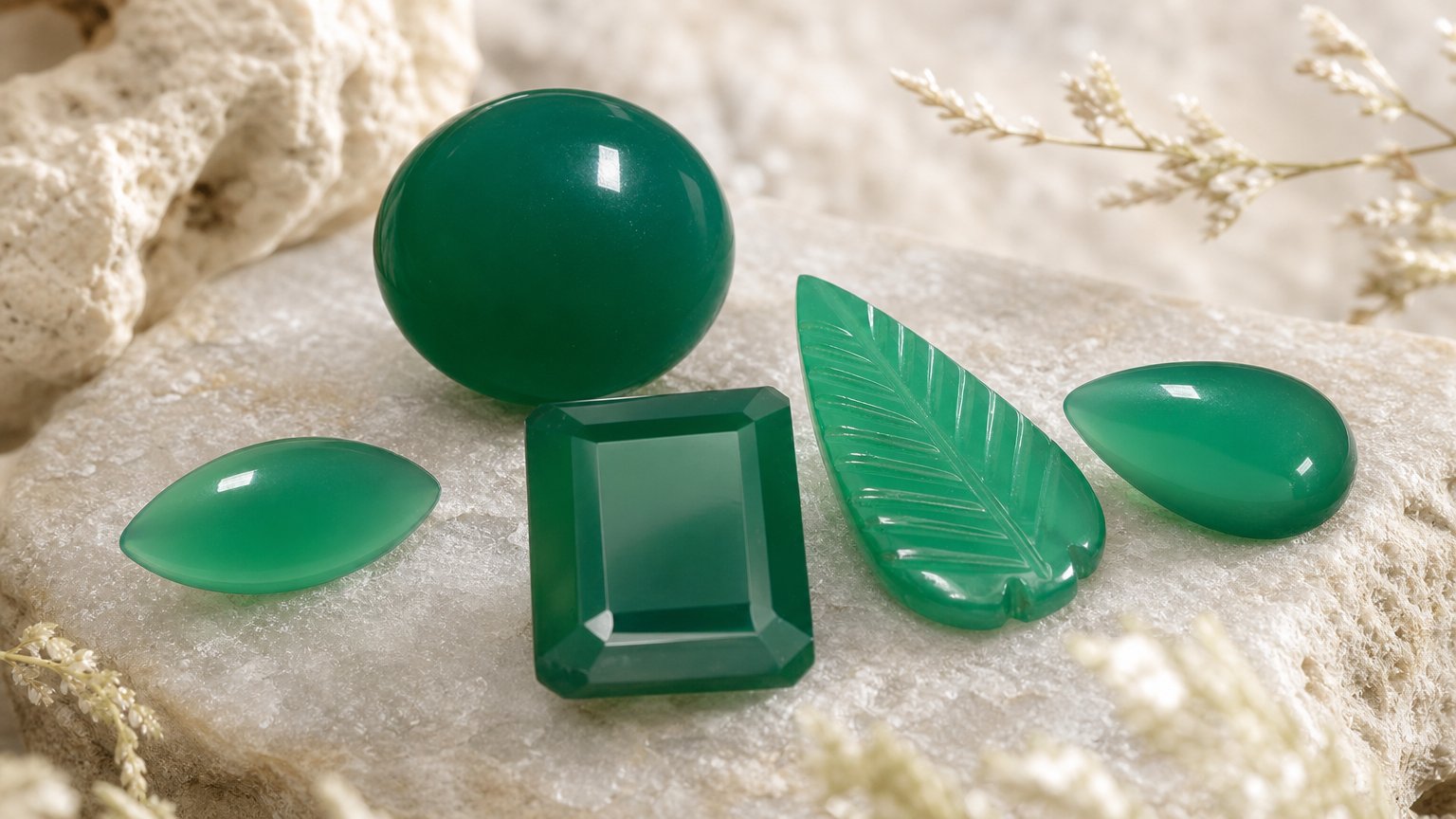
Green agate is a green variety of agate, a quartz gemstone appreciated for its pleasing color, versatility and wide range of jewelry uses. For buyers, the most important points are the quality of the green color, the cut and shape, whether the stone has been dyed or heat treated, and whether the size and durability suit the intended jewelry design.
This guide explains what to look for before buying green agate, with practical advice for loose gemstone buyers, jewelers, designers and collectors.
What Is Green Agate?
Green agate is a variety of agate associated with the quartz mineral family. Its chemical formula is SiO₂, and it has a trigonal crystal system. As a quartz gem, it has a Mohs hardness of 6.5 to 7, which gives it useful durability for many types of jewelry when set and cared for properly.
Green agate is commonly cut as cabochons, but it is also seen in carved designs and, less commonly, faceted stones. It is used in earrings, rings, necklaces, pendants, bracelets and brooches, making it a flexible choice for both classic and decorative jewelry styles.
Color and Appearance: What to Look For
Color is the first feature most buyers notice in green agate. Choose a shade of green that suits the design: softer greens can look understated and elegant, while stronger greens create a bolder focal point. When comparing stones, look at the overall evenness of color, the attractiveness of any visible pattern, and how the stone appears under the lighting in which it will be worn.
Because green agate is commonly treated, color should be considered together with treatment disclosure. A very vivid or uniform green may still be desirable, but buyers should know whether the appearance is natural, dyed or heat treated before making a purchase.
Common Cuts and Shapes
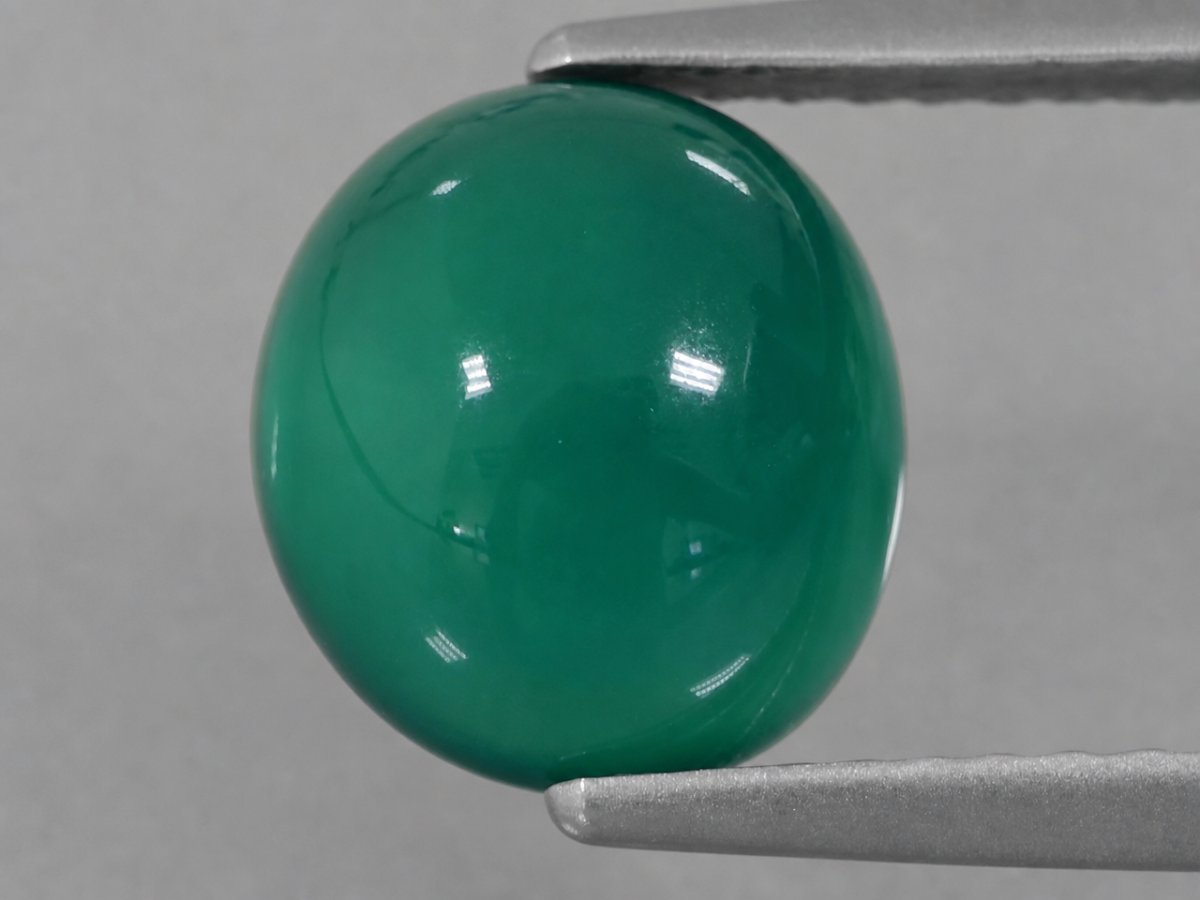
Cabochons are the most common cut for green agate. A cabochon has a smooth, polished, domed surface rather than facets. This style is well suited to agate because it emphasizes body color, surface polish and any natural visual character within the stone.
Carving cuts are also used, especially for decorative pieces and custom jewelry. Carved flower shapes can be attractive for pendants, brooches and earrings where design is more important than symmetry alone. Faceted green agate is less common, but it can offer a more geometric look for buyers who prefer reflective surfaces.
Popular shapes include oval and round, both of which are easy to set and suitable for many jewelry designs. Cushion and pear shapes are also useful for pendants, earrings and rings. Trillion and carved shapes can add a more distinctive design element.
Treatments: Dyed, Heat Treated and Untreated Green Agate
Treatment disclosure is one of the most important buying considerations for green agate. Dyed green agate is common, and heat treatment is also encountered. Untreated green agate exists, but buyers should not assume a stone is untreated unless it is clearly described that way by the seller.
Dyeing can be used to create or intensify the green color. This does not necessarily make a gemstone unsuitable, but it does affect what the buyer is purchasing and how the stone should be represented in jewelry. For professional use, especially in resale or custom work, treatment information should be recorded and passed on to the customer.
When buying from GemSelect or any reputable gemstone supplier, check the treatment information on the product page. If treatment status is important for your project or collection, choose stones with clear disclosure and keep the purchase details for your records.
Durability and Everyday Wear
Green agate has a Mohs hardness of 6.5 to 7. This means it is durable enough for many jewelry uses, including earrings, necklaces, pendants, brooches and many ring designs. Rings and bracelets receive more knocks and abrasion than earrings or pendants, so protective settings and sensible wear are recommended for those pieces.
For care, clean green agate with mild soap, warm water and a soft cloth or soft brush. Because dyed material is common, avoid harsh chemicals, prolonged soaking and aggressive cleaning methods. Store green agate separately from harder gems to reduce the risk of surface scratches.
Origins and Why They Matter
Green agate is associated with several origins, including Brazil and India, as well as Madagascar, Botswana and the United States. For most buyers, origin is less important than appearance, treatment disclosure, cutting quality and size. However, origin may matter to collectors or designers who want stones from a particular source.
A listed origin should not be treated as a guarantee of superior quality on its own. Evaluate each stone individually based on the visible color, polish, shape, dimensions and disclosed treatment.
Gemological Properties
The following properties help identify green agate within the quartz family and may be useful for jewelers, collectors and gemology-minded buyers:
| Gem variety | Green agate |
| Mineral association | Quartz |
| Chemical formula | SiO₂ |
| Mohs hardness | 6.5-7 |
| Refractive index | 1.530-1.540 |
| Specific gravity | 2.58-2.64 |
| Crystal system | Trigonal |
Best Jewelry Uses for Green Agate
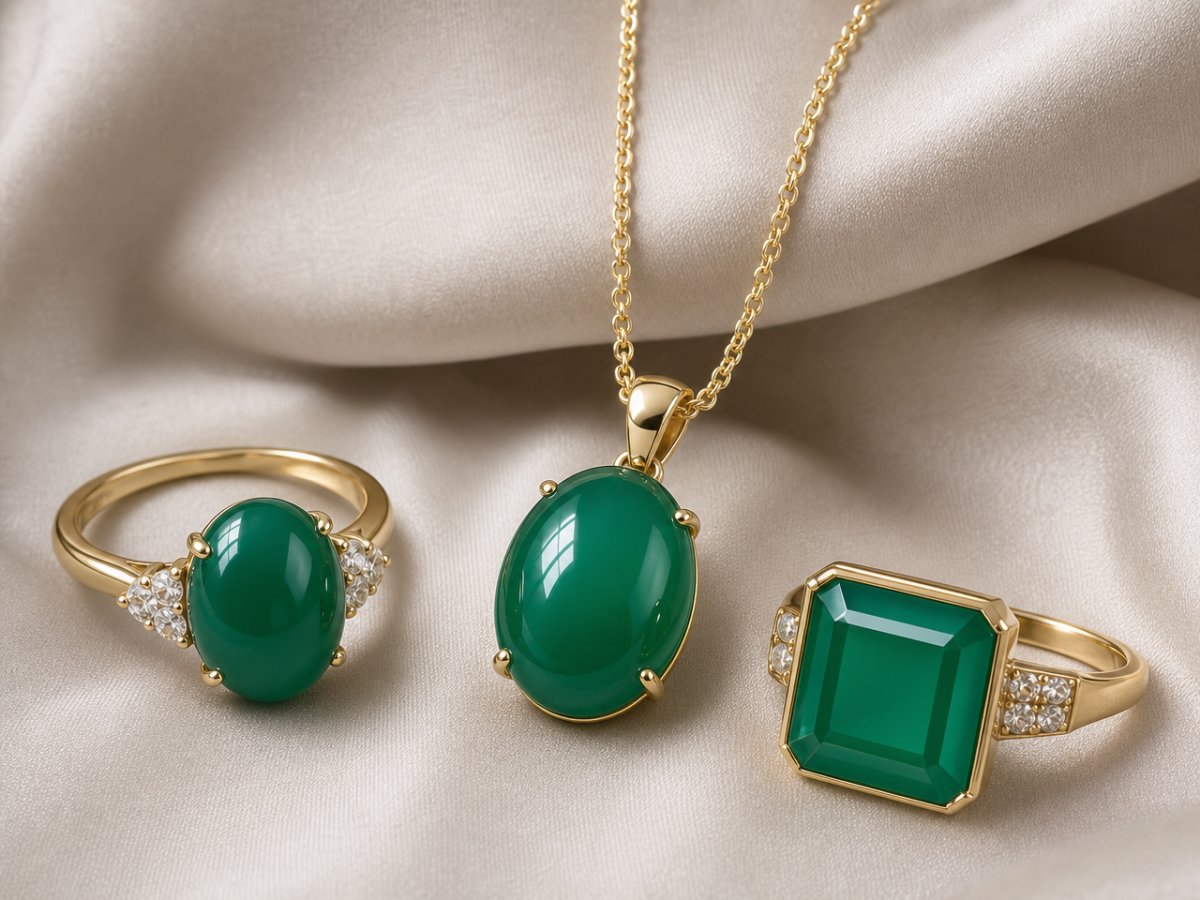
Green agate is especially practical for earrings and rings, two of its most common jewelry uses. Earrings allow the color to stand out without heavy wear, while rings benefit from cabochon cuts and smooth shapes that are comfortable on the hand. For rings, consider bezels or other protective settings if the piece will be worn often.
Necklaces and pendants are also excellent choices, especially for larger cabochons, pear shapes, ovals and carved stones. Bracelets and brooches can work well, but bracelets should be designed with awareness that they are more exposed to knocks and abrasion.
How to Choose Green Agate: Practical Buying Checklist
1. Decide what shade of green you want
Compare stones side by side if possible. Choose the green tone that best supports your jewelry design rather than assuming the strongest color is always the best choice.
2. Check treatment disclosure
Dyed green agate is common, so look for clear treatment information. If you specifically want untreated material, make sure the listing says so.
3. Match cut to jewelry use
Cabochons are a dependable choice for rings, earrings and pendants. Carvings suit decorative jewelry, while faceted stones offer a less traditional look.
4. Review size, shape and setting needs
Oval and round stones are easy to use in standard jewelry layouts. Pear, cushion, trillion and carved shapes can make a design more distinctive but may require more careful setting choices.
5. Inspect polish and symmetry
A good cabochon should have an attractive outline, smooth polish and a pleasing dome. In matched pairs or sets, pay attention to consistency of size, shape and color.
6. Buy from a seller with clear gemstone details
For purchasing confidence, look for listings that provide dimensions, weight, treatment information and photos. These details help you select stones that fit both the design and your expectations.
Summary
Green agate is a versatile quartz gemstone that works well in many jewelry styles, especially cabochon rings, earrings, pendants and necklaces. The best purchase is not simply the greenest stone, but the one with the right color, cut, size, treatment disclosure and durability for your intended use. By paying close attention to these practical factors, buyers can choose green agate with confidence.
