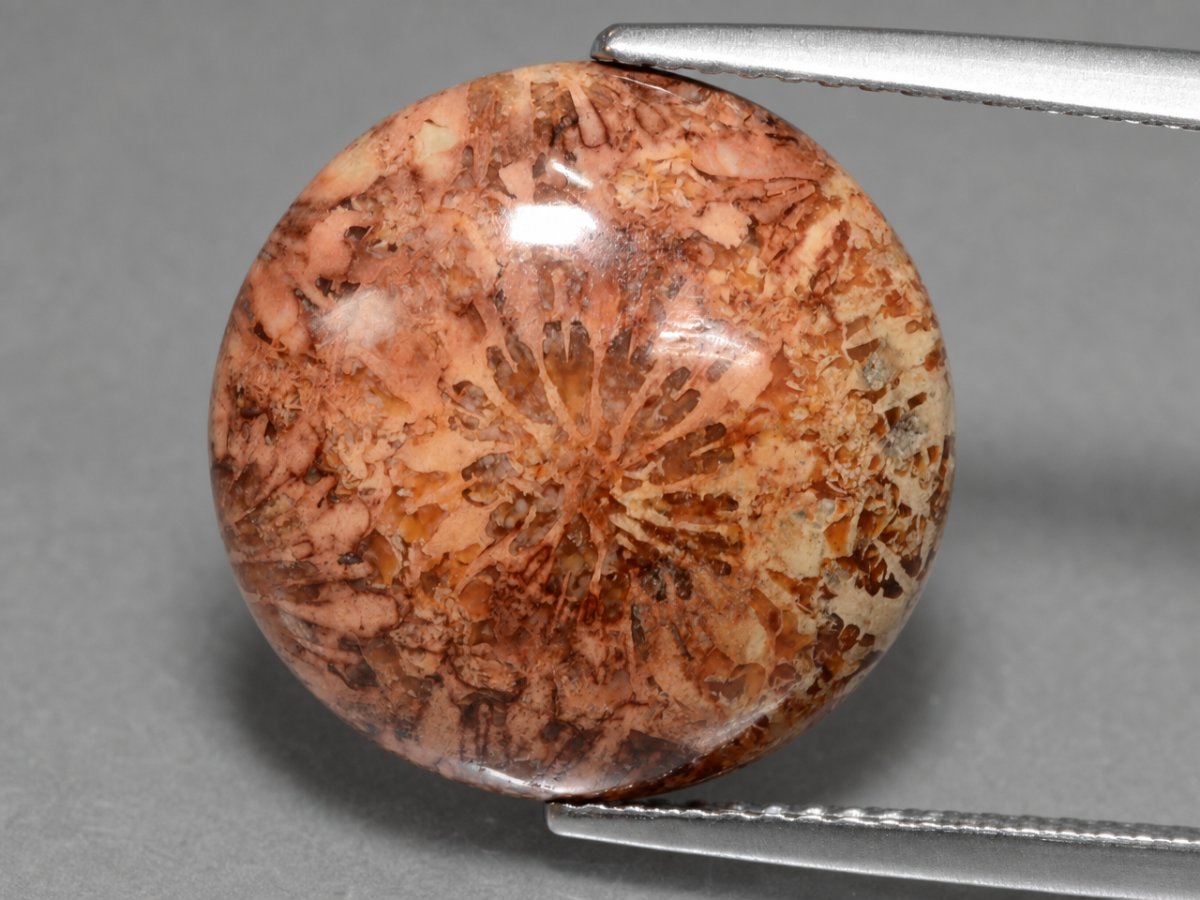


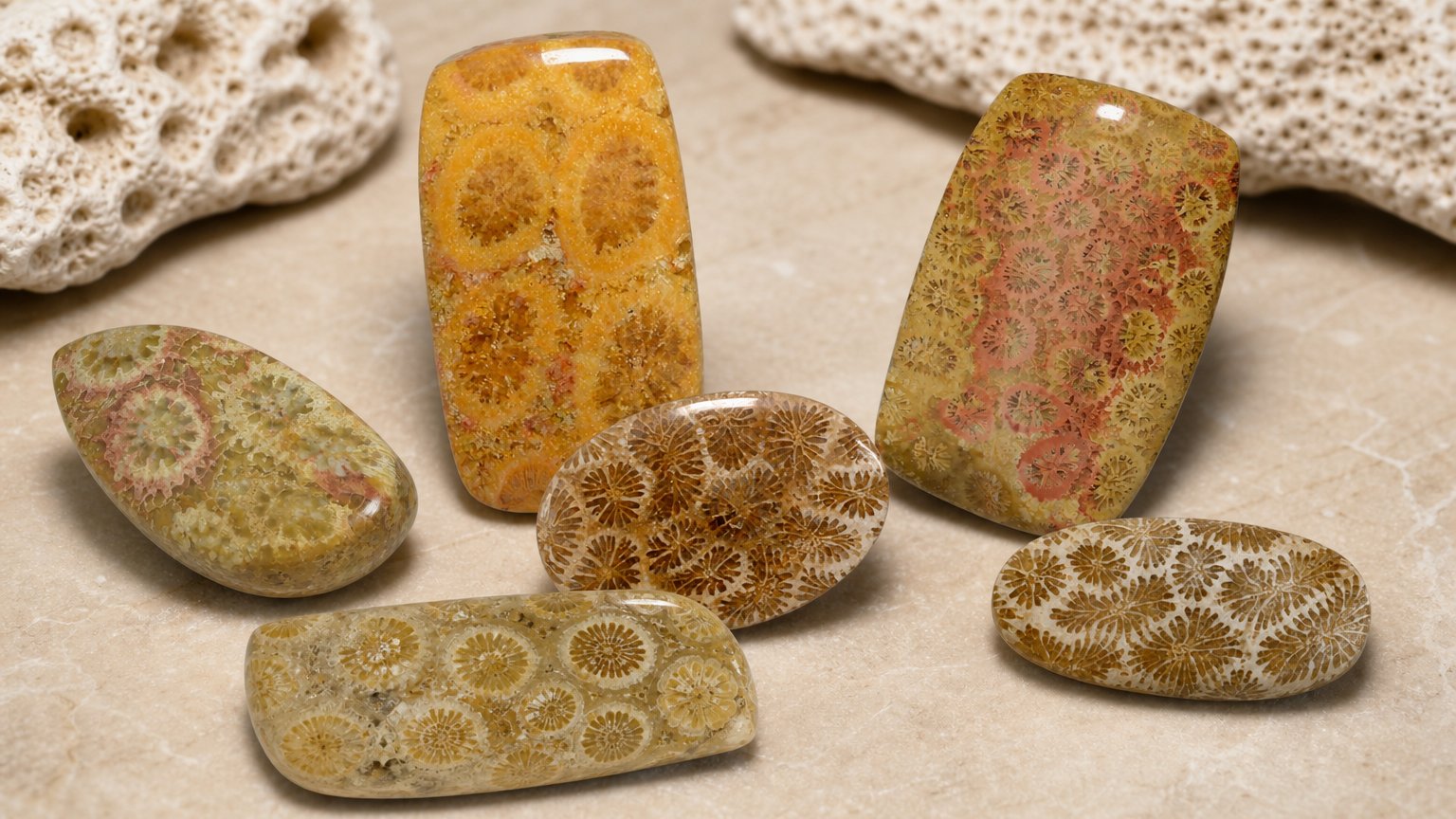
Fossil coral is chosen less for sparkle and more for natural pattern, character and individuality. Each stone can show organic-looking details from ancient coral structures that have been transformed into a gem material composed primarily of chalcedony. For buyers, the most important decisions are visual: pattern, color, shape, size and how the stone will be used in jewelry.
This guide explains the practical points to consider before buying fossil coral, including appearance, common cuts, durability, treatments and suitable jewelry designs.
What Is Fossil Coral?
Fossil coral is a gemstone material formed when coral is fossilized and the original material is replaced or preserved in a silica-rich form, primarily SiO₂ chalcedony. Gemologically, it belongs to the quartz family and has a trigonal crystal system, with a refractive index of about 1.530-1.540 and a specific gravity of 2.58-2.64.
The main appeal of fossil coral is its natural patterning. Rather than a single uniform color, buyers often look for attractive contrast, well-defined coral-like structures and a pleasing overall composition. Because patterns vary from stone to stone, fossil coral is especially popular with collectors, jewelry designers and buyers who prefer gems with an organic look.
Color and Pattern: The Main Buying Factors
Fossil coral is commonly multicolor, and many stones combine warm, neutral and contrasting tones within the same gem. Orange is one of the important color appearances, while white, black and pink may also be seen. The best choice depends on the design style you want: warm orange tones can suit earthy or artisan settings, while high-contrast black-and-white areas can create a more graphic look.
When comparing fossil coral gemstones, pay close attention to the pattern rather than judging by color alone. Look for patterns that are clear, balanced and visually interesting. Some buyers prefer dense, flower-like or cellular details, while others prefer softer, more abstract markings. There is no single standard pattern that is "best"; the most desirable stone is usually the one with the most appealing natural design for your intended jewelry piece.
Cut and Shape
Fossil coral is most often cut as a cabochon. A cabochon has a smooth, polished domed surface rather than facets, which is ideal for displaying pattern and color. This cut also makes fossil coral easy to set in pendants, necklaces, earrings and artisan jewelry.
Freeform shapes are especially common because cutters can follow the natural pattern of the material and preserve attractive areas of the stone. Oval, cushion and pear shapes are also popular choices for more traditional jewelry layouts. Round, marquise and trillion shapes may be used when a specific design calls for them.
Carvings and slices are also seen. Carved fossil coral can be attractive in unique or handmade designs, while slices can emphasize broad natural patterning. For jewelry, check that the cut is symmetrical enough for the setting, that the polish is even and that the stone has no awkwardly thin or vulnerable edges.
Size and Layout Considerations
Because fossil coral is valued strongly for its pattern, bigger is not automatically better. A smaller stone with a crisp, attractive pattern may be more visually effective than a larger stone with dull or confused markings. For pendants and necklaces, larger cabochons or freeforms can work well because there is enough surface area to show the fossil structure. For earrings, matched pairs should be judged by overall harmony in color, shape and pattern rather than by perfect duplication.
Origins
Indonesia is an important source associated with fossil coral. Material may also be associated with the United States, Malaysia and Thailand. For most buyers, origin is less important than appearance, cut quality, treatment disclosure and suitability for the intended jewelry piece. If origin matters to you as a collector or designer, buy from a seller who clearly provides available source information.
Durability and Everyday Wear
Fossil coral has a Mohs hardness of 6.5-7, which gives it reasonable durability for many types of jewelry. This hardness is similar to many chalcedony-based gemstones, making it suitable for pendants, necklaces, earrings and many artisan designs.
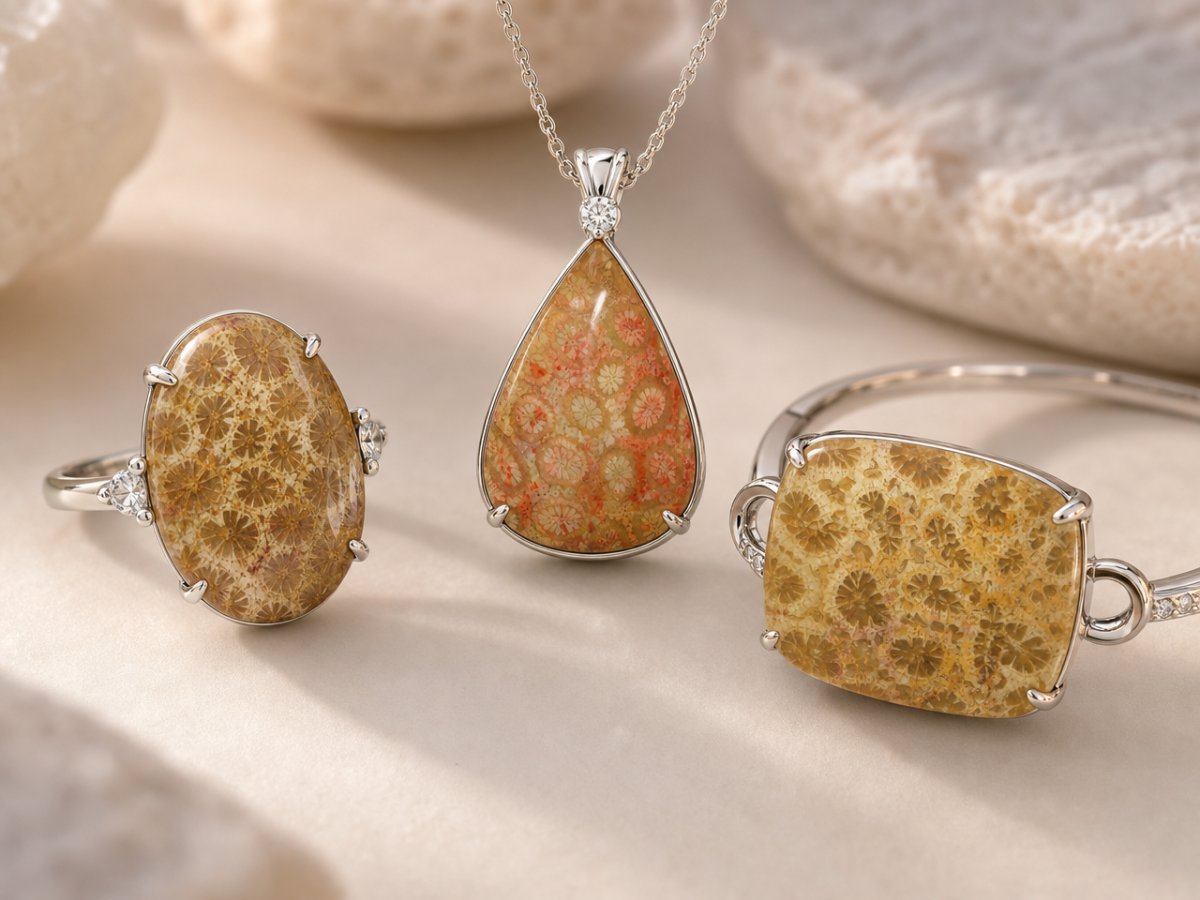
Rings and bracelets are possible, but they require more care because they are more exposed to knocks, abrasion and contact with hard surfaces. If choosing fossil coral for a ring, a protective bezel or low-profile setting is a practical option. For bracelets, avoid designs where the stones are likely to strike desks, counters or other jewelry repeatedly.
Treatments and Disclosure
Fossil coral is commonly sold untreated. Stabilization may also be encountered. Stabilization is used in some gem materials to improve structural stability, especially when the material has natural porosity, fractures or areas that benefit from reinforcement.
When buying fossil coral, check the treatment information provided by the seller. Untreated stones may appeal to buyers who prefer minimal enhancement, while stabilized material may still be suitable for jewelry when properly disclosed. The key point is transparency: treatment status should be clearly stated so you know what you are buying.
Best Jewelry Uses for Fossil Coral
Fossil coral is especially well suited to necklaces and pendants, where its natural pattern can be shown clearly and protected from heavy wear. It is also a strong choice for artisan jewelry because freeform cabochons and unique patterns allow designers to create one-of-a-kind pieces.
Earrings are another practical use, especially when the stones are not too heavy and the patterns complement one another. Bracelets and rings can be attractive, but they should be chosen and worn with more care because those jewelry types experience more impact and abrasion.
How to Choose Fossil Coral: A Practical Checklist
- Choose by pattern first: Look for clear, attractive and balanced natural markings.
- Consider color contrast: Multicolor stones and orange-toned examples are common choices, but white, black and pink areas can add character.
- Match the cut to the design: Cabochons suit most jewelry, while freeforms are ideal for artisan pieces.
- Inspect the polish: The surface should look smooth and well finished, especially on domed cabochons.
- Think about wear: Pendants and earrings are safer choices for frequent use than rings or bracelets.
- Check treatment disclosure: Confirm whether the stone is untreated or stabilized.
- Buy the exact stone you like: Because fossil coral patterns are individual, photos and measurements are especially important.
Care Tips
Clean fossil coral with mild soap, lukewarm water and a soft cloth or soft brush. Avoid harsh chemicals, strong household cleaners and rough handling. Store it separately from harder gemstones to reduce the chance of scratches. For rings and bracelets, remove the jewelry before activities that involve impact, pressure or abrasive contact.
Summary
Fossil coral is a distinctive gemstone for buyers who appreciate natural pattern over brilliance. The best examples for your needs will have appealing color, well-defined patterning, a suitable cabochon or freeform cut and clear treatment disclosure. With a hardness of 6.5-7, it is practical for pendants, necklaces, earrings and many artisan jewelry designs, while rings and bracelets should be selected with protective settings and worn with care. GemSelect buyers should compare individual stones closely, since the beauty of fossil coral lies in its natural variation.