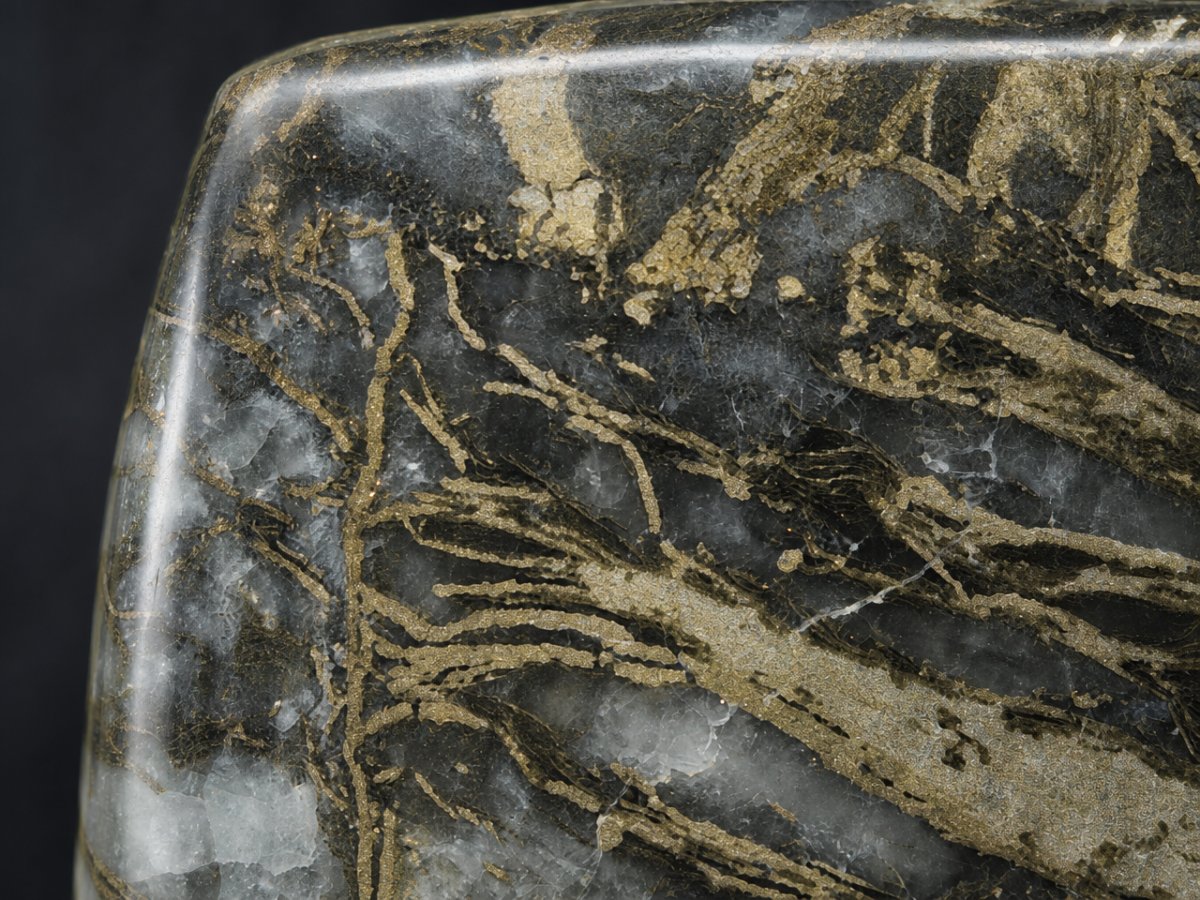


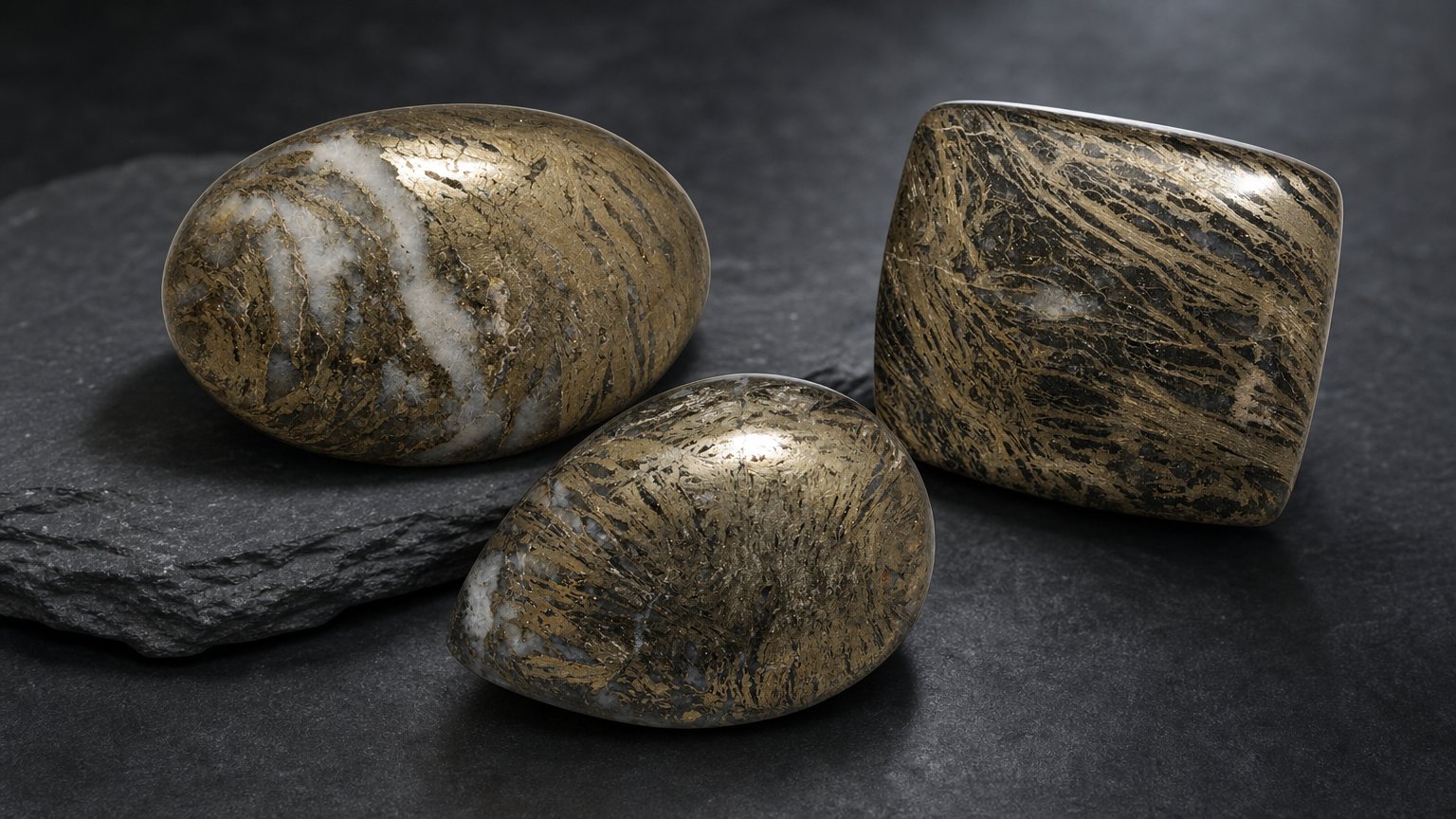
Feather Pyrite is a distinctive variety of pyrite chosen for its bold opaque appearance and decorative color contrast. For buyers, the most important considerations are not traditional clarity or brilliance, but face-up pattern, color balance, polish, cut quality, size and the intended jewelry use.
This guide explains what to look for when choosing Feather Pyrite gemstones, whether you are buying a cabochon for a pendant, matched stones for earrings, or a statement piece for artisan jewelry.
What Is Feather Pyrite?
Feather Pyrite is a variety of pyrite, an iron sulfide mineral with the chemical formula FeS₂. It belongs to the isometric crystal system and is opaque, so its refractive index is not usually measured for gem buying purposes.
Unlike transparent gemstones, Feather Pyrite is appreciated for surface appearance rather than light return through the stone. Buyers should judge it by its color, pattern, finish and how well the cut presents the material.
Color and Appearance: What to Look For
Feather Pyrite commonly shows a multicolor appearance, often featuring black, gold and yellow tones. The strongest stones for jewelry are usually those with an attractive face-up pattern and a pleasing balance between darker and metallic-looking areas.
Because Feather Pyrite is opaque, clarity grading is not a major buying factor. Instead, inspect the visible surface. Look for a smooth polish, clean outline and a pattern that is centered or intentionally positioned within the shape. For matched pairs, such as earrings, focus on similar size, outline, color balance and overall visual harmony rather than expecting identical patterning.
Cut Styles and Shapes
Cabochons are the most common and practical cut for Feather Pyrite. A good cabochon should have an even dome, a smooth polish and a balanced outline. The cabochon style suits opaque gems because it emphasizes surface color and pattern rather than internal brilliance.
Carvings and slice cuts are also seen, especially in artisan designs. Carvings can make the stone more sculptural, while slices can emphasize a broad display of the material. When buying these styles, check the edges, thickness and finish carefully, as workmanship has a direct impact on the final appearance.
Popular shapes include oval and cushion, with pear shapes also appearing often. Freeform shapes can be attractive for one-of-a-kind jewelry, while round and marquise shapes may suit more specific design needs. Choose the shape according to the setting and how much of the pattern you want visible.
Origins and Buying Confidence
Feather Pyrite is associated with several origins, with Peru and Russia being especially important sources. Spain is also known, while China and the United States may be encountered in the market.
Origin can be interesting for collectors, but for most jewelry buyers it should not outweigh appearance, cut quality and seller disclosure. If origin is important to you, buy from a seller that clearly states the source when known. When comparing gemstones on GemSelect or elsewhere, prioritize well-photographed stones with clear descriptions over origin alone.
Gemological Properties That Matter to Buyers
Feather Pyrite has a Mohs hardness of 6 to 6.5. This gives it reasonable hardness for many jewelry designs, but it is not in the same durability category as harder everyday-wear gems. It also has a specific gravity of about 4.9 to 5.2, meaning it can feel relatively heavy for its size compared with many other gemstones.
Its opacity is important for buying decisions. You do not need to evaluate transparency, windowing or internal inclusions in the same way you would with transparent gems. Instead, concentrate on the visible face, polish and how the stone will sit in the jewelry design.
Durability and Jewelry Suitability
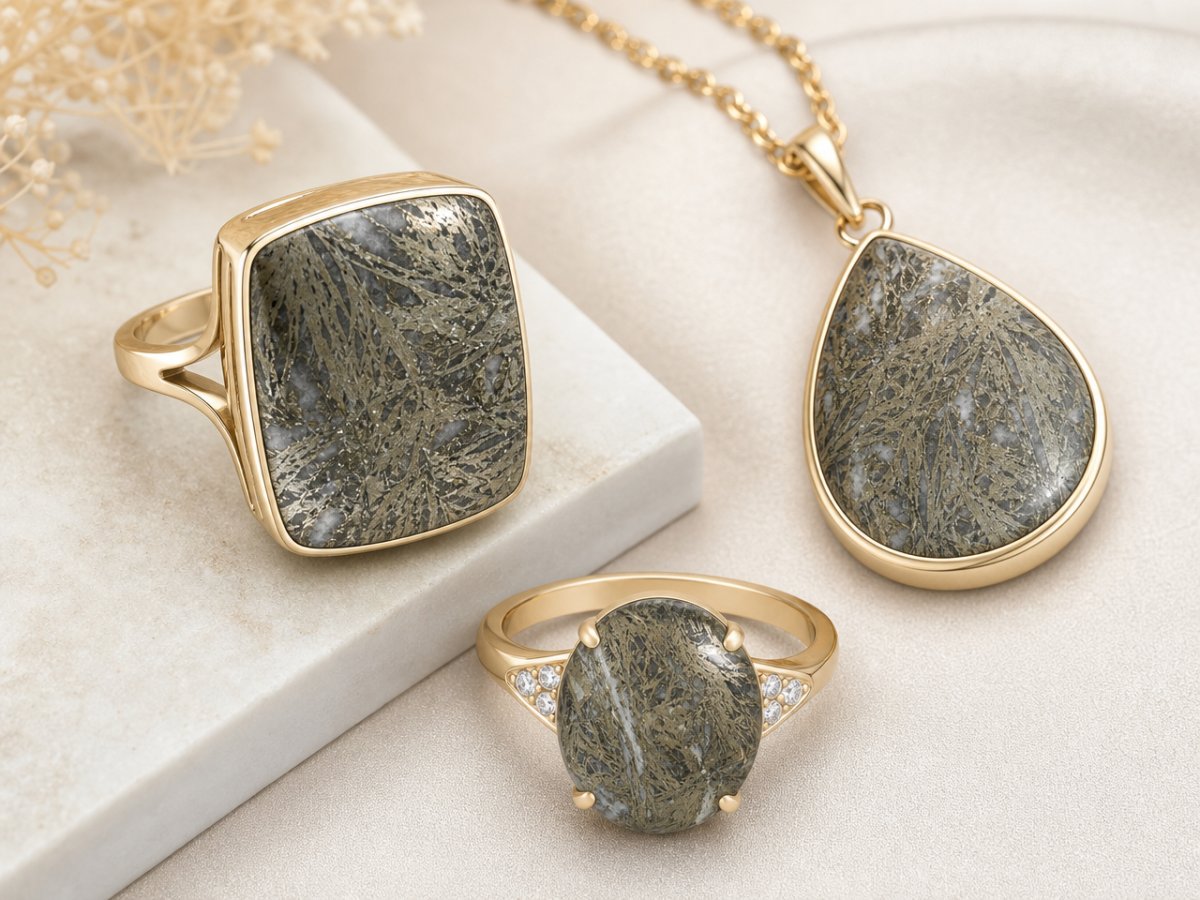
Feather Pyrite is well suited to pendants, necklaces, brooches and earrings, where it is less exposed to impact and abrasion. These uses allow the stone's surface pattern and metallic-looking color to be displayed prominently.
Rings are possible, but they require more care. If you choose Feather Pyrite for a ring, consider a protective setting and wear it as an occasional or statement ring rather than for rough daily use. The stone's moderate hardness means it should be protected from knocks and stored separately from harder gems that could scratch it.
Treatments
Feather Pyrite is commonly offered untreated. This is helpful for buyers who prefer natural, untreated gemstones. As with any gemstone purchase, check the seller's treatment disclosure and keep the information with your records, especially if the stone is intended for a custom jewelry project or collection.
How to Choose Feather Pyrite: Practical Buying Checklist
1. Choose by appearance first
Select the stone with the most appealing face-up color and pattern. In Feather Pyrite, the visual arrangement of multicolor, black, gold and yellow tones is a major part of its character.
2. Inspect the polish and cut
For cabochons, look for an even dome, smooth surface and symmetrical outline unless the stone is intentionally freeform. For slices and carvings, check that the shape feels deliberate and that the finish is clean.
3. Match the stone to the jewelry use
Use pendants, earrings, necklaces and brooches for easy wear and strong visual impact. For rings, choose protective settings and avoid designs that leave exposed edges vulnerable to impact.
4. Consider size and weight together
Because Feather Pyrite has a relatively high specific gravity, a stone may feel heavier than expected for its dimensions. For earrings, check the millimeter size and overall weight if comfort is important.
5. Confirm treatment and origin information
Untreated material is common, but disclosure still matters. If origin is listed, treat it as a useful detail rather than the only measure of quality.
Summary
The best Feather Pyrite gemstone is one that combines attractive multicolor, black, gold or yellow appearance with a well-executed cut and a jewelry-appropriate size. Cabochons are the most common choice, especially for pendants and other display-focused designs. For buyers, the smartest approach is to evaluate the surface pattern, polish, shape, treatment disclosure and setting suitability before making a purchase.