


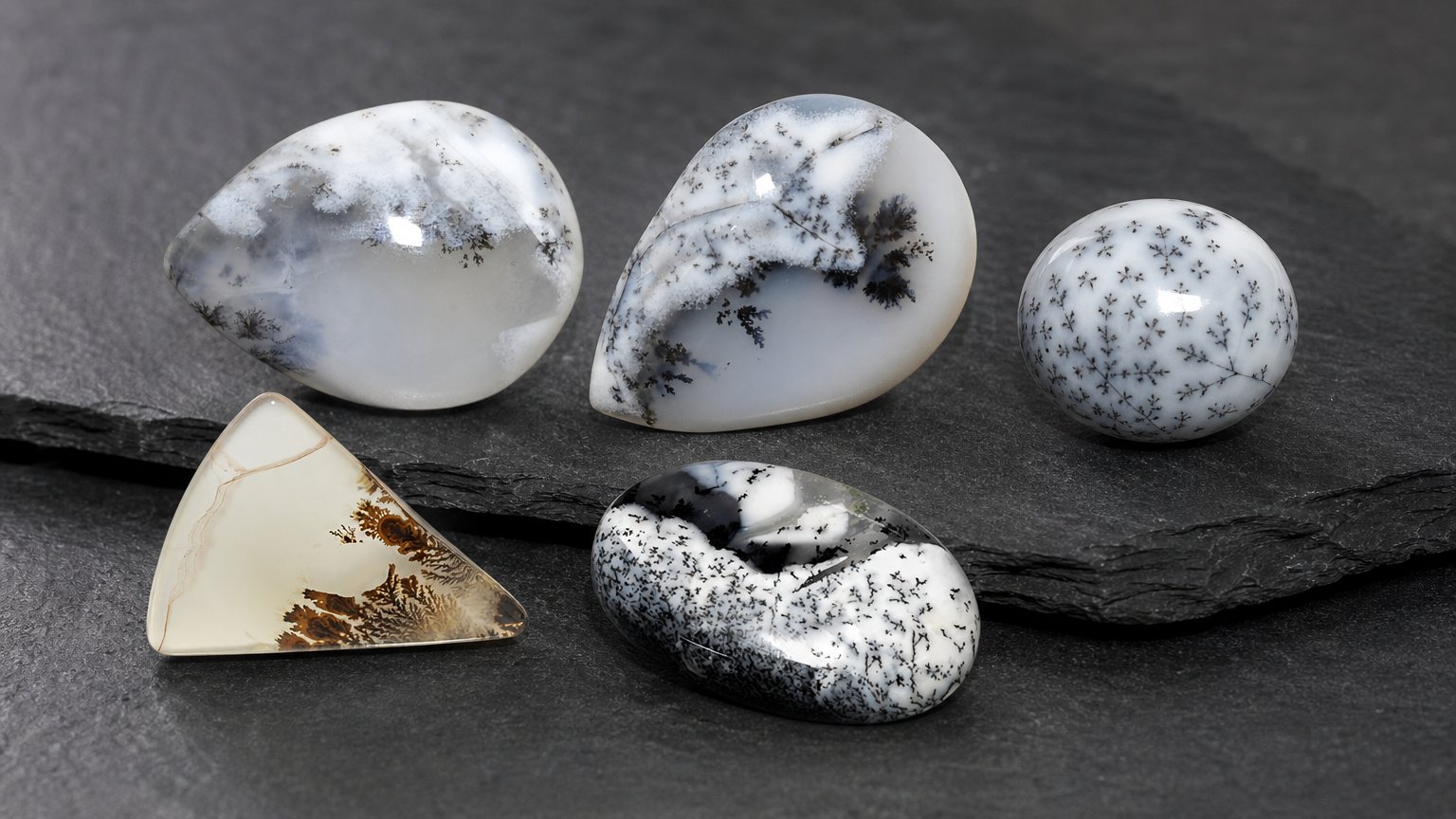
Dendritic agate is a distinctive variety of agate chosen for its patterned, multicolor appearance and its suitability for a wide range of jewelry designs. For buyers, the appeal is often visual rather than standardized: each stone can look different, and the best choice depends on how the pattern, shape, size and setting work together.
This buying guide explains the practical points to consider before purchasing dendritic agate, including appearance, cut, durability, treatments, origin and jewelry use. Whether you are selecting a single cabochon for a pendant, matching stones for earrings, or a distinctive gem for a ring, understanding these factors will help you buy with confidence.
What Is Dendritic Agate?
Dendritic agate is a variety of agate, and agate belongs to the quartz family. Its chemical formula is SiO₂, the same basic formula associated with quartz. Like other agates, dendritic agate is valued as an ornamental gemstone and is commonly cut to show its natural patterning rather than to maximize brilliance in the way a transparent faceted gemstone might be cut.
From a buying perspective, dendritic agate should be judged first as a patterned gemstone. There is no single ideal look that suits every buyer. Some stones have bold, high-contrast designs, while others have a softer, more subtle character. Because of this, personal preference and jewelry design goals are especially important when selecting dendritic agate.
Color and Appearance: What to Look For
Dendritic agate is known as a multicolor gemstone. The visual interest comes from the way its colors and internal patterning appear across the surface of the cut stone. When comparing stones, look at the overall balance of color, the visibility of the pattern and the way the design is positioned within the shape.
For many buyers, the most attractive dendritic agates are those where the pattern is clearly visible and well framed by the cut. A cabochon with an interesting central design may work beautifully in a ring or pendant, while a more expansive slice or freeform stone may be better suited to a statement necklace or artistic jewelry design.
Pattern Placement Matters
Because dendritic agate is appreciated for its appearance, pattern placement can be more important than strict symmetry. A stone may be oval, round, cushion, pear, baguette or freeform, but the cut should present the most appealing part of the material. In a ring stone, the pattern should be pleasing when viewed face-up. In a pendant, a larger or more elongated design can be very effective.
Before buying, view the stone in the orientation in which it will be worn. A pattern that looks attractive loose on a tray may look different once it is set vertically in a pendant or horizontally in a ring.
Common Cuts and Shapes
Dendritic agate is most commonly cut as a cabochon. A cabochon has a smooth, polished, domed top rather than facets. This style is especially suitable for patterned opaque to translucent gems because it displays the surface pattern clearly and provides a smooth, durable finish for jewelry use.
Slice cuts are also used, especially when the goal is to show a broader natural pattern. Slices can have a more organic appearance and may be especially appealing in pendants, necklaces and designer jewelry. Carvings and faceted stones are also possible, though they are less typical choices. Faceting is generally more associated with transparent gems where sparkle is the main goal, while dendritic agate is usually selected for pattern and character.
Choosing a Shape
Oval and freeform shapes are especially common and useful. Ovals are practical for rings, pendants and earrings because they are easy to design around and generally comfortable to wear. Freeform stones are ideal when the natural pattern is the star of the design and the cutter has shaped the gem around its best visual features.
Cushion and round shapes are also common options and can be useful when a designer wants a balanced, classic outline. Pear and baguette shapes may suit more specific jewelry styles. When selecting a shape, consider whether the outline complements the pattern. With dendritic agate, the best-looking stone is not always the most conventional shape.
Clarity, Transparency and Surface Quality
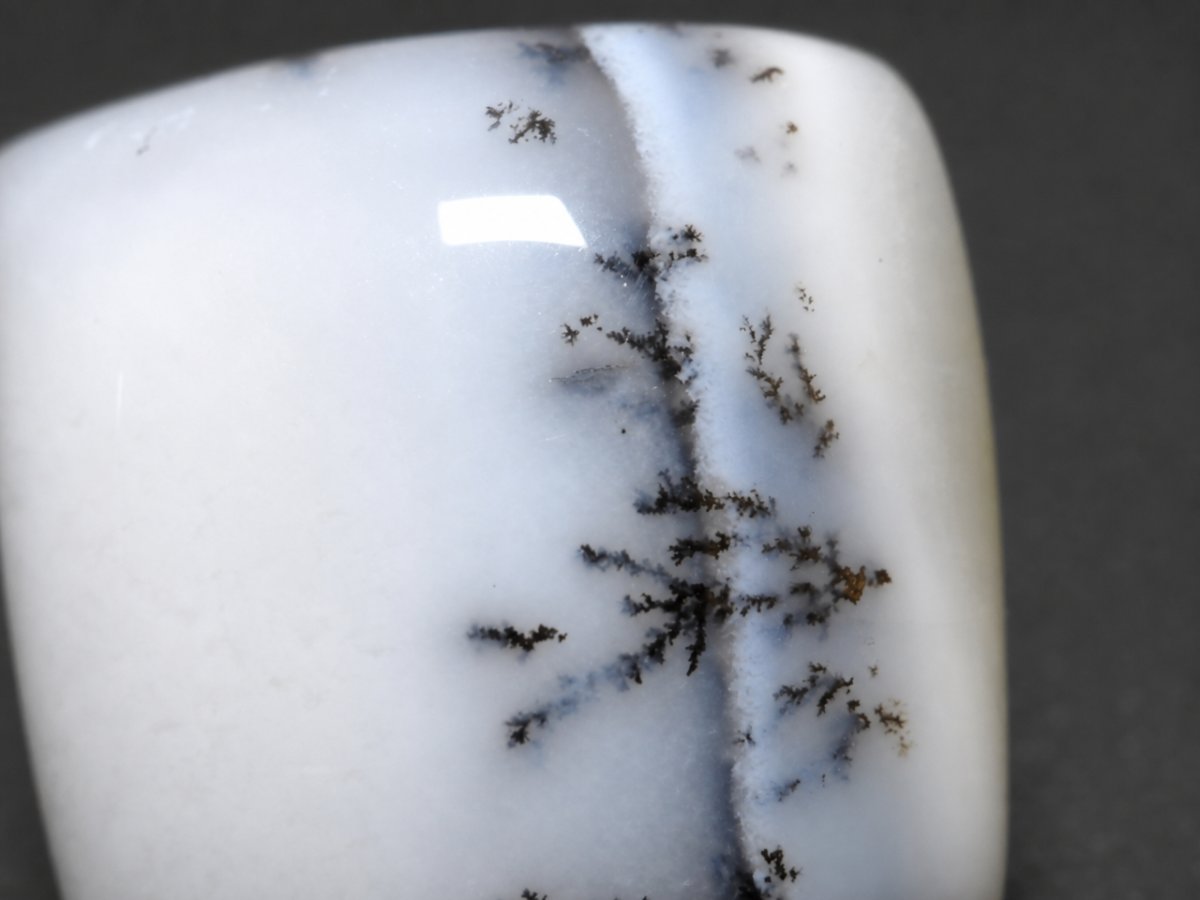
Unlike diamonds or many transparent colored gemstones, dendritic agate is not usually purchased according to a clarity grade. Buyers should instead look for a clean, well-polished surface and an attractive face-up appearance. Natural internal features are part of the look of the stone, but chips, pits, scratches or poorly finished areas can affect both appearance and wearability.
Inspect the polish under good lighting. The surface should look smooth and even, especially on cabochons. On slice cuts, check the edges as well as the face of the stone. Thin or irregular edges may be part of an artistic design, but they should still be appropriate for the intended setting.
Gemological Properties
Dendritic agate is part of the quartz family and has a trigonal crystal system. Its refractive index is 1.530 to 1.540, and its specific gravity is 2.58 to 2.64. These gemological properties are useful for identification and for understanding the gemstone’s general behavior, but most retail buyers will focus more on appearance, cut and suitability for jewelry.
The Mohs hardness of dendritic agate is 6.5 to 7. The Mohs scale measures resistance to scratching, with higher numbers indicating greater scratch resistance. This hardness range makes dendritic agate suitable for many jewelry applications, provided the setting and care are appropriate.
Durability and Everyday Wear
With a Mohs hardness of 6.5 to 7, dendritic agate is reasonably durable for jewelry, but it should still be treated with care. It is appropriate for pendants, rings, earrings, necklaces, bracelets, brooches and cufflinks, though different jewelry types expose the stone to different levels of wear.
Pendants and earrings are generally lower-impact uses because they are less likely to strike hard surfaces during daily wear. Rings and bracelets require more consideration because they are more exposed to knocks, abrasion and accidental contact. If you choose dendritic agate for a ring, a protective setting can help reduce the chance of edge damage. For bracelets, consider designs that protect the stones and avoid constant impact.
Care Tips for Dendritic Agate Jewelry
Clean dendritic agate with mild soap, lukewarm water and a soft cloth or soft brush. Avoid harsh chemicals and abrasive cleaners. Store it separately from harder gemstones to reduce the risk of scratches. As with many gemstones, it is best to remove dendritic agate jewelry before heavy work, sports or activities where the stone could be hit or scraped.
Treatments: Untreated and Dyed Dendritic Agate
Dendritic agate is commonly available untreated. For many buyers, untreated stones are preferred because the appearance is natural to the material. However, dyed dendritic agate can also occur. Dyeing is used in some agates to alter or intensify color, and buyers should pay attention to treatment disclosure when comparing stones.
When purchasing, look for clear information about whether the stone is untreated or dyed. Treatment status can matter for personal preference, jewelry design and long-term expectations. If a color looks unusually strong or uniform, it is reasonable to ask whether the stone has been dyed. Reputable sellers, including GemSelect, aim to provide treatment information so buyers can make informed choices.
Origins of Dendritic Agate
Dendritic agate is associated with several important sources. India is a notable origin, and material is also known from Brazil, Madagascar, Australia, Mexico and the United States. Origin can be interesting to collectors and may help describe a stone’s background, but it should not be the only buying factor.
For most jewelry buyers, appearance and cutting quality will matter more than country of origin. A well-cut stone with an attractive pattern is usually more useful than a stone chosen only because of its source. If origin is important to you, check the product information and ask the seller for available details.
Best Jewelry Uses for Dendritic Agate
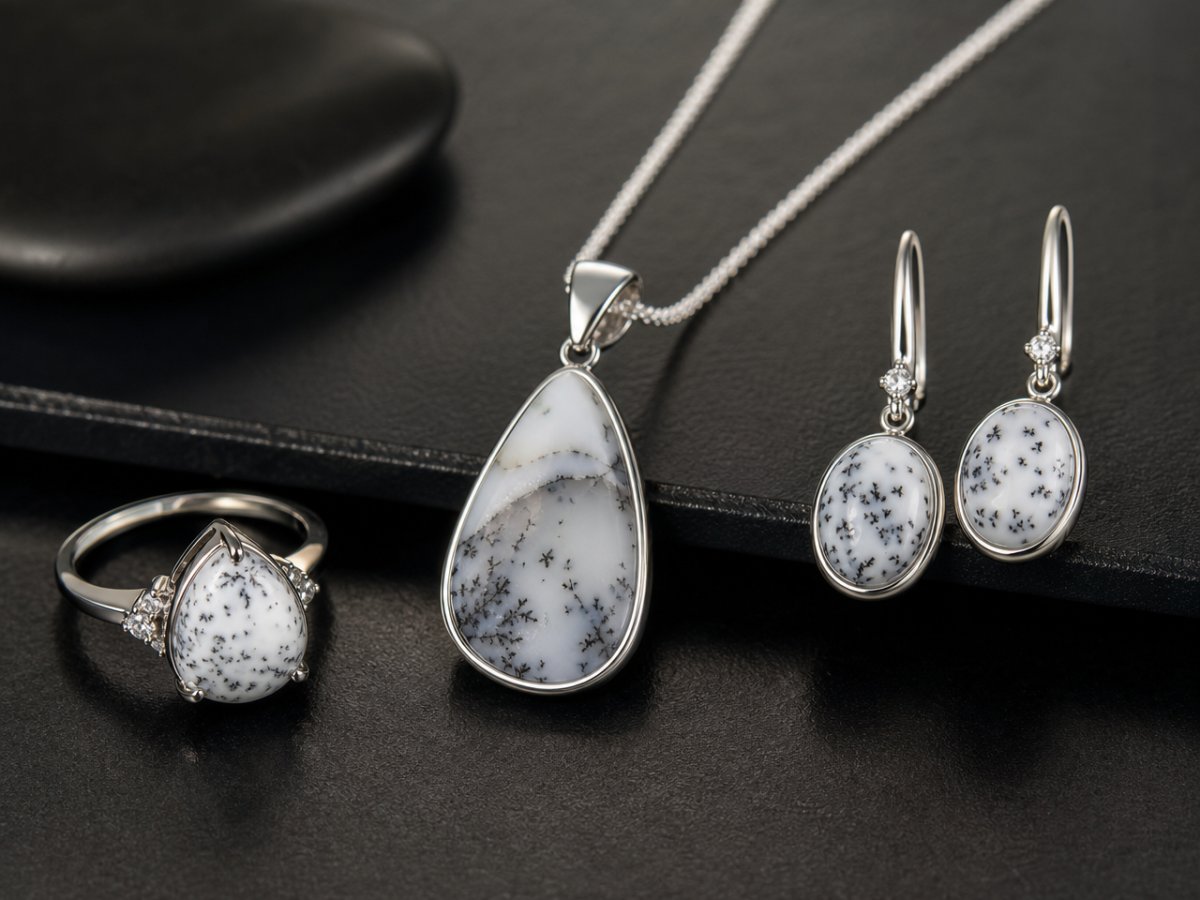
Dendritic agate is highly versatile. Pendants and rings are among the most popular uses because a single patterned stone can become the visual center of the design. A pendant allows for larger stones and more dramatic patterns, while a ring offers a compact display that can be worn often with suitable care.
Earrings and necklaces are also excellent choices, particularly when the stones are selected for complementary patterns or balanced shapes. Exact matches can be difficult with a patterned gem, so buyers should look for pairs or layouts that feel harmonious rather than identical. Bracelets can be attractive but should be designed with durability in mind because wrist jewelry is more exposed to impact.
Brooches and cufflinks are additional options for buyers who want a distinctive patterned gem in accessories. These uses can be especially effective for freeform or cabochon stones where the design benefits from a larger visible surface.
How to Buy Dendritic Agate: Practical Checklist
1. Start with the Pattern
Choose a stone whose pattern you genuinely like. Dendritic agate is not a gem where buyers need to chase a single standardized ideal. Look for balance, contrast and an arrangement that suits your intended jewelry design.
2. Match the Cut to the Jewelry
Cabochons are the safest and most traditional choice for rings, pendants and earrings. Slice cuts can be excellent for pendants and necklaces where a broader pattern can be shown. Freeform shapes are ideal for custom jewelry, while ovals, rounds and cushions are easier to fit into classic settings.
3. Check the Polish and Edges
A good polish improves the look of dendritic agate and makes the pattern easier to appreciate. Inspect the surface for scratches, chips or dull areas. If the stone is a slice or freeform, check whether the edges are suitable for secure setting.
4. Consider Size and Wearability
Larger dendritic agates can show more pattern, making them attractive for pendants and statement pieces. Smaller stones may work better for rings, earrings and cufflinks. Think about comfort, weight and how the stone will sit in the design.
5. Review Treatment Information
Untreated dendritic agate is common, but dyed material exists. Always review the treatment disclosure before purchase. If you prefer natural color, choose stones listed as untreated.
6. Choose the Right Setting
For rings and bracelets, protective settings are useful because these jewelry types are more exposed to wear. Bezel settings can help protect edges, while pendants and earrings allow more design flexibility because they typically experience less impact.
Buying Dendritic Agate from GemSelect
When browsing dendritic agate at GemSelect, compare stones by appearance, shape, size, cut and treatment disclosure. Because each patterned gemstone is individual, photographs and measurements are especially important. Take time to select a stone that fits both your design requirements and your personal taste.
If you are buying for jewelry production, consider whether you need calibrated shapes or whether a freeform stone would better showcase the material. For collectors, pattern uniqueness and overall presentation may be the most important factors. For everyday jewelry, durability, setting choice and comfort should guide the purchase.
Summary
Dendritic agate is a multicolor variety of agate in the quartz family, valued for its individual patterns and broad jewelry potential. It is most often cut as a cabochon, with slice cuts and freeform shapes also used to highlight attractive natural designs. With a Mohs hardness of 6.5 to 7, it is suitable for many jewelry types, especially pendants, rings, earrings and necklaces when set and cared for appropriately.
The best dendritic agate purchase is one that combines an appealing pattern, good polish, suitable shape, appropriate size and clear treatment information. Rather than focusing on a rigid grading standard, buyers should choose a stone that looks beautiful in the intended setting and suits how the jewelry will be worn.
