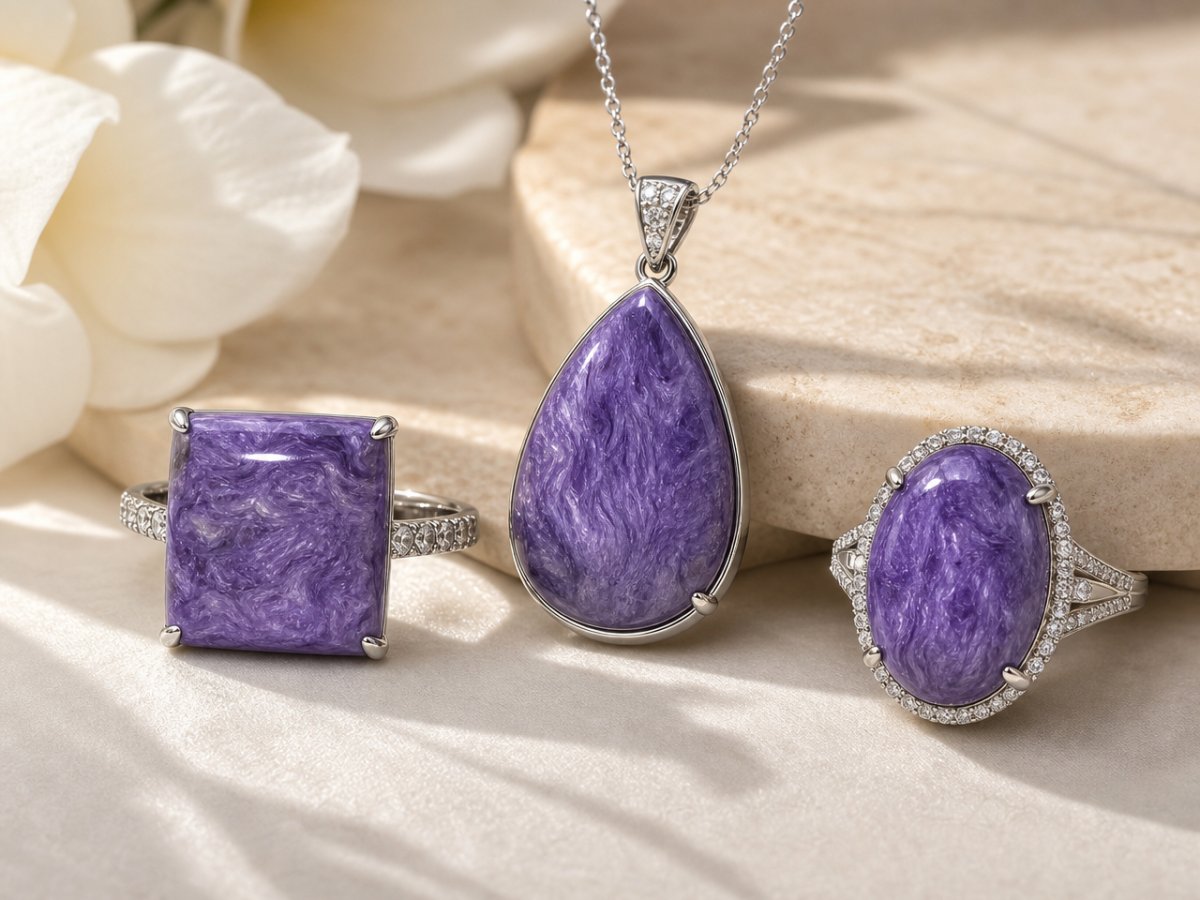


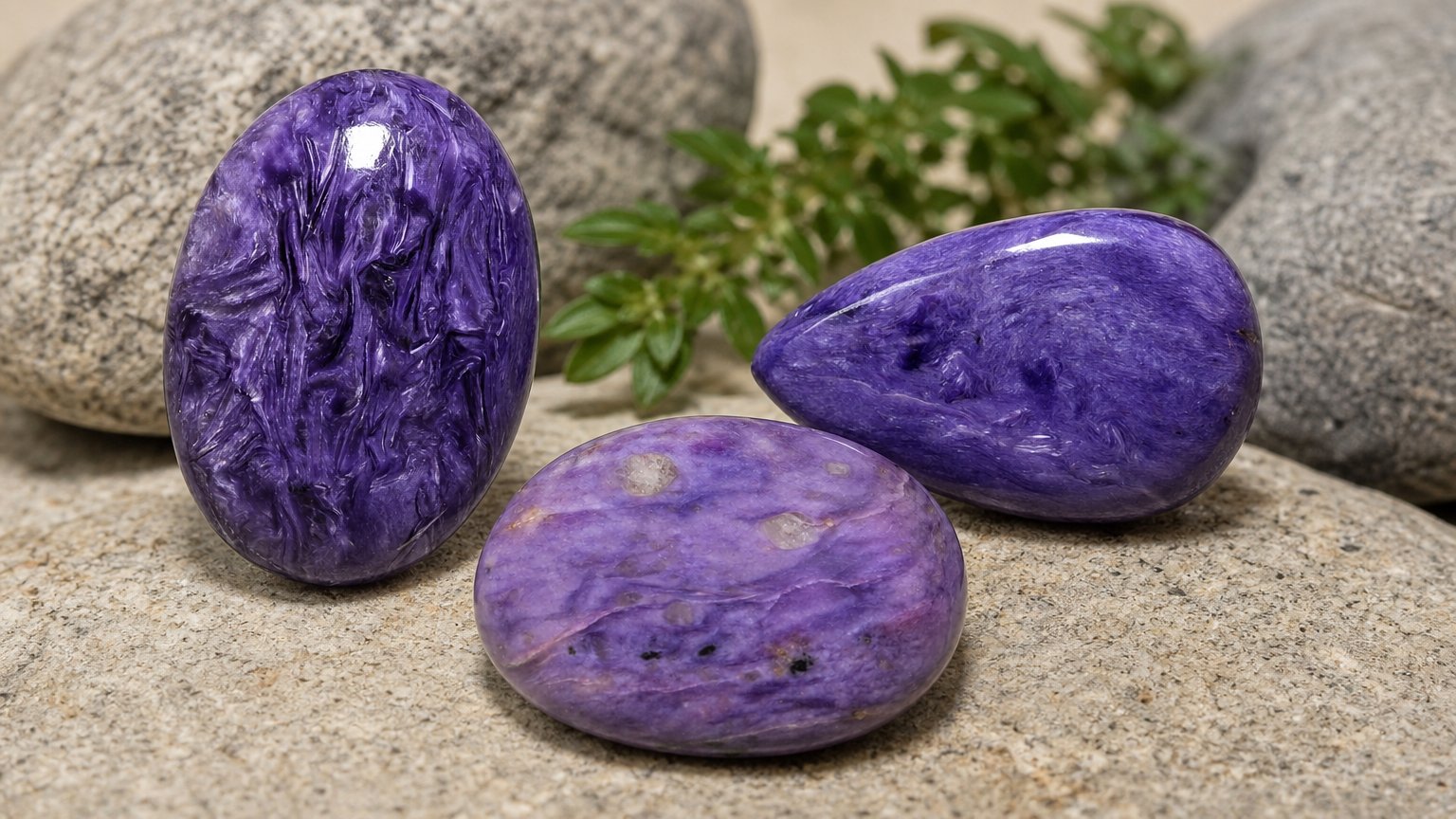
Charoite is chosen for its distinctive violet to purple color and its strong design presence in jewelry. For buyers, the most important decisions are visual: selecting the color, shape and cut that suit the intended piece. Practical considerations such as durability, treatment status and origin also help you buy with confidence.
This guide explains what to look for when comparing charoite gemstones, especially cabochons for pendants, necklaces, rings, earrings and artisan jewelry.
What Is Charoite?
Charoite is a silicate gemstone with a monoclinic crystal system. Its chemical formula is K5Ca8(Si6O15)2(Si2O7)Si4O9(OH)•3(H2O). In jewelry, it is most often seen as a polished gemstone rather than a faceted stone, with cabochons being the most common cut style.
For shoppers, charoite is mainly appreciated as a colorful design stone. Its violet and purple tones make it useful when a piece needs a bold gemstone focal point rather than a traditional transparent gem look.
Color: The Main Buying Factor
Color is the first feature most buyers notice in charoite. The known color range is violet to purple, and the best choice depends on the design you have in mind. A stronger violet appearance can create a dramatic center stone, while softer purple tones may be easier to combine with other gemstones or metals.
When comparing stones online, look at the full image rather than a single close-up area. For cabochons, the face-up color is what will be seen in jewelry, so choose the stone whose overall appearance appeals to you most. If you are matching stones for earrings or a necklace layout, compare hue and tone carefully so the finished piece looks balanced.
Cut and Shape: Cabochons Are the Standard Choice
Charoite is commonly cut as a cabochon. A cabochon has a smooth, polished, domed surface without facets, making it a practical and attractive choice for stones valued primarily for body color and overall visual character.
Oval cabochons are especially common and easy to set in many jewelry styles. Freeform shapes are also popular for artisan jewelry because they give designers more creative flexibility. Pear, cushion and round shapes may also be available and can be selected according to the setting style.
Carvings and slice cuts are also seen, though less commonly than cabochons. Choose carvings when the gemstone itself is intended to be the artistic feature. Choose slices when a flatter profile or more organic design is desired.
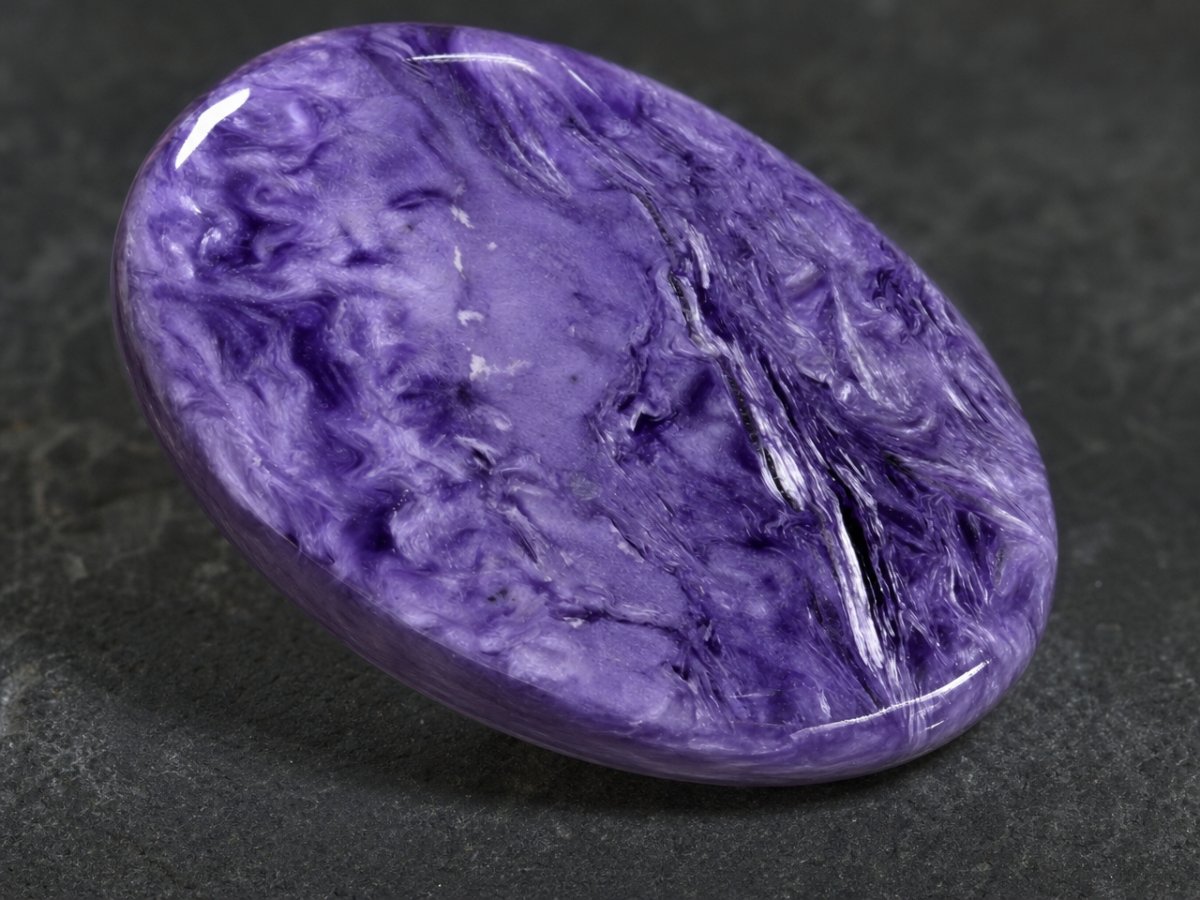
Origin: Russia Is the Key Origin to Know
Russia is the important origin associated with charoite. For many buyers, origin information is useful for documentation and purchasing confidence, especially when buying collector stones or distinctive pieces for custom jewelry.
Origin should not be the only factor in your decision. Color, cut quality, size, shape and suitability for the intended jewelry design will usually be more important to the final appearance of the stone.
Treatments and Disclosure
Charoite is commonly offered untreated. This is helpful for buyers because the color and appearance being purchased are generally expected to be natural to the stone rather than the result of routine enhancement.
As with any gemstone purchase, review the seller's treatment disclosure. At GemSelect, treatment information is provided so buyers can compare stones more confidently and choose the piece that fits their expectations.
Durability and Everyday Wear
Charoite has a Mohs hardness of 5-6. This places it below harder everyday jewelry stones, so it should be worn with reasonable care. It is well suited to pendants and necklaces, where it is less exposed to knocks. Earrings are also a practical option because they usually experience less abrasion than rings.
Charoite can be used in rings, but the setting and wearing habits matter. A protective setting is preferable, and the ring should be treated as a jewelry piece that benefits from mindful wear rather than rough daily use.
For care, avoid hard impacts, abrasive cleaning and storage against harder gemstones. Clean with mild soap, lukewarm water and a soft cloth, then dry thoroughly before storing.
Gemological Properties
The following properties can help buyers, jewelers and collectors understand charoite from a gemological perspective:
| Gem type | Silicate |
| Crystal system | Monoclinic |
| Mohs hardness | 5-6 |
| Refractive index | 1.550-1.559 |
| Specific gravity | 2.54-2.78 |
| Chemical formula | K5Ca8(Si6O15)2(Si2O7)Si4O9(OH)•3(H2O) |
How to Choose the Right Charoite
For pendants and necklaces
Pendants and necklaces are among the most suitable uses for charoite. Larger cabochons can be effective because the stone is displayed prominently and is less exposed to impact than in a ring. Oval, pear and freeform shapes all work well depending on the design style.
For rings
If choosing charoite for a ring, prioritize a well-polished cabochon and a setting that helps protect the stone. Rings receive more contact during wear, so charoite rings are best for buyers who are comfortable treating them with care.
For earrings
For earrings, pay attention to matching. Similar violet or purple tones, comparable size and compatible shapes will give the pair a more intentional appearance. Round, oval and pear shapes are convenient choices.
For artisan jewelry
Freeform cabochons, carvings and slices are especially useful for one-of-a-kind designs. In this case, the best stone may not be the most symmetrical one, but the one whose outline and color best support the designer's concept.
Buyer's Checklist
- Choose the violet or purple color that best fits your design.
- Expect cabochons to be the most common and practical cut style.
- Select a shape that works with the intended setting: oval, pear, freeform, cushion or round.
- Check whether the stone is disclosed as untreated.
- Consider durability: Mohs 5-6 is suitable for many jewelry uses, but rings need extra care.
- Use Russian origin information as helpful context, not as a replacement for evaluating appearance and suitability.
Summary
The best charoite for you is the one with the violet to purple color, cut and shape that suit your jewelry design. Cabochons are the main choice, especially for pendants and necklaces, while freeform stones, carvings and slices can be excellent for artisan work. Because charoite has a Mohs hardness of 5-6, it should be worn and stored with care, particularly in rings. Look for clear treatment disclosure and buy from a seller that provides the essential details you need to compare stones confidently.