


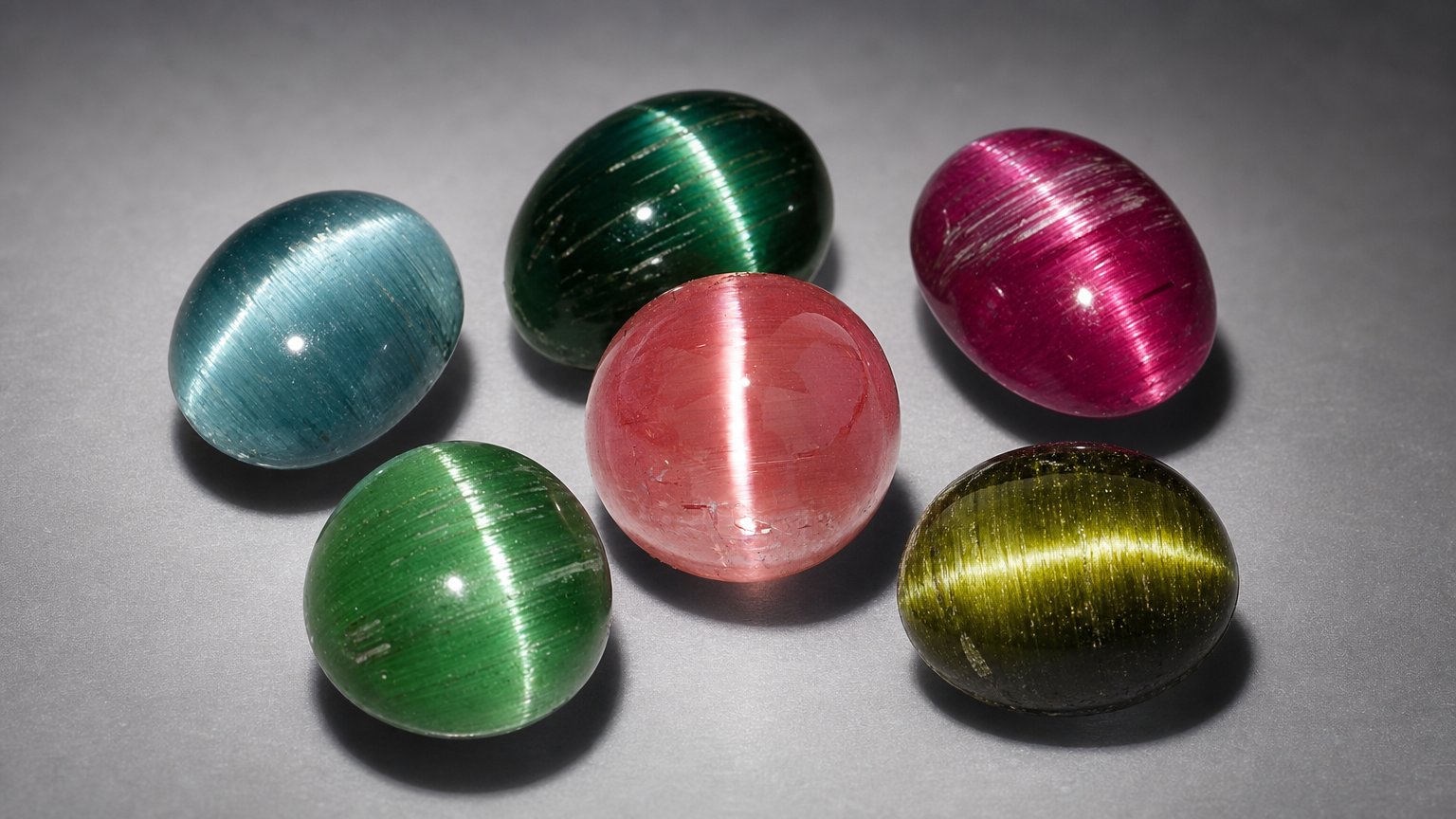
Cat's Eye Tourmaline is a distinctive variety of tourmaline valued for its moving band of light, known as the cat's eye effect. For buyers, the most important decision is not only the body color of the gem, but also the quality of the eye, the cabochon cut and the stone's suitability for the intended jewelry design.
This guide explains what to look for when choosing Cat's Eye Tourmaline, with practical advice on color, cut, durability, treatments, origin and jewelry use.
What Is Cat's Eye Tourmaline?
Cat's Eye Tourmaline is tourmaline that displays chatoyancy, the optical effect that creates a narrow, bright line across the surface of the gem. Tourmaline is a gem group with variable chemistry; Cat's Eye Tourmaline is associated with the elbaite species and has a trigonal crystal system.
The cat's eye effect is best seen when the gem is cut as a cabochon rather than faceted. A cabochon has a smooth, domed top, which allows the light band to appear clearly and move across the surface as the stone or light source moves.
Color and Appearance: What Buyers Should Look For
Cat's Eye Tourmaline is known in several colors, with green and pink being especially important choices for buyers. Brown examples are also seen, while black and blue stones are less central but may appeal to collectors or designers looking for a specific look.
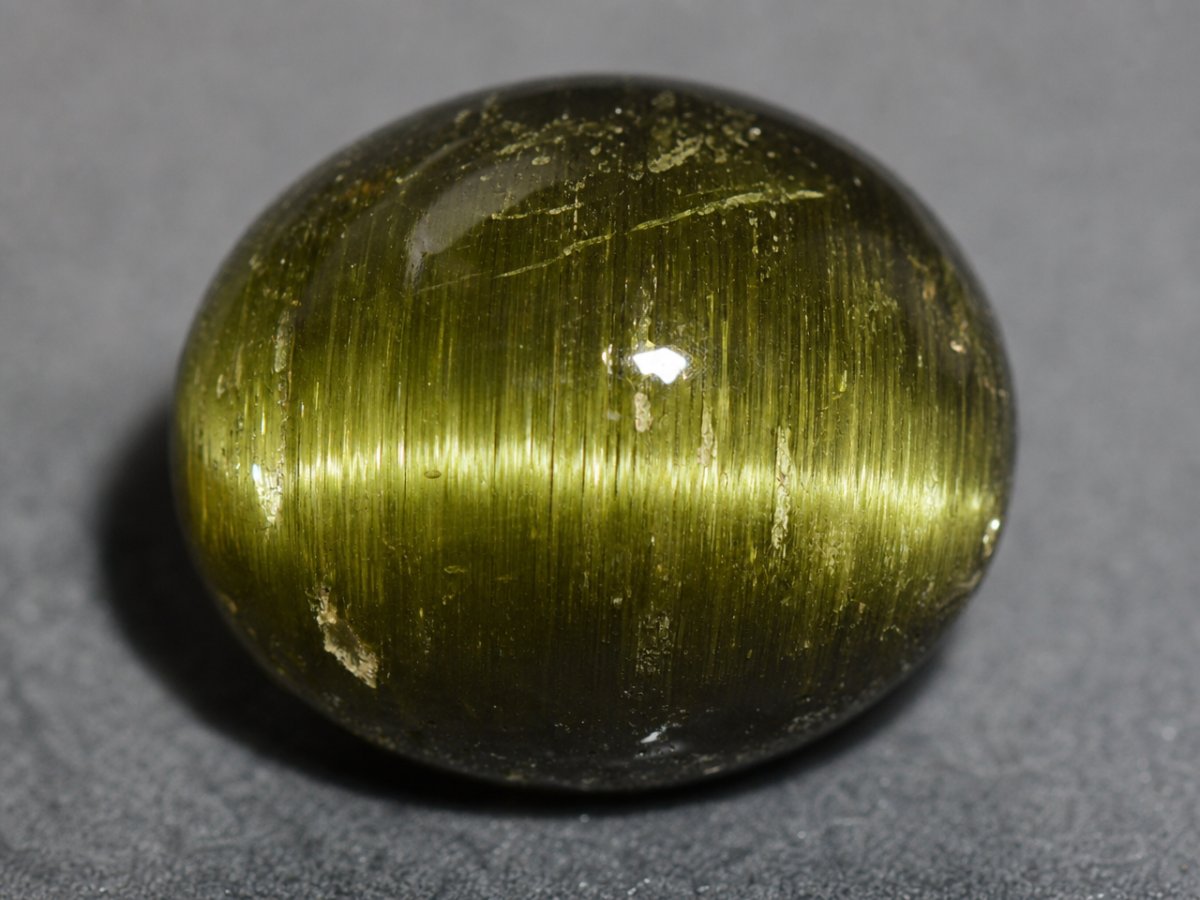
When comparing stones, consider both the body color and the quality of the eye. A desirable stone should have a visible, well-positioned line of light that contrasts clearly against the body color. The eye should ideally run across the center of the cabochon and remain noticeable when the stone is viewed under a direct light source.
Color preference is personal, but evenness matters. Look for a body color that appears attractive face-up and does not look overly dark unless that is the intended design style. In darker stones, the cat's eye may still be striking, but the overall appearance can be more dramatic and less colorful.
Cut and Shape: Why Cabochons Matter
Cat's Eye Tourmaline is most commonly cut as a cabochon because this cutting style is essential for showing the eye effect. Faceting is generally used to emphasize brilliance in transparent gems, while cabochon cutting emphasizes surface phenomena such as chatoyancy.
Oval and round cabochons are the most common and practical shapes. They are easy to set, balanced in appearance and well suited to rings and pendants. Cushion and pear shapes can also be attractive when the cutter has oriented the eye properly. More unusual shapes, such as trillion cabochons, may be chosen for distinctive jewelry designs, but the alignment and visibility of the eye should still be the priority.
Before buying, check the cabochon from several angles. A well-cut stone should have a smooth dome, good polish and an eye that is not pushed too far to one side. If the eye disappears too easily or appears blurred, the visual impact may be weaker.
Clarity and the Cat's Eye Effect
In many gems, buyers are trained to look for high transparency and minimal inclusions. With cat's eye gems, the priorities are different. The internal features that interact with light help create the optical effect, so the stone should be judged by its overall appearance rather than by transparency alone.
Choose a Cat's Eye Tourmaline that looks clean and attractive from normal viewing distance, with no distracting surface-reaching fractures or obvious damage. A strong, sharp eye and pleasing color usually matter more than complete transparency.
Origins
Cat's Eye Tourmaline is associated with several important sources, including Brazil and Madagascar. Mozambique is also a recognized source, with Afghanistan and Nigeria also known for this gem material.
Origin can be interesting for collectors, but it should not replace visual assessment. For most buyers, the best stone is the one with the most appealing color, strongest eye, good cut and suitable size for the intended jewelry piece. If origin is important to you, buy from a seller that clearly states the available origin information.
Gemological Properties and Durability
Cat's Eye Tourmaline has a Mohs hardness of 7 to 7.5, making it durable enough for many types of jewelry. Its refractive index is 1.62 to 1.64 and its specific gravity is 3.00 to 3.20. These properties help gemologists identify the material and distinguish it from similar-looking stones.
For everyday wear, hardness is only one part of durability. Rings and bracelets are more exposed to knocks than pendants, necklaces and earrings. Cat's Eye Tourmaline can be used in rings, but a protective setting is a sensible choice, especially if the jewelry will be worn often.
Treatments and Buying Confidence
Cat's Eye Tourmaline is commonly offered as untreated. This is an important buying point because many gemstone shoppers prefer stones that have not been enhanced.
When purchasing, review the product details carefully. A reputable seller should disclose treatment information clearly. GemSelect lists treatment information on gemstone product pages where available, helping buyers compare stones with greater confidence.
Best Jewelry Uses for Cat's Eye Tourmaline
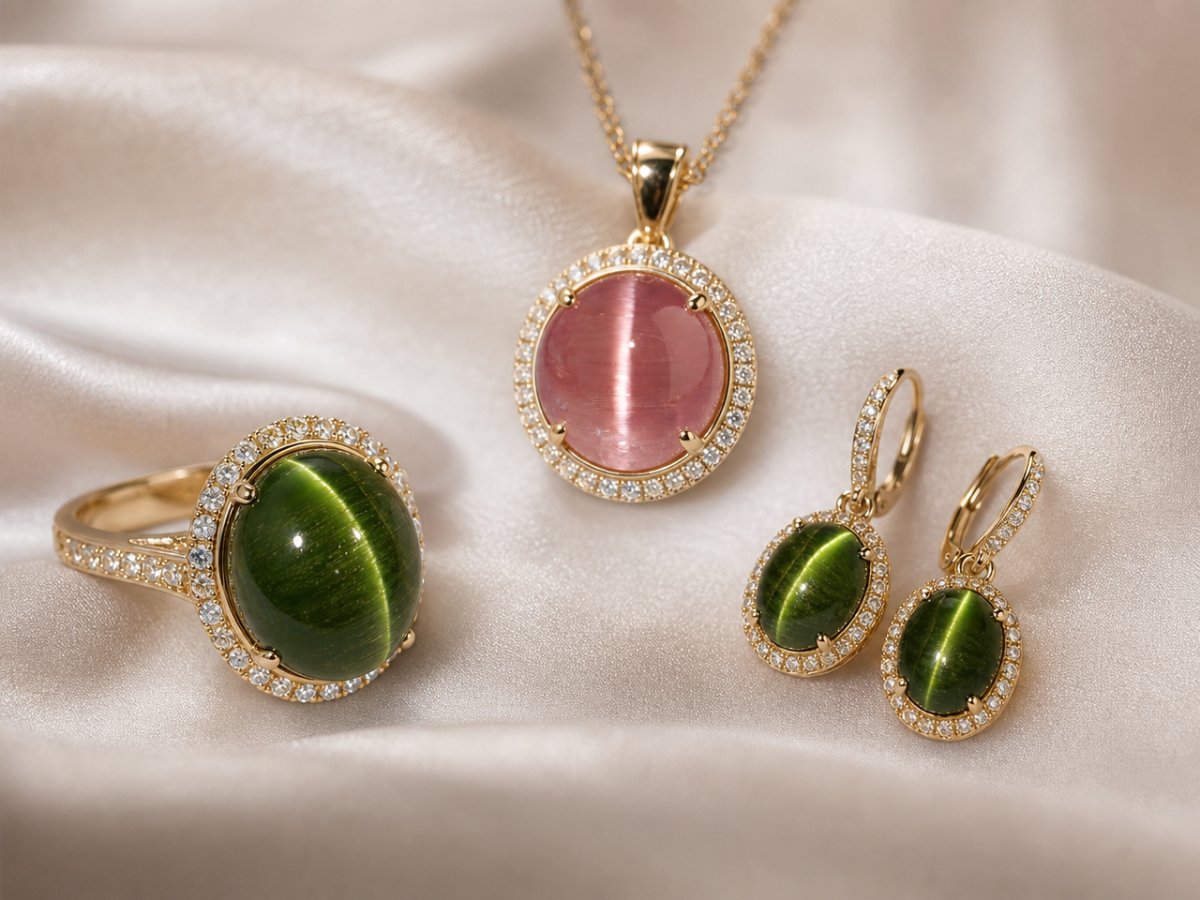
Cat's Eye Tourmaline works especially well in pendants and rings, where the cabochon surface can be seen clearly. Pendants are a practical choice because they receive less impact than rings and allow the eye effect to be appreciated at the center of a design.
Rings are popular, including collector rings, but the setting should protect the cabochon from hard knocks. Bezel or partial bezel settings can help secure the stone and frame the eye attractively. Necklaces are another good option, particularly for larger cabochons.
Bracelets and earrings can also use Cat's Eye Tourmaline, though each has different considerations. Bracelets are more vulnerable to impact, so secure settings are important. Earrings are lower risk and can be effective when using matched cabochons with similar color and eye alignment.
How to Choose Cat's Eye Tourmaline
1. Prioritize the eye
The eye is the defining feature. Look for a bright, centered and continuous line that is visible under direct light. A sharper eye usually gives the gem a stronger presence.
2. Choose a color you will enjoy wearing
Green and pink are key colors for Cat's Eye Tourmaline, while brown, black and blue can offer different design possibilities. Select a color that suits the jewelry style and metal color you have in mind.
3. Check the cabochon quality
The dome should be smooth and well polished. The shape should look balanced, and the eye should be properly oriented across the stone. Oval and round cabochons are especially versatile.
4. Match size to jewelry use
Larger cabochons can make striking pendants and collector rings. Smaller stones may be better for earrings, accent designs or more practical everyday rings. Consider both visual impact and wearability.
5. Consider durability and setting style
With a hardness of 7 to 7.5, Cat's Eye Tourmaline is suitable for many jewelry applications, but rings and bracelets should be designed with protection in mind. Avoid settings that leave the cabochon overly exposed if the piece will be worn frequently.
6. Confirm treatment disclosure
Since Cat's Eye Tourmaline is commonly untreated, clear treatment information is useful. Review seller details and ask questions if the treatment status is not stated.
October Birthstone Connection
Tourmaline is associated with October, and Cat's Eye Tourmaline offers an unusual option for buyers looking for an October birthstone with a distinctive optical effect. It is especially suitable for shoppers who want something less conventional than a standard faceted tourmaline.
Summary
When buying Cat's Eye Tourmaline, focus first on the quality of the cat's eye effect, then on color, cabochon cut and suitability for the intended jewelry piece. Green and pink stones are important options, while other colors can provide unique design character. A well-cut cabochon with a clear, centered eye will usually be more visually satisfying than a stone chosen for size or origin alone.
