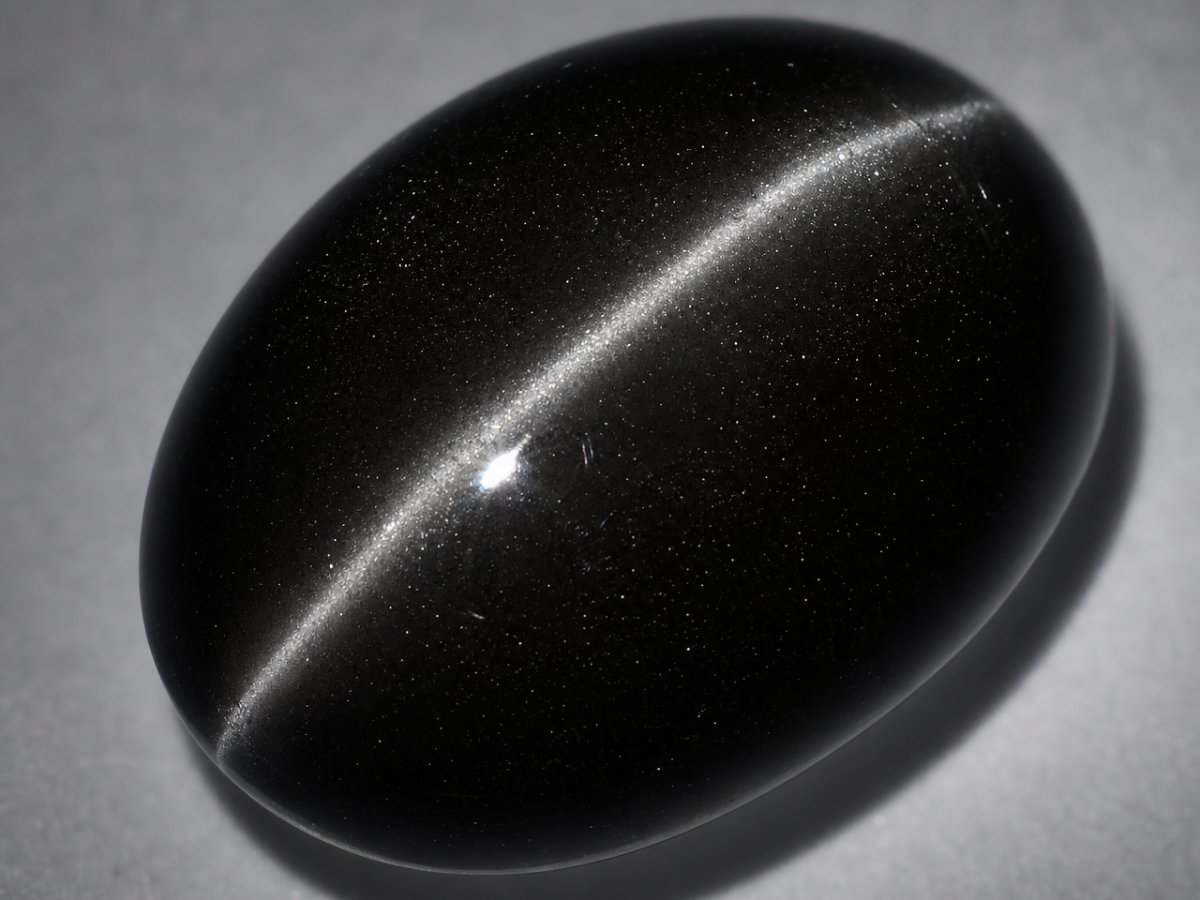


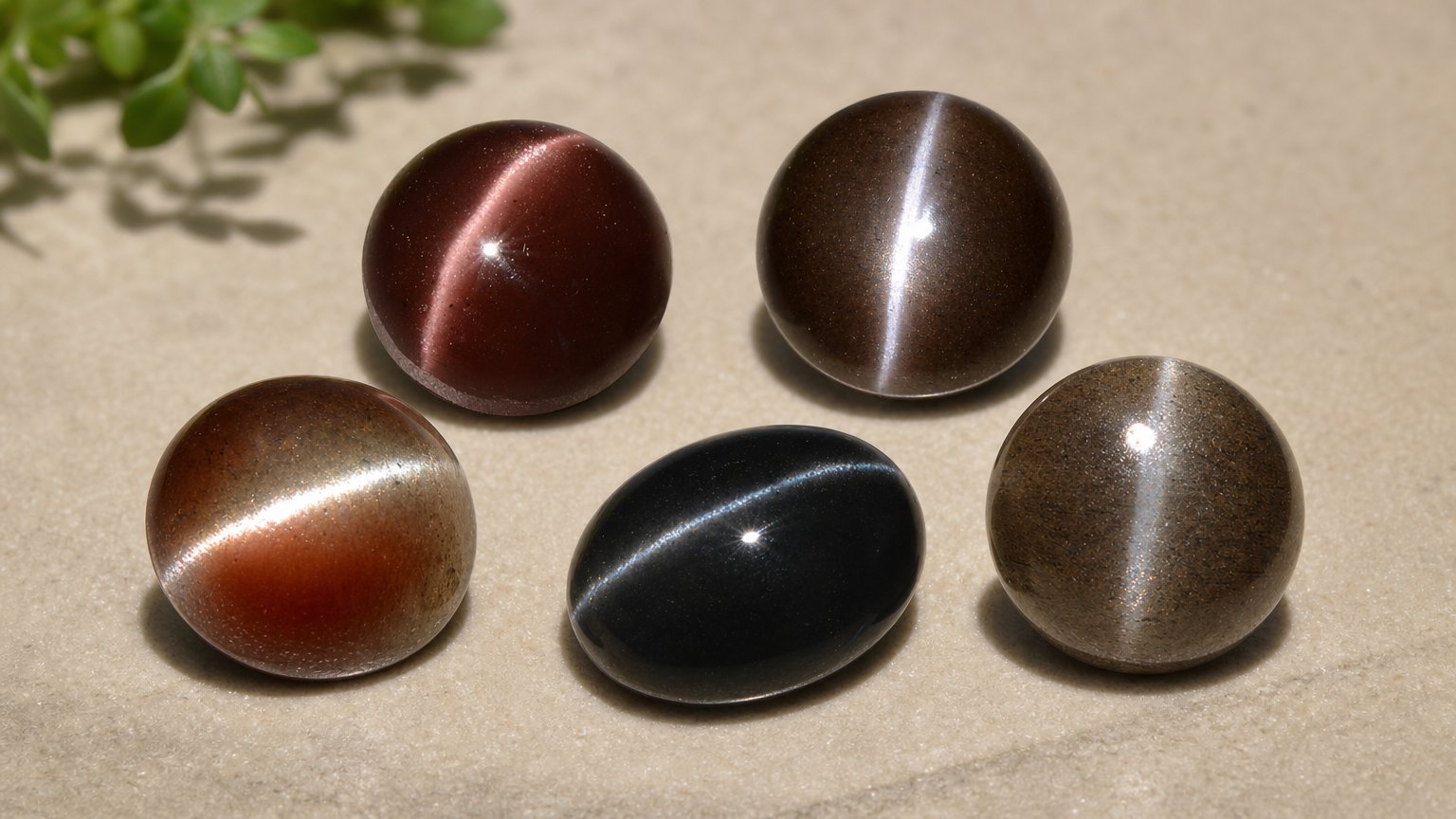
Cat's eye scapolite is a distinctive variety of scapolite valued for its chatoyancy: the narrow band of light that appears to glide across the surface when the stone is moved. For buyers, the most important decision is not just color or size, but the quality of the cat's eye effect and the cabochon cut that displays it.
This guide explains what to look for when choosing cat's eye scapolite, including color, eye sharpness, cut, durability, treatments and suitable jewelry settings.
What Is Cat's Eye Scapolite?
Cat's eye scapolite is a chatoyant form of scapolite, a mineral species with a tetragonal crystal system and the chemical formula (Na,Ca)₄Al₃Si₉O₂₄Cl(CO₃,SO₄). The cat's eye effect is best seen in a polished cabochon, where a bright line of reflected light crosses the curved surface of the gem.
In cat's eye gemstones, this optical effect is caused by light reflecting from fine, parallel internal features. Because the effect depends on both the stone's internal structure and the quality of the cutting, two stones of similar color and size can look very different in person.
Color and Appearance
Brown is the most commonly associated color for cat's eye scapolite and is often the first color buyers encounter. Black and gray stones are also seen and can give the cat's eye a strong, dramatic contrast. Yellow material may appeal to buyers who prefer a warmer look, while violet examples are also known.
When comparing stones, color should be judged together with the eye. A pleasing body color is important, but the best buying choice is usually the stone that balances attractive color with a clean, centered and visible cat's eye.
How to Judge the Cat's Eye Effect
The cat's eye should appear as a distinct line rather than a blurry patch of light. Look for these qualities:
- Sharpness: A well-defined eye is usually more attractive than a broad or cloudy band.
- Centering: The line should run across the top of the cabochon rather than sitting too far to one side.
- Movement: When the stone is tilted, the eye should move smoothly across the dome.
- Contrast: A bright eye against a darker or more saturated body color can make the effect easier to see.
View the stone under a single direct light source if possible. Diffuse lighting can make the eye appear weaker, while a focused light helps reveal the quality of the chatoyancy.
Cut, Shape and Size Considerations
Cat's eye scapolite is most commonly cut as a cabochon because a domed surface is needed to display the eye. Faceting is not the preferred style for this variety when the goal is chatoyancy.
Oval cabochons are especially common and work well for pendants, necklaces and earrings. Round cabochons are also suitable, while freeform shapes can be attractive for custom jewelry or collector pieces. Cushion shapes may be encountered less often, but the same rule applies: the dome and orientation must support a strong eye.
Do not judge a cat's eye cabochon by symmetry alone. A slightly deeper or higher dome may be necessary to show the eye properly. The best cut is one that places the chatoyant band clearly across the crown of the stone and gives the gem a balanced outline for setting.
Clarity and Surface Quality
Cat's eye gemstones contain the internal features responsible for the optical effect, so buyers should not expect the same type of transparent clarity used to judge many faceted gems. Instead, focus on whether inclusions or surface-reaching features distract from the eye, weaken the appearance or affect durability.
A practical inspection should include the surface polish, the smoothness of the dome and the visibility of any cracks or chips. A cleanly polished cabochon with an uninterrupted eye will usually be more satisfying than a stone with obvious surface damage, even if the body color is appealing.
Origins
Important sources for cat's eye scapolite include Madagascar and Tanzania. Material is also associated with Myanmar, Kenya and Sri Lanka. Origin can be interesting for collectors, but for most jewelry buyers the visual quality of the stone is more important than country of origin.
If origin matters to you, choose a seller that clearly states available origin information. When origin is not documented, it is better to make the purchase decision based on the visible qualities of the gem: color, eye, cut and condition.
Treatments and Buying Confidence
Cat's eye scapolite is commonly offered as untreated. This is useful for buyers who prefer gems without enhancement, but it is still wise to review the treatment disclosure on the specific stone being purchased.
At GemSelect, buyers should check each gemstone listing for treatment information, dimensions, weight and photographs. For a chatoyant gem, photos are especially helpful because they show the position and strength of the cat's eye effect.
Durability and Jewelry Suitability
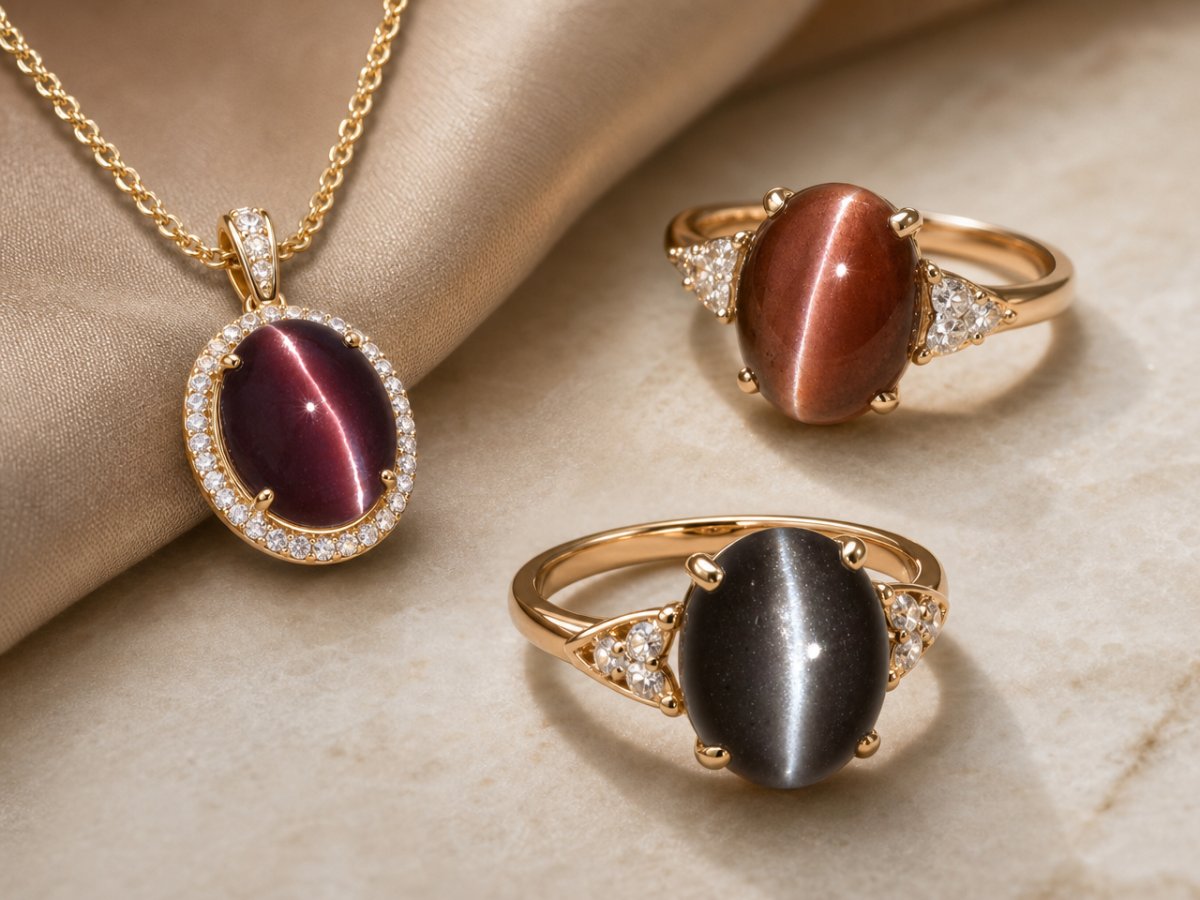
Cat's eye scapolite has a Mohs hardness of 5.5 to 6. This makes it softer than many everyday ring stones, so it should be used thoughtfully in jewelry. It is well suited to necklaces, pendants and earrings, where it is less exposed to knocks and abrasion. Brooches can also be appropriate because they usually receive less wear than rings.
Collector rings are possible, but they should be treated as occasional-wear jewelry rather than hard-wearing everyday rings. If set in a ring, a protective design such as a bezel or low-profile setting can help reduce accidental impacts.
Care Tips
Clean cat's eye scapolite gently with mild soap, lukewarm water and a soft cloth or soft brush. Avoid harsh chemicals, rough handling and storage beside harder gemstones that could scratch the surface. For jewelry, remove the piece before strenuous activity, cleaning or situations where it may be hit.
Gemological Properties
For buyers and collectors who want identifying information, cat's eye scapolite has a refractive index of 1.540-1.579 and a specific gravity of 2.57-2.74. These properties are mainly useful for gemological identification rather than day-to-day buying decisions.
The key practical point is that cat's eye scapolite combines a distinctive optical effect with moderate hardness, so it should be chosen for its appearance and set in jewelry that matches its durability.
Practical Buying Checklist
- Choose a cabochon with a sharp, centered and mobile cat's eye.
- Compare color and eye together; neither should be judged in isolation.
- Inspect the polish, dome shape and surface condition.
- Prefer pendants, necklaces and earrings for regular wear.
- Use extra care if choosing a ring, especially for frequent wear.
- Review treatment disclosure; cat's eye scapolite is commonly untreated.
- Consider origin as a secondary factor unless you are buying for a collection.
Summary
The best cat's eye scapolite is the one that displays a strong, well-positioned eye in an appealing cabochon. Brown, black, gray, yellow and violet stones can all be attractive, but the quality of the chatoyancy is the feature that gives this gem its special character. For jewelry, choose protective, lower-impact uses such as pendants, necklaces and earrings, and buy from a seller that provides clear photos and treatment information.