


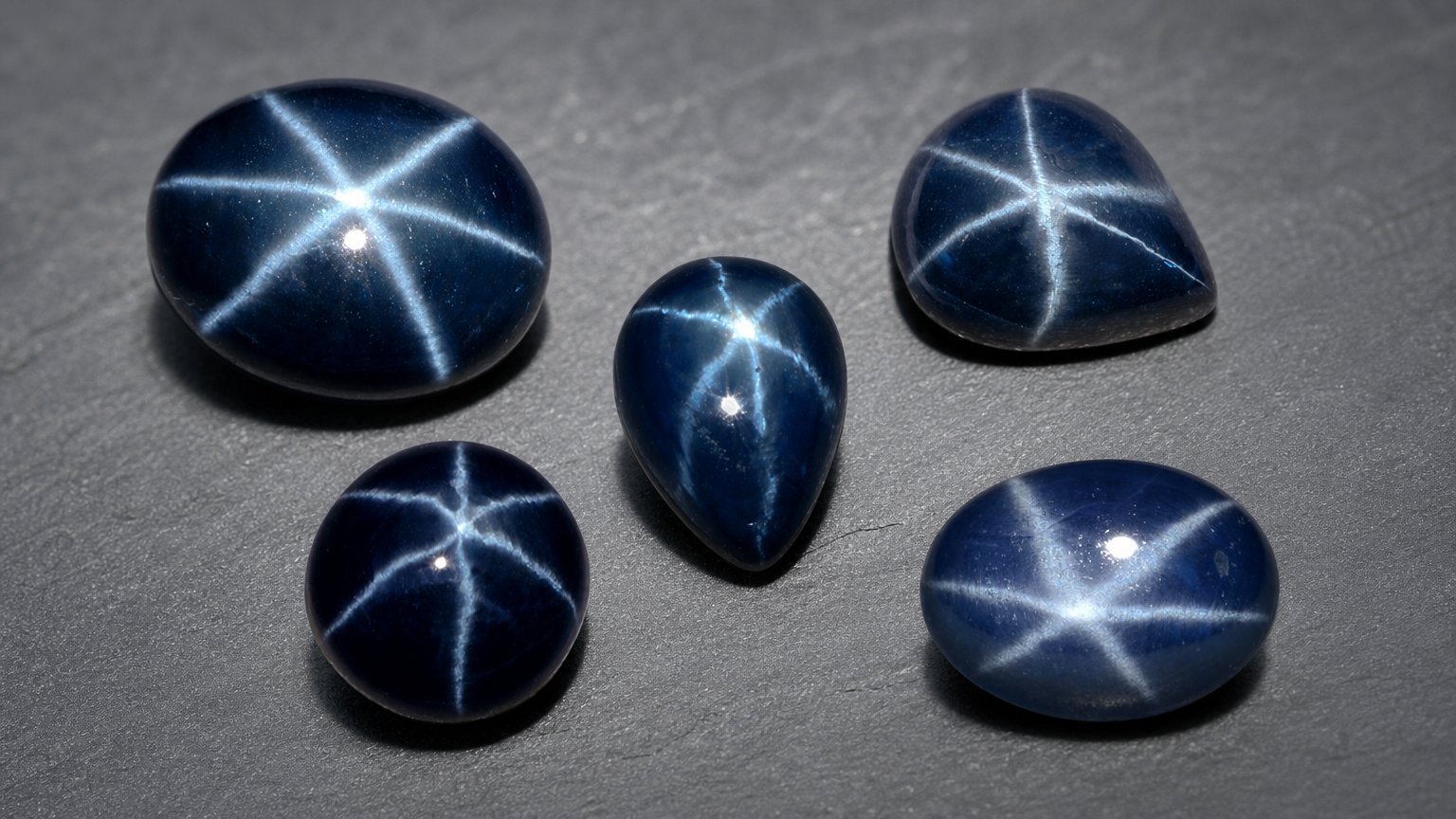
Blue star sapphire is a blue variety of sapphire, a corundum gemstone valued for its distinctive star-like optical effect when cut as a cabochon. For buyers, the main decision is not simply choosing the darkest or largest stone. A good blue star sapphire should combine attractive blue body color, a clearly visible star, a well-shaped cabochon and full treatment disclosure.
This guide explains the practical points to check before buying, whether you are choosing a loose gemstone for a custom ring, pendant, earrings or a collector's piece.
What Is Blue Star Sapphire?
Blue star sapphire is a variety of sapphire, which belongs to the mineral species corundum. Its chemical formula is Al₂O₃, and it crystallizes in the trigonal crystal system. Like other sapphires, it is a durable gemstone with a Mohs hardness of 9, making it suitable for many types of jewelry.
The feature that separates star sapphire from ordinary blue sapphire is the star effect, also called asterism. This effect is best displayed when the stone is cut with a smooth, domed cabochon rather than a faceted cut. The quality, placement and visibility of the star are among the most important buying factors.
Color and Overall Appearance
Blue is the defining color of blue star sapphire. Buyers should look for a blue tone that is pleasing in normal lighting and complements the intended jewelry design. Some buyers prefer a deeper, more dramatic blue, while others prefer a lighter blue that makes the star easier to see.
When comparing stones, view the gem from different angles. The body color should look reasonably even, and the star should not disappear too easily under direct light. A stone with attractive color but a weak or poorly placed star may be less satisfying than a slightly different blue stone with a sharper, better-centered star.
The Star Effect: What to Look For
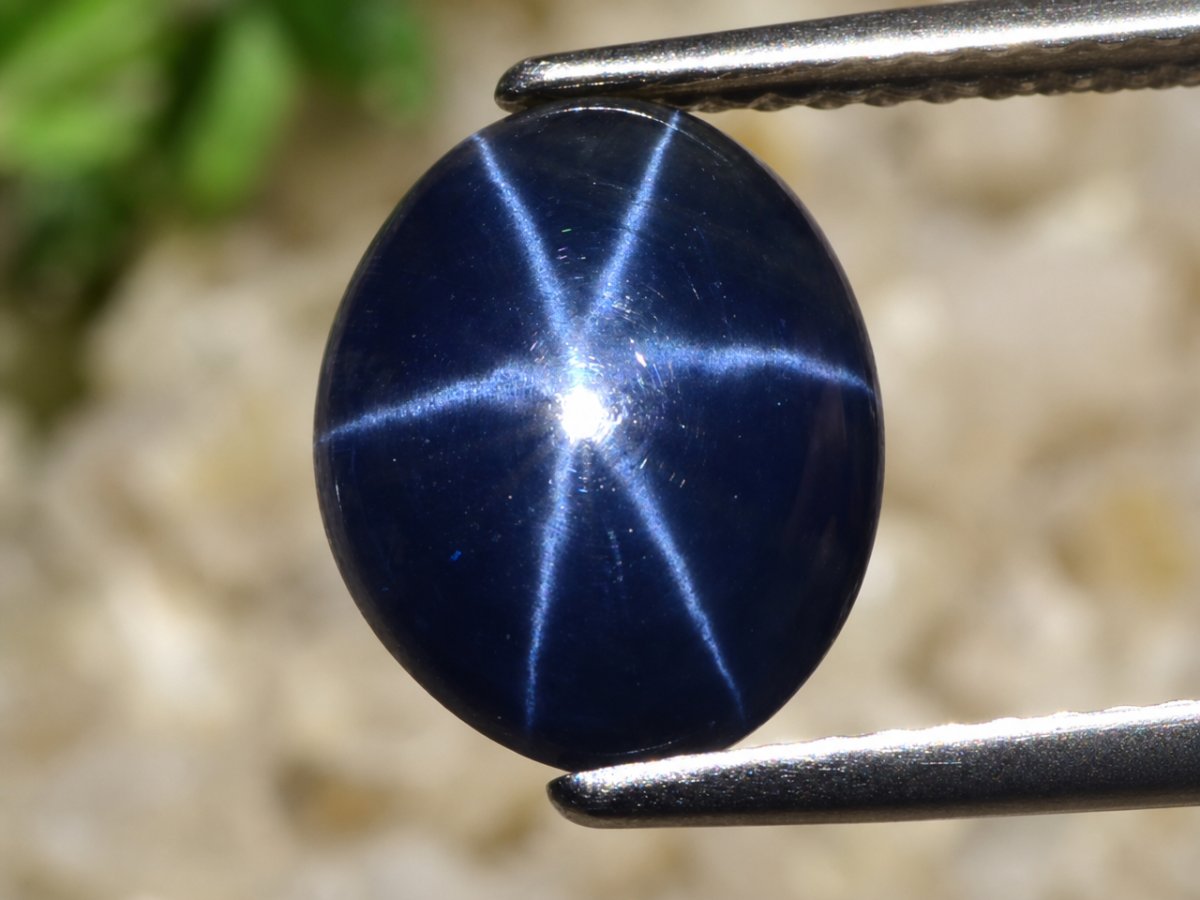
The star is the signature feature of this gemstone, so it deserves close attention. A well-cut blue star sapphire should show a distinct star under a single direct light source. The star should ideally be centered on the top of the cabochon and appear balanced across the dome.
Move the stone gently under the light. A good star should seem to glide across the surface rather than remain dull or broken. Very uneven stars, off-center stars or stars that are difficult to see may still be attractive, but they should be considered carefully before purchase.
Cabochon Cut and Shape
Blue star sapphire is most commonly cut as a cabochon because the domed surface displays the star effect. The cabochon should have a smooth polish, pleasing proportions and a dome high enough to show the star clearly without appearing awkward in jewelry.
Oval cabochons are especially common and practical for rings and pendants. Round and pear shapes are also popular choices, while cushion, trillion and marquise shapes may appeal to buyers looking for a less traditional design. Whatever the outline, the most important cutting factors are symmetry, surface finish and star placement.
Clarity and Surface Quality
Blue star sapphire should be judged differently from transparent faceted sapphire. In a star stone, the visual effect is more important than high transparency. Instead of looking for a perfectly clear gem, examine whether the surface is well polished and whether any visible fractures, pits or chips affect the appearance or durability.
For jewelry use, avoid stones with obvious damage on the crown or edges, especially if the gem will be set in a ring or bracelet where it may receive more wear.
Treatments and Disclosure
Treatment disclosure is one of the most important parts of buying blue star sapphire. Diffused blue star sapphires are commonly encountered, and heat treatment may also be present. Untreated stones exist, but buyers should rely on clear seller disclosure rather than assumptions.
Diffusion is a treatment used to alter or enhance appearance, and it should be clearly identified in the listing. Heat treatment should also be disclosed. None of these categories automatically makes a stone unsuitable, but they do affect how buyers compare stones and make informed decisions.
When shopping at GemSelect or elsewhere, check the product details for treatment information before comparing price, size or origin. If treatment status is important to your project, choose a stone with the disclosure that matches your expectations.
Origin: Useful, But Not the Only Buying Factor
Blue star sapphire is associated with several important origins, including Sri Lanka and Thailand. Madagascar is also a known source, with additional material associated with Cambodia, Tanzania and Vietnam.
Origin can be interesting for collectors and may matter to some buyers, but it should not replace direct evaluation of the gemstone. For most jewelry purchases, color, star quality, cut, treatment disclosure and durability are more practical decision points than origin alone.
Gemological Properties
Blue star sapphire shares the important gemological properties of corundum. These properties help explain why it is so widely used in jewelry.
| Gemstone type | Blue star sapphire, a variety of sapphire |
|---|---|
| Mineral species | Corundum |
| Chemical formula | Al₂O₃ |
| Crystal system | Trigonal |
| Mohs hardness | 9 |
| Refractive index | 1.762-1.770 |
| Specific gravity | 4.00 |
Durability and Jewelry Suitability
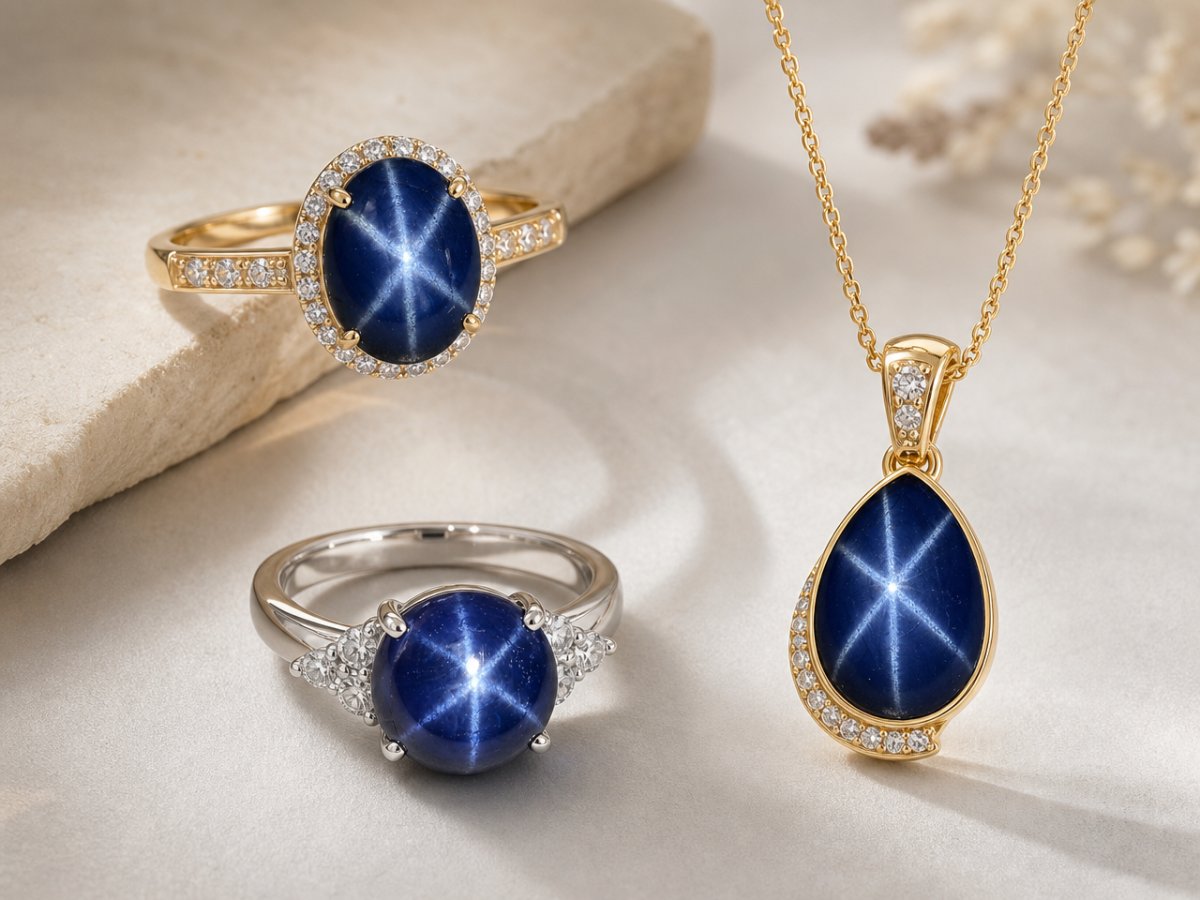
With a Mohs hardness of 9, blue star sapphire is a strong choice for jewelry. It is especially suitable for rings and pendants, where the cabochon's star can be displayed prominently. It is also used in earrings and necklaces, and can be considered for bracelets or cufflinks when properly set.
For rings, choose a setting that protects the cabochon edges and holds the stone securely. For bracelets, extra care is sensible because bracelets are more exposed to knocks during daily wear. As with any gemstone jewelry, remove the piece before heavy work, sports or activities that may cause impact.
Practical Buying Checklist
- Check the star first: It should be visible, balanced and preferably centered under direct light.
- Evaluate the blue color: Choose a tone that looks attractive to you and supports the visibility of the star.
- Inspect the cabochon: Look for a smooth polish, pleasing dome and symmetrical outline.
- Review treatment disclosure: Confirm whether the stone is diffused, heat treated or untreated.
- Match shape to jewelry: Oval cabochons are versatile, while round, pear and other shapes can suit specific designs.
- Consider durability needs: Rings and bracelets need secure, protective settings; pendants and earrings are usually less exposed to impact.
- Do not buy by origin alone: Origin is useful information, but appearance and disclosure matter more for most buyers.
Summary
A confident blue star sapphire purchase comes from balancing beauty and disclosure. Focus on the quality of the star, the appeal of the blue color, the cabochon cut and the treatment information. With its corundum durability and distinctive optical effect, blue star sapphire can be an excellent choice for rings, pendants and other jewelry when selected carefully.
