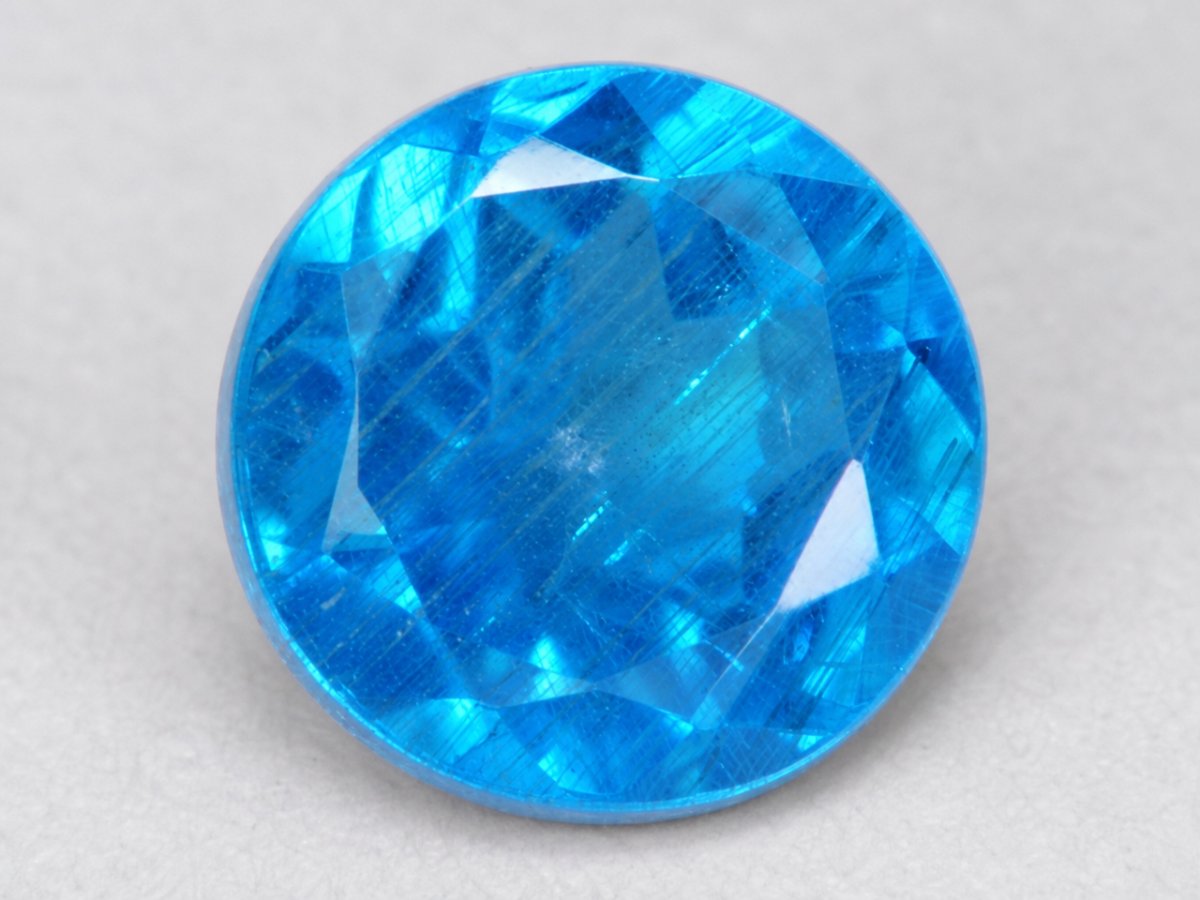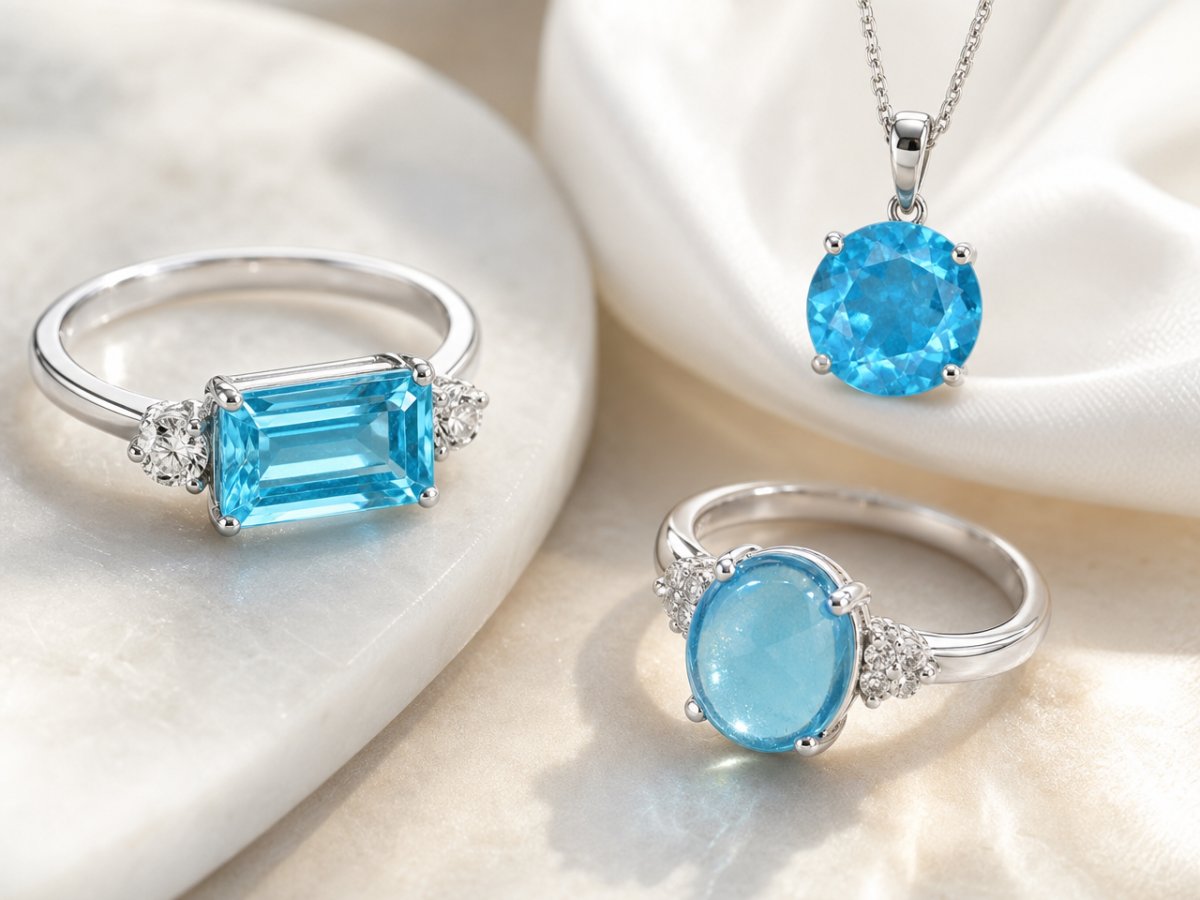


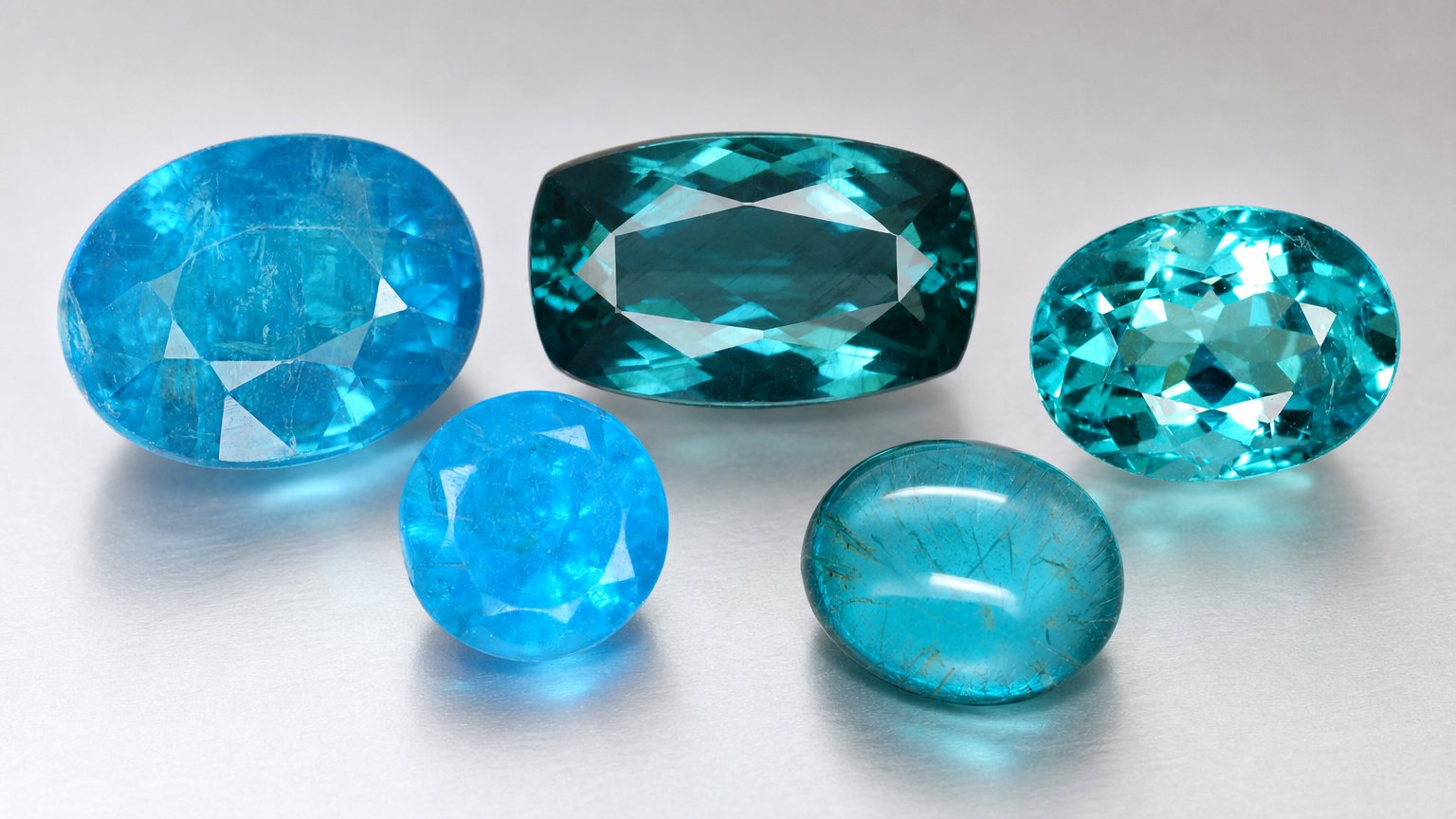
Blue apatite is a blue variety of apatite, a phosphate mineral valued by gemstone buyers for its attractive color and wide choice of faceted shapes. It can make a striking gemstone for pendants, earrings, necklaces and carefully worn rings, but it also requires realistic expectations about durability and care.
This buying guide focuses on the points that matter most when choosing blue apatite: color appearance, cut quality, treatment disclosure, size and shape, jewelry suitability and practical handling.
What Is Blue Apatite?
Blue apatite is a gemstone variety of apatite with the chemical formula Ca₅(PO₄)₃(F,Cl,OH). It belongs to the phosphate mineral group and crystallizes in the hexagonal crystal system.
For most buyers, the most important thing to understand is that blue apatite is attractive but not a hard everyday-wear stone. It has a Mohs hardness of 5, so it needs more care than harder jewelry gems. This does not make it unsuitable for jewelry, but it does affect how it should be set, worn and cleaned.
Color and Appearance: What to Look For
Blue is the defining color of blue apatite. When comparing stones, judge the overall impression of the color rather than looking for a single technical grade. A pleasing blue color, good brightness and an even face-up appearance are usually the most important visual factors.
View the gemstone under more than one lighting condition if possible. Some gems look stronger in one light source than another, so photos, videos or clear seller descriptions can help you understand what the stone will look like in real jewelry use.
Clarity and Transparency
Clarity should be assessed by appearance. For faceted blue apatite, many buyers prefer stones that look clean to the unaided eye or have inclusions that do not distract from the color and brilliance. Cabochons are judged differently; the priority is a smooth polished surface, attractive color and an appealing overall look.
Minor internal features are normal in many natural gemstones. The key buying question is whether they are visible, whether they affect beauty, and whether they reach the surface in a way that may reduce durability.
Cut Styles and Shapes
Faceted blue apatite is common and is often chosen to bring out brightness and color. Cabochons are also available and can be a good choice for buyers who prefer a softer, polished look rather than sparkle.
Popular shapes include oval and round, with cushion and pear shapes also seen frequently. Octagon, square, trillion and marquise shapes may also be available. Shape choice is partly personal, but it also affects jewelry design: rounds and ovals are versatile, pears create direction and movement, and octagons or squares can suit more geometric designs.
How to Judge Cut Quality
A well-cut stone should look balanced, symmetrical and lively from the front. Avoid stones with obvious windowing, where the center looks pale or see-through, unless the price and appearance still suit your project. For calibrated jewelry settings, confirm the millimeter dimensions rather than relying only on carat weight.
Treatments: Heated or Untreated
Blue apatite may be heat treated, and untreated stones are also available. Heat treatment is a common gemstone practice used to improve or modify appearance, but it should be disclosed by the seller when known.
For buying confidence, ask whether the stone is heated or untreated and keep any treatment information with your records. At GemSelect, as with any reputable gemstone source, clear treatment disclosure is an important part of comparing gemstones fairly.
Durability and Care
Blue apatite has a Mohs hardness of 5. In practical terms, it can be scratched more easily than harder gems and should be protected from rough wear. This is especially important for rings, which are more exposed to knocks, abrasion and daily contact with hard surfaces.
Pendants, earrings, necklaces and brooches are generally more forgiving uses because they receive less impact than rings. Blue apatite can be used in rings, but it is best reserved for occasional wear or protective settings, and it should be worn with care.
Care Tips for Blue Apatite Jewelry
- Clean gently with mild soap, lukewarm water and a soft cloth or soft brush.
- Avoid harsh chemicals and abrasive cleaners.
- Store separately from harder gemstones to reduce scratching.
- Remove blue apatite rings before sports, housework or activities that may cause impact.
- Use protective jewelry designs when setting blue apatite in rings.
Origins
Blue apatite is associated with several important sources, including Madagascar, Brazil, Myanmar, Pakistan and Sri Lanka. Madagascar is especially notable among listed origins.
Origin can be interesting to collectors, but most jewelry buyers should place greater emphasis on the individual gemstone's color, cut, condition, treatment disclosure and suitability for the intended design. A beautiful, well-cut stone from any recognized source may be a better purchase than a less attractive stone chosen only for origin.
Gemological Properties
Blue apatite's gemological properties are useful for identification and for understanding how the stone behaves in jewelry.
- Gem type: Blue variety of apatite
- Mineral group: Phosphate
- Chemical formula: Ca₅(PO₄)₃(F,Cl,OH)
- Crystal system: Hexagonal
- Mohs hardness: 5
- Refractive index: 1.632-1.649
- Specific gravity: 3.16-3.23
The refractive index and specific gravity are mainly used by gemologists for testing and identification. For buyers, hardness is the most practical property because it directly affects wearability and care.
How to Choose the Right Blue Apatite
Start with the intended jewelry use. For a pendant, necklace, earrings or brooch, you can focus mainly on color, cut, shape and size. For a ring, add durability and setting style to the top of your checklist.
Next, compare stones by face-up appearance. Look for an appealing blue color, good symmetry, a bright cut and inclusions that do not distract from the stone's beauty. If you are buying for a specific setting, check the millimeter dimensions carefully.
Finally, confirm treatment information and seller transparency. A confident purchase should include clear details about the stone's identity, size, cut, weight, treatment status where known and return conditions.
Summary
Blue apatite is an attractive blue gemstone for buyers who value color and distinctive jewelry design. Its main buying consideration is durability: with a Mohs hardness of 5, it should be treated as a gemstone for careful wear rather than a hard daily-use stone. Choose the best stone by prioritizing color, cut, visible clarity, treatment disclosure and an appropriate jewelry setting.