


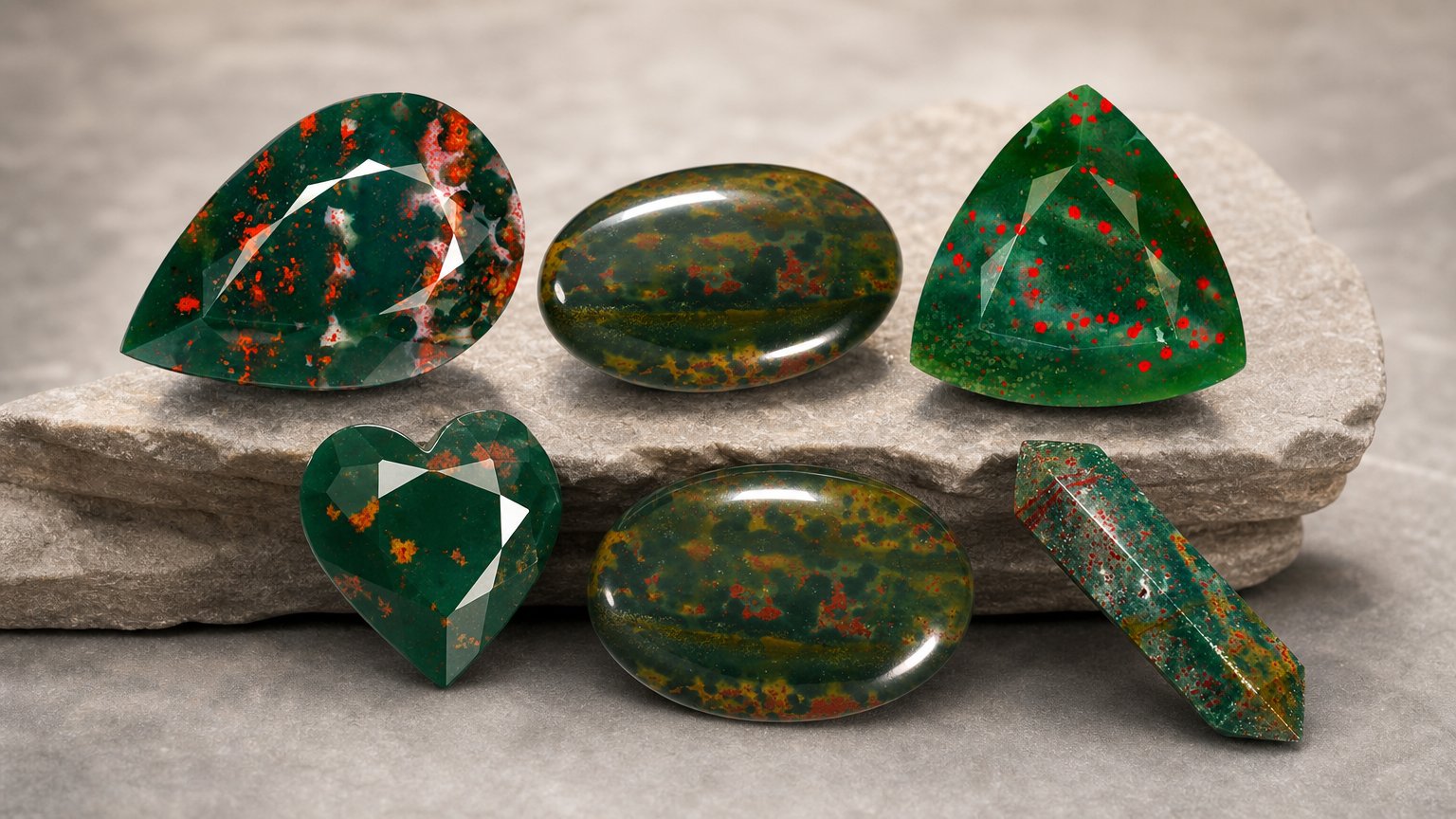
Bloodstone is a distinctive quartz gemstone chosen by buyers who like natural character, practical durability and jewelry-friendly shapes. It is especially popular in cabochons, pendants and necklaces, where its color and surface pattern can be appreciated without the need for high brilliance. For many shoppers, the appeal of bloodstone is not a single feature but the overall balance of color, cut, polish, size and suitability for the intended jewelry design.
This buying guide explains the main points to consider before purchasing bloodstone, including color and appearance, common cuts and shapes, durability, treatments, origins and jewelry use. It is designed for gemstone buyers, jewelers, designers and collectors who want a clear, practical way to compare stones rather than relying on exaggerated claims or vague descriptions.
What Is Bloodstone?
Bloodstone is a gemstone associated with the quartz mineral species. Its chemical formula is SiO₂, and it belongs to the trigonal crystal system. As a quartz gemstone, it offers a useful combination of attractive appearance and everyday practicality, with a Mohs hardness of 6.5 to 7.
In buying terms, bloodstone is usually evaluated differently from highly transparent faceted gemstones. While transparent gems are often judged strongly by brilliance, dispersion and internal clarity, bloodstone is more often selected for its body color, pattern, surface quality, cutting style and polish. The best choice is therefore the stone that looks balanced and appealing for the jewelry design or collection purpose you have in mind.
Color and Appearance: What Buyers Should Look For
Green is an important color for bloodstone and should be one of the first features buyers assess. When comparing stones, look at the overall strength, evenness and attractiveness of the green body color. Some buyers prefer a deeper, stronger green, while others may prefer a lighter or more varied appearance. Because bloodstone is commonly cut as a cabochon, its color and pattern are viewed across a broad polished surface rather than through a faceted crown.
There is no single universal grading scale for bloodstone color used in ordinary retail buying. Instead, practical comparison is more useful. Place several stones side by side, or compare photographs taken under similar lighting, and consider which stone has the most pleasing overall face-up appearance. A well-chosen stone should look attractive from a normal viewing distance, not only under magnification.
Color Consistency and Pattern
For jewelry, color consistency matters because the gem will be seen as part of a finished design. A pendant may benefit from a bold, centered look, while earrings or cufflinks may require stones that match well in tone and shape. For collectors, unusual or strongly individual natural patterns can be part of the attraction.
When buying online, review all available images and measurements. If multiple stones are available, compare the face-up view rather than judging only by carat weight. A larger stone with weaker visual impact may be less suitable for a design than a smaller stone with a better color balance and polish.
Clarity, Surface Quality and Polish
Clarity in bloodstone should be understood in a practical way. For transparent gems, clarity usually refers to internal inclusions visible through the stone. For cabochon-style stones, buyers should pay closer attention to the surface, polish, symmetry and any cracks or pits that affect appearance or durability.
A good bloodstone cabochon should have a smooth, even polish and a pleasing outline. Check the dome for flat spots, uneven polishing or obvious surface-reaching fractures. Small natural features may be acceptable, especially in patterned gemstones, but damage that weakens the stone or distracts from its appearance should be considered carefully.
How to Inspect a Bloodstone Before Buying
Use normal viewing distance first. If the stone looks attractive to the eye, then inspect more closely. Under magnification, look for chips around the girdle or edge, scratches on the dome and open cracks. In mounted jewelry, check that the setting does not hide damage or place pressure on a vulnerable area of the stone.
For loose stones, also look at the back. A clean back and even thickness can make setting easier for a jeweler. This is especially important for rings, cufflinks and fitted pendant designs where the stone needs to sit securely in a bezel or other setting.
Common Cuts and Shapes
Cabochon is the most common and most important cut for bloodstone. A cabochon has a smooth, rounded top rather than a faceted crown. This style is well suited to gemstones where color, surface pattern and polish are more important than sparkle. A well-cut cabochon should have balanced proportions, a smooth dome and an outline that suits the shape.
Sugarloaf cabochons are also seen. This style has a higher, more pyramid-like dome and can create a stronger sculptural presence in jewelry. It is a good choice for statement rings, pendants or designer pieces where height and form are part of the design.
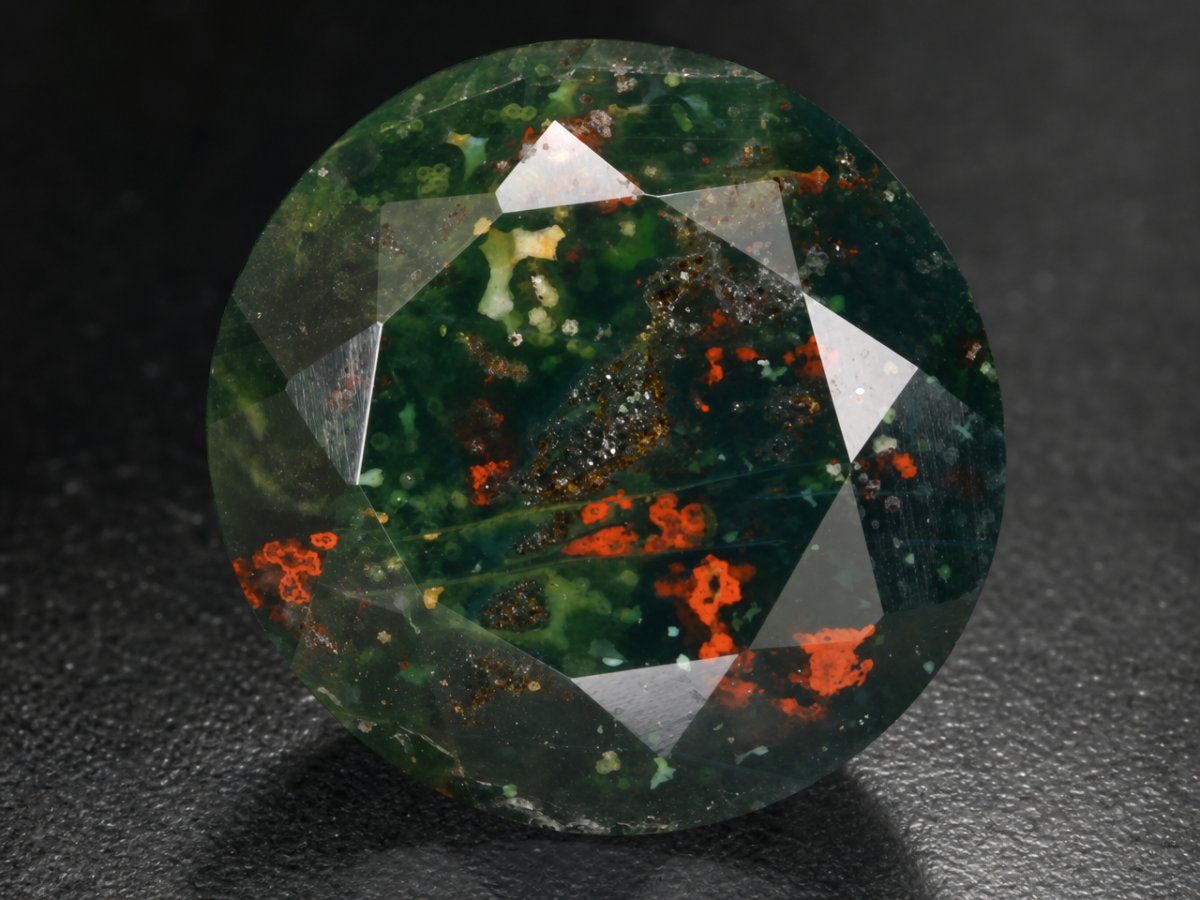
Faceted bloodstone exists but is less common. Faceting is usually chosen when the cutter wants to emphasize geometry and reflective surfaces, but buyers should remember that bloodstone is not primarily purchased for diamond-like brilliance. If choosing a faceted stone, inspect the symmetry, facet junctions and polish carefully.
Popular Shapes
Oval bloodstone cabochons are especially practical and widely usable. The oval outline suits pendants, necklaces, rings and brooches, and it is easy for jewelers to set. Freeform shapes can be attractive when the natural pattern or outline of the rough is part of the design. Pear shapes are also useful for pendants and drops, while cushion and round shapes offer classic options for rings and cufflinks. Pyramid shapes may appear in more sculptural or sugarloaf-style designs.
When choosing shape, think about the finished piece. A pendant can accommodate a larger or more unusual outline, while a ring often benefits from a shape that is comfortable on the hand and protected by the setting. For matched jewelry, such as cufflinks or earrings, symmetry and similarity between stones are more important than simply choosing the largest available gems.
Size and Carat Weight
Bloodstone is often bought by visual size as much as by carat weight. Because cabochons can vary in depth, two stones of the same carat weight may look different when viewed from the top. A deep stone may weigh more but appear smaller face-up than a shallower, well-proportioned cabochon.
For buyers, the key is to check millimeter measurements as well as carat weight. Pendants and necklaces can often use larger cabochons because they do not receive the same impact as rings. Rings should be chosen with comfort, setting protection and wearability in mind. For cufflinks and brooches, size should be balanced with the metal design so the gemstone looks intentional rather than oversized or undersized.
Origins of Bloodstone
Bloodstone is associated with several origins, with Madagascar being an important source. India and the United States are also known origins, while Australia and China may also be encountered. Origin can be interesting for collectors and for buyers who like to know where a gemstone comes from, but it should not be the only factor in a purchase.
For most jewelry buyers, appearance, cut quality, treatment disclosure and durability are more practical considerations than origin alone. A beautiful, well-cut bloodstone from one source may be a better choice than a less attractive stone from a better-known locality. If origin is important to you, buy from a seller that provides clear product information and can answer questions about the stone.
Gemological Properties
Understanding the basic gemological properties of bloodstone helps buyers judge how it may perform in jewelry. Bloodstone has a Mohs hardness of 6.5 to 7. The Mohs scale measures resistance to scratching, not resistance to breaking. This means bloodstone is reasonably durable for many types of jewelry, but it should still be protected from hard knocks and abrasive wear.
| Chemical formula | SiO₂ |
| Mineral association | Quartz |
| Crystal system | Trigonal |
| Mohs hardness | 6.5–7 |
| Refractive index | 1.530–1.540 |
| Specific gravity | 2.58–2.64 |
The refractive index range of 1.530 to 1.540 describes how the gemstone bends light. In practical buying, this is more important for identification than for visual comparison, especially because bloodstone is most often cut as a cabochon. Specific gravity, 2.58 to 2.64, is another gemological property useful in testing and identification.
Durability and Everyday Wear
With a hardness of 6.5 to 7, bloodstone can be used in a range of jewelry types. It is especially well suited to necklaces and pendants because these pieces are less exposed to knocks and abrasion than rings. Brooches and cufflinks are also practical uses, provided the stones are set securely and protected from impact.
Bloodstone can be used in rings, but buyers should choose the setting carefully. A bezel or protective design can help guard the edges of a cabochon. If the ring will be worn daily, avoid exposing it to rough work, repeated impact or abrasive surfaces. Like many gemstones, bloodstone should be removed before activities that could chip, scratch or loosen the stone.
Care Tips
Clean bloodstone jewelry with mild soap, lukewarm water and a soft cloth or soft brush. Rinse well and dry carefully. Avoid harsh chemicals and abrasive cleaners. Store bloodstone separately from harder gemstones that could scratch it, and keep mounted pieces from rubbing against other jewelry.
Treatments and Disclosure
Bloodstone is commonly found untreated, which is an important point for buyers who prefer natural, unenhanced gemstones. Dyed material may also occur, so treatment disclosure matters. Dyeing is used in the gem trade for some stones to alter or improve color, and buyers should know whether a gemstone has been treated before purchase.
When buying bloodstone, look for clear treatment information in the product description. If treatment status is not stated, ask the seller. At GemSelect, treatment disclosure is an important part of helping customers compare gemstones honestly and choose stones that match their preferences.
Why Treatment Status Matters
Treatment status can affect buyer preference, care and long-term satisfaction. An untreated stone may appeal to collectors or customers who prioritize natural condition. A dyed stone may still be usable in jewelry, but the buyer should understand what they are purchasing and follow appropriate care guidance. The most important rule is transparency: treatment information should be disclosed clearly before the sale.
Best Jewelry Uses for Bloodstone
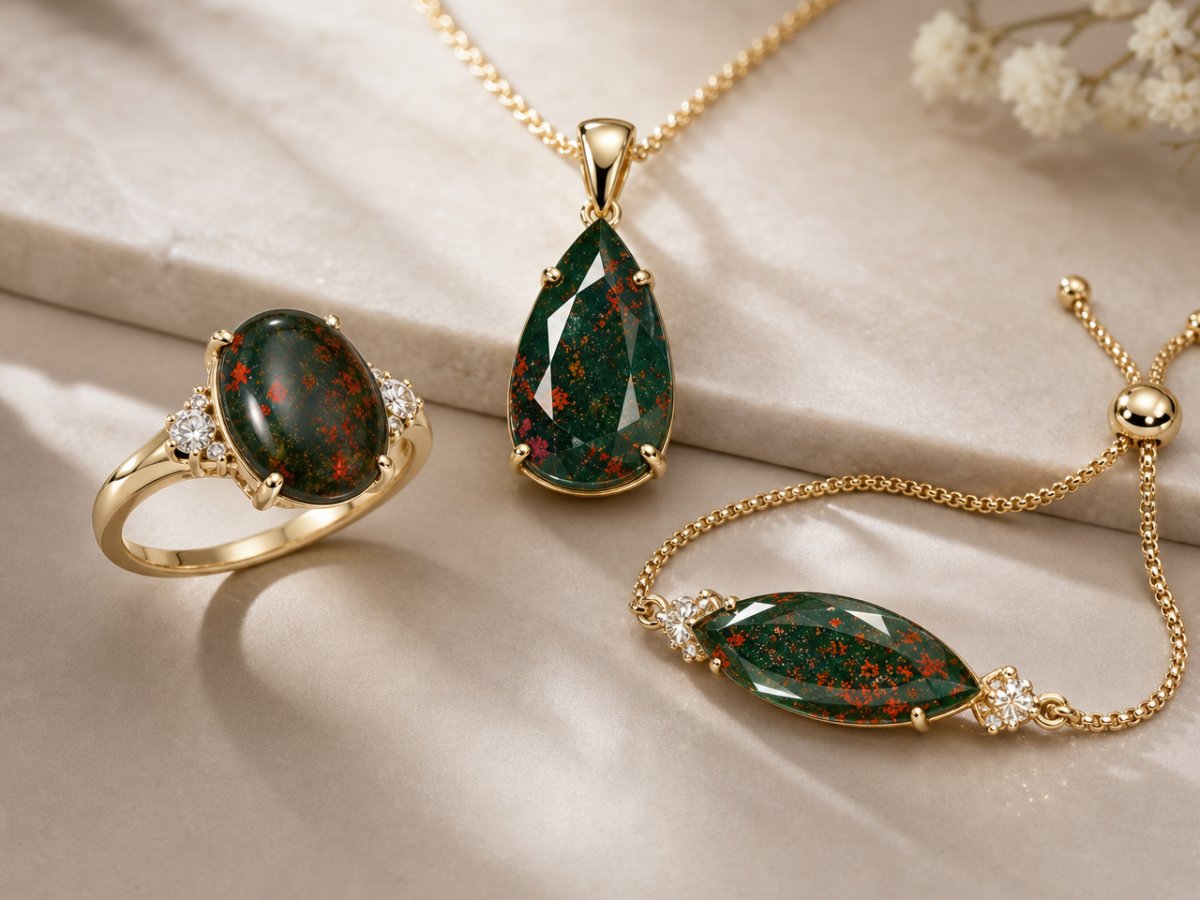
Bloodstone works especially well in necklaces and pendants. These jewelry types allow the stone to be shown as a central design feature while reducing the risk of impact compared with rings. Larger oval, pear or freeform cabochons can be particularly effective in pendant designs.
Rings are also a popular option, especially when the stone is well protected. A cabochon ring can have a strong, classic look, but buyers should consider how often the ring will be worn and whether the setting protects the edges. Brooches provide space for larger or more decorative stones, while cufflinks are a good use for matched pairs or compact cabochons.
Design Considerations for Jewelers
Jewelers and designers should consider the stone's outline, dome height and back shape before planning a setting. Cabochons usually work well in bezels, but the bezel must match the stone's shape and thickness. Sugarloaf cabochons need enough clearance so the high dome is not exposed to unnecessary impact. For cufflinks and rings, a low to moderate profile may be more wearable than a very high dome.
Bloodstone as a March Birthstone
Bloodstone is associated with March as a birthstone. For buyers, this makes it a meaningful option for birthday jewelry, personalized pendants, rings, cufflinks and collectible loose stones. When buying a birthstone gift, choose a piece that suits the recipient's lifestyle. A pendant or necklace is often a safe choice because it is wearable and generally less exposed to damage than a ring.
Practical Bloodstone Buying Checklist
Before purchasing bloodstone, consider the following practical points:
- Color: Look for an appealing green body color and an overall appearance that suits your taste.
- Cut: Cabochons are the main choice; check for a smooth dome, good outline and even polish.
- Shape: Oval is highly versatile, while freeform and pear shapes can work well for pendants and designer jewelry.
- Surface condition: Avoid stones with distracting chips, open cracks or poor polish.
- Measurements: Check millimeter size as well as carat weight, especially for mounted jewelry.
- Treatment: Confirm whether the stone is untreated or dyed.
- Use: Match the stone to the jewelry type. Pendants and necklaces are especially suitable; rings need protective settings.
- Origin: Madagascar, India, the United States, Australia and China are known origins, but appearance and disclosure should guide the final decision.
Conclusion
Buying bloodstone is mostly about choosing a stone with the right visual character, cut quality and suitability for your intended use. As a quartz gemstone with a Mohs hardness of 6.5 to 7, it is durable enough for many jewelry styles when worn and cared for sensibly. Cabochons, especially oval cabochons, are the most practical and common choice, while sugarloaf cabochons and freeform shapes offer more distinctive design possibilities.
For a confident purchase, compare color, polish, surface condition, measurements and treatment disclosure. Choose necklaces and pendants for easy wear, select protective settings for rings, and consider matched stones carefully for cufflinks or coordinated designs. With clear information and careful comparison, bloodstone can be an attractive and practical gemstone for jewelry, collecting and March birthstone gifts.
