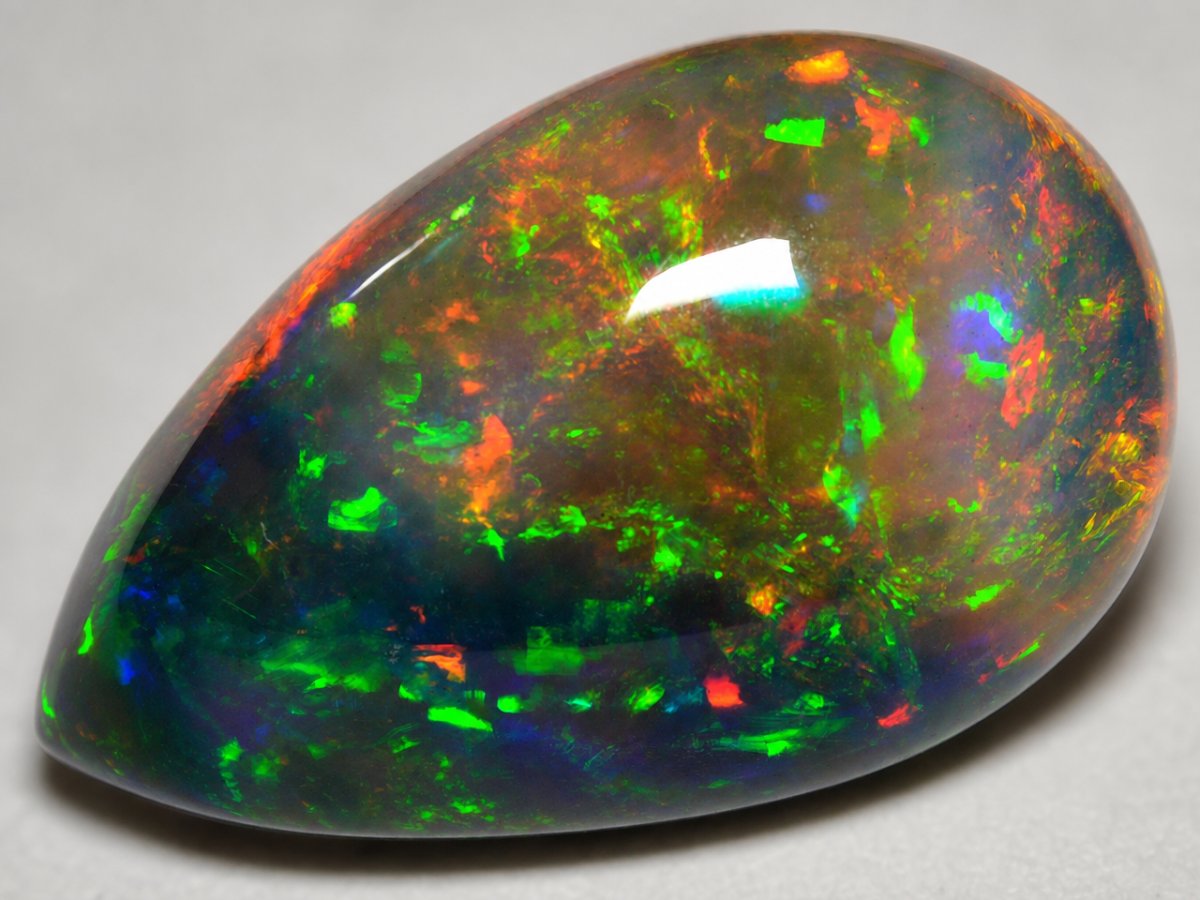


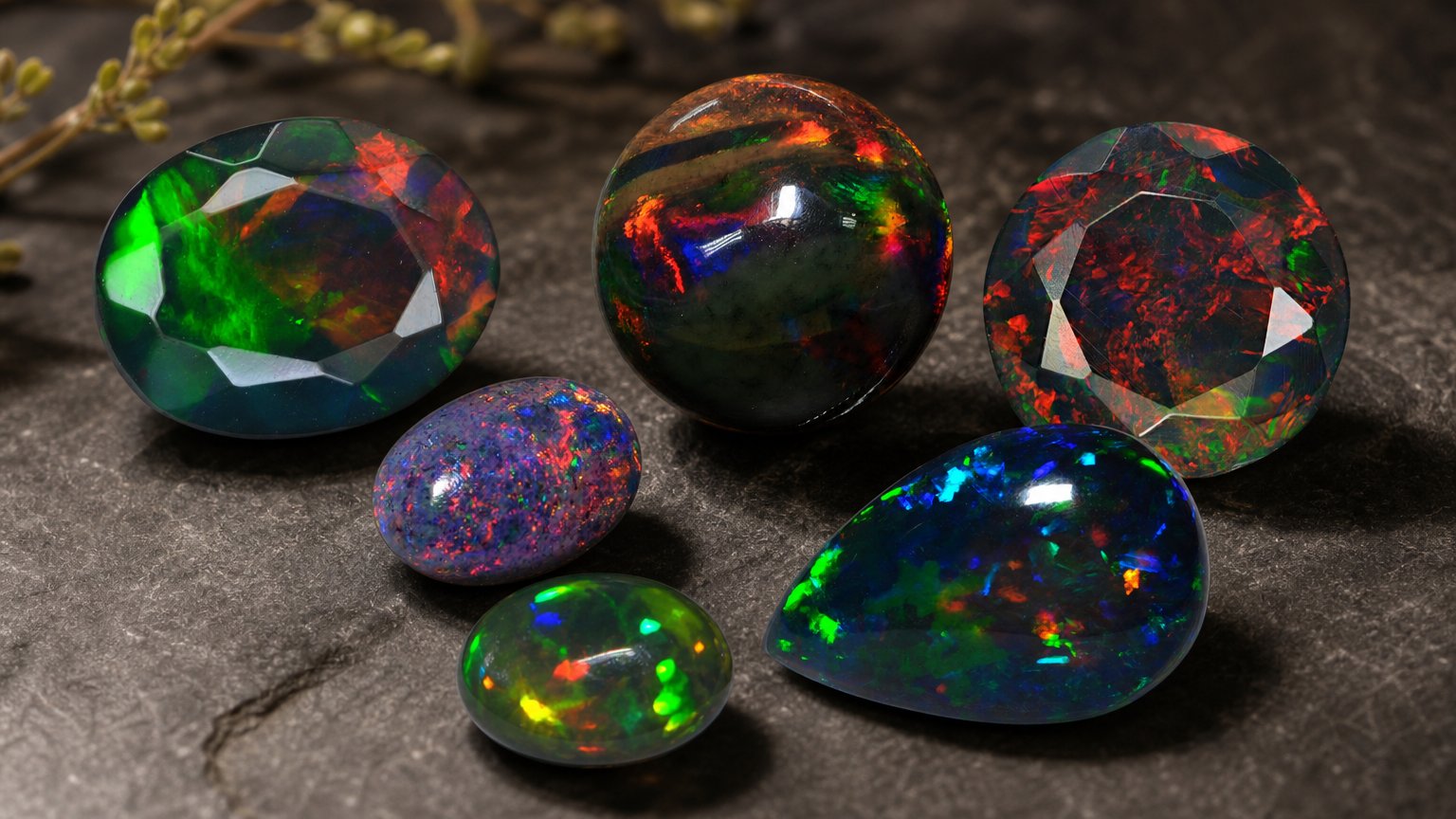
Black opal is one of the most distinctive varieties of opal, admired for its multicolor appearance and strong visual personality. In a meaning and history context, its appeal is closely connected to contrast, individuality and its place within the wider opal tradition.
For many gemstone buyers and collectors, black opal carries meaning not because of a single ancient story, but because it combines the symbolic heritage of opal with a dramatic modern identity. It is also associated with October, making it especially relevant as a birthstone gift or personal gemstone for people born in that month.
What Is Black Opal?
Black opal is a variety of opal. Like other opals, it is valued for its multicolor appearance, which can make each gem feel highly individual. This individuality is one of the reasons black opal has developed such a strong symbolic presence among collectors and jewelry lovers.
The word black in the name identifies the variety within the opal family, while the gemstone itself is known for displaying multiple colors. This combination gives black opal a visual character that feels different from more uniform gemstones, and that has shaped much of its modern meaning.
Black Opal Meaning and Symbolism
Black opal is most often interpreted through the broader symbolism of opal, with additional meaning drawn from its bold appearance. Because its colors can appear varied and expressive, it is commonly seen today as a gemstone of individuality, personal expression and emotional depth. These are symbolic interpretations rather than scientific properties.
As an October birthstone, black opal can also symbolize personal identity, celebration and connection to the month of birth. For this reason, it is often chosen as a meaningful birthday gemstone, especially by people who want an opal with a more dramatic presence.
Its multicolor appearance also gives it a natural association with variety and change. In modern gemstone symbolism, black opal is often appreciated by people who prefer gems that do not look identical from one stone to the next. This makes it especially meaningful as a personal talisman or commemorative gemstone, provided those meanings are understood as tradition and personal interpretation.
Historical Background and Important Origins
The story of black opal in the gem world is strongly connected with origin. Australia is the most important source associated with black opal, and it has played a central role in how the gemstone is recognized and discussed in the trade. Australian black opal is especially prominent in modern collecting culture.
Ethiopia is also an important origin for black opal, adding to the gemstone's international presence. Honduras is another known source, though it is less prominent than Australia and Ethiopia in the supplied origin profile.
Origin matters in the history of a gemstone because localities often influence how a gem is collected, described and valued culturally. For black opal, the modern historical picture is best understood as a global opal story with Australia at the forefront and additional contributions from Ethiopia and Honduras.
Black Opal as an October Birthstone
Black opal is associated with October through its identity as an opal variety. This birthstone connection is one of its clearest and most widely recognized symbolic associations.
As an October gemstone, black opal is often chosen for birthday jewelry and personal gifts. The meaning is usually tied to the wearer rather than to a formal ceremony: it can mark a birth month, a personal milestone or a connection to the opal family.
Among October birthstones, black opal offers a particularly distinctive look because of its multicolor appearance. This helps explain why it is often selected by buyers who want a birthstone with strong individuality rather than a simple single-color gem.
Folklore, Tradition and Modern Belief
Opal as a gemstone has long attracted symbolic interpretation, but black opal should be discussed carefully. Some meanings connected with black opal today come from general opal tradition, while others are modern personal or crystal-style interpretations.
When people describe black opal as inspiring creativity, transformation or self-expression, these ideas should be understood as symbolic or traditional associations. They are not medical or scientific claims. For collectors and jewelry wearers, such meanings can still be personally valuable when treated as cultural or emotional symbolism.
This distinction is important because gemstones often carry both documented facts and interpretive traditions. The documented facts for black opal include its identity as a variety of opal, its multicolor appearance, its October birthstone association and its important origins. Symbolic meanings are best viewed as traditions layered onto those facts.
Black Opal in Modern Culture
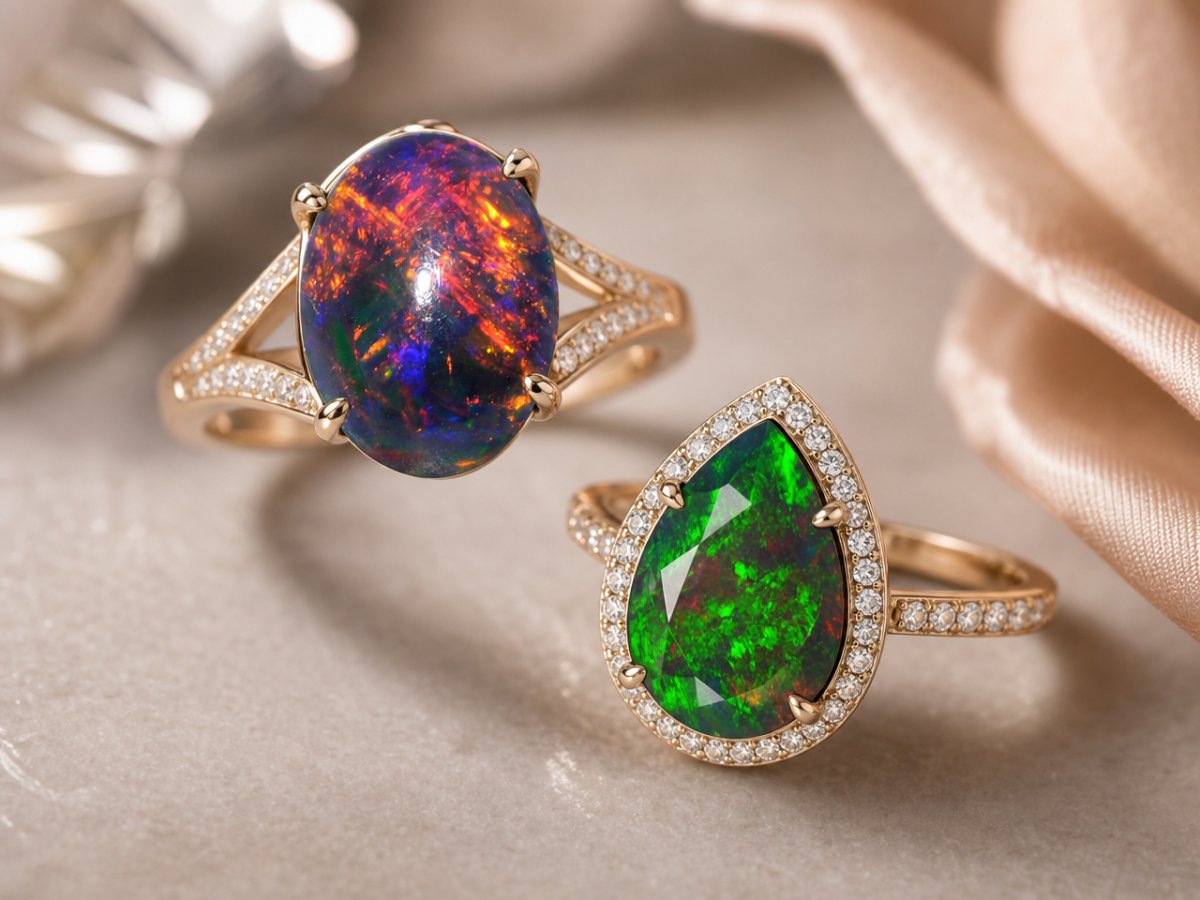
Today, black opal is valued as a gemstone with a strong sense of individuality. It appears in rings, engagement rings, earrings, pendants, bracelets and necklaces, where its meaning is often tied to personal expression and memorable gifting.
In engagement rings and other symbolic jewelry, black opal is usually chosen by people who want a gemstone that feels distinctive and less conventional. Its modern cultural meaning is therefore closely linked with uniqueness and emotional significance rather than with a fixed historic ceremony.
GemSelect customers often view black opal as both a collectible opal variety and a meaningful personal gemstone. Its October birthstone role gives it a traditional anchor, while its multicolor character gives it a contemporary appeal.
Conclusion
Black opal's meaning comes from a combination of opal tradition, October birthstone symbolism, important geographic origins and its unmistakable multicolor appearance. Australia is especially important in its modern gem story, with Ethiopia and Honduras also recognized as notable sources.
Rather than relying on unsupported legends, black opal is best appreciated as a gemstone whose symbolism is rooted in individuality, birthstone identity and the expressive beauty of the opal family. Its meaning today is personal, visual and culturally connected to the enduring appeal of opal.