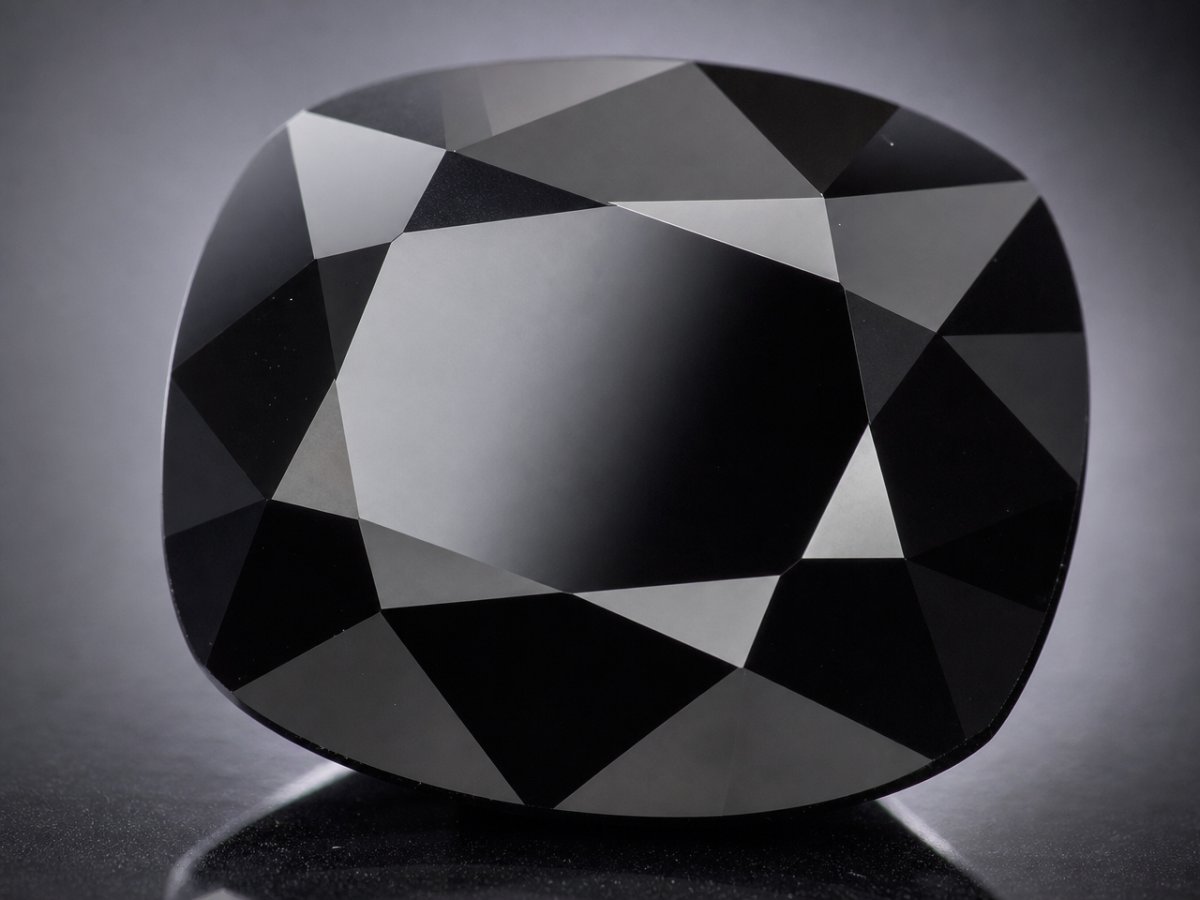


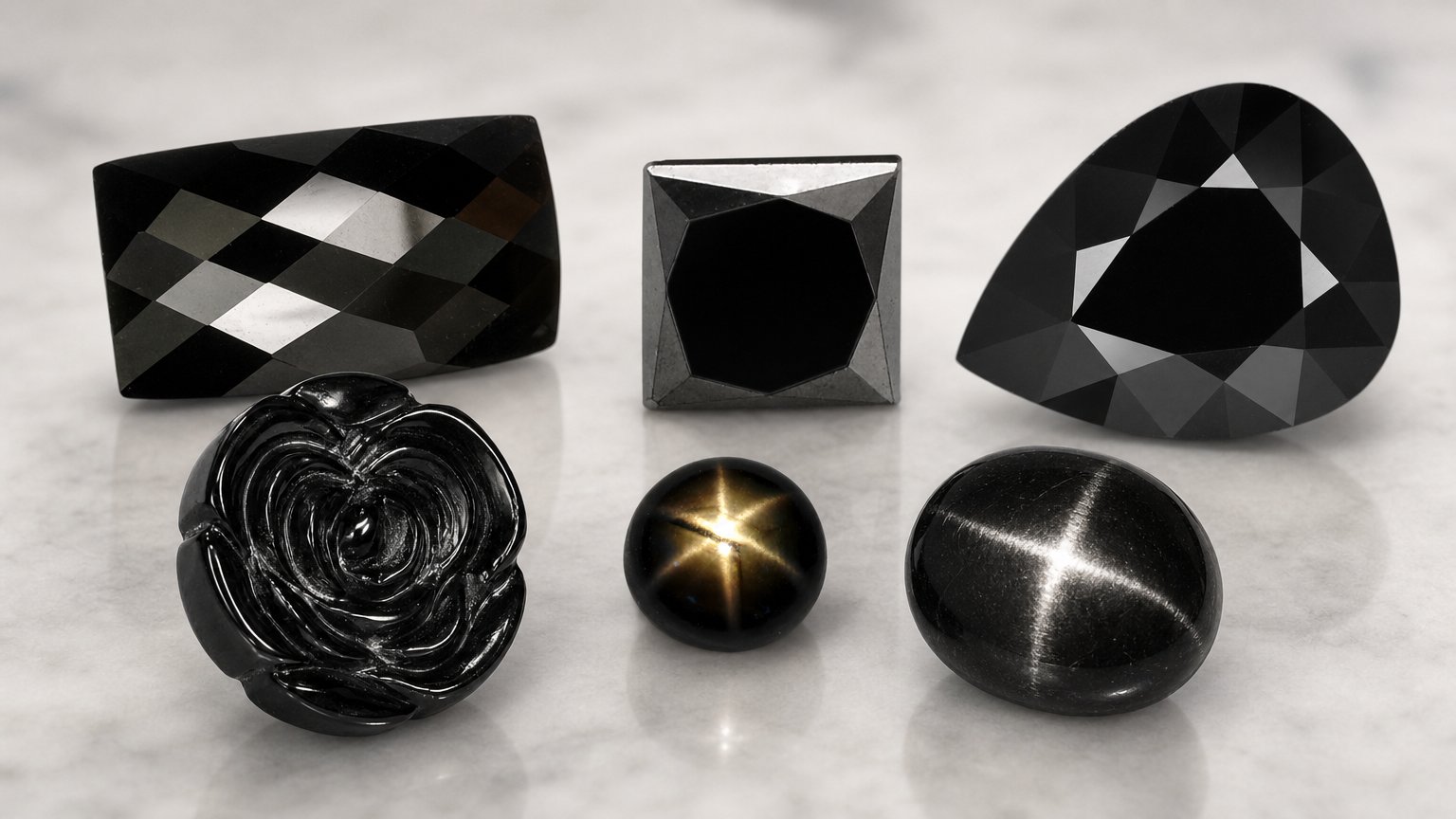
Black gemstones can make striking engagement rings, but choosing one is not as simple as picking the darkest stone available. Some black gems are hard and well suited to frequent wear, while others need more protective settings and careful use. They also differ greatly in visual style: a faceted black spinel, a polished black onyx cabochon, a black diamond and a black star sapphire do not create the same look.
This guide focuses on natural loose black gemstones that are realistically considered for engagement rings, including black spinel, black sapphire, black diamond, black tourmaline, black onyx, black star sapphire and black star diopside. When comparing stones, look beyond the gemstone name. Actual photographs, millimeter dimensions, cut quality, polish, treatment disclosure and setting design all matter.
Black Gemstones Do Not All Look the Same
Black gemstones can appear neutral jet black, slightly gray-black, brownish black, bluish black or almost metallic. Some are opaque and mirror-like when polished; others may be translucent dark gray or black at the edges. Phenomenal black gems, such as black star sapphire and black star diopside, show a moving star-like reflection across the surface.
It is also important to separate brilliance from surface luster. Transparent gemstones return light from inside the stone, creating brilliance and scintillation. Most black engagement-ring gemstones are opaque or near-opaque, so they do not sparkle in the same way. Instead, their beauty often comes from surface polish, crisp facet reflections, a glossy cabochon surface or an optical effect such as asterism.
Durability: Hardness Is Important, But Not the Whole Story
The Mohs scale measures scratch resistance. For engagement rings, scratch resistance matters because rings are worn on the hand and come into contact with hard surfaces. However, hardness is not the only durability factor. Toughness, cleavage, brittleness, abrasion resistance, inclusions, cut style and exposure in the setting also affect how a gemstone performs over time.
A high-set prong ring exposes the center stone more than a low bezel setting. Sharp corners on shapes such as pear, marquise, trillion and emerald cuts may need extra protection. Softer stones can still be used in engagement rings, but the wearer should understand that they require more care than sapphire, spinel or diamond.
Comparison of Black Gemstones for Engagement Rings
| Gemstone | Typical appearance | Transparency | Mohs hardness | Everyday-wear suitability | Relative affordability | Luster / visual effect | Treatment considerations | Setting considerations |
|---|---|---|---|---|---|---|---|---|
| Black Spinel | Usually opaque, dark black to slightly gray-black; attractive in faceted cuts | Typically opaque | 8 | Good for frequent wear when well set | Often a strong value choice for a natural black center stone | High polish and crisp facet reflections | Check the individual stone disclosure | Works well in solitaires, halos, bezels and contemporary designs |
| Black Sapphire | Dense black, bluish black or gray-black; less like transparent blue sapphire visually | Opaque to near-opaque | 9 | Very good for daily wear | Varies by size, cut and quality | Durable polished surface; facet reflections rather than transparent brilliance | Sapphire treatments should always be disclosed for the individual gem | Suitable for most ring styles, including prong and bezel settings |
| Black Diamond | Opaque black, sometimes with a metallic-looking surface reflection | Opaque | 10 | Excellent scratch resistance; setting and stone condition still matter | Highly variable; natural-color and treated stones are not the same category | Strong surface reflections from polished facets | Natural-color and treated black diamonds exist; disclosure is essential | Good in modern solitaires, halos and monochrome designs |
| Black Tourmaline | Deep black, sometimes with strong linear or crystal-like character | Usually opaque | 7 to 7.5 | Possible for rings, but needs more care than sapphire or spinel | Often considered affordable for larger stones | Bold dark surface; can suit natural or geometric styles | Check disclosure for the individual stone | Prefer protective designs, especially for everyday wear |
| Black Onyx | Smooth, uniform, polished black; classic cabochon or flat-top style | Opaque | 6.5 to 7 | More care-intensive for an engagement ring | Often accessible in larger sizes | Glossy, even surface rather than faceted sparkle | Onyx may be dyed; check disclosure | Best with bezels, low profiles and protective designs |
| Black Star Sapphire | Dark cabochon with a moving star effect | Opaque to translucent | 9 | Very good when the cabochon is well protected | Depends on star quality, size and overall appearance | Asterism; usually a six-rayed star in sapphire | Check disclosure; star stones should be evaluated individually | Use settings that leave the dome visible and protect the edge |
| Black Star Diopside | Black to dark greenish or grayish cabochon with a star effect | Opaque to translucent | About 5.5 to 6.5 | Distinctive but more care-intensive | Can be attractive for unusual designs; value depends on the stone | Asterism; often seen as a four-rayed star | Evaluate the individual stone and disclosure | Best in protective, occasional-wear or careful-wear settings |
Black Spinel: A Strong Natural Choice for Engagement Rings
Black spinel deserves attention as a gemstone in its own right. It has good hardness at 8 on the Mohs scale, no cleavage, and it can take a high polish. Most black spinel used in jewelry is opaque, so its visual appeal comes from polished facets, sharp cutting and glossy reflections rather than internal brilliance.
For buyers who want a natural black faceted center stone with a clean, modern appearance, black spinel is one of the most practical options. It works well in round, oval, cushion, pear, emerald-cut, octagon, trillion and geometric shapes. In minimalist rings, it can look sleek and architectural; in halo rings, the contrast with white diamond or colorless gemstone accents can make the black center look even more defined.
When shopping for loose black spinel at GemSelect or elsewhere, compare the actual face-up size in millimeters, the polish, facet symmetry and photographs of the individual stone. Since opaque gemstones do not reveal light return in the same way as transparent gems, the surface finish and proportions are especially important.
Black Sapphire: Durable Corundum with a Darker Character
Black sapphire is corundum, the same mineral family as blue sapphire and ruby, and has a Mohs hardness of 9. That makes it one of the most scratch-resistant colored gemstone choices for an engagement ring. Black sapphire is usually opaque to near-opaque, so it should not be judged by the same visual expectations as transparent blue, pink or yellow sapphire.
Instead of bright internal color and brilliance, black sapphire gives a strong, durable, dark surface with polished reflections. It may appear neutral black, gray-black or bluish black depending on the stone and lighting. Because sapphire is well suited to daily-wear jewelry, black sapphire is a practical option for buyers who prioritize durability but prefer a natural colored gemstone rather than diamond.
Black Diamond: Natural Color, Treated Color and Disclosure
Black diamond offers the highest Mohs hardness at 10 and a distinctive opaque black appearance. However, black diamonds need careful buying attention because natural-color black diamonds and treated black diamonds both exist. Treatment disclosure is important; do not assume that every black diamond has the same origin of color or treatment status.
Visually, black diamond often has a strong, reflective, sometimes metallic-looking surface. Like other opaque black stones, it does not perform like a transparent colorless diamond. Its appeal is usually bold contrast and facet reflection, not traditional diamond brilliance.
Black Tourmaline and Black Onyx: Distinctive but More Care-Dependent
Black tourmaline is a natural black gemstone with a bold, often slightly rugged character. It is generally more affordable than many premium engagement-ring stones and may be appealing for larger or unconventional center stones. Its Mohs hardness of about 7 to 7.5 is respectable, but it does not have the same everyday-wear margin as sapphire or spinel. For an engagement ring, a lower-profile setting or protective design is a sensible choice.
Black onyx gives a different look entirely. It is usually chosen for its smooth, uniform, polished black surface rather than faceted reflections. This classic appearance can be excellent for vintage-inspired, signet-influenced, Art Deco or minimalist designs. Onyx, however, is softer than spinel and sapphire and can be more vulnerable to scratches and abrasion. It is best for wearers who accept extra care and prefer protective settings such as bezels.
Black Star Sapphire and Black Star Diopside
Asterism is the optical effect that creates a star-like reflection on the surface of a gemstone. As the light source or the stone moves, the star appears to glide across the dome. For an engagement ring, this can make the center stone feel alive and highly individual.
Black star sapphire combines the durability of corundum with a phenomenal effect, usually in a cabochon cut. Black star diopside is also known for its star effect, often appearing as a four-rayed star, but it is softer and requires more care. Both are normally cut as cabochons rather than faceted stones, because the rounded dome is needed to display the star.
When selecting a star gemstone, conventional faceted brilliance is not the main quality factor. Look at the strength, centering and movement of the star, the quality of the cabochon polish, the dome shape and the stone's outline. The setting should hold the cabochon securely while leaving enough of the top visible for the star to be seen.
Black Spinel vs Black Sapphire vs Black Diamond
Black spinel, black sapphire and black diamond are often compared because all three can be used for durable-looking black engagement rings, but they suit different priorities.
Black spinel is valued for its high polish, opaque black appearance, good hardness and lack of cleavage. It is a strong choice for buyers who want a natural black faceted gemstone with good wearability and a clean, glossy look.
Black sapphire is harder than spinel and belongs to the corundum family. It is a practical daily-wear choice, but its appearance is usually dense and opaque, not like transparent colored sapphire. It is best judged as a dark, durable gem with surface reflections.
Black diamond has the greatest scratch resistance, but buying requires careful attention to natural color versus treatment. Its look can be dramatic and highly reflective, but it should not be expected to sparkle like a transparent diamond.
None is universally superior. The best choice depends on whether the buyer values natural gemstone character, scratch resistance, treatment status, budget, size, rarity, or a particular visual style.
Choosing Shape, Cut and Size
Shape has a powerful effect on black gemstones because the outline is often more visually dominant than internal color play. Round and oval shapes feel classic and balanced. Cushion cuts soften the look and work well in halos. Pear shapes create drama and length. Emerald and octagon cuts look architectural. Trillion and other geometric cuts can make opaque black material feel contemporary and bold.
Cutting and polishing still matter even when a stone is opaque. A poorly polished black gemstone can look dull, while a well-polished stone can show crisp highlights across its facets. Symmetry, outline, crown height and overall proportions influence how light reflects from the surface.
Carat weight should not be used alone when comparing black gemstones. Different gem species have different specific gravities, and cutting style affects face-up size. A one-carat spinel, sapphire, diamond, tourmaline or onyx will not necessarily have the same visible diameter. For an existing ring setting or a custom design, compare actual millimeter measurements first, then consider carat weight.
Setting Styles for Black Gemstone Engagement Rings
Because black gemstones are visually dominant, the setting and metal color have an unusually strong influence on the finished ring.
- Solitaire rings: Best when the cut, polish and outline of the black gemstone are strong enough to stand alone.
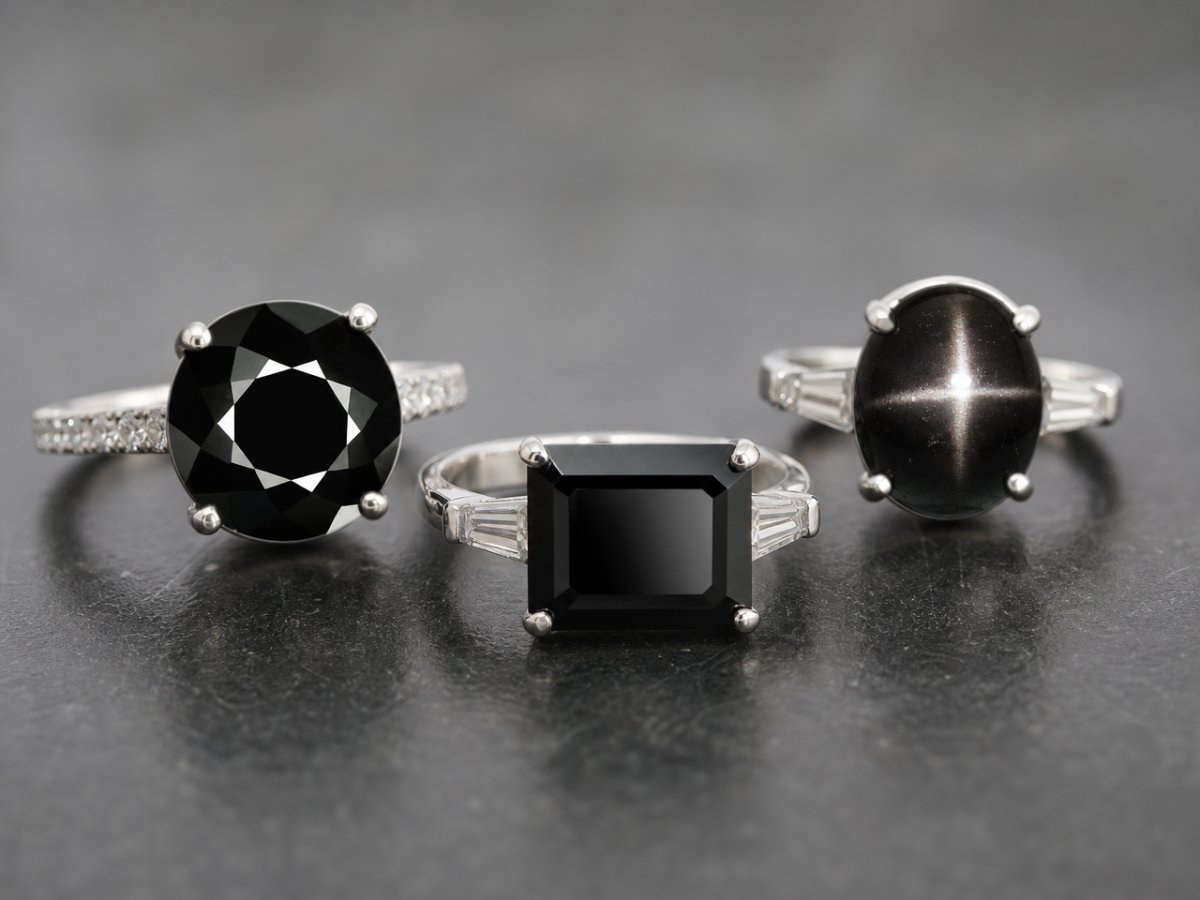
- Halo settings: A halo of small white diamonds or colorless gems creates a bright boundary around an opaque black center stone, making the outline sharper and more dramatic.
- Bezel settings: Useful for cabochons, softer stones or wearers who want extra edge protection and a sleek profile.
- Three-stone rings: Colorless side stones create contrast; colored side stones can make the design more personal and less monochrome.
- Vintage-inspired designs: Black onyx, black spinel, black sapphire and star stones can all work well with milgrain, engraving and geometric details.
- Minimalist designs: A single well-cut black spinel, sapphire or diamond in a clean setting can look refined and modern.
- Geometric or contemporary rings: Octagon, trillion, kite-like and shield-style cuts can emphasize the graphic strength of black gems.
Metal Color and Contrast
White gold and platinum create a crisp monochrome effect, especially with diamond accents. Yellow gold gives a strong black-and-gold contrast that feels dramatic and warm. Rose gold softens the contrast and can make a black center stone look less severe.
Accent stones are especially useful with opaque black gems. Small white diamonds or other colorless gemstones can visually separate the black center from the metal, define the outline and add brightness without changing the overall black gemstone focus.
Which Black Gemstone Is Best for an Engagement Ring?
There is no single best black gemstone for every engagement ring. Choose according to the design and the wearer's priorities:
- Maximum everyday durability: Black diamond and black sapphire offer the highest scratch resistance among the main options, with black spinel also a strong practical choice.
- Natural jet-black faceted appearance: Black spinel is excellent for a polished, opaque black look with crisp reflections.
- High-polish faceted style: Black spinel, black sapphire and black diamond are the leading choices.
- Affordable larger center stone: Black tourmaline and black onyx may be appealing, but they need more care; black spinel can also offer strong value depending on the individual stone.
- Unusual optical effect: Black star sapphire is the more durable star-stone option; black star diopside is distinctive but more care-intensive.
- Classic smooth black appearance: Black onyx is the traditional choice for a uniform polished surface.
- Distinctive or less common choice: Black spinel, black star sapphire and black star diopside can all create engagement rings that feel different from conventional diamond designs.
Which Black Gemstones Need More Care?
Black sapphire, black spinel and diamond are generally the safest choices for frequent-wear black gemstone engagement rings, assuming the individual stone is sound and the setting is appropriate. Black tourmaline, black onyx and black star diopside require more care because they are softer or more vulnerable to wear than sapphire and spinel.
For care-intensive stones, avoid high exposed settings, protect corners and edges, remove the ring during heavy work, and clean gently. Bezel settings, thicker prongs and lower profiles can help reduce accidental impact and abrasion.
Treatments and Buying Disclosure
Treatment disclosure matters for black gemstones. Some black diamonds are natural-color and some are treated. Onyx may be dyed. Sapphire and other gemstones may have treatments that should be identified for the individual stone. The safest approach is to check the specific treatment disclosure rather than assuming an entire gemstone variety is untreated or treated.
When buying a loose black gemstone for an engagement ring, compare real photos, measurements, cut, polish, transparency, optical effects, treatment information and price. GemSelect lists individual loose gemstones, which makes it easier to evaluate the exact stone rather than relying only on a variety name or carat weight.
Final Thoughts
A black gemstone engagement ring can be sleek, dramatic, vintage, minimalist or highly unconventional depending on the stone and setting. Black spinel is one of the most balanced natural choices because it combines good hardness, no cleavage, high polish and a strong faceted black appearance. Black sapphire adds excellent scratch resistance, black diamond offers maximum hardness with important disclosure considerations, and star stones or onyx provide very different visual styles.
The best result comes from matching the gemstone to the wearer's lifestyle and the ring design. For a ring intended for daily wear, give durability and setting protection the same attention as color and style.