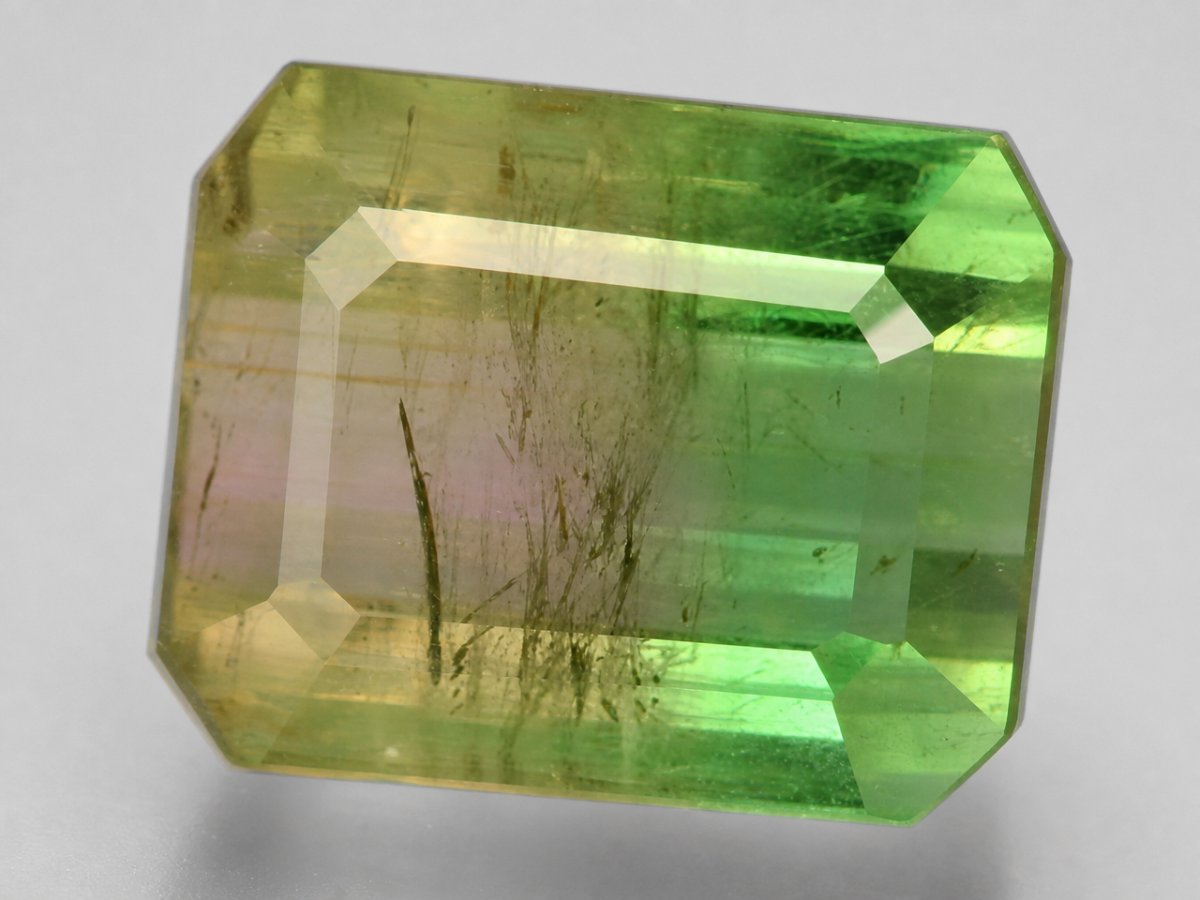


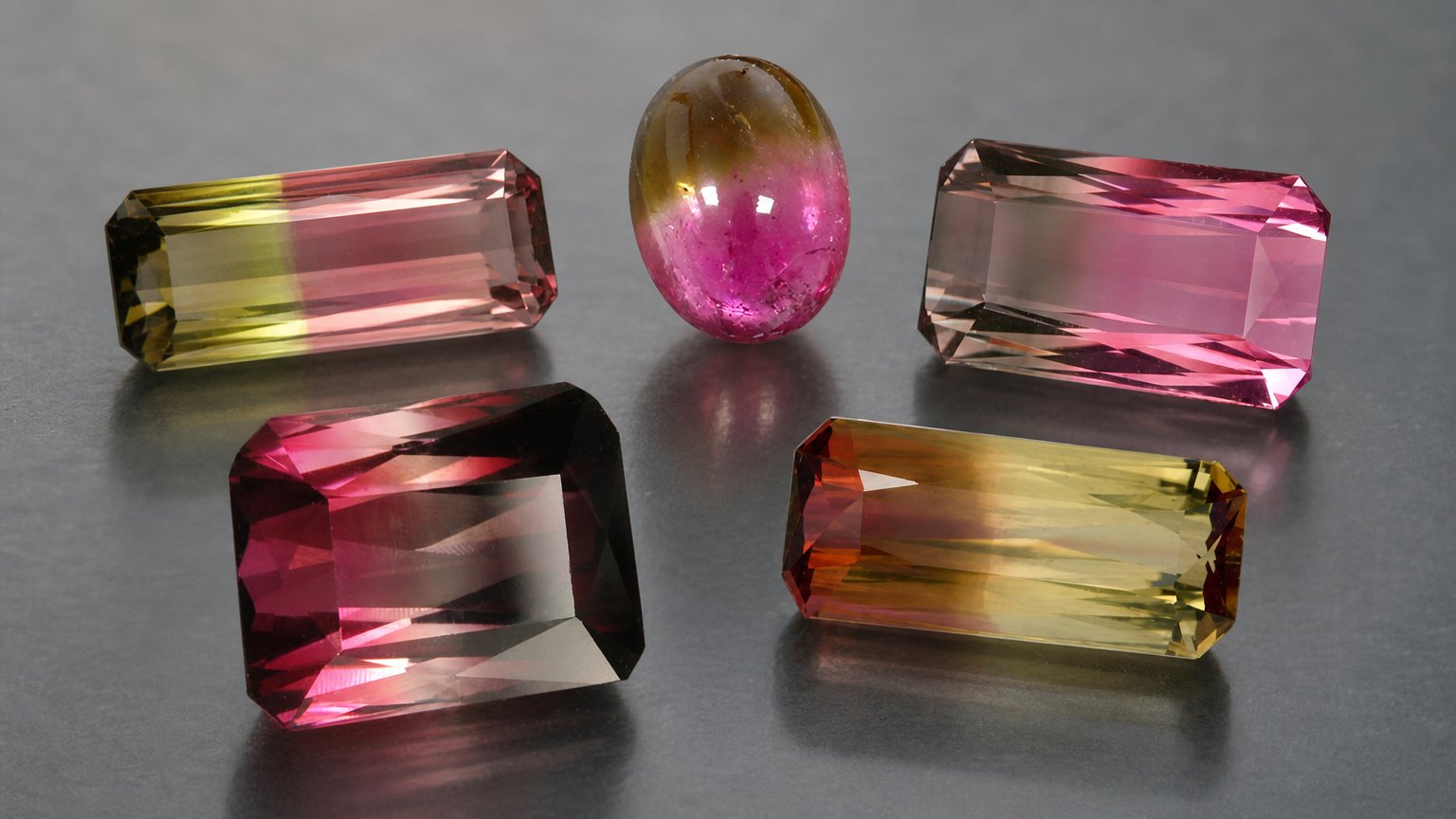
Bi-color tourmaline is chosen for one main reason: two colors in a single natural gemstone. For buyers, the most important decision is not simply whether the stone is "bi-color," but how attractive, balanced and usable that color combination is in the finished gem.
This guide explains what to look for when buying bi-color tourmaline, including color layout, cut, clarity, durability, treatments, origin and jewelry suitability.
What Is Bi-Color Tourmaline?
Bi-color tourmaline is a variety of tourmaline, most closely associated with the mineral species elbaite. Its defining feature is visible color zoning, where two different colors appear within the same gemstone. This zoning may be arranged in bands, sections or gradual transitions, depending on how the crystal formed and how the gemstone was cut.
Because the color pattern is central to its appeal, each bi-color tourmaline should be judged individually. Two stones of the same size and shape can look very different if the color boundary, proportions or orientation are different.
Color and Appearance: The Main Buying Factor
Color is the key feature to examine first. A desirable bi-color tourmaline should show two clearly visible color areas that work well together. The colors do not need to be equal in size, but the arrangement should look intentional and attractive when viewed face-up.
When comparing stones, consider these points:
- Color separation: A crisp boundary can create a bold graphic look, while a softer transition can appear more subtle.
- Balance: The two colors should be positioned in a way that suits the shape and setting you have in mind.
- Face-up appearance: Judge the gem from the top, not only from the side, because this is how it will usually be seen in jewelry.
- Cut orientation: A skilled cut can place the color zones where they are most visible and attractive.
If you are buying online, examine all photos carefully and look for images that show the color distribution clearly. For custom jewelry, choose a stone whose color layout fits the design, not just the stated carat weight.
Cut and Shape Considerations
Faceted bi-color tourmaline is common and often the best choice when you want brilliance along with visible color zoning. Octagon shapes are especially practical because their straight lines can display color bands cleanly and make setting easier for rings and pendants.
Other shapes, including cushion, oval and fancy shapes, can also work well when the cutter has oriented the stone to show both colors attractively. Slice cuts are valued for emphasizing natural color zoning and can be appealing in distinctive pendants or designer jewelry. Cabochons offer a softer, polished look, while carved or freeform pieces are more individual and may appeal to collectors or custom jewelry designers.
For buying purposes, do not judge cut only by the shape name. Look at whether the stone is symmetrical enough for your design, whether the color zones are well placed, and whether the gem has an appealing face-up appearance.
Clarity and Transparency
For bi-color tourmaline, clarity should be considered together with color and cut. A gem with excellent color zoning may still be attractive even if it is not perfectly free of inclusions, especially if the inclusions are not distracting to the unaided eye.
Inspect the stone for inclusions that affect beauty or durability. Surface-reaching features, chips or fractures near corners and edges are more important than small internal characteristics that do not interfere with appearance. In faceted stones, inclusions may be more visible in pale areas than in darker color zones, so examine both sections of the gem.
Durability and Everyday Wear
Bi-color tourmaline has a Mohs hardness of 7 to 7.5, making it suitable for many types of jewelry, including rings, pendants, earrings and necklaces. This hardness gives it good resistance to everyday scratching compared with softer gems, but it should still be worn with reasonable care.
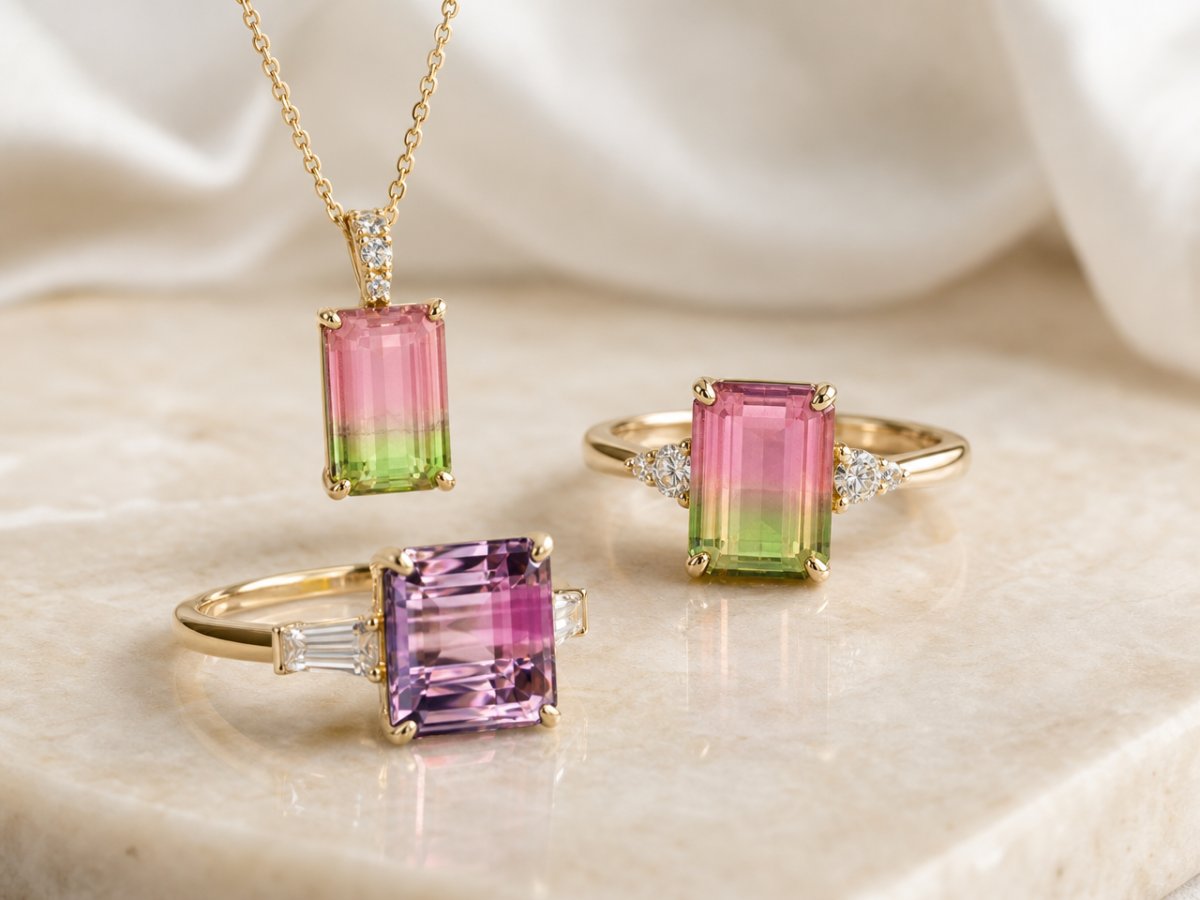
For rings, especially those worn often, choose a setting that protects exposed corners and edges. Octagon and other angular shapes can look elegant, but their corners should be securely set. Pendants, earrings and necklaces are generally lower-impact choices and are excellent ways to showcase a stone with distinctive color zoning.
Clean bi-color tourmaline gently with mild soap, warm water and a soft brush. Avoid harsh chemicals and strong impacts, and store it separately from harder gemstones to reduce the chance of scratches.
Treatments and Buying Confidence
Bi-color tourmaline is commonly offered as untreated. For buyers, this is an important point because treatment status can affect confidence and suitability for certain collectors. When purchasing, check the seller's treatment disclosure and keep any invoice or gem information supplied with the stone.
At GemSelect, treatment information is listed with gemstones so buyers can compare stones more confidently. If treatment status is important for a collection or custom jewelry project, review the product details before purchasing.
Origins
Important sources of bi-color tourmaline include Brazil, Afghanistan, Madagascar and Mozambique, with additional material known from Namibia, Nigeria and the United States. Origin can be interesting to collectors, but for most jewelry buyers the visible qualities of the individual gem are more important than country of origin.
When comparing stones from different origins, prioritize the appearance: color combination, zoning, cut quality, clarity and size. A beautiful stone with well-displayed color is usually a better practical choice than selecting by origin alone.
Gemological Properties
Bi-color tourmaline belongs to the trigonal crystal system and has a refractive index of 1.614 to 1.666 and a specific gravity of 3.02 to 3.26. Its chemical formula is Na(Li₁.₅Al₁.₅)Al₆(Si₆O₁₈)(BO₃)₃(OH)₄.
For most buyers, the most useful property is hardness: 7 to 7.5 on the Mohs scale. This helps explain why tourmaline is popular for jewelry, while still reminding buyers to choose appropriate settings and care.
Best Jewelry Uses
Bi-color tourmaline works especially well in pendants and rings because a single stone can become the focal point of the design. In a pendant, a larger or elongated stone can show the full color transition clearly. In a ring, a well-cut octagon, cushion or oval can provide both color contrast and wearability.
Earrings and necklaces are also good choices, particularly when using matched or complementary stones. Exact matching can be difficult because each bi-color pattern is unique, so designers often use stones that coordinate rather than match perfectly. Brooches and collector jewelry can make excellent use of unusual slices, carvings or freeform shapes.
Tourmaline is associated with October as a birthstone, making bi-color tourmaline a distinctive option for October birthstone jewelry.
Practical Buying Checklist
- Start with the color pattern: Make sure both colors are visible and appealing in the face-up view.
- Check the cut: The cut should display the color zoning well, not hide one color at the edge or pavilion.
- Match shape to design: Octagon shapes are classic and practical; slices and freeforms suit more artistic designs.
- Inspect clarity: Look for inclusions, chips or fractures that distract from beauty or affect setting security.
- Consider durability: For rings, choose protective settings and avoid designs that leave corners vulnerable.
- Confirm treatment disclosure: Bi-color tourmaline is commonly untreated, but always review the seller's information.
- Do not over-focus on origin: Origin is interesting, but appearance and suitability should guide most purchases.
Summary
The best bi-color tourmaline for you is the stone with the most attractive color relationship, a cut that presents both colors clearly, and a shape that suits your intended jewelry design. Its good hardness makes it versatile for pendants, rings, earrings and necklaces, while its unique color zoning gives every gem an individual character.
Buy with your intended use in mind, compare stones by their face-up appearance, and confirm treatment information before purchase. These simple steps will help you choose a bi-color tourmaline with confidence.