

Ammolite is admired for its vivid multicolor appearance and its strong visual individuality. Unlike gemstones with long, well-documented use in ancient jewelry or royal collections, ammolite is best understood today as a distinctive modern gemstone whose meaning is closely connected to color, rarity of appearance and North American origin.
This guide focuses on the meanings and cultural associations that can be discussed responsibly: what ammolite symbolizes for many modern gemstone lovers, how its name is understood, and how its identity has developed around its colorful aragonite composition and important sources in Canada and, to a lesser extent, the United States.
What Is Ammolite?
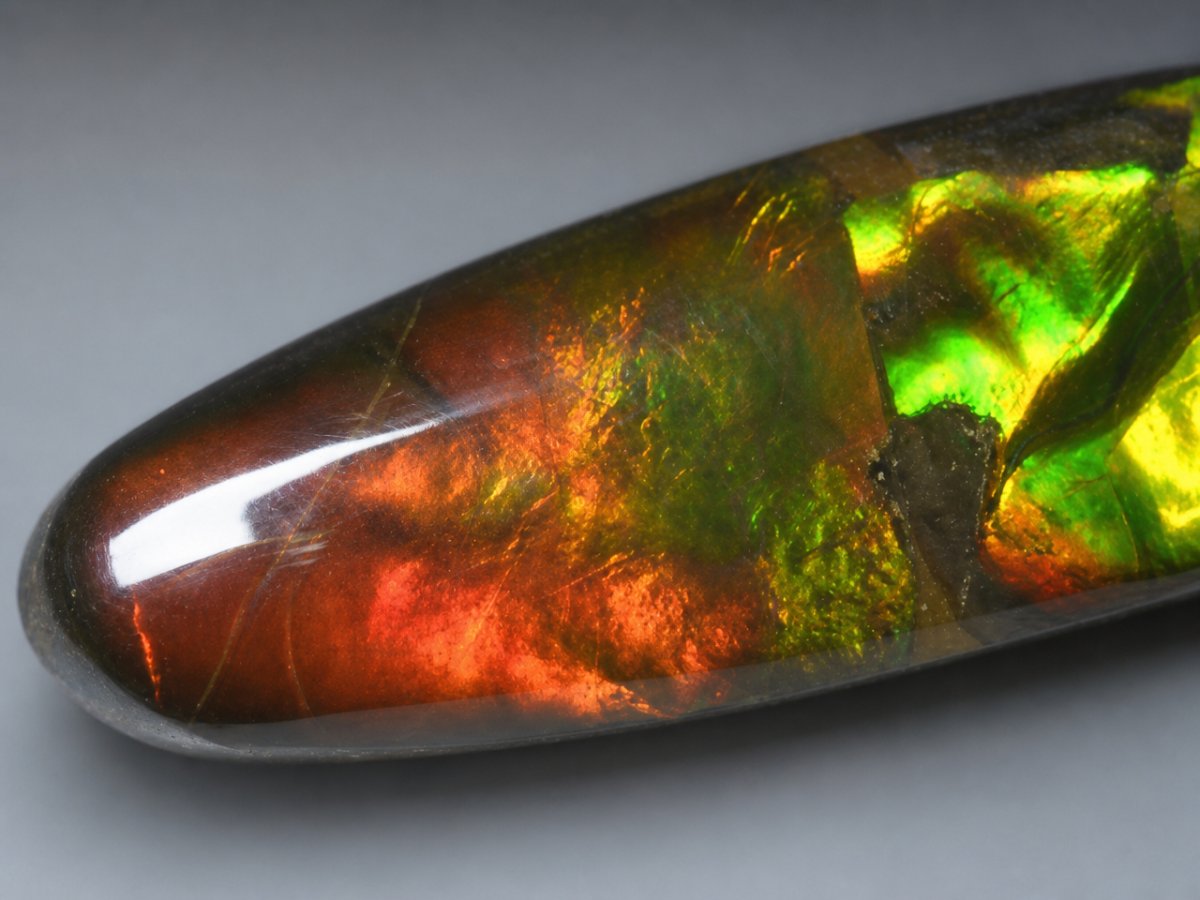
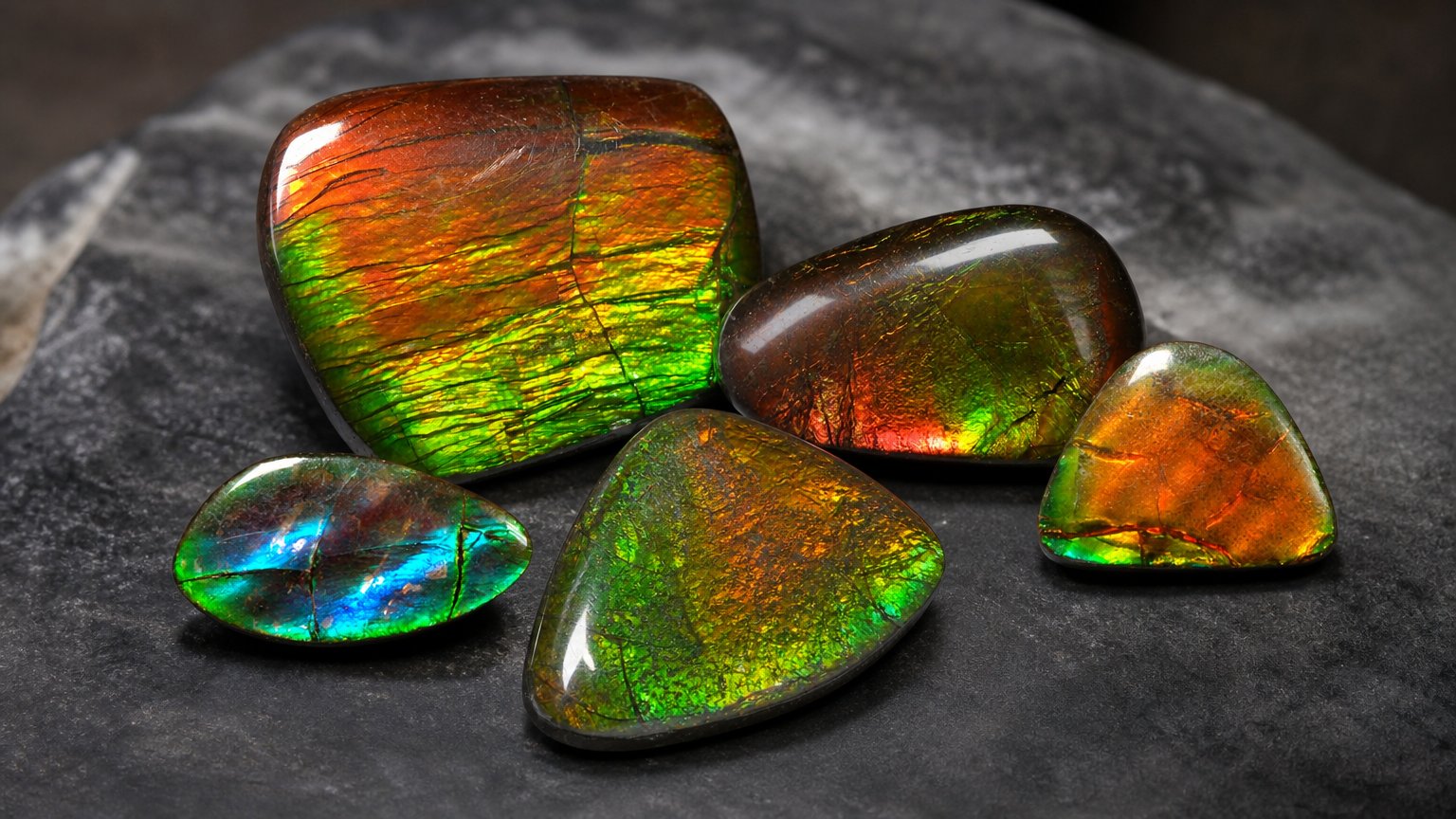
Ammolite is associated with the aragonite mineral, a form of calcium carbonate with the chemical formula CaCO₃. In gemstone use, it is valued above all for its multicolor display. This can give a single piece of ammolite a lively, shifting character that feels very different from single-color gems.
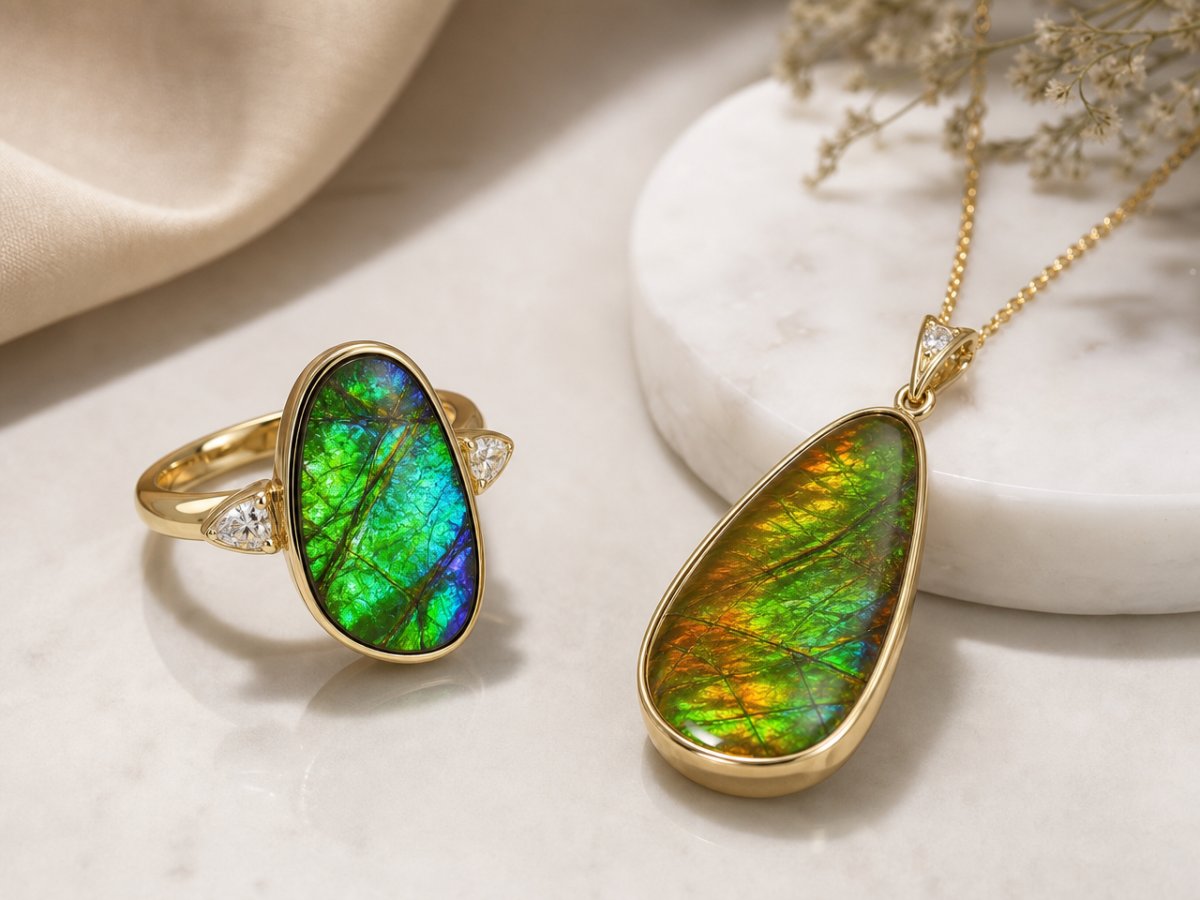
Because ammolite's appeal is so visual, its modern meaning is often shaped by what people see in it: movement, contrast, individuality and natural color. It is commonly fashioned as cabochons, often in freeform shapes that preserve or emphasize the natural patterning of the material. Pendants and necklaces are especially common ways to display its color, though rings, earrings and bracelets are also seen.
Ammolite Meaning and Symbolism
Ammolite does not have the same long-established symbolic record as gems such as sapphire, ruby or emerald. Its meanings are therefore usually modern interpretations rather than ancient traditions. The most common associations come from its multicolor appearance and the impression of change and energy created by its shifting colors.
Color, Change and Individuality
Multicolor gems often invite personal interpretation because each stone can look unique. For ammolite, this individuality is central to its appeal. Many owners see it as a symbol of self-expression, creativity and personal transformation. These are symbolic meanings, not scientific properties, but they reflect how the gem is often appreciated by collectors and jewelry wearers today.
Balance Through Many Colors
Because ammolite can show several colors in one gem, it is sometimes regarded as a symbol of harmony among contrasts. This interpretation is especially common in modern crystal and gemstone traditions, where color variety is often used to represent wholeness, complexity or the coming together of different influences.
A Gemstone With a Modern Identity
Ammolite's symbolism is also connected to its contemporary gemstone identity. Rather than being defined by centuries of courtly, religious or ceremonial use, it is valued as a gemstone that feels unusual, expressive and highly individual. For many buyers, its meaning is personal rather than inherited from a fixed historical tradition.
Name and Etymology
The name "ammolite" is closely associated with the gemstone's identity in the modern gem trade. While the supplied facts for this guide do not support a detailed etymological history, the name is widely used today to distinguish this colorful aragonite gem material from other multicolor gemstones.
In practical terms, the name helps buyers, jewelers and collectors identify a specific gemstone category rather than simply describing a color effect. This is important because ammolite's appeal depends on its characteristic multicolor appearance and the way that appearance is presented in finished gems.
Historical Background
Based on the verified information available here, ammolite should not be presented as an ancient gemstone with a long record of documented historical use. Its cultural importance is more clearly tied to modern appreciation, lapidary work and jewelry design.
This distinction matters. Some gemstones have extensive historical records in religion, royalty, trade routes or ancient carving traditions. Ammolite's known significance, by contrast, is better explained through its modern role as a rare-looking, colorful gemstone associated especially with Canada and also found in the United States.
Cultural Significance Today
Ammolite's strongest cultural identity is North American. Canada is the most important origin associated with the gemstone, while the United States is also recognized as a source. This geographic association contributes to the way ammolite is viewed today: as a gemstone with a distinctive regional identity rather than a gem broadly linked to ancient Old World trade or classical jewelry traditions.
For modern gemstone enthusiasts, ammolite often represents a connection to natural color and unusual geological artistry. Jewelers and designers tend to value it for visual impact, while collectors may appreciate the way each piece can differ in pattern and color arrangement.
Folklore, Belief and Responsible Interpretation
Ammolite may appear in modern spiritual or crystal traditions, where it is sometimes linked with transformation, vitality or balanced energy. These associations should be understood as belief-based interpretations rather than proven effects. GemSelect recommends treating such meanings as personal or cultural symbolism, not as medical or scientific claims.
When reading about ammolite legends or spiritual uses, it is helpful to separate three things: documented gemstone facts, modern symbolic interpretation and unsupported folklore. Ammolite's verified facts include its association with aragonite, its multicolor appearance and its important origins in Canada and the United States. Broader claims about powers, healing or ancient ceremonial use should be approached cautiously unless supported by reliable historical evidence.
Birthstone, Zodiac and Anniversary Associations
Ammolite is not one of the traditional or modern standard birthstones most commonly used in the jewelry trade. It also does not have a widely established mainstream anniversary association comparable to gems such as diamond, sapphire or emerald.
That does not prevent people from choosing ammolite for symbolic occasions. Its multicolor nature can make it meaningful for personal milestones, creative achievements or life transitions, especially when the wearer is drawn to its visual sense of movement and individuality.
How Ammolite Is Viewed in Modern Jewelry Culture
In contemporary jewelry, ammolite is often chosen for pieces where the gem itself is the focus. Pendants and necklaces are natural settings for displaying broad areas of color, while rings and earrings can highlight smaller, carefully selected sections of pattern. These jewelry uses are part of ammolite's modern identity because they allow its symbolic qualities-individuality, color and change-to be seen clearly.
Some ammolite gems are assembled for stability and presentation, while untreated material also exists. For a meaning guide, the key point is not the technical process but the cultural result: ammolite is often appreciated as a gemstone where natural color and skilled presentation work together to create a striking visual object.
Conclusion
Ammolite's meaning is rooted less in ancient written tradition and more in modern appreciation of its multicolor beauty. It is a gemstone associated with individuality, transformation, creative expression and harmony through color, especially in contemporary symbolic use.
Its important connection with Canada, along with sources in the United States, gives it a strong North American identity. For buyers and collectors, ammolite is most meaningful when understood honestly: a visually remarkable aragonite gemstone whose symbolism is largely modern, personal and inspired by its extraordinary play of color.