

Ametrine is admired for one clear reason: it is a naturally expressive bi-color gemstone. Its appeal comes from contrast within a single stone, making it easy to understand why many people view ametrine as a symbol of balance, transition and harmony. Unlike gemstones whose reputation is built mainly on ancient ceremony or royal ownership, ametrine's modern identity is closely tied to its distinctive two-color appearance and its connection with important quartz sources, especially Bolivia.
This guide focuses on ametrine's meaning, historical context and cultural symbolism. Folklore and modern interpretations are described as traditions or symbolic readings, not as scientific claims.
What Is Ametrine?
Ametrine is a variety of quartz, the same broad mineral family that includes many familiar gem materials. Its chemical formula is SiO₂, and it belongs to the trigonal crystal system. For meaning and history, however, the most important feature is not its chemistry but its appearance: ametrine is a bi-color gemstone.
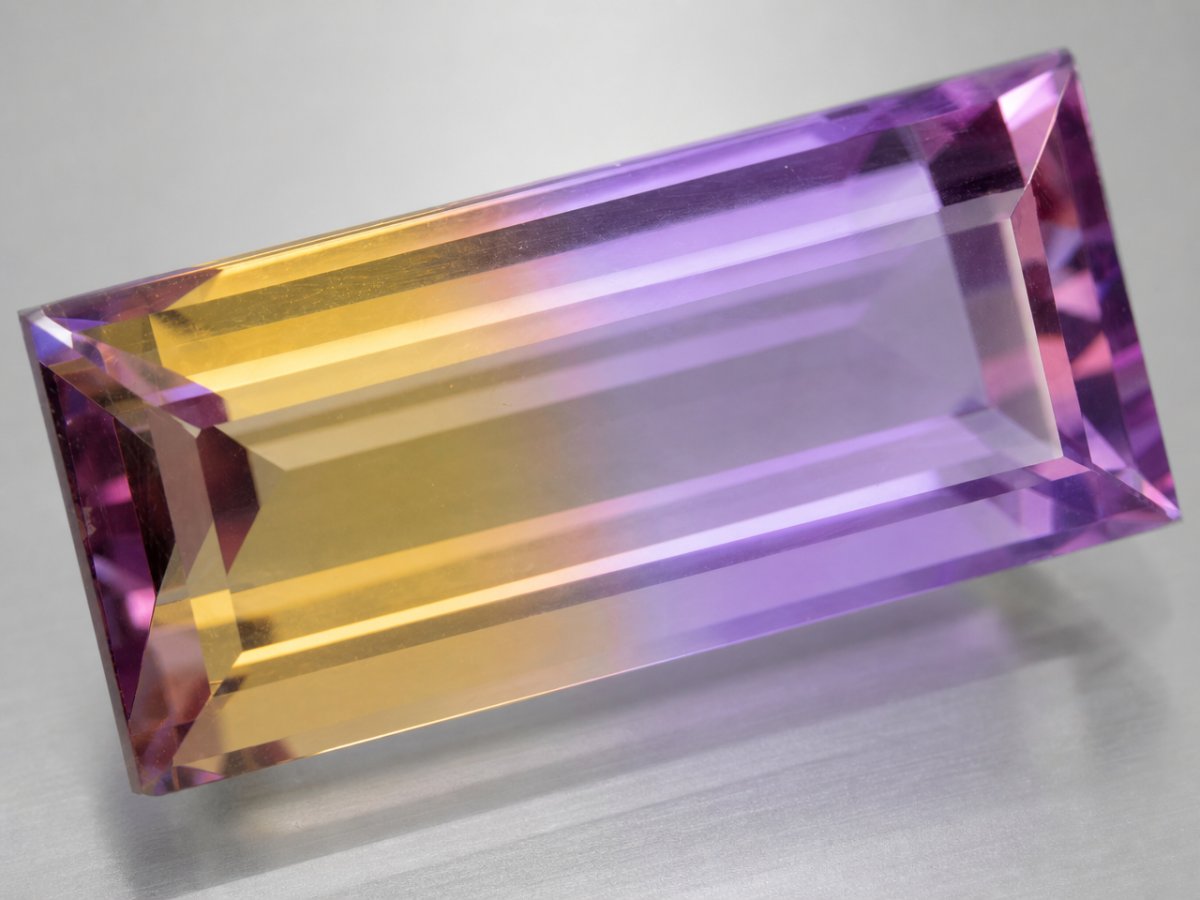
The name ametrine is commonly associated with its dual-color identity. In gem use, it refers to quartz that displays two contrasting color zones in one gem. This natural visual division gives ametrine much of its symbolic character. Where a single-color gem may suggest one mood or theme, ametrine is often appreciated for showing two qualities side by side.
Ametrine Meaning and Symbolism
The most common symbolic interpretation of ametrine comes from its bi-color appearance. Because two colors are present in a single quartz gemstone, ametrine is often viewed as a visual metaphor for balance, partnership and the joining of opposites. This is a modern symbolic reading based on the gem's appearance rather than a documented ancient doctrine.
For gemstone enthusiasts, ametrine can represent the idea that contrast does not have to mean conflict. The stone's two-color structure suggests coexistence: separate tones held together naturally in one crystal. This has made ametrine meaningful to people who like gemstones with a visible story rather than a uniform surface.
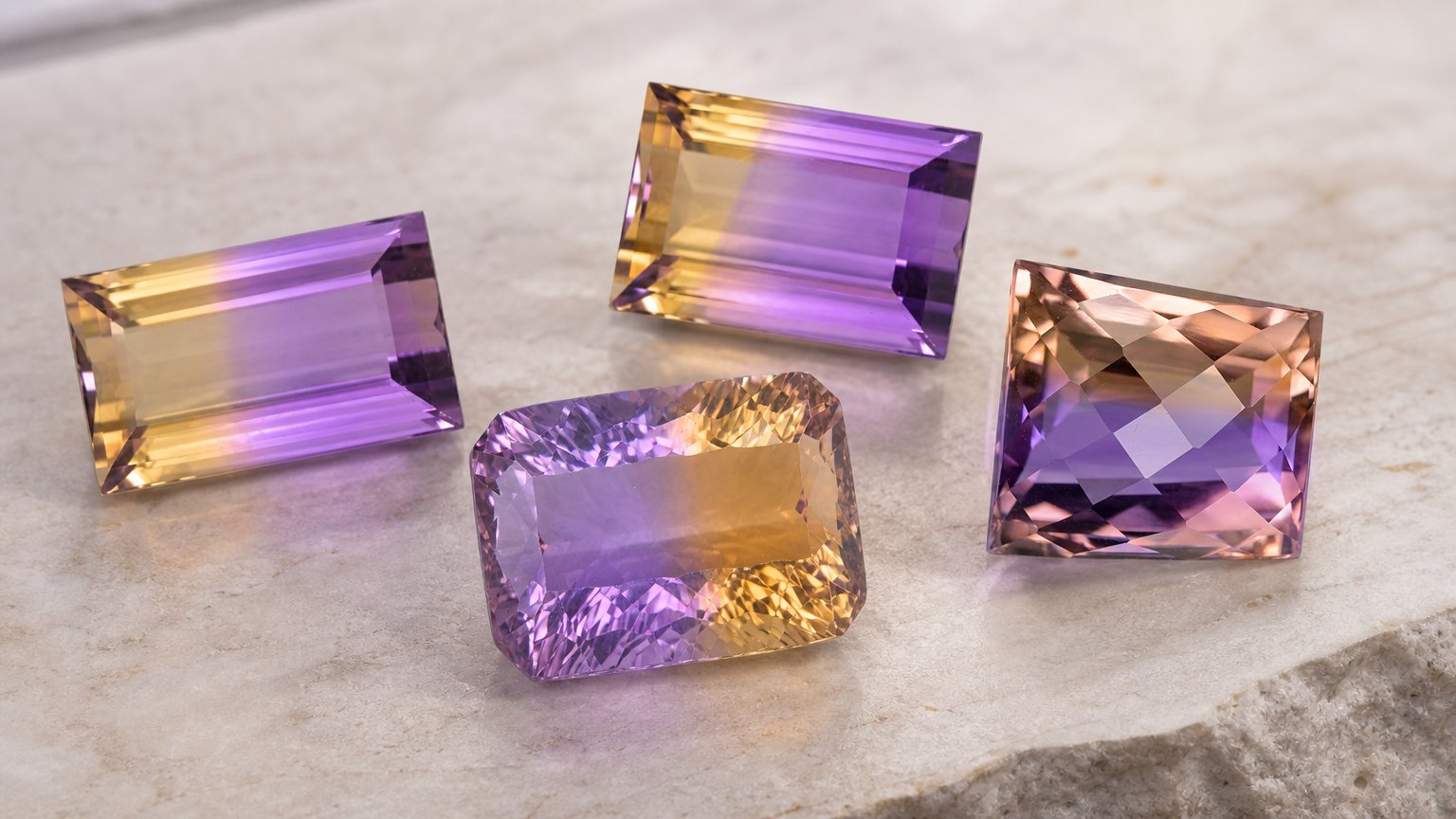
Ametrine is also associated with individuality. No two bi-color patterns look exactly the same, so each gem can feel personal. This sense of uniqueness is one reason ametrine appeals to collectors, jewelry designers and buyers who prefer gems with character and visible natural variation.
Historical Background and Geographic Significance
The strongest geographic association for ametrine is Bolivia, which is the most important origin connected with this gemstone. Brazil is also associated with ametrine, with India noted as another source. Among these, Bolivia is the origin most closely tied to ametrine's identity in the gem trade.
In cultural terms, this gives ametrine a different kind of history from gems such as sapphire, ruby or emerald, which have long documented roles in royal, religious and ceremonial traditions. Ametrine's story is better understood through its mineral identity, its notable sources and its rise as a distinctive bi-color quartz gemstone appreciated by modern buyers and designers.
That does not make ametrine less meaningful. Instead, its significance is more visual and contemporary. Its importance comes from the way nature combines two color zones in one gem, creating a stone that immediately invites symbolic interpretation.
Cultural Meaning of a Bi-Color Gemstone
Bi-color gemstones have a special place in gem culture because they naturally challenge the idea that a gemstone must be one consistent color. Ametrine makes that contrast central to its identity. Its beauty depends on the meeting point between two tones, and that visible transition has become part of its emotional appeal.
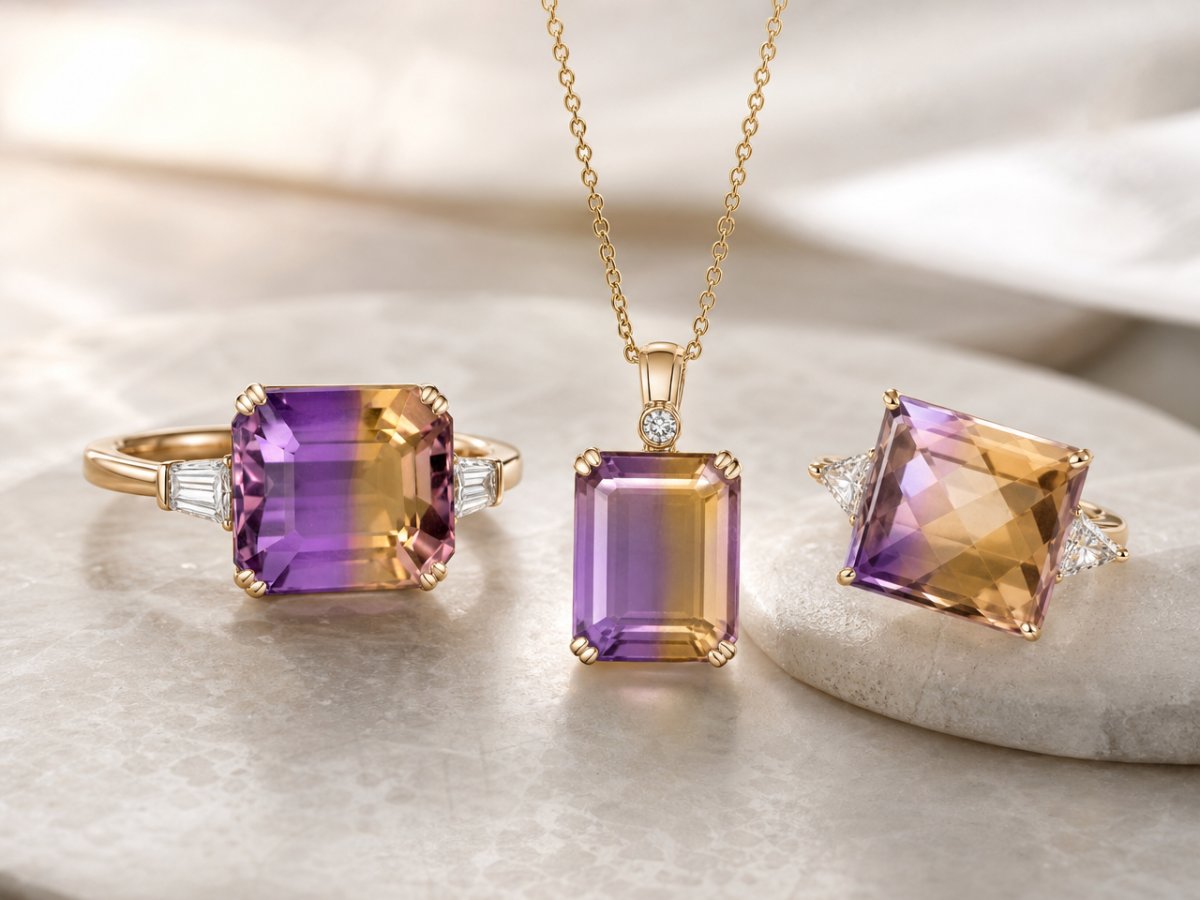
For designers and collectors, ametrine's meaning is often linked to composition. A well-oriented ametrine can display its color division clearly, especially in faceted gems. Shapes such as octagon and oval are commonly seen because they can present the gem's bi-color nature effectively. This is not merely a cutting preference; it also affects how the stone's symbolic duality is perceived.
In modern gemstone culture, ametrine is often chosen by people who want a gem that feels expressive without requiring a complicated legend. Its meaning is easy to grasp: two colors, one stone; contrast held in harmony.
Folklore, Belief and Responsible Interpretation
Some modern crystal traditions connect ametrine with themes such as clarity, balance or blended energies. These associations should be understood as symbolic or spiritual beliefs, not proven medical or scientific effects. Gemstones can carry personal meaning, but they should not be presented as substitutes for professional health advice or evidence-based care.
Ametrine's strongest and most responsible symbolic meaning comes from what can be seen directly: its bi-color nature. This makes it especially suitable for personal interpretations involving unity, change, cooperation or the integration of different aspects of life.
Ametrine in Modern Gemstone Culture
Today, ametrine is valued by gemstone lovers because it offers a distinctive look within the quartz family. It appears in pendants, rings, earrings and necklaces, but its cultural appeal goes beyond jewelry use. Collectors often appreciate ametrine as a natural example of color zoning, while designers enjoy the creative possibilities of placing the two-color pattern within a gem shape.
At GemSelect, ametrine is best understood as a gemstone for people who appreciate individuality and visible natural contrast. Its meaning is not dependent on elaborate mythology. Instead, it speaks through its appearance: a single quartz gem with a dual personality.
Conclusion
Ametrine's meaning is rooted in duality. As a bi-color quartz gemstone, it naturally suggests balance, contrast, partnership and harmony. Its most important geographic association is Bolivia, with Brazil and India also connected to its occurrence. While ametrine does not have the same widely documented ancient ceremonial history as some classic gemstones, it has a strong modern identity built around its rare-looking two-color character.
For many people, ametrine is meaningful because it shows that difference can be beautiful within one whole. That simple visual message is the heart of its symbolism.