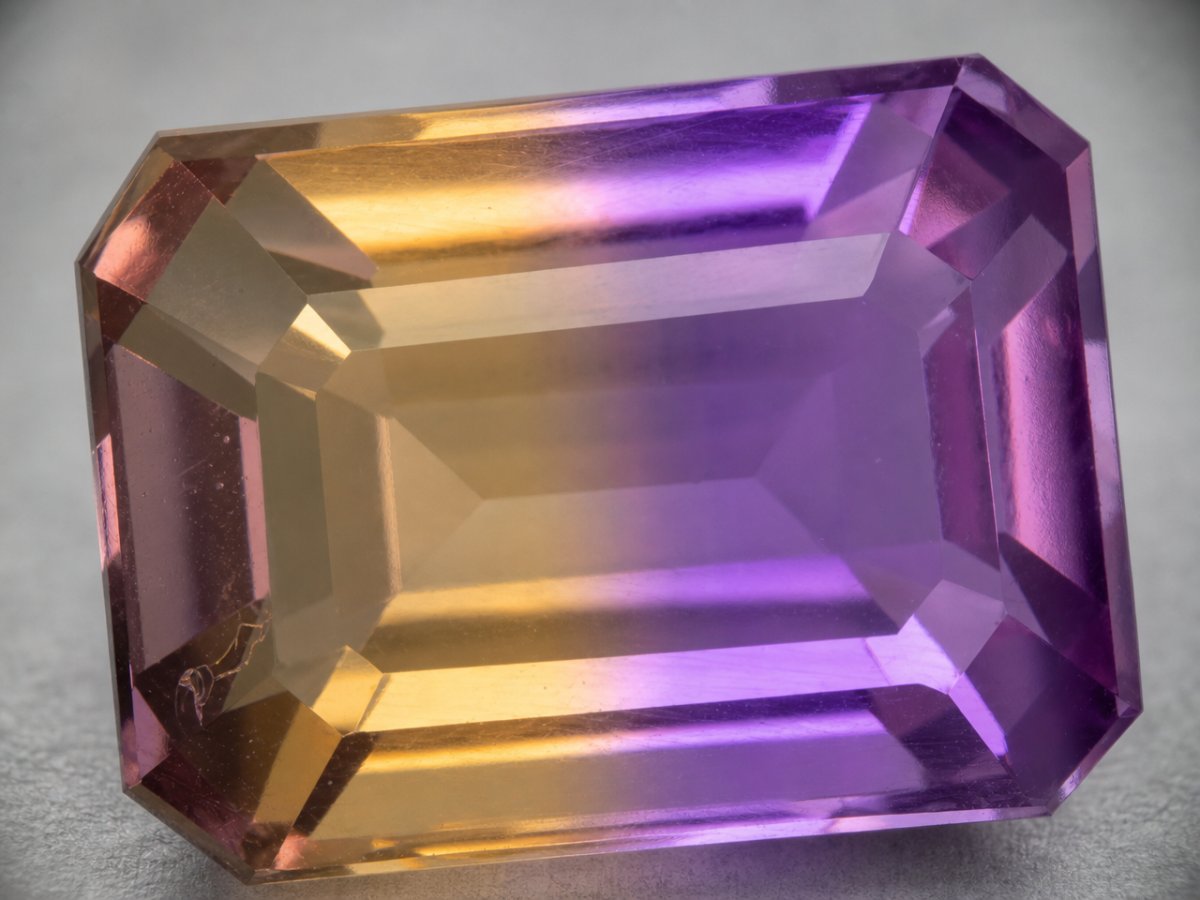


Ametrine is a distinctive bi-color gemstone from the quartz family, valued by buyers who want a single gem with a naturally varied appearance. Instead of choosing a stone for one uniform body color, ametrine buyers usually focus on the relationship between its color zones, the quality of the cut and how well the gem will suit the intended jewelry design.
This buying guide explains the main features to consider before purchasing ametrine, including color appearance, cut style, shape, clarity considerations, durability, treatments, origin and jewelry use. Whether you are selecting one center stone for a ring, a matched pair for earrings or a larger gem for a pendant, the goal is to choose an ametrine that looks attractive, is properly disclosed and fits the way it will be worn.
What Is Ametrine?
Ametrine is a quartz gemstone with a bi-color appearance. Quartz is a well-known mineral species with the chemical formula SiO₂ and a trigonal crystal system. Ametrine shares the practical durability and gemological identity of quartz, while its appeal comes from the visible contrast between color areas within the same stone.
For buyers, this means ametrine should not be evaluated in exactly the same way as a single-color gemstone. A fine-looking ametrine is often about balance: the color zones should be pleasing, the transition between them should work with the cut and the overall gem should look lively rather than dull or uneven. Personal preference also plays a large role because some buyers prefer a strong division between the colors, while others prefer a softer, more blended appearance.
Ametrine Color and Appearance
Color is the defining feature of ametrine. It is best described as a bi-color quartz gem, so the buyer should pay close attention to how the two color areas are displayed. The most attractive stone for you may not simply be the one with the strongest color; it is the one where the colors, shape and cutting style work together.
What to Look for in Bi-Color Ametrine
When comparing ametrine gemstones, view each stone face-up and ask several practical questions. Are both color zones easy to see? Is the color arrangement attractive in the chosen shape? Does one area dominate in a way you like, or would you prefer a more even balance? Is the color boundary positioned in a way that enhances the design?
Because ametrine is appreciated for its bi-color nature, a stone with a clear and appealing color presentation will usually be more desirable to many buyers than a stone where the bi-color effect is difficult to notice. However, there is no single correct pattern. Some jewelry designs benefit from symmetry, while others look more natural and artistic with an irregular color arrangement.
Lighting and Viewing Angle
As with many faceted gemstones, ametrine can look different under different lighting conditions and viewing angles. Before buying, inspect the gem in neutral lighting where possible, and review any available photos or videos carefully. Pay attention not only to the colors themselves, but also to whether the stone shows good brightness across the face.
For online purchases, choose sellers who provide clear images, dimensions and treatment information. GemSelect lists individual gemstones with useful details so buyers can compare the actual stone rather than relying only on a general description.
Clarity Considerations
Clarity refers to the presence or absence of internal features, surface-reaching marks or other characteristics that may affect appearance. For ametrine, the most practical buying standard is visual: does the gem look clean and attractive to the unaided eye when viewed normally?
Minor internal features may not matter if they are difficult to see without magnification and do not affect beauty or use. On the other hand, obvious inclusions, cracks or surface blemishes can distract from the bi-color pattern, especially in larger or lighter areas of the stone. When comparing similar stones, choose the one with the better overall face-up appearance, not merely the one with a technical description that sounds better.
In faceted gems, clarity and cut often work together. A well-cut ametrine can appear bright and lively, helping the eye focus on color and brilliance. A poorly cut stone may look flat even if it has appealing color.
Cut Styles and Shapes
Cut is especially important for ametrine because it determines how the bi-color pattern is displayed. A skilled cut can position the color zones in a pleasing way, improve brightness and make the gem more suitable for jewelry.
Faceted Ametrine
Faceted ametrine is the most common and practical choice for buyers who want sparkle and a clear display of color. Faceting uses flat polished surfaces to reflect light back to the viewer. In ametrine, the cutter can use facet placement and orientation to emphasize both the color contrast and the gem’s brilliance.
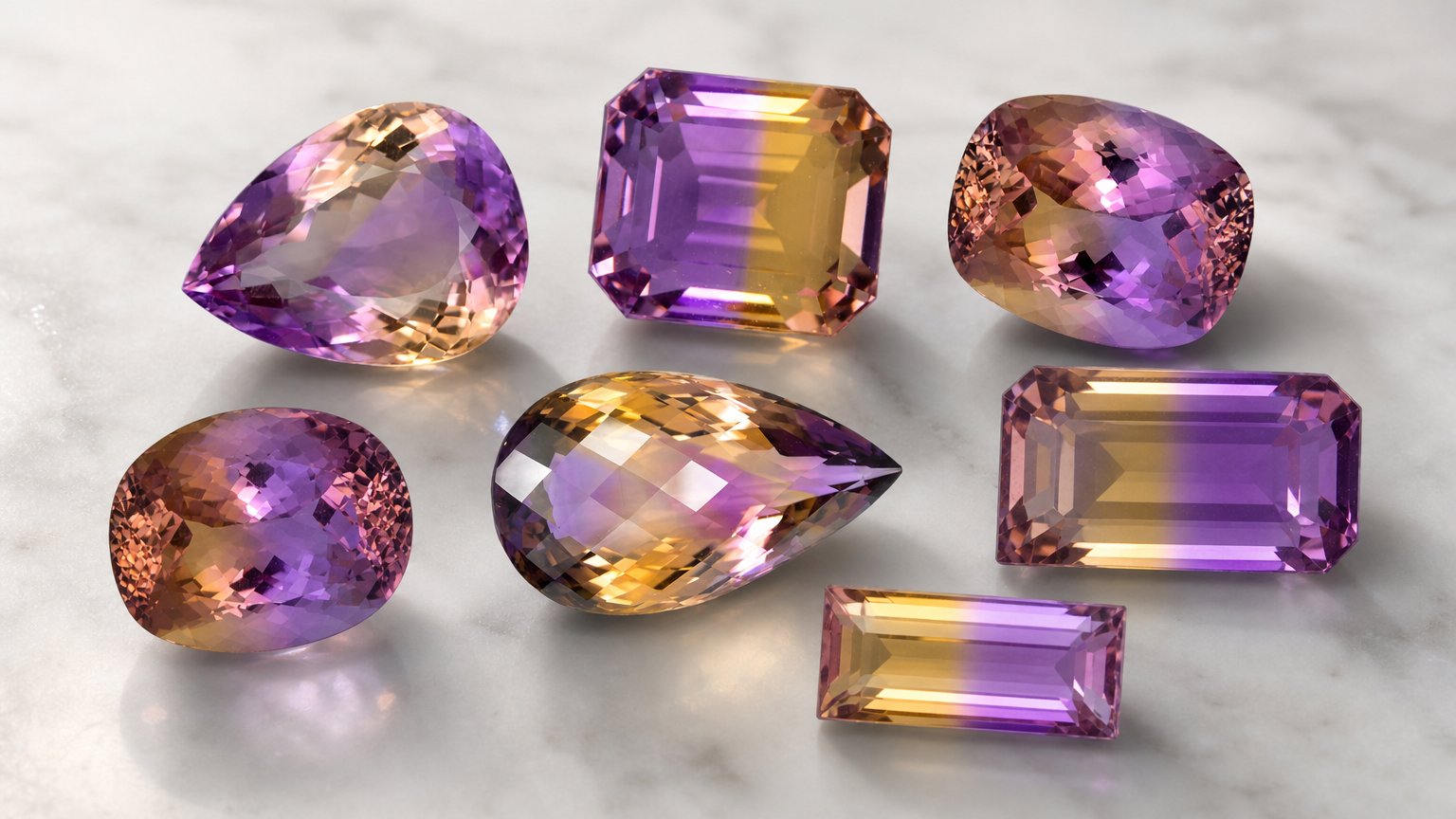
Step cuts and concave cuts are also seen in ametrine. Step cuts use long, straight facets that can give a clean architectural appearance and may suit the linear look of some bi-color stones. Concave cutting uses curved facets that can create a distinctive optical effect and a more modern appearance. Mixed cuts and Portuguese cuts may also be used, offering additional brilliance or design complexity. Cabochons, which have a smooth domed surface rather than facets, are less commonly chosen when maximum sparkle is the goal, but they can be suitable for certain design preferences.
Popular Shapes
Octagon and oval shapes are especially common and useful for ametrine. An octagon can present a structured, balanced outline that works well in rings and pendants, while an oval gives a softer shape that suits many jewelry styles. Cushion and round shapes are also familiar options, and buyers may occasionally find baguette, heart, marquise and trillion shapes.
When choosing shape, consider both appearance and setting. Long or angular shapes can emphasize the direction of the color zones, while rounded shapes may soften the contrast. If the gem is intended for a ring, make sure the shape can be set securely and comfortably. For pendants and necklaces, larger or more elongated shapes can be especially attractive because they provide more surface area for the bi-color effect.
Size and Proportions
Size should be chosen according to the jewelry design, budget and desired visual impact. With bi-color gemstones, face-up dimensions can be just as important as carat weight. Two ametrine gems of the same carat weight may look different in size if one is cut deeper than the other. Always compare the millimeter measurements as well as the weight.
For a pendant, a larger face-up size may allow the color zones to be appreciated more easily. For rings, comfort and wearability matter more, so a moderate size may be more practical. For earrings, matching overall size, shape and color balance is important if you want a coordinated pair.
Ametrine Origins
Bolivia is the most important origin associated with ametrine in the supplied gem information. Brazil is also a known origin, and India is noted as well. For buyers, origin can be interesting and may matter for collecting or personal preference, but it should not replace a careful evaluation of the individual gemstone.
A beautiful ametrine should be judged by visible quality, cut, clarity, color presentation, treatment disclosure and suitability for the intended use. If origin is important to you, request available origin information from the seller, but remember that a country name alone does not guarantee that a particular stone will be the best choice for your jewelry project.
Gemological Properties
Ametrine is quartz, with the chemical formula SiO₂. Its refractive index is 1.544–1.553, and its specific gravity is 2.65–2.66. These values are part of the gemological profile used to identify and understand the material.
For most buyers, the most immediately relevant property is hardness. Ametrine has a Mohs hardness of 7. The Mohs scale measures resistance to scratching, not resistance to every kind of damage. A hardness of 7 gives ametrine practical durability for many jewelry uses, but the stone should still be treated with reasonable care.
Durability and Everyday Wear
Ametrine’s Mohs hardness of 7 makes it suitable for a range of jewelry styles, including pendants, rings, earrings and necklaces. It is hard enough for regular wear, but it is not indestructible. Rings are exposed to more knocks and abrasion than pendants or earrings, so ring settings should be chosen thoughtfully.
For rings, a secure setting that protects the edges of the stone is a sensible choice, especially for larger gems or shapes with points and corners. Octagon, cushion, marquise, heart and trillion shapes may have corners or points that need careful setting. Pendants and earrings are generally less exposed to impact, making them excellent choices for showing off a distinctive bi-color ametrine.
To keep ametrine looking its best, store it separately from harder gemstones and avoid rough handling. Use gentle cleaning methods suitable for quartz jewelry and avoid exposing any gemstone jewelry to unnecessary impact, harsh chemicals or sudden stressful conditions.
Treatments and Disclosure
Ametrine is commonly associated with untreated material, and heat treatment is also a known treatment. Treatment disclosure is an important part of buying any gemstone because it helps you understand exactly what you are purchasing.
When buying ametrine, look for clear treatment information from the seller. An untreated stone may appeal to buyers who prefer gems with no enhancement, while a heat-treated stone may still be suitable if it is accurately represented and priced accordingly by the seller. The key point is transparency. A reliable listing should state whether the gem is untreated or has been treated when that information is known.
Do not assume treatment status based only on appearance. If treatment matters to you for collecting, resale, design or personal reasons, ask before purchasing and keep any documentation provided with the stone.
Best Jewelry Uses for Ametrine
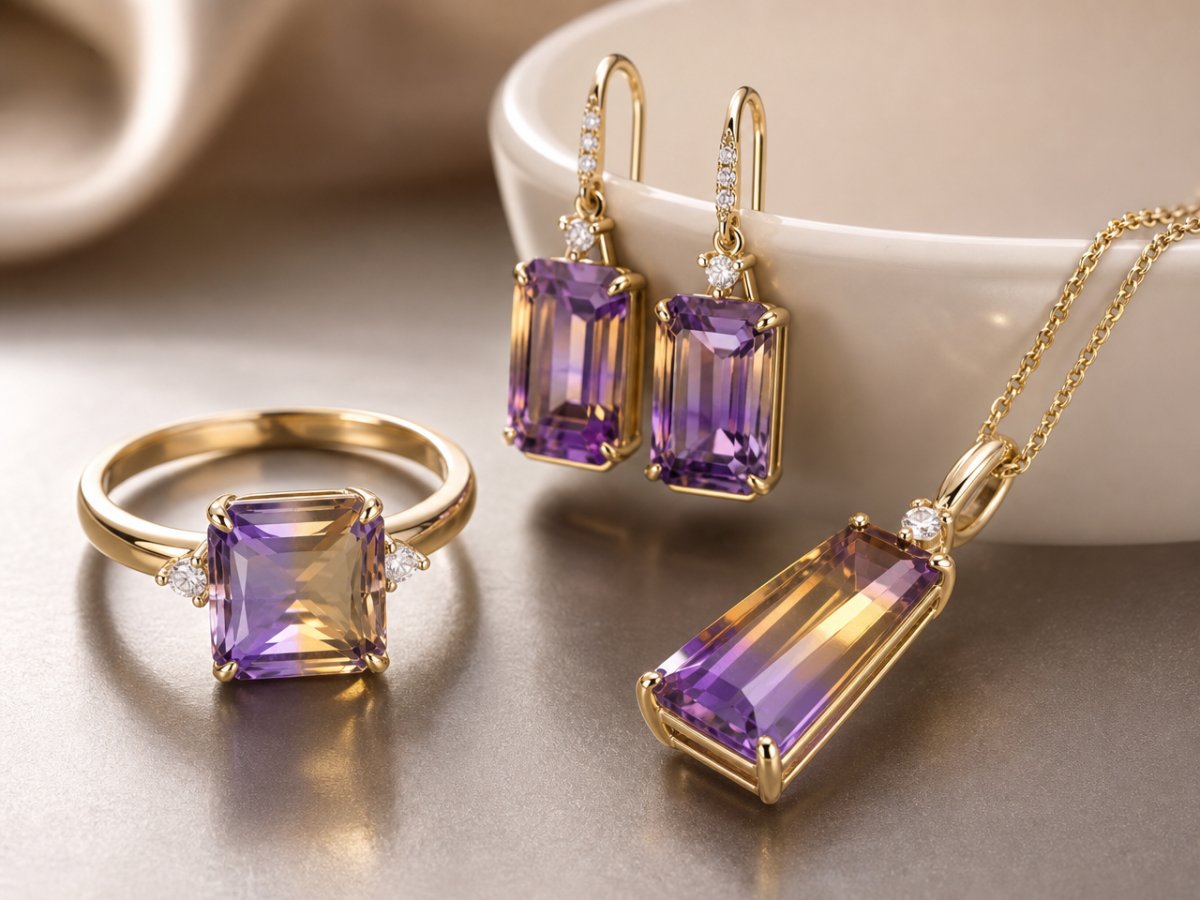
Ametrine is well suited to pendants and rings, two of its most important jewelry uses. In a pendant, the stone can be displayed prominently and is less exposed to daily impact than a ring. This makes pendants a strong choice for larger ametrine gems or stones with dramatic color zoning.
Rings are also popular, especially when the wearer wants a distinctive center stone. For rings, choose a secure setting and consider the wearer’s lifestyle. Ametrine can be used in fashion rings as well, where the focus is often on visual impact and design individuality.
Earrings and necklaces are also good options. For earrings, matched pairs should be selected carefully because the bi-color patterns do not always look identical from stone to stone. For necklaces, ametrine can work as a center feature, particularly when the shape and cut emphasize the color contrast.
Practical Ametrine Buying Checklist
1. Start with the Color Pattern
Because ametrine is a bi-color gem, begin by choosing a color arrangement that appeals to you. Look for a face-up pattern that is visible, attractive and well positioned in the stone.
2. Evaluate the Cut
A good cut should make the gem look bright and balanced. Faceted stones are the standard choice for brilliance, while step cuts, concave cuts and more complex cutting styles can create a different design effect.
3. Check Shape and Dimensions
Do not rely on carat weight alone. Compare the millimeter size, shape and depth. Octagon and oval shapes are common, but cushion, round and other shapes may better suit a specific design.
4. Inspect Clarity Visually
Look for distracting inclusions or surface features, especially in the main viewing area. A gem that looks clean and attractive in normal viewing is usually more practical than one judged only by magnified inspection.
5. Confirm Treatment Information
Ask whether the ametrine is untreated or heat treated. Treatment disclosure should be clear before purchase.
6. Match the Stone to the Jewelry Use
For pendants and necklaces, you can often choose a more expressive size and shape. For rings, focus on secure setting design and long-term wearability. For earrings, prioritize matching size, shape and color balance.
7. Buy the Individual Gem, Not Just the Label
Origin, cut name and shape are useful details, but the individual gemstone should still be evaluated on its visible beauty and suitability. Compare real photos, measurements and descriptions before making a final decision.
Summary
Ametrine is a bi-color quartz gemstone that offers buyers a distinctive alternative to single-color gems. The most important buying factors are color presentation, cut quality, shape, clarity, treatment disclosure and suitability for the intended jewelry. Bolivia is the leading origin associated with ametrine, with Brazil and India also known, but the best choice is always the individual stone that meets your visual and practical needs.
When buying from GemSelect or any reputable gemstone seller, review the full listing details, compare photographs and confirm treatment information. A well-chosen ametrine can make a beautiful pendant, ring, necklace or pair of earrings, especially when its bi-color character is thoughtfully matched to the design.