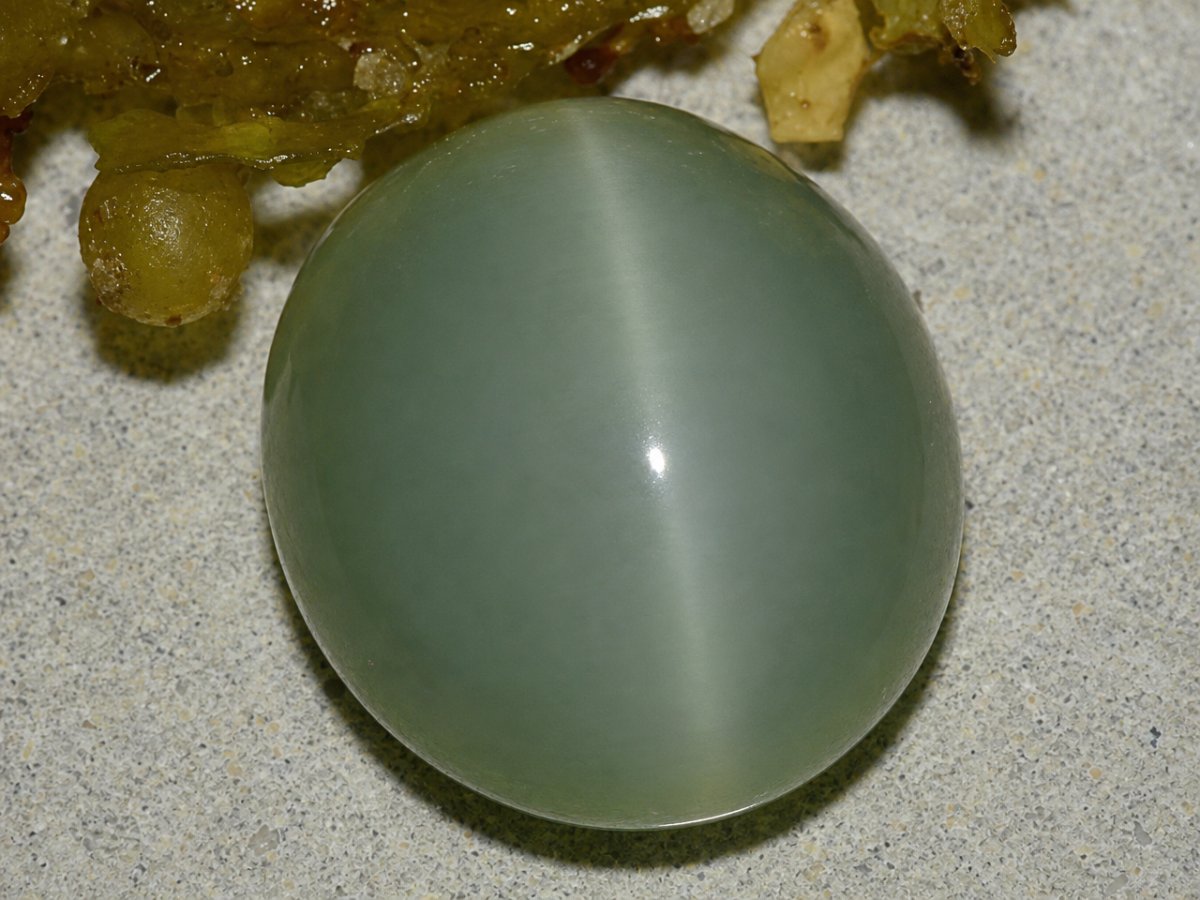


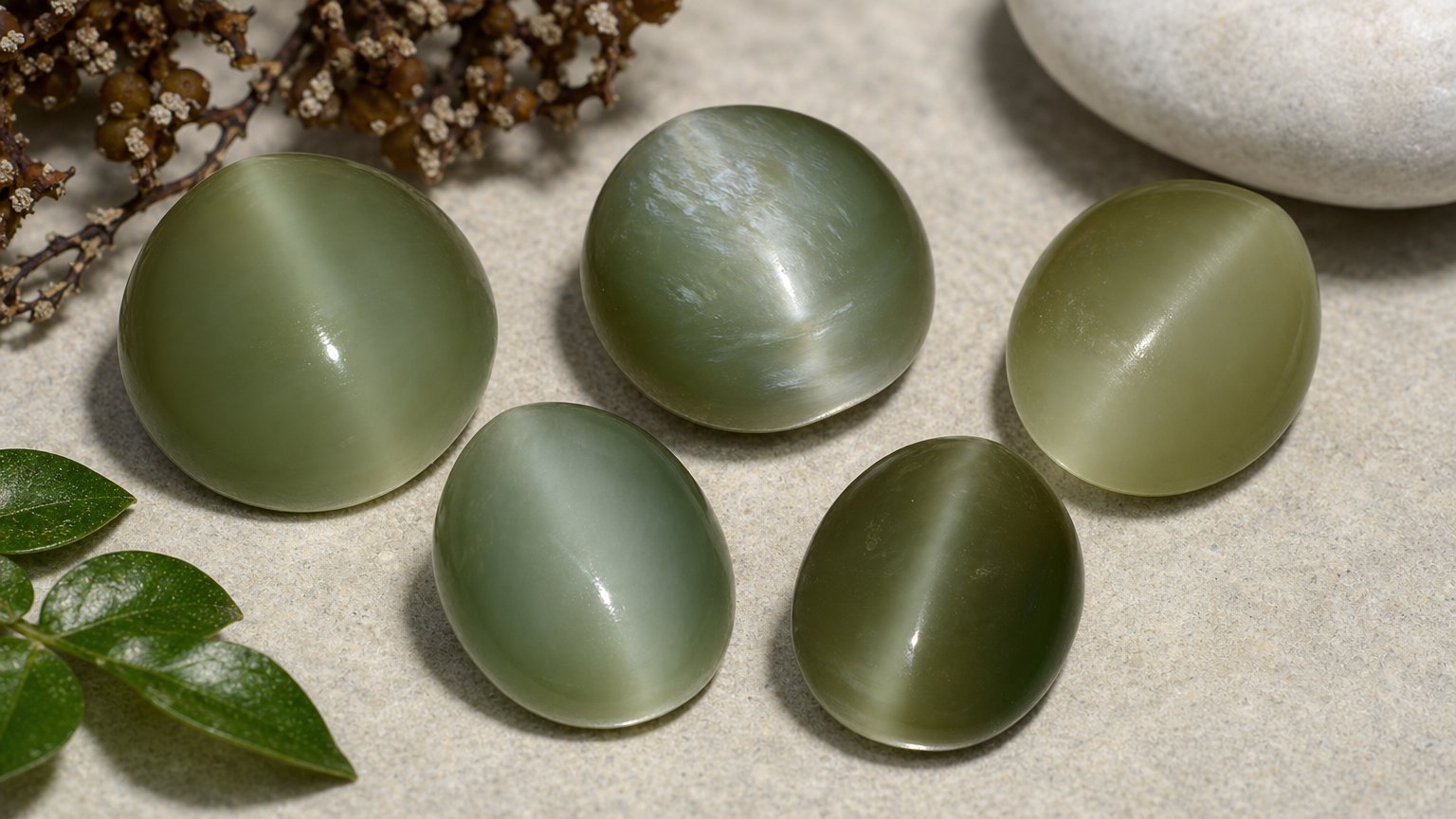
Actinolite Cat's Eye is an unusual gemstone valued for its distinctive eye-like band of light, an effect that gives the stone much of its symbolic appeal. Most often seen in green, with some gray and yellow examples, it belongs to the amphibole silicate mineral group and is typically fashioned as a cabochon to display its cat's eye effect.
As a meaning and history subject, Actinolite Cat's Eye is best understood as a modern collector and jewelry gemstone rather than a gem with a long, widely documented record in ancient royal, religious or ceremonial use. Its significance comes mainly from its visual character: the moving line of light, the natural green body color and the traditional symbolism people often attach to eye-like gemstones.
What Is Actinolite Cat's Eye?
Actinolite Cat's Eye is a variety of actinolite that shows chatoyancy, the optical effect known as the cat's eye. Chatoyancy appears as a bright, narrow band of reflected light that seems to glide across the surface as the gem is moved. This effect is most visible when the stone is cut with a smooth, domed cabochon surface rather than as a faceted gem.
The name "cat's eye" is descriptive rather than cultural: it refers to the resemblance between the bright line on the gemstone and the slit-like pupil of a cat. This visible feature has strongly influenced the way cat's eye gemstones are interpreted symbolically, including associations with alertness, attention and watchfulness.
Meaning and Symbolism
The symbolic meaning of Actinolite Cat's Eye is closely tied to its appearance. The eye-like band has often been interpreted in modern gemstone symbolism as a sign of awareness, focus and protection. These meanings should be understood as traditional or modern symbolic associations, not as scientific properties.
Green Actinolite Cat's Eye, the best-known color for this gemstone, also gives it a natural, earthy character. In symbolic language, green gems are commonly associated with renewal, growth and balance. For Actinolite Cat's Eye, that green color combines with the cat's eye effect to create a gemstone that many people view as calm, observant and quietly distinctive.
Because gray and yellow examples also occur, the gem does not have a single uniform appearance. Gray stones may feel more subdued and mineral-like, while yellowish examples can appear warmer. However, the strongest symbolic identity of the gemstone remains the luminous cat's eye effect rather than any single shade.
Historical Background
Actinolite Cat's Eye does not have the same level of documented ancient history as gems such as ruby, sapphire, emerald or jade. Its historical importance is more closely connected with mineral appreciation, gem cutting and the broader fascination with chatoyant stones.
Cat's eye gems have long attracted attention because they appear animated by light. The moving line can make a polished stone seem almost alive, which explains why eye-like gemstones have often inspired ideas of watchfulness and mystery. For Actinolite Cat's Eye specifically, available historical context is more modest: it is appreciated today as a distinctive natural gemstone, especially among buyers who enjoy uncommon gems with unusual optical effects.
Cultural Significance and Folklore
There is no strong basis for assigning Actinolite Cat's Eye to a specific ancient civilization, religious tradition or ceremonial role. Instead, its cultural meaning is best discussed within the wider tradition of cat's eye gemstones. Across gemstone folklore, eye-like gems are often regarded as symbols of perception and protection because the visual effect resembles an observing eye.
For Actinolite Cat's Eye, these associations are interpretive rather than documented historical facts. Modern crystal and gemstone enthusiasts may connect the stone with concentration, personal insight or grounding, but such meanings belong to belief and symbolism, not proven effects. This distinction is important for buyers who appreciate gemstone lore while still wanting accurate information.
Origins and Modern Gem Identity
Actinolite Cat's Eye is known from several gem-producing regions, with Brazil and India among the important sources. Sri Lanka and Tanzania are also associated with this gemstone, while material may also come from Madagascar, Myanmar and the United States. These origins help place the gem in the modern international gemstone trade rather than in a single cultural tradition.
Many Actinolite Cat's Eye gems are valued in their untreated state, which supports their appeal for collectors who prefer gemstones whose appearance comes from natural mineral structure and skilled cutting. The cabochon cut is especially important because it reveals the cat's eye band and gives the stone its symbolic identity.
Actinolite Cat's Eye in Modern Jewelry and Collecting
Today, Actinolite Cat's Eye is chosen by people who enjoy gems with personality rather than mainstream fame. Its meaning is not built around a formal birthstone, zodiac or anniversary tradition; instead, it appeals through visual symbolism, natural color and rarity of appearance.
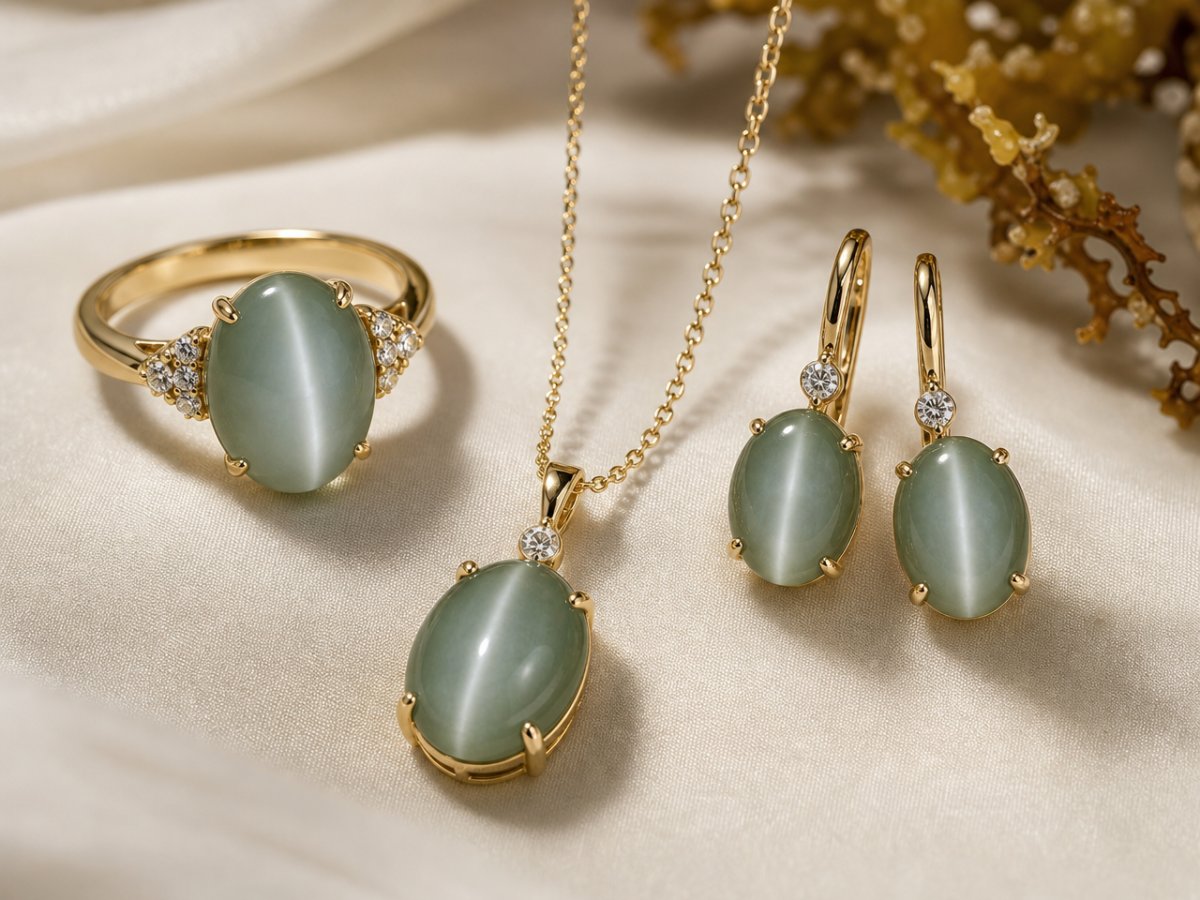
In jewelry, the stone may be seen in pendants, rings, earrings, necklaces, bracelets or brooches, but its cultural appeal remains centered on the moving eye of light. Collectors and designers often appreciate the gemstone because it offers a quieter alternative to more famous cat's eye gems while still carrying the same sense of movement and observation.
Conclusion
Actinolite Cat's Eye is meaningful because of what it shows: a natural, focused line of light across a green to gray or yellowish gem. While it does not have a deeply documented ancient mythology of its own, its cat's eye effect gives it a strong symbolic connection with watchfulness, focus and quiet protection in modern gemstone tradition.
For gemstone enthusiasts, its history is the story of a distinctive mineral becoming appreciated through careful cutting and close observation. That makes Actinolite Cat's Eye especially appealing to those who value uncommon gems with natural character and understated symbolism.