


What can I find in this article?
- Kunzite Colors
- Kunzite Species
- Kunzite Clarity and Cut
- Spiritual Meaning of Kunzite
- Kunzite and the Chakras
- Health Benefits of Kunzite
- Kunzite Price
- Kunzite Discovery and History
- Where is Kunzite found?
- How is Kunzite formed?
- Can Kunzite be treated?
- What jewelry is Kunzite suitable for?
- Did you know? Fascinating facts about Kunzite
- How to care for Kunzite
- How to tell a real Kunzite
- Can Kunzite change color?
- What is so special about Kunzite?
- Kunzite - Gemological Properties
Kunzite Gemstone Information

Introduction
Kunzite is a beautiful gemstone known for its delicate pink to lilac color, which is often associated with love and emotional healing. Kunzite is a variety of the mineral spodumene and is prized for its unique pastel hues. This gemstone is believed to promote feelings of peace, compassion, and understanding, making it a popular choice for jewelry pieces with a meaningful touch.
If this article was all about the gemstone Spodumene I bet it would only get half as many visitors as it does. The mineral spodumene is the source of lithium which is used in the production of car and smartphone batteries and seems about as far from the glamorous and colorful world of gemstones as you can get. Certainly Katy Perry would not wear an 80 carat Spodumene ring to the Grammy's but she did wear a spectacular pink Kunzite!
Before cars and smart phones, Spodumene was used in ceramics, glass making, steel production and medicine but all that changed at the end of the 19th century with first the discovery of delightful green spodumene and then the finding of delicate pink and lovely lilac versions.
Jewelers of the day soon realized that no one is going to want to buy a gemstone ring that sounds like a medicine for stomach ailments no matter how beautiful they may be! The pink gemstone was named Kunzite after the gemologist and vice-president of Tiffany's George Kunz and the green gemstone was called Hiddenite after the mineralogist Will Hidden.

Kunzite is the pale pink to violet form of the mineral spodumene. The color tends to be quite delicate in most cases although some more vivid and vibrant gemstones can be found.
As with all colored gemstones it is the color that really determines the price and the darker more intense tones fetch the higher prices.
In the case of Kunzite it is the presence of manganese mineral traces as the crystals form that cause the delightful pink and violet hues. It has been said that long exposure to the sun will cause the color to fade and Kunzite should only be worn at night.
There are enough anecdotes and reports about the effect of sun on Kunzite (or spodumene) to realize this is a special and unusual gemstone. Rough material can come out of the ground looking green, be left in the sun for the day and be glowing pink overnight! Some say only treated kunzite will fade others say all Kunzite can fade over time.
As you turn a Kunzite gemstone in your hand it can flash from pink to violet or dark pink to colorless in some examples. This unusual phenomenon is called pleochroism and only occurs in a small number of gemstones.
Yellow Kunzite and Blue Kunzite are names for colored Spodumene used to cash in on the popularity of the Kunzite name - remember Kunzite are pink to violet or purple only. We have seen a few blue specimens in our time but we cannot be sure what type of treatment they may have had and the color seems to be quite unstable - often fading to light brown or colorless very quickly.
Kunzite is a trade name or adopted name for the mineral Spodumene which is a Lithium aluminum silicate colored pink by traces of manganese in the crystal structure.
Spodumene is a common material but is mainly mined for its lithium content to make batteries. Green gem quality Spodumene is called Hiddenite, colorless or pale yellow Spodumene is known as Triphane and the pink to violet colored gemstones are called Kunzite.
Sometimes gemstone traders may use the well known Kunzite name to increase sales and call pale yellow Spodumene, Yellow Kunzite or even sell some aqua blue Spodumene as Blue Kunzite. This last example Blue Kunzite should be treated cautiously as it is reported to be very unstable and the color can quickly disappear.

Kunzite is quite plentiful in the world of gemstones so there is no need to accept any that are not at least eye clean. Visible inclusions or flaws devalue the gemstone considerably and should be avoided. Saying that, there are some interesting and striking translucent specimens which are well worth looking at.
The large clear Kunzites are usually cut into faceted gemstones and can appear in some very large carat sizes. Cutting Kunzite can present a few problems. It has cleavage in two directions meaning a mistake while cutting could easily split the gemstone.
Kunzite gemstones have a fairly uncommon phenomenon where they seem to display two or even three colors depending on which angle they are viewed from. This is called pleochroism and the lapidary or gem cutter has to bear this in mind when faceting so as to show off this peculiarity to its best.
The sublime translucent Kunzite gemstones are more often than not shaped into domes or cabochons and can appear in round, oval, heart or any manner of interesting forms.
The light pastel tone of Kunzite embodies its calming abilities and symbolizes its innocence and purity. Its definite feminine appeal and appearance disclose its affinity to young mothers and children. This gemstone will reassure new mothers that they are doing the right thing and help settle hyperactive children.
Its appeasing strength can restore trust between people and reconnect troubled relationships. It can encourage sympathy, forgiveness and compassion resulting in a relaxed and contented way of life.
Kunzite is also a very heartening and encouraging gemstone so depression, bipolar disorders, self-confidence issues, eating disorders can be treated with Kunzite.
Chakras are the energy centers in your body also referred to as Qi or Prana. There are seven Chakras throughout the body each influencing a particular physical, emotional or mental state.

The seven chakras are as follows, Crown, Third Eye, Throat, Heart, Solar Plexus, Sacral and Root. The word Chakra is a Sanskrit word meaning wheel. Each chakra is assigned a color of influence and a gemstone which has a particularly dominant color will be connected with that color's chakra point.
Sometimes in life our Chakras become unbalanced or blocked and need to be realigned or cleansed. One way to do this is through the use of Chakra healing stones. These stones or crystals are colored to correspond to individual chakras, red for the Root Chakra, orange for the Sacral, yellow for the Solar Plexus, green for the Heart, blue for the Throat, Indigo for the Third Eye and purple for the Crown Chakra.
In the case of Kunzite being pink to violet you would think that it would be associated with the Third Eye or Crown Chakras but in fact Kunzite, like Rose Quartz and Pink Tourmaline, has a close connection to the Heart Chakra. Whether this is because of the fact that the base mineral of Kunzite is Spodumene which has a tendency towards green or because pink is the color of love and the heart we are not really sure.
The Heart Chakra deals with emotional issues including love, joy, compassion and relationships. It will lead you toward unconditional love - both giving and receiving - and balance in your life. A Kunzite gemstone will also help rid you of feelings of jealousy, possessiveness and co-dependence.
Physically, Kunzite is of benefit to the heart and blood flow, blood pressure, general circulation, anemia, lung issues and the respiratory system as well as the throat and for the young, the thymus gland. Other ailments that can be addressed with Kunzite crystal include weak bones and muscles, joint aches and swelling, inflammation, and arthritis. It can assist the auto immune system and help women attain hormonal balance.
We are often asked how to use gemstones for spiritual or health benefits and while we are certainly not experts in this field we have gained some experience and knowledge. Of course wearing the gemstone as a piece of jewelry is the easiest way for the crystal to influence your body. Kunzite is recommended to be kept under the pillow at night to both stimulate dreams to unleash subconscious messages and to give a feeling of security to help you get a good night's rest.
Alternatively they can be placed in your purse or pocket and used as a touchstone throughout the day. Hold crystals or place them in your lap while meditating. Easiest of all, just lay down with crystals on your body, lined up with the chakra points if possible. Put them in the bath (check the particular stone is impervious to water).
Decorate your home with crystals and certain crystals boost the working environment so keep them on your desk, others help you relax so keep them in the lounge or living room. Kunzite's sensitivity to sunlight and, to some extent, heat means it should not be exposed for too long or in bright locations.
To cleanse a Kunzite gemstone, hold it under running water, a spring or stream is ideal but a tap will suffice, every couple of weeks while picturing inhibitions flushing away. Do not dry Kunzite in the sun as you would for many other types of gemstone but if you feel the need for extraterrestrial help it can be left in the moonlight - especially a full moon - for a bit of a charge.

Kunzite Price List |
||
Color |
Weight range |
Price range / USD |
|---|---|---|
Light Pink |
1ct + |
$5 - 10/ct |
Rich Pink |
1ct + |
$15 - 30/ct |
The price for nearly all colored gemstones depends on the color. Kunzite is no different so when valuing this gemstone we first look at the color - vivid pinks and violets with even hues throughout the gemstone are the most popular.
Clarity is important too and Kunzite in its transparent form is always clear to the naked eye - no flaws or internal inclusions should be present. The translucent versions are a bit different, of course, but the color then takes on even more importance.
Kunzite is available in large carat sizes - gemstones in carat sizes well over 10 carats are fairly common in fact because they are quite tricky to cut, small size Kunzites are difficult to come by!
Faceted Kunzite gemstones can appear to change color from dark pink to pale pink to almost colorless as it is turned from one angle to another. This quite unusual phenomenon is called pleochroism and when cutting the gemstone, a skilled lapidary (gemstone cutter) will take this into account. Better and more valuable Kunzite gemstones will have the deepest pink color displayed at the top.
So Kunzite is a very appealing gemstone in fun romantic pinks and violets, usually in quite large carat sizes and in clear faceted condition. They are a durable gemstone suitable for all types of jewelry yet despite this they are a very reasonably priced gemstone, perhaps this is because it is still relatively unknown.
Origin does not seem to play a huge factor in the pricing of Kunzite gemstones although gemstones from Palo in California can demand a premium as the original site of discovery.
If you are looking for a fun, eye-catching, romantic, feminine gemstone at an appealing price look no further than Kunzite.

Fred M Sickler was a San Diego native who led the most extraordinary life full of adventures in deserts, mountains and jungles. He made friends with native American Indians, Central American presidents and Boer Army generals and worked as a miner, chemist, reporter, US Marshall and private investigator. He spoke seven languages, taught Eskimos how to herd reindeer and was the first man to photograph the Aurora Borealis.
Before all that however he was working in the family mine in Pala, California, where they came across some slender lilac colored crystals. No-one knew what they were - certainly not the tourmaline or morganite that was found in the area - so eventually Fred sent them off to George F Kunz at Tiffany's in New York for analysis.
In 1903, Dr Kunz declared them to be a form of Spodumene and that the gemstone was a newcomer to science. They were name Kunzite in his honor (why not Sicklerite?*) and Tiffany's bought the largest and best colored gemstones Fred M Sickler could find. These were cut and faceted, put into jewelry and displayed for the first time in public shortly thereafter.
*There is a story here as Sicklerite, Salmonite and Californian Iris were all alternative names at the time but Kunzite had some serious backing from the New York jewelry market.

After its initial find in southern California, Kunzite has also been found in Madagascar, Myanmar, Russia, Mexico, Australia and Canada. The most important and largest deposits seem to be in Brazil but the most popular source at the moment is the mountains of Afghanistan and Pakistan.
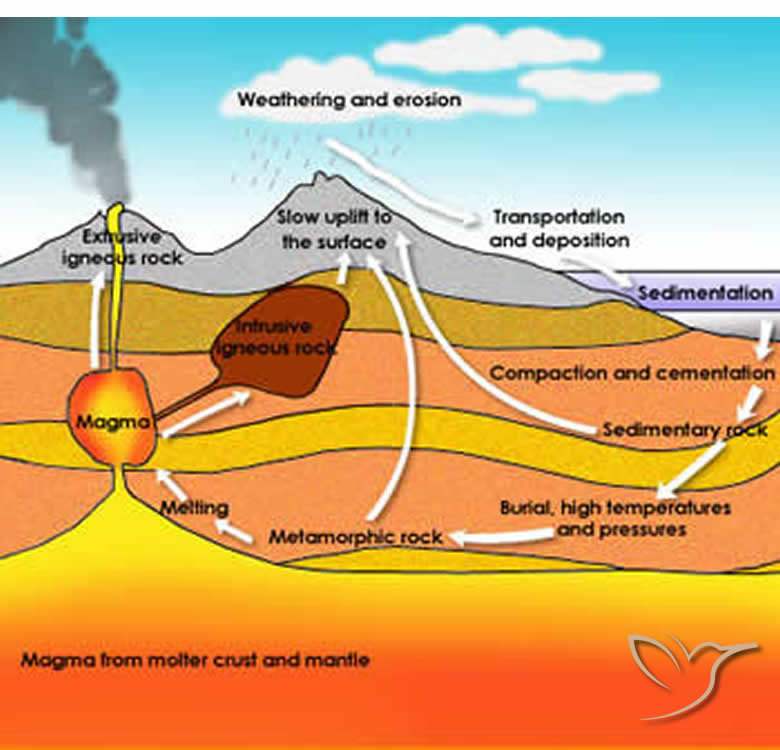
Kunzite is a variety of Spodumene, a silicate mineral which forms in pegmatite rock formations which are the result of molten rock or magma coming up from below the earth's crust to the surface. This magma cools and as it does, gas bubbles form, as do cracks and fissures where magma overlaps or cools at different times. The gases in the bubbles escape and leave gaps where liquids can seep into, as well as into the other cracks found in pegmatite rock.
Over millions of years the liquids dry leaving silicon crystals which then grow to fill these gaps. The original liquid would have had some mineral impurities which help create the various gemstones such as Kunzite. In the case of Kunzite, the basic silica material has mixed with lithium, sodium and aluminum to create the crystals plus manganese which has given the gemstone its pink to lilac color.
Kunzite gemstones are typically not treated although there is some anecdotal evidence that some are heat treated or irradiated.
This is a little bit tricky as some treatments are more invasive that others. If colorless gemstones are diffused with chemicals, dyed, filled, or oiled then it is clearly being treated but if rough gemstones are left in the sun for some natural irradiation is it the same?
Kunzite can be affected by heat and by sunlight (and unnatural irradiation too) both to enhance but also to the gemstones detriment and high heat treatment would almost certainly adversely affect the pink and violet coloring in Kunzite.
Rest assured if any gemstones sold by GemSelect receive any such treatment we will always disclose this information.
Kunzite is rated at about 7 on the Mohs hardness scale meaning it is tough and durable enough for most everyday jewelry pieces. It is relatively inexpensive and is available in lovely clear large sizes as well as attractive translucent cabochons so let your imagination run wild and create an eye-catching unique item or two.
See our detailed article on the Mohs hardness scale right here
Kunzite jewelry is being seen more and more on the red carpets, fashion runways and at parties around the world because of it fun, feminine and frivolous appeal. This gemstone is readily available and it is easy to find Kunzite in sizes ideal for matching rings, bracelets, earrings and so on.
Smaller gemstones tend to appear pale but the larger carat sizes look much deeper in color and saturation. Luckily Kunzite is often found in carat sizes of 5 or 10 or even more so this is not much of a problem.
- A work of Art
- When Tiffany's the famous jewelers celebrated 150 years in business they asked Paloma Picasso, daughter of the artist Pablo, to design a piece of jewelry to celebrate the occasion. She used a 396 carat kunzite gem from Afghanistan to adorn a stunning necklace.
- JFK's final gift to Jackie
- American President, John F Kennedy ordered a ring featuring a 47 carat kunzite gem surrounded by diamonds as a Christmas present for his wife, Jackie. This was the last gift from JFK to Jackie as he died just three weeks later. It was later auctioned for over $400,000 in the Sotheby's auction of Jackie's estate.
- There is an 880 carat Kunzite gemstone on display at the Smithsonian Institute - it is the largest faceted Kunzite in the world.
- Kunzite is called the ‘evening stone' because of its reputation of fading in sunlight and excessive heat.
- Kunzite has special glow in the dark powers
- When placed near radium bromide a Kunzite gemstone will glow and continue to glow when the radium is removed. This brought it to the attention of renowned scientist Madam Curie.
Kunzite is rated at about 7 on the Mohs hardness scale so it is a fairly durable gemstone and able to withstand the occasional knock or bump but we always recommended removing jewelry before physical activities, especially household cleaning, sports or gardening.
It can be scratched by anything harder than 7 on the scale so it is a good idea to keep your Kunzite separate from all other gems of different hardness in a fabric-lined compartment of a jewelry box. Individual cloth jewelry bags are also suitable if you have limited space in your box.
Kunzite can be safely, simply, and effectively cleaned with warm soapy water and a soft brush, such as a toothbrush. Do not use ultrasonic cleaners, steam cleaners or anything requiring heat as this can affect the color of your Kunzite.
Do not wear your Kunzite gemstones to the beach - the sun can cause the color to fade in some cases.

A certified gemstone from a reputable dealer is the best approach when purchasing Kunzite or any valuable gemstone but this is not always possible when you are searching the internet for a great gemstone or a bargain!
Kunzite is not a very expensive gemstone so it may not be worth going to the trouble of getting it certified unless buying a substantial piece.
How can you be sure that you are getting a genuine Kunzite? Color will be the first clue, Kunzite are always pink to violet with the variation being the saturation - anything out of this color range or which appear too pink or too violet should be treated with suspicion.
Kunzite can be mistaken for other gemstones such as Tourmaline, Morganite or Pink Zoisite but since they are all considerably more expensive than Kunzite this is not an issue. Rose Quartz is similar but tends to be cloudier than the clear Kunzites and a softer pink.
At 7 on Mohs hardness scale, Kunzite is similar to many of the gemstones it could be mistaken for but it should not be able to be scratched by a knife or a coin so you could perform a quick test (check with the owner first or be very discrete).
At GemSelect, we currently offer brief identification reports from your choice of three well-respected independent gemological laboratories, American International GemLab (AIG), International Colored Gemstone Association Laboratory (ICA GemLab) and Burapha Gemological Laboratory (BGL Lab).

Some gemstones show a distinct or dramatic change in color under different light sources. Look at certain types of garnet under electric or artificial light and it could look red, take it outside into the sunlight and all of a sudden it is green! This does NOT occur in Kunzite gemstones.
However as you turn a Kunzite gemstone in your hand it can flash from dark pink or violet to light pink or violet to colorless shades. This unusual phenomenon is called pleochroism and only occurs in a small number of gemstones.
Kunzite is a thoroughly modern gemstone, discovered just over a century ago and marketed to the world by a world famous jewelry store. Its colors are modern too, fun and flashy pinks and violets that seem perfectly designed for parties and events where this gemstone can be photographed, instagrammed and liked by everyone.
It is attractive, attainable and brings a smile to all that see one - what's not to love?
Chemical Formula: |
LiAl[Si2O6] Lithium aluminum silicate |
Crystal Structure: |
Monoclinic; prismatic; tabular |
Color: |
Light violet-pink, pink-violet |
Hardness: |
6.5 [fraction] to 7 on the Mohs scale |
Refractive Index: |
1.660 to 1.681 |
Density: |
3.15 to 3.21 |
Cleavage: |
Perfect |
Transparency: |
Transparent |
Double Refraction or Birefringence: |
0.014 to 0.016 |
Luster: |
Vitreous |
Fluorescence: |
Strong, yellow-red, orange |
Overall Rating -> 10 
Always get a nice gemstone. Just like the picture. Never disappointed
Posted By Ron T in June, 2026
Source: Bizrate
Overall Rating -> 10
I have a beautiful emerald I purchased from a company names gemselect and they are awesome! You should try them out?
Posted By Lynn in September, 2025
Source: Bizrate
Overall Rating -> 10
The website has a good selection, the interface is very intuitive.
Posted By PhoenixFeatherJewelry in January, 2026
Source: Bizrate
Overall Rating -> 10
Absolutely love Gem Select. I always know the quality and accuracy of information and photos are top notch. Highly recommend!
Posted By Matthew K. in May, 2026
Source: Bizrate
Overall Rating -> 10
I am filling a small treasure chest and picked a nice amethyst.
Posted By VinnyD in August, 2025
Source: Bizrate
Overall Rating -> 10
Great site for finding specific stones and sizes for individual pieces of jewelry
Posted By Designer in December, 2025
Source: Bizrate
Related Articles
Spodumene Gemstone Information
Spudomene Information: An attractive gems with many names
Birthstones by Month
Birthstones by Month, Every Birthstone, Zodiac & Anniversary
Gemstone Hardness Explained
Gemstone Hardness | Mohs Scale with Images and Charts
Kunz and Tourmaline
Kunz and Tourmaline - Creating the colored gemstone market
Gemstone Names
Gemstone Names | Gem Name Origins, History, Lists and More
Spodumene Species
Spudomene Species - From industrial use to the jewelry store
Gems from Afghanistan
Gemstones from Afghanistan - Untold wealth beneath the earth
Yellow Kunzite
Yellow Kunzite Gemstones - What’s in a name? We’ll tell you.
Kunzite Value
Kunzite Gemstone Value - What price should you be paying?
Blue Gemstones for Jewelry
Comparing Blue Gemstones for Jewelry - See our Top List here
