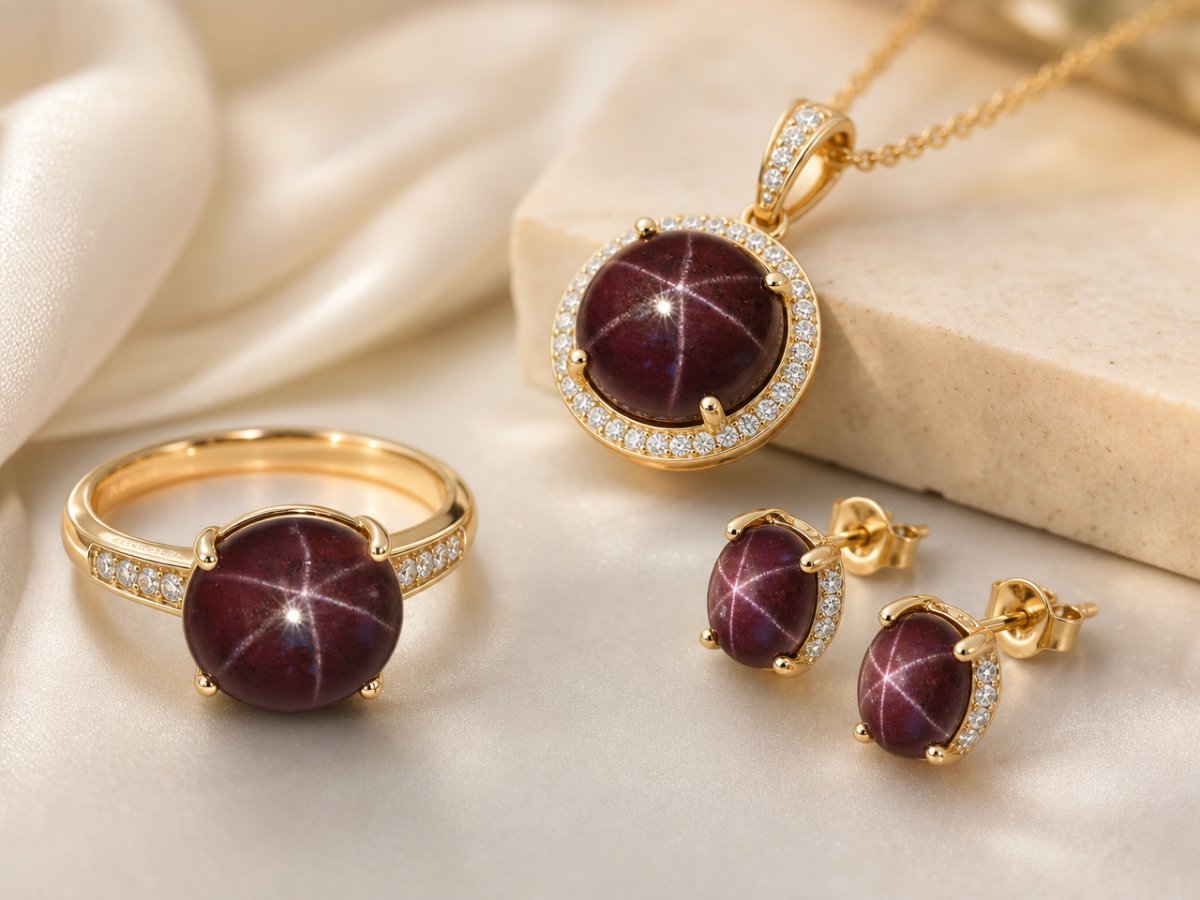


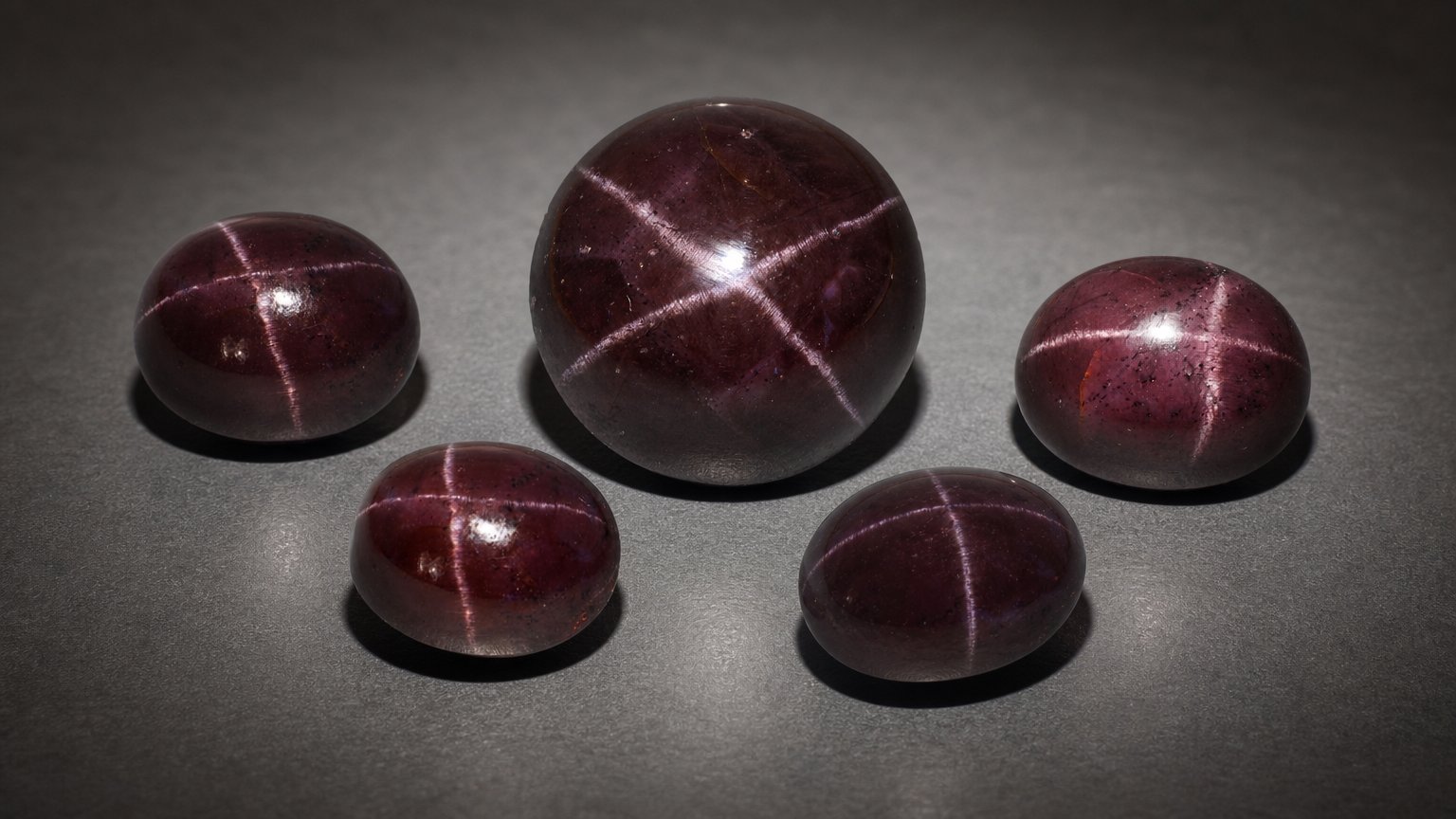
Star garnet is a distinctive variety of garnet chosen for its deep red to purplish body color and its star-like optical effect when cut and polished correctly. For buyers, the appeal is different from that of a transparent faceted garnet: instead of brilliance alone, star garnet is judged by the quality of its cabochon cut, the visibility and placement of the star, the richness of its color and its suitability for the intended jewelry design.
This buying guide explains the practical points to consider before purchasing star garnet, including color, appearance, cut, durability, treatments, origin and jewelry use. Whether you are buying a loose gemstone for a custom ring, a pendant center stone or a collectible cabochon, the goal is to help you evaluate what you are seeing and choose a stone that fits your design and expectations.
What Is Star Garnet?
Star garnet is a variety of garnet and belongs to the broader Garnet Group. Gemologically, garnets are a group of related minerals rather than a single mineral species. The chemical composition associated with star garnet ranges from Fe₃Al₂(SiO₄)₃ to Mg₃Al₂(SiO₄)₃, and it crystallizes in the isometric, or cubic, crystal system.
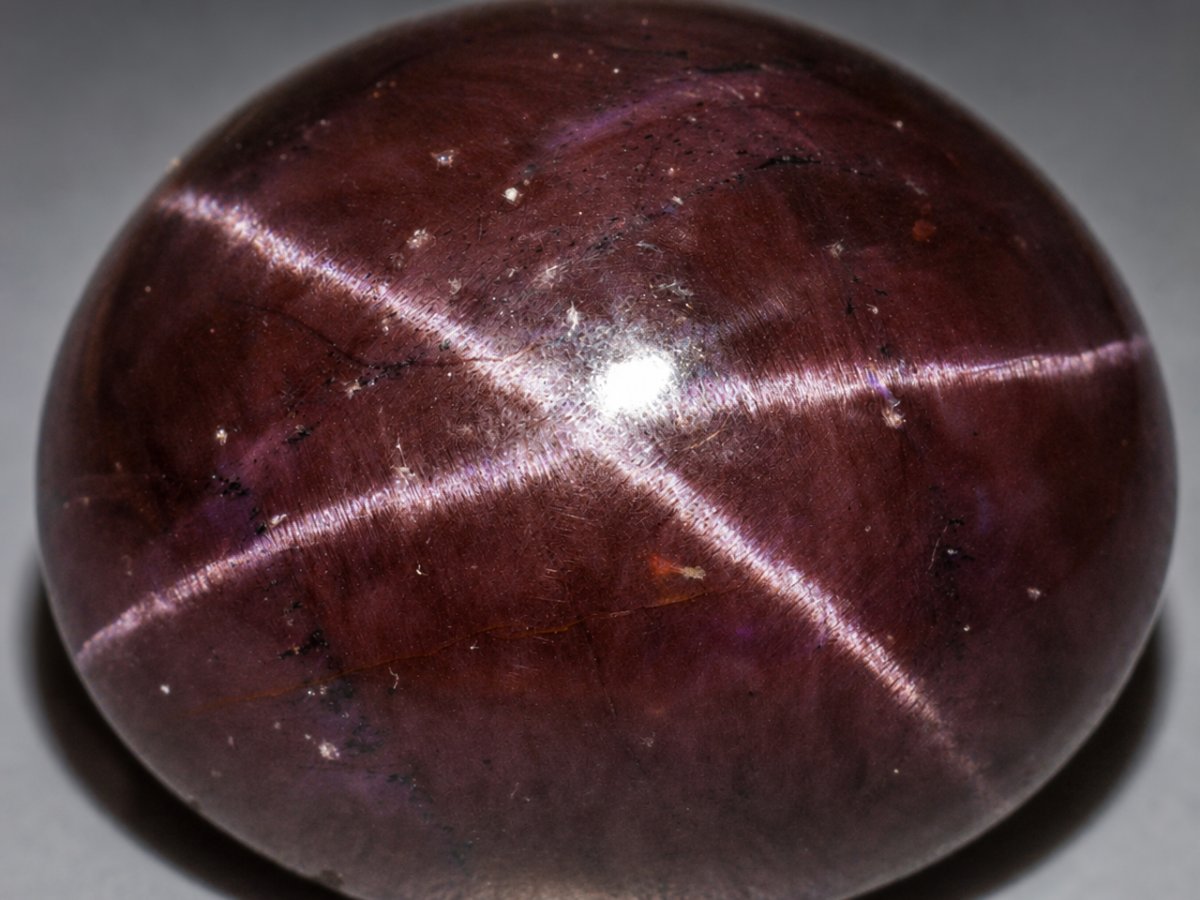
The defining visual feature of star garnet is asterism: a star-like pattern of light seen on the surface of the stone under a direct light source. Asterism in gemstones is generally caused by light reflecting from oriented internal inclusions. For the buyer, this means that inclusions are not automatically a drawback in star gemstones; they are part of what makes the optical effect possible. The important question is not simply whether inclusions exist, but whether the finished cabochon displays an attractive, well-positioned star.
Most star garnets are cut as cabochons, which means they have a smooth, rounded, polished top rather than facets. This cut is essential because asterism is best displayed on a curved surface. A well-made cabochon can show the star clearly when the stone is moved under a point light source, while a poorly oriented or overly flat stone may display a weak or off-center effect.
Color and Appearance
Color is one of the first things buyers notice in star garnet. The most important and typical color is red, often with a deep, saturated appearance. Purple tones may also be present, giving some stones a purplish red or more violet-leaning look. When comparing stones, consider both the body color and how that color interacts with the star effect.
Red Star Garnet
Red is the key color for star garnet and should be given the most attention during selection. A pleasing red body color can make the star appear more dramatic because the light effect contrasts against a darker polished surface. Very dark stones may need stronger direct lighting to reveal the star clearly, while stones with a slightly brighter red appearance can be easier to appreciate in everyday viewing.
Purple and Purplish Tones
Purple tones are also known in star garnet and may add individuality to the stone. Buyers who prefer a cooler or more unusual look may find purplish star garnets attractive, especially for pendants, earrings or contemporary jewelry. As with red stones, the best choice is a balance of body color, surface polish and visible star effect.
Evaluating the Star Effect
When buying star garnet, inspect the stone under a focused light source, such as a small lamp or direct spotlight. Diffuse lighting may make the body color look attractive but can hide the star. Move the stone gently and observe whether the star appears clearly, whether it is centered on the dome and whether it moves smoothly across the surface.
A centered, easy-to-see star is generally more desirable for jewelry because it gives the stone a clear focal point. An off-center star may still be attractive, especially if the color and cabochon shape are appealing, but it is important to know what you are buying. If purchasing online, look for photographs or descriptions that make the star effect clear, and buy from a seller that provides accurate disclosure and practical return policies.
Cut and Shape: Why Cabochons Matter
Star garnet is most commonly cut as a cabochon. This cut has a domed top and a flat or slightly curved base. The curved top allows the star to form on the surface when light reflects from internal features. Faceting is not normally the preferred approach for star garnet because facets interrupt the continuous curved surface needed to show asterism.
Oval cabochons are especially common and practical. They work well in rings, pendants and necklaces because the elongated outline gives designers flexibility and often helps the star sit attractively across the dome. Cushion shapes are also popular, offering a softer square or rectangular outline with rounded corners. Pear and round shapes may also be found and can be excellent choices when they suit the design.
What to Look for in a Cabochon
Examine the symmetry of the outline, the evenness of the dome and the quality of the polish. A good cabochon should look intentional and balanced, not lopsided or uneven. The dome should be high enough to show the star but not so high that the stone becomes impractical for the intended setting. The base should sit securely in the mount, especially for rings and bracelets where the stone may receive more wear.
Surface condition also matters. Small surface-reaching marks may affect polish and appearance, particularly because cabochons have broad reflective surfaces. A smooth, well-polished top helps the star appear sharper and makes the gemstone more attractive in finished jewelry.
Clarity and Inclusions
Clarity in star garnet should be judged differently from clarity in transparent faceted stones. In a faceted gem, buyers often look for high transparency and few visible inclusions. In a star gemstone, internal features are part of the optical performance. The best star garnet is not necessarily the clearest stone, but the one with an appealing combination of color, polish, shape and star visibility.
That said, not all inclusions are desirable. Avoid stones with obvious cracks, large surface-reaching fractures or durability concerns, especially for rings. If inclusions make the stone look dull, cloudy or structurally weak, they may reduce its suitability for jewelry. For collectors, unusual internal character may be interesting, but for regular wear, appearance and stability should remain the priorities.
Gemological Properties
Star garnet has a Mohs hardness of 7 to 7.5, placing it in a useful range for many types of jewelry. Its refractive index is 1.76 to 1.81, and its specific gravity is 3.85 to 4.20. These properties are useful for identification and for understanding the gem’s physical behavior, but most buyers will evaluate star garnet primarily by visual quality, cut and suitability for the intended setting.
The Mohs hardness scale measures resistance to scratching. A hardness of 7 to 7.5 means star garnet is harder than many everyday materials and can perform well in jewelry when set and worn with reasonable care. However, hardness is not the same as toughness. Any gemstone can chip or fracture if struck sharply, especially along exposed edges or if set in a design that leaves the stone vulnerable.
Durability and Everyday Wear
Star garnet is durable enough for many jewelry styles, including pendants, rings, earrings and necklaces. Rings require the most careful consideration because they are more exposed to impacts, knocks and abrasion than pendants or earrings. If you plan to wear a star garnet ring often, choose a secure setting that protects the cabochon’s edge and consider removing the ring during heavy work, sports or activities where the stone may be hit.
Pendants and necklaces are excellent uses for star garnet because they allow the cabochon to be seen clearly while reducing the risk of impact. Earrings can also work well, particularly matched pairs with similar body color and star appearance. Bracelets are possible but need protective settings because wrist jewelry is more likely to contact hard surfaces. Cufflinks and brooches can be attractive uses where the stone is more decorative and less exposed to continuous abrasion.
Treatments and Disclosure
Star garnet is commonly offered as untreated. Heat treatment is also associated with star garnet, though it is less prominent. For buyers, the most important point is disclosure: ask whether the stone is untreated or heated, and make sure the seller clearly states any known treatment.
Treatment information matters because it helps you compare stones accurately and understand what you are purchasing. Untreated status may be preferred by some collectors, while other buyers may focus more on appearance, size and suitability for jewelry. Either approach is valid as long as the treatment status is represented honestly.
When shopping with GemSelect or any reputable gemstone seller, review the product information carefully. Look for treatment disclosure, dimensions, weight, cut style and clear images. If a stone is being purchased for a specific design, dimensions can be more important than carat weight because cabochons with the same weight may have different outlines and dome heights.
Origin: Where Star Garnet Comes From
Origin can be interesting for collectors and buyers who enjoy knowing the geographic background of their gemstones. Important origins for star garnet include India, with Sri Lanka also notable. Madagascar and Tanzania are also associated with star garnet.
For most jewelry buyers, origin should be considered alongside visible quality rather than as the only deciding factor. A beautiful, well-cut star garnet with strong color and a clear star can be an excellent choice regardless of origin. If origin is important to you, purchase from a seller that provides the available origin information clearly and avoids unsupported claims.
Choosing Star Garnet for Jewelry
Star garnet’s smooth cabochon surface and deep color make it suitable for many jewelry styles. Rings and pendants are especially strong choices because they allow the stone to serve as a central feature. A ring places the star where it can be easily viewed by the wearer, while a pendant gives the cabochon a protected position and a classic display area.
For earrings, try to match stones for body color, size, shape and star visibility. Perfect matching can be difficult with natural cabochons, so a pleasing visual pair is more important than identical measurements alone. Necklaces can use a single focal cabochon or multiple stones, while bracelets require more protective design decisions. Cufflinks and brooches can be distinctive options, especially for buyers who want a darker red or purplish gemstone with character rather than a highly transparent faceted gem.
Setting Considerations
Bezel settings are often practical for cabochons because they hold the stone securely around the edge and provide protection. Prong settings may also be used, but the prongs should grip the stone securely without placing stress on vulnerable areas. The setting should not cover the center of the dome, where the star is meant to appear.
Because the star is best seen under direct light, designers should consider how the finished piece will be worn. A pendant or ring with an open, visible cabochon surface will usually display the effect more readily than a design that hides the dome or places the stone at an awkward angle.
Star Garnet Buying Checklist
Before purchasing star garnet, compare several stones if possible. Start with the color: decide whether you prefer a deep red appearance or a stone with more purple influence. Then evaluate the star under direct light. Is it visible? Is it centered? Does it move attractively across the dome as the stone is tilted?
Next, inspect the cabochon cut. Look for a balanced outline, a smooth dome and a good polish. Oval cabochons are a reliable and versatile choice, while cushion, pear and round shapes may suit particular designs. Check dimensions carefully, especially if you are buying a loose stone for a pre-planned setting.
Consider durability and intended use. For rings, prioritize protective settings and avoid stones with obvious structural issues. For pendants, earrings and necklaces, you may have more flexibility in size and dome height. Finally, confirm treatment disclosure and any available origin information. A confident purchase is based on both appearance and accurate description.
Care and Cleaning
Clean star garnet gently with warm water, mild soap and a soft brush or cloth. Rinse well and dry with a lint-free cloth. Avoid harsh chemicals, sudden temperature changes and rough handling. Store star garnet separately from harder gemstones to reduce the risk of scratches, and keep cabochons away from abrasive surfaces that can dull the polish.
For jewelry worn regularly, check the setting periodically. Cabochons rely on secure mounting around the edge or well-placed prongs, and any looseness should be repaired before the piece is worn again. This is especially important for rings and bracelets, which experience more contact during daily wear.
Summary
Star garnet is a compelling choice for buyers who appreciate deep red to purplish color, a smooth cabochon surface and the distinctive visual interest of a star effect. The best stone for you will depend on how well the star shows, how attractive the color appears, how carefully the cabochon is cut and how suitable the stone is for your jewelry design.
Focus on the visible qualities that matter most: color, star placement, polish, shape and structural condition. Confirm treatment information, consider origin where available and choose a setting that protects the stone while allowing the star to be seen. With these points in mind, star garnet can be a practical, attractive and individual gemstone for rings, pendants, earrings, necklaces and other jewelry styles.