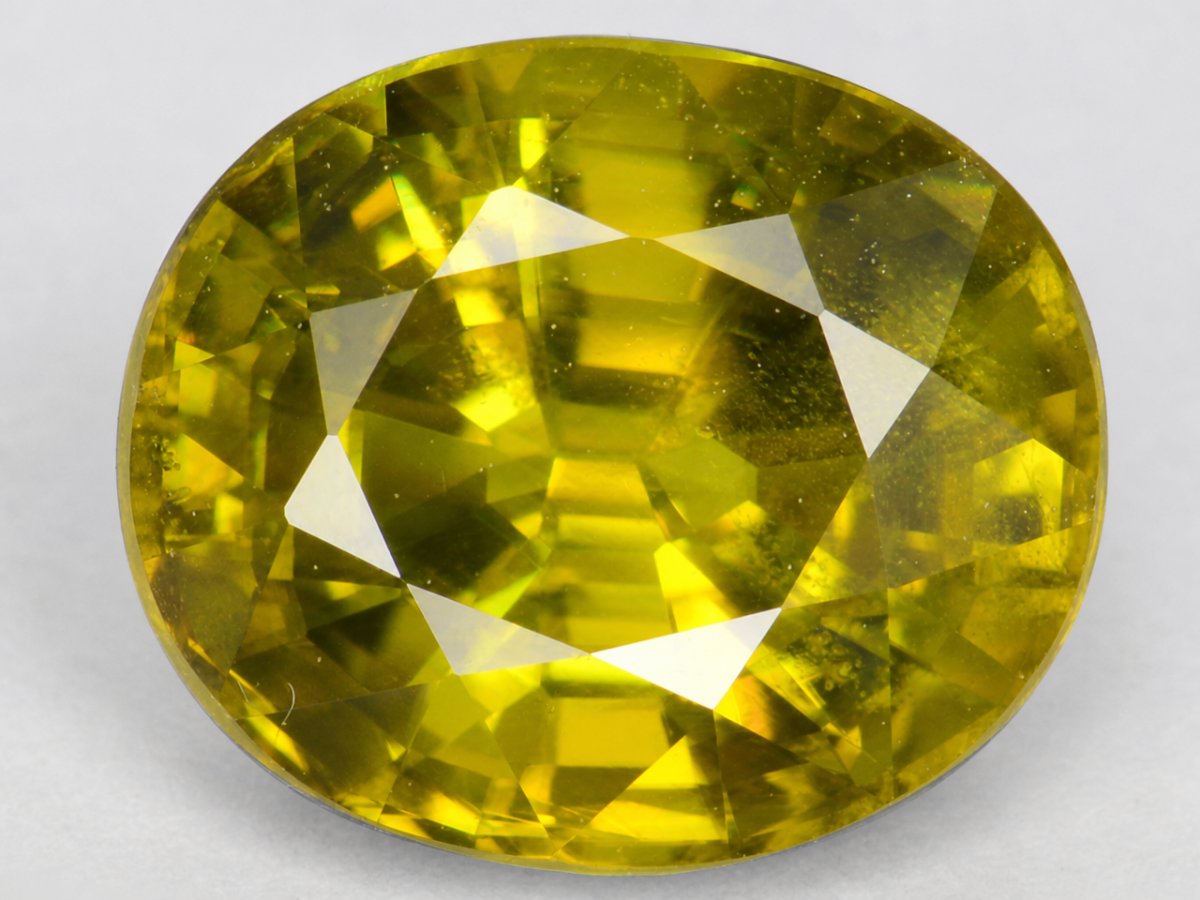


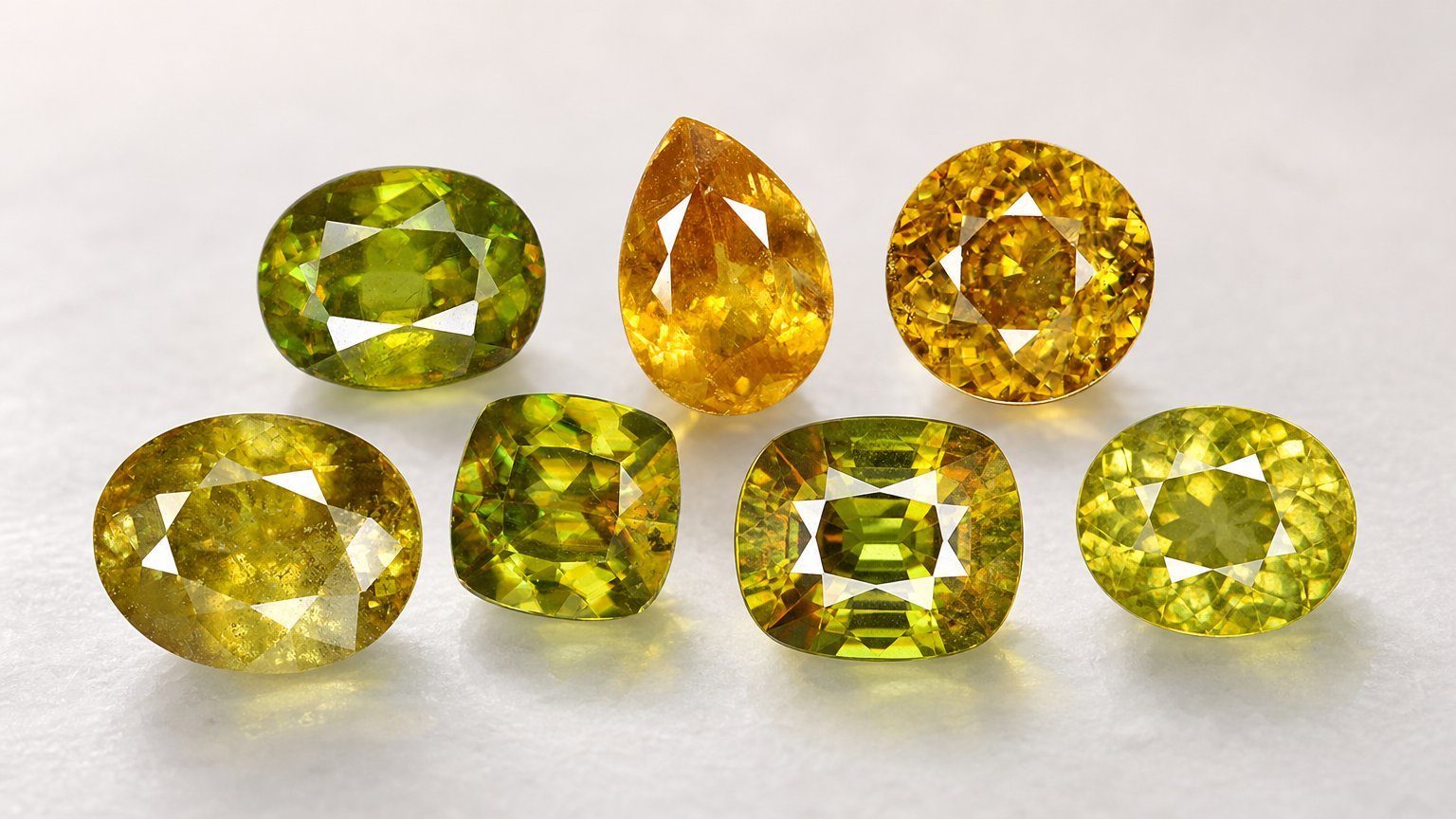
Sphene is a distinctive gemstone for buyers who want color, personality and a gem that looks different from the most familiar jewelry stones. Associated with the mineral species titanite, sphene is known in gemstone buying for green, yellow, brown and orange body colors, often cut as faceted stones that show lively reflections when well proportioned.
Because sphene has a Mohs hardness of 5–5.5, it deserves more thoughtful buying and setting decisions than harder everyday jewelry gems. It can be a beautiful choice for pendants, necklaces and earrings, and it can also be used in rings when the design and wearing habits are appropriate. This guide explains what to check before buying sphene, including color, clarity, cut, treatments, durability, origin and jewelry use.
What Is Sphene?
Sphene is associated with titanite, a mineral with the chemical formula CaTiSiO₅. It crystallizes in the monoclinic crystal system and has gemological properties that make it recognizable to trained gemologists, including a refractive index of 1.843–2.110 and a specific gravity of 3.45–3.60.
For buyers, the key point is that sphene is not a generic green or yellow gemstone. It has its own identity, appearance and care requirements. Its relatively high refractive index can contribute to a bright appearance in a well-cut faceted stone, but the final look depends strongly on color, transparency, facet arrangement and cutting quality.
Sphene Color and Appearance
Color is usually the first feature buyers notice in sphene. The best choice depends on personal preference, jewelry design and how the stone will be worn. Sphene is known in green, yellow, brown and orange colors, with green and yellow being especially important when comparing available stones.
Green Sphene
Green sphene is often the color buyers seek first because it gives the gem a vivid, natural look that works well in both modern and classic jewelry. When evaluating green sphene, look for a color that is attractive face-up and not overly dark in the center. A gem may appear different under daylight, office lighting and warm indoor lighting, so compare the stone in more than one lighting condition when possible.
Yellow, Brown and Orange Sphene
Yellow sphene can have a bright, warm appearance and may be appealing for buyers who want a lively alternative to more common yellow gems. Brown and orange sphene can be attractive in earthy or warm-toned designs, especially when paired with yellow or rose-colored metals. These colors are worth considering if you prefer a gem with a natural, autumnal or antique-inspired look.
Clarity and Transparency
Clarity should be judged with the intended use in mind. A gem does not need to be perfectly flawless to be beautiful, but inclusions that are easily visible from normal viewing distance may affect appearance. When shopping online, examine photos carefully and look for clear descriptions. When shopping in person, view the gem face-up first, then from the side, and check whether any internal features distract from the color and brightness.
For jewelry, the most important question is practical: does the stone look attractive in the setting you plan to use? Small inclusions near the edge may be less noticeable after setting, while inclusions in the center of the gem can be more visible.
Cut, Shape and Faceting
Sphene is most commonly seen as a faceted gemstone. Faceting uses flat polished surfaces to reflect light and show the gem’s color and brightness. Because sphene’s appearance depends heavily on how it handles light, cut quality is an important buying factor.
Common sphene shapes include cushion, oval and round. These shapes are practical and versatile, making them suitable for pendants, necklaces and earrings. Pear and trillion shapes are also found and can give jewelry a more distinctive outline. Heart and octagon shapes may be available as well, though they are less central choices for many buyers.
What to Look for in a Faceted Sphene
When evaluating a faceted sphene, check the following:
- Face-up appearance: The gem should look balanced when viewed from above, with attractive color across the stone.
- Symmetry: The outline should be even, especially in rounds, ovals, cushions and pears.
- Brightness: A well-cut stone should not look lifeless or overly dark through the center.
- Proportions: Stones that are cut too shallow or too deep may not show their best face-up appearance.
- Finish: Facets should appear cleanly polished, with no obvious abrasion visible in the sales presentation.
Step cuts are also used for sphene. A step cut has long, straight facets arranged in rows, often giving the gem a more architectural look. Step cuts can emphasize clarity and color zoning more than brilliant-style faceting, so inspect them carefully.
Cabochon Sphene
Sphene may also be cut as a cabochon, which has a smooth domed surface rather than facets. Cabochons can be attractive when the material has a pleasing body color or when a softer, less sparkly appearance is desired. For a cabochon, look for an even dome, good polish and an outline that will sit securely in the intended setting.
Important Sphene Origins
Sphene is associated with several origins, including Mexico and Sri Lanka, both of which are important sources to know when comparing stones. Brazil and Pakistan are also noted origins, and Madagascar is another origin buyers may encounter.
Origin can be interesting for collectors and for buyers who like to know the story behind a gemstone. However, origin should not be used as the only quality factor. A well-cut sphene with attractive color and good transparency may be a better purchase than a stone from a preferred origin that does not look as appealing. If origin matters to you, ask the seller how it is represented and whether any documentation is available.
Gemological Properties Buyers Should Understand
Gemological properties help identify sphene and explain some of its practical characteristics. Buyers do not need to memorize laboratory data, but understanding the basics can help with realistic expectations.
| Mineral association | Titanite |
| Chemical formula | CaTiSiO₅ |
| Crystal system | Monoclinic |
| Mohs hardness | 5–5.5 |
| Refractive index | 1.843–2.110 |
| Specific gravity | 3.45–3.60 |
The refractive index range is relevant because refractive index relates to how strongly a gemstone bends light. In practical terms, a faceted gem with suitable cutting and transparency can appear bright. Hardness is equally important because it affects resistance to scratching during wear.
Durability and Wearability
Sphene’s Mohs hardness of 5–5.5 means it is softer than many common jewelry gemstones. Mohs hardness measures scratch resistance, not overall toughness, but it is still a useful guide for daily wear. A lower hardness means the gem can show wear more easily if it rubs against harder materials or is exposed to rough conditions.
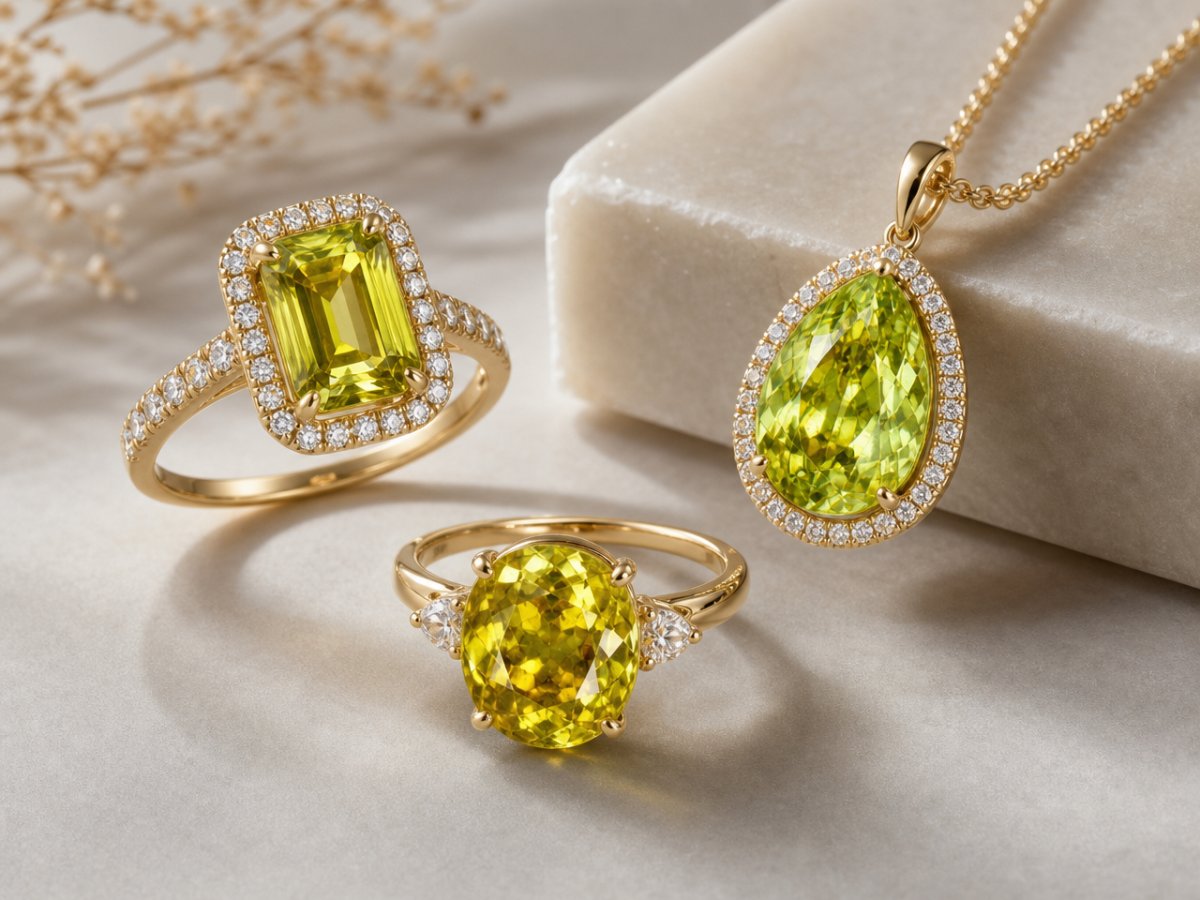
For this reason, sphene is best chosen thoughtfully for jewelry. Pendants and necklaces are excellent options because they usually receive less abrasion than rings. Earrings are also a sensible use, especially when the stones are protected from hard knocks. Rings can be made with sphene, but they require more care. If you want a sphene ring, consider a protective setting and reserve it for occasional wear rather than heavy everyday use.
Care Tips for Sphene Jewelry
- Store sphene separately from harder gemstones to reduce scratching.
- Avoid wearing sphene jewelry during sports, gardening, housework or activities where impact is likely.
- Clean gently with mild soap, warm water and a soft cloth or soft brush.
- Have rings and frequently worn pieces checked by a jeweler to make sure the stone remains secure.
- Put sphene jewelry on after cosmetics, lotions and perfumes to help keep the gem and setting clean.
Sphene Treatments
Sphene is commonly offered as untreated. For many buyers, this is a positive point because it keeps the buying decision straightforward: the stone’s color and appearance are not being presented as the result of a routine enhancement process.
Even so, treatment disclosure is always important. Ask the seller whether the sphene is untreated and whether that information is stated on the invoice or product description. At GemSelect, treatment information is provided where relevant so buyers can make comparisons with greater confidence.
Best Jewelry Uses for Sphene
Sphene can be used in several types of jewelry, but its hardness makes some choices more practical than others.
Pendants and Necklaces
Pendants are one of the best uses for sphene. A pendant allows the gemstone to be displayed prominently while reducing the risk of abrasion compared with a ring. Sphene’s green, yellow, brown and orange tones can work well as a single center stone or as part of a design with accent gems.
Necklaces offer similar advantages. Because the gem is worn away from the hands, it is less likely to receive hard contact during normal wear. For buyers who want to enjoy sphene often, a pendant or necklace is usually a practical first choice.
Earrings
Earrings are another good option for sphene. Smaller matched stones can be used in studs or drops, while larger or more decorative shapes can create statement earrings. Since earrings generally experience limited abrasion, they are suitable for a gemstone that needs a little extra care.
Rings
Sphene rings can be attractive, but they should be planned carefully. Choose a setting that gives some protection to the edges of the stone, and avoid exposing the ring to rough wear. If you want a ring for daily use in demanding conditions, sphene may not be the most practical option. If you want an occasional-wear ring with a distinctive gemstone, sphene can be considered with proper care.
How to Choose a Sphene: Practical Buying Checklist
1. Decide Which Color You Prefer
Start by choosing the color family that appeals to you most. Green is a major choice for sphene buyers, while yellow can be bright and warm. Brown and orange options can suit earthy, vintage or autumn-toned jewelry designs. Do not judge from color name alone; compare actual photos or stones.
2. Evaluate the Face-Up Look
The face-up view is how the gem will usually be seen in jewelry. Look for a pleasing balance of color, brightness and shape. A gemstone can have promising specifications but still not appeal visually, so give the appearance priority.
3. Check Cut and Shape for the Jewelry Design
Oval, cushion and round sphene are versatile choices. Pear and trillion shapes can add design interest, while cabochons offer a softer look. If you are buying for a ready-made setting, confirm the exact dimensions rather than relying only on carat weight. Two gems of the same weight can have different measurements depending on their proportions.
4. Review Clarity Carefully
Look for inclusions that may affect beauty or setting safety. In online listings, use enlarged photos to inspect the stone, but remember that magnified images can make small features look more noticeable than they will appear in real life. For jewelry, what matters most is whether the gem looks clean and attractive at normal viewing distance.
5. Match the Gem to the Intended Wear
If the jewelry will be worn often, consider a pendant, necklace or earrings. If choosing a ring, plan for occasional wear and a protective setting. Buyers who understand sphene’s hardness before purchasing are more likely to be satisfied with the gem over time.
6. Confirm Treatment Disclosure
Because sphene is commonly untreated, confirm that the seller states the treatment status clearly. Keep invoices, product pages or certificates with your records, especially if you are buying for a collection or a custom jewelry project.
7. Consider Origin as Supporting Information
Mexico and Sri Lanka are important origins for sphene, and buyers may also see stones from Brazil, Pakistan and Madagascar. Origin can add interest, but color, cut, clarity, size and suitability for jewelry should remain central to the purchase decision.
Common Buying Mistakes to Avoid
- Choosing only by color name: Green, yellow, brown and orange can each vary in tone and appearance, so judge the actual stone.
- Ignoring hardness: Sphene is not ideal for rough daily wear, especially in rings.
- Buying without dimensions: Carat weight alone does not tell you whether the gem will fit a setting.
- Overlooking cut quality: A poor cut can reduce brightness and make the stone look less appealing.
- Assuming origin equals quality: Origin is useful information, but the individual gem’s appearance matters most.
Summary
Sphene is a rewarding gemstone for buyers who appreciate distinctive color and a lively faceted appearance. The most important buying factors are attractive face-up color, good cutting, suitable clarity, clear treatment disclosure and realistic expectations about durability. Green and yellow stones are especially prominent, while brown and orange sphene can be excellent choices for warmer designs.
For jewelry, sphene is best suited to pendants, necklaces and earrings. Rings are possible, but they require careful setting choices and mindful wear. By choosing a well-cut untreated sphene from a transparent seller and matching it to the right jewelry style, buyers can enjoy a gemstone with character and individuality.