


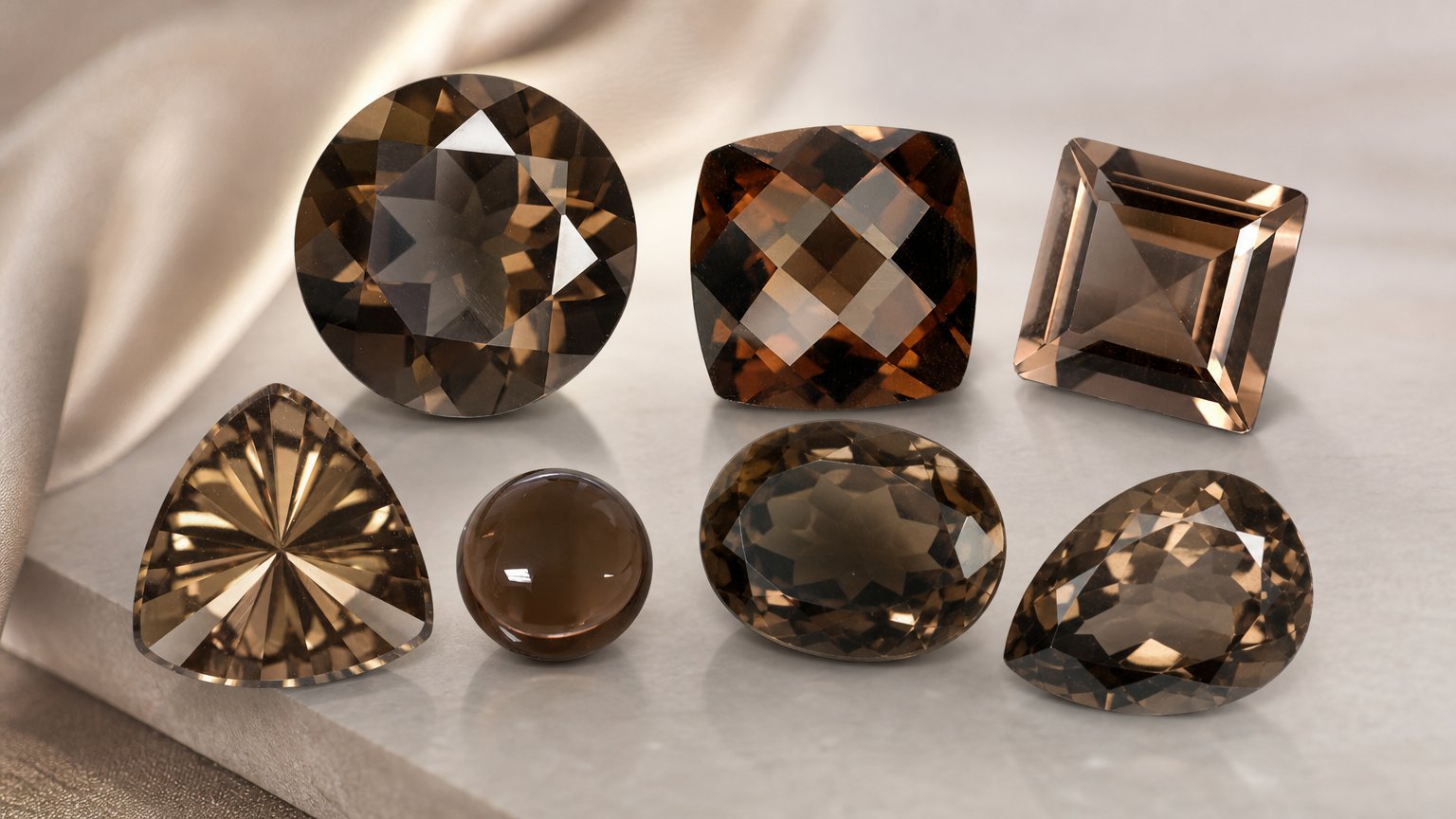
Smoky quartz is a brown variety of quartz valued by buyers who want a gemstone with a warm, neutral appearance and a practical level of durability for many jewelry designs. Its color can suit both classic and contemporary settings, and it is commonly cut into faceted gems for pendants, statement rings, necklaces and other jewelry pieces. For anyone buying a loose smoky quartz, the most important considerations are the quality of the brown color, the precision of the cut, the apparent clarity, the size and shape, and whether any treatment has been disclosed.
This guide explains how to evaluate smoky quartz from a buyer’s point of view. It focuses on the features you can compare when choosing a stone online or in person, including appearance, gemological properties, durability, treatment information, origin and jewelry suitability.
What Is Smoky Quartz?
Smoky quartz is a variety of quartz, one of the best-known mineral species used in gemstones. Its chemical formula is SiO₂, and it crystallizes in the hexagonal crystal system. Like other quartz gems, smoky quartz has a Mohs hardness of 7, a refractive index of 1.544–1.553 and a specific gravity of 2.65.
For buyers, these facts are useful because they help explain why smoky quartz is widely used in jewelry. A hardness of 7 means it can resist everyday scratching better than softer gems, although it still needs sensible care. Its refractive index gives it a moderate level of brilliance when well cut, especially in faceted styles. The main visual identity of smoky quartz is its brown color, which can appear subtle and understated or deeper and more dramatic depending on the individual gem.
Color and Appearance: What to Look For
Color is the first feature most buyers notice in smoky quartz. The defining color is brown, and the best choice depends on your design goal and personal taste. Some buyers prefer a lighter, more transparent brown because it feels soft and versatile. Others prefer a deeper brown for stronger contrast in a pendant or statement ring.
When comparing stones, look beyond the color label and study the actual photos or the gem in hand. Consider three practical points:
- Tone: Is the stone light, medium or dark? Very dark stones may appear bold, but make sure the cut still allows light to return through the gem.
- Evenness: Check whether the brown color appears balanced across the face of the stone. Slight variations can be attractive, but obvious unevenness may affect the look in a finished piece.
- Transparency and brightness: A well-cut smoky quartz should not look lifeless. Even with a darker brown tone, the stone should show attractive reflections when moved under light.
Because smoky quartz is often chosen for its understated color, the right stone is not necessarily the darkest one. A medium brown gem with good cutting and pleasing brightness may be more attractive in jewelry than a stone that is too dark to show its faceting.
Clarity and Transparency
Clarity describes how easily inclusions, internal features or surface-reaching marks can be seen. For a buyer, the most practical clarity standard is whether the stone looks clean and attractive to the unaided eye. Use magnified images when available, but also judge the overall face-up appearance, because small internal features may not be visible once the gem is set.
In transparent faceted smoky quartz, inclusions can distract from the smooth brown appearance if they are obvious, centrally located or reflective. In darker stones, some internal features may be less noticeable, but surface marks and chips can still affect durability and appearance. Always check the crown, girdle and corners of shaped stones, especially in pointed shapes such as pear, marquise, trillion or heart.
If you are buying for a ring or bracelet, inspect the edges carefully because those jewelry types are more exposed to knocks. For pendants, necklaces and earrings, small clarity characteristics may be less concerning if the overall face-up beauty is strong.
Cut Quality and Popular Cutting Styles
Cut has a major effect on smoky quartz because the brown color must be balanced with light return. Smoky quartz is commonly found in faceted cuts, and faceting is often the best choice when the buyer wants brilliance and crisp reflections. Step cuts are also popular and can give smoky quartz a clean, architectural look, especially in octagon and rectangular-style outlines.
Other cutting styles seen in smoky quartz include buff top, cabochon, checkerboard, concave cut, Portuguese cut and princess cut. Each creates a different effect. A cabochon has a smooth, domed surface rather than facets and emphasizes color and shape over sparkle. A checkerboard crown adds a patterned surface reflection. A concave or Portuguese cut can create a more complex play of light when the cutting is well executed.
How to Judge the Cut Before Buying
When evaluating cut, ask practical questions rather than relying only on the cut name:
- Does the stone look lively? The gem should show reflections and depth rather than looking flat.
- Is the outline symmetrical? Ovals should not look lopsided, rounds should be evenly circular and octagons should have balanced corners.
- Are the facets neat? Uneven facets, poor polish or misalignment can reduce the visual appeal.
- Does the shape suit the jewelry design? A large oval or octagon can work well in a pendant, while a round or cushion may be easier to use in many ring designs.
Because smoky quartz can be cut in many shapes, buyers should not choose by shape alone. A well-proportioned round, oval or octagon can be more attractive than a more unusual shape with poor symmetry or a dull center.
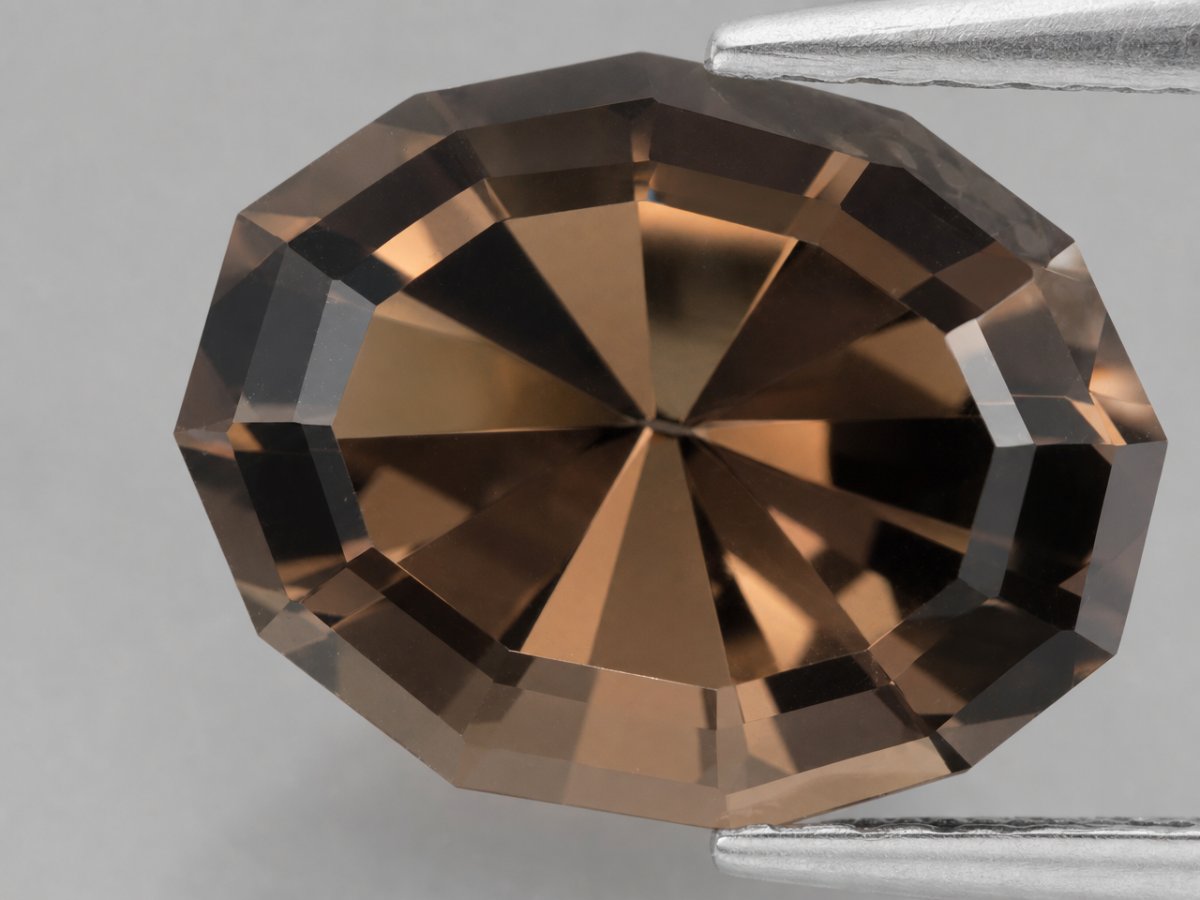
Shapes and Sizes: Matching the Stone to the Design
Smoky quartz is available in many shapes. Round, oval and octagon shapes are especially common choices, giving buyers plenty of flexibility for rings, pendants and necklaces. Cushion, pear and marquise shapes are also popular when a softer or more elongated outline is desired. Fancy shapes, hearts, squares and trillions can be useful for custom designs or distinctive jewelry pieces.
When choosing size, consider both carat weight and millimeter dimensions. Carat weight tells you the weight of the stone, while millimeter measurements tell you how large it will appear in the setting. Two smoky quartz gems with the same carat weight can look different in size if one is cut deeper than the other.
For pendants and statement rings, buyers often have more freedom to choose larger face-up sizes because the design is meant to showcase the center stone. For earrings, weight and balance are important. For bracelets and cufflinks, lower profiles and secure settings are practical because these pieces can receive more contact during wear.
Origins of Smoky Quartz
Smoky quartz is associated with several origins. Important sources include Brazil and Madagascar, with additional material known from Russia, the United States, Namibia and Scotland. Origin can be interesting to collectors and may be part of the story of a gemstone, but buyers should not rely on origin alone as a measure of beauty or suitability.
When purchasing smoky quartz for jewelry, the visible quality of the gem is usually more important than the locality name. Compare the color, cut, transparency, polish and overall condition. If origin is important to you, choose a seller that clearly discloses it when known. If origin is not stated, it is still possible to make a good buying decision by focusing on the stone’s appearance and specifications.
Gemological Properties Buyers Should Understand
The key gemological properties of smoky quartz help buyers understand what they are purchasing:
- Mineral species: Quartz
- Chemical formula: SiO₂
- Crystal system: Hexagonal
- Mohs hardness: 7
- Refractive index: 1.544–1.553
- Specific gravity: 2.65
The Mohs scale measures resistance to scratching. A hardness of 7 is suitable for many types of jewelry, but it does not mean the gemstone is unbreakable. Refractive index describes how light bends as it enters the stone; in smoky quartz, good cutting is important for making the most of its optical performance. Specific gravity is a density measurement used in gemology and identification, and it is helpful for confirming that the stone’s properties are consistent with quartz.
Durability and Everyday Wear
Smoky quartz is durable enough for many jewelry uses when it is set and worn appropriately. Its Mohs hardness of 7 makes it a practical choice for pendants, necklaces, rings, earrings and statement pieces. However, all gemstones can be damaged by hard impact, sharp blows or rough handling.
For rings, especially statement rings, consider protective settings if the stone is large or has exposed corners. Octagon, princess, pear, marquise, heart and trillion shapes may have points or edges that benefit from secure prongs or a setting that protects vulnerable areas. Pendants and earrings are generally less exposed to impact than rings and bracelets, making them comfortable choices for displaying larger smoky quartz gems.
For care, keep smoky quartz away from situations where it can rub against harder materials. Store it separately from other jewelry, clean it gently and check settings periodically if the piece is worn often.
Treatments and Disclosure
Smoky quartz is commonly available as untreated material, and heat treatment is also associated with the gem. Treatment disclosure matters because it helps buyers understand exactly what they are purchasing. A reputable seller should state treatment information clearly when it is known.
For most jewelry buyers, the key question is not simply whether a stone is treated, but whether the treatment is disclosed and acceptable for the intended purchase. If you prefer untreated gemstones, check the product details carefully. If a heated smoky quartz fits your design and budget, make sure you are comfortable with that information before buying. GemSelect product pages are designed to present gemstone details so buyers can compare stones with greater confidence.
Best Jewelry Uses for Smoky Quartz
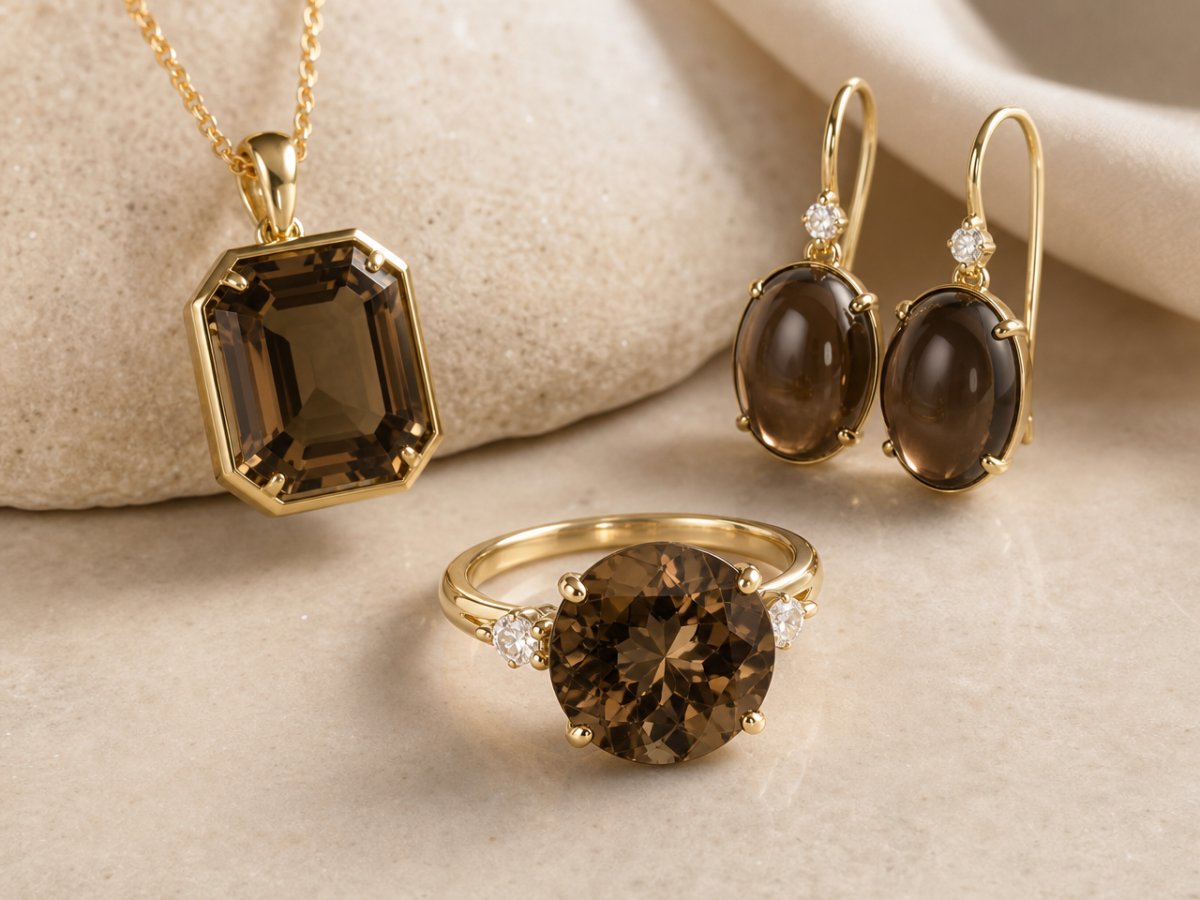
Smoky quartz is especially well suited to pendants and statement rings because its brown color can create a strong center-stone look without needing a bright or highly saturated hue. A faceted oval, round or octagon smoky quartz can look elegant in a pendant, while a large cushion, pear or marquise can create a bold statement ring.
Necklaces and rings are also common choices. In necklaces, smoky quartz can be used as a central focal gem or as part of a coordinated design. In rings, choose a setting that matches how often the piece will be worn. For occasional wear, more open and decorative designs may be suitable. For frequent wear, prioritize secure settings and protected edges.
Smoky quartz can also be used in bracelets, earrings and cufflinks. Earrings are a good option for matched pairs or lighter designs. Bracelets require extra care because they are more likely to strike hard surfaces. Cufflinks can benefit from smoky quartz’s refined brown tone, especially in geometric shapes such as round, square or octagon.
Practical Buying Checklist
Before purchasing a loose smoky quartz, review the following points:
- Color: Choose a brown tone that suits your design. Make sure the stone is not so dark that it loses life.
- Cut: Look for symmetry, good polish and pleasing light return. Faceted and step-cut stones are especially common.
- Shape: Match the shape to the jewelry piece. Round, oval and octagon shapes are versatile, while pear, marquise, heart and trillion shapes create more distinctive designs.
- Clarity: Check whether inclusions or surface marks are visible face-up and whether they affect beauty or setting safety.
- Measurements: Compare millimeter dimensions as well as carat weight, especially if the stone must fit a setting.
- Treatment: Confirm whether the stone is untreated or heat treated when this information is provided.
- Durability: Choose protective settings for rings, bracelets and stones with exposed corners.
- Origin: Consider origin if it matters to you, but prioritize the stone’s visible quality and disclosed details.
Common Buying Mistakes to Avoid
One common mistake is choosing the darkest smoky quartz available without checking whether it still shows brilliance. A darker brown stone may look impressive in a still image, but if the cut is too deep or the tone is too heavy, it can appear dull in jewelry.
Another mistake is selecting a stone by carat weight alone. Smoky quartz can be cut in different depths and proportions, so millimeter size is essential when planning a ring, pendant or matched pair. Always compare length, width and depth if the stone needs to fit a specific design.
Buyers should also avoid overlooking the setting style. A beautiful smoky quartz with pointed corners may need more protection than a rounded oval. Finally, do not ignore treatment information. Whether you prefer untreated or are comfortable with heat-treated material, clear disclosure supports a more confident purchase.
Summary
Smoky quartz is a brown quartz gemstone that offers a practical blend of attractive color, versatile cutting options and jewelry-friendly durability. The best purchase is the stone that balances color, transparency, cut quality, shape, size and disclosed treatment information for your intended use. Brazil and Madagascar are important origins, with smoky quartz also associated with Russia, the United States, Namibia and Scotland, but origin should be considered alongside the actual appearance and specifications of the gem.
For most buyers, a well-cut smoky quartz with pleasing brown color, good symmetry and an appropriate setting plan will be more satisfying than a stone chosen only for size or darkness. Whether you are designing a pendant, statement ring, necklace, earrings or cufflinks, careful comparison will help you select a smoky quartz that looks right and performs well in the finished jewelry.
