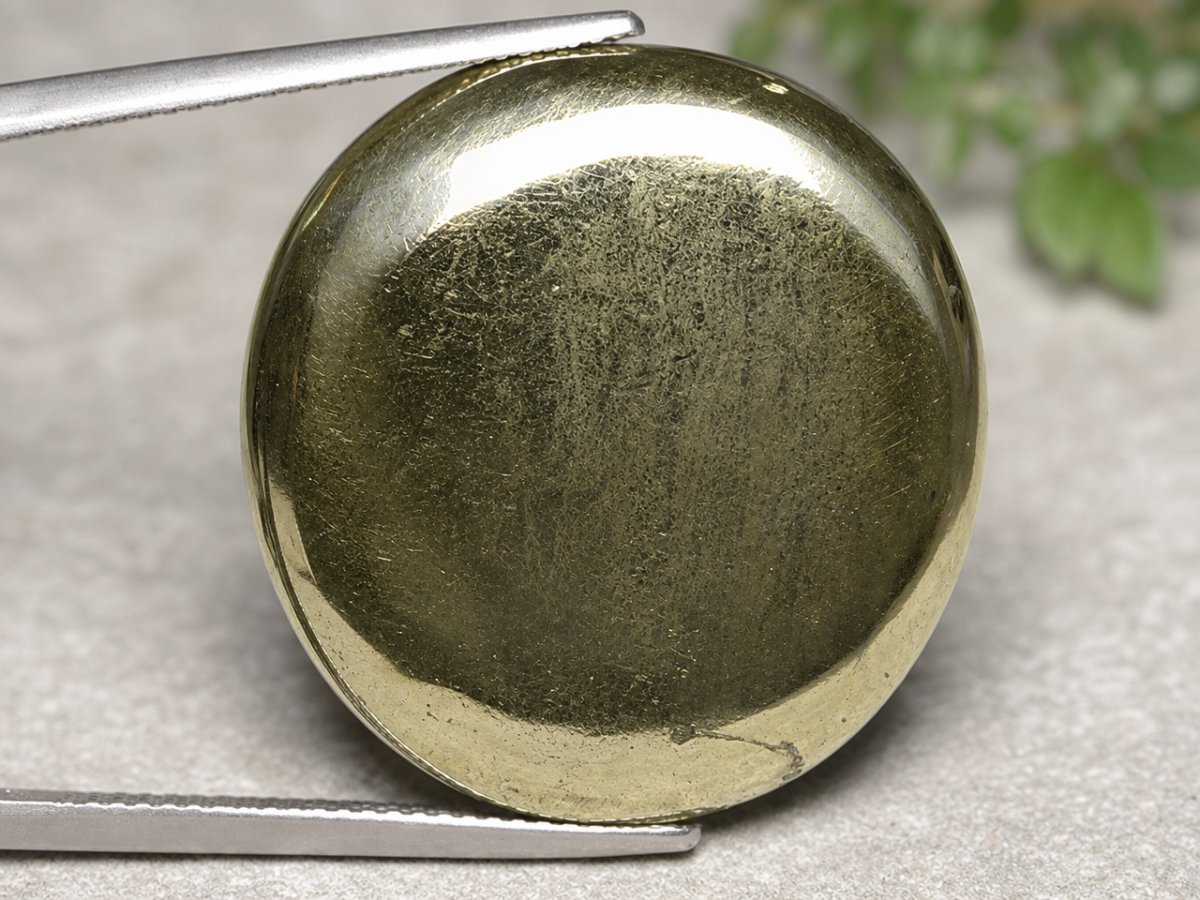


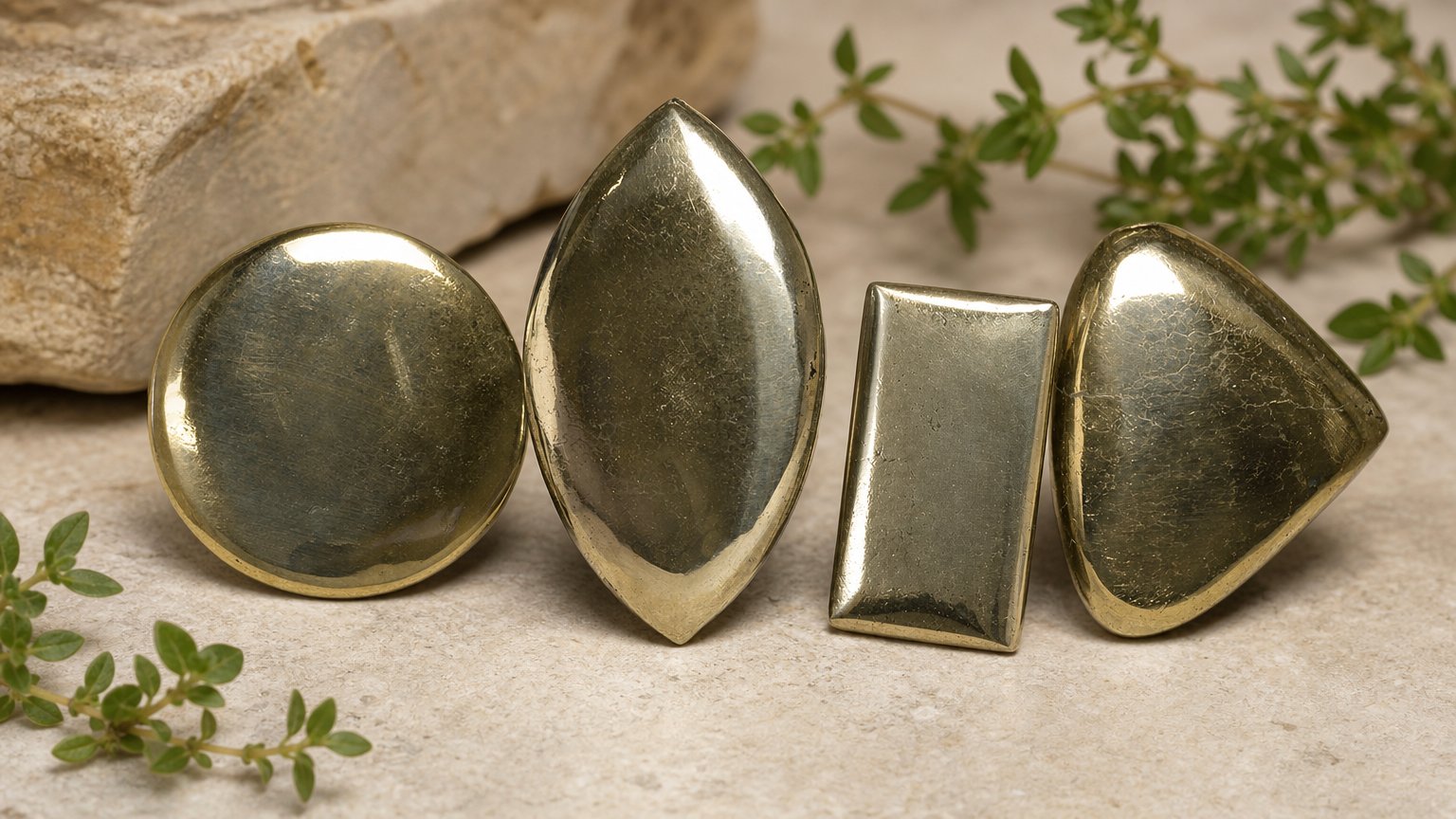
Pyrite is one of the most visually recognizable minerals used as a gemstone and collector stone. Its natural gold to yellow color, sometimes with brownish tones, gives it a bright metallic look that has long shaped how people interpret its meaning.
Unlike transparent gems valued mainly for brilliance and color depth, pyrite is opaque and admired for its strong surface shine, geometric crystal forms and resemblance to precious metal. This appearance is central to its symbolism: pyrite is commonly associated with wealth, confidence, ambition and the attraction of opportunity. These meanings are cultural and symbolic rather than scientific facts.
What Is Pyrite?
Pyrite is an iron sulfide mineral with the chemical formula FeS₂. In gem use, it is usually appreciated as an opaque metallic gem material rather than a transparent faceted stone. Its isometric crystal system can produce striking natural crystal shapes, which helps explain its popularity among mineral collectors as well as gemstone enthusiasts.
Gem-quality pyrite is typically gold-colored, with yellow and occasional brownish tones. This gold-like appearance is the feature most closely tied to its history, folklore and modern meaning.
Pyrite Name Meaning and "Fool's Gold"
The name pyrite is traditionally traced to a Greek root connected with fire, reflecting the mineral's ability to produce sparks when struck against harder material. This association with sparks and fire adds another symbolic layer: energy, ignition, action and transformation.
Pyrite is also widely known as "fool's gold" because its metallic golden color can resemble real gold at first glance. The nickname is not a statement about pyrite being worthless; rather, it reflects the long-standing human tendency to connect its appearance with gold, wealth and discovery. For modern collectors, that resemblance is part of pyrite's charm.
Historical Background and Cultural Significance
Pyrite's history is closely linked to its visual similarity to gold and its spark-producing quality. In mining and collecting contexts, its gold color made it a mineral people noticed immediately. Over time, this visual link helped pyrite become a symbol of prosperity, hidden potential and the difference between appearance and true value.
Important sources for pyrite include Peru and Russia, with additional material known from Spain, China and the United States. These origins matter to collectors because pyrite can form attractive crystals and display pieces as well as cut gemstones. In a meaning and history context, its broad geographic presence also helps explain why pyrite is familiar in many mineral collections around the world.
Pyrite Symbolism
Pyrite symbolism is largely shaped by two ideas: its golden color and its connection with sparks. The gold color naturally links pyrite with abundance, success, confidence and material aspiration. The spark association gives it a more active meaning, suggesting motivation, creative energy and the power to begin something new.
In modern crystal traditions, pyrite is sometimes described as a stone of protection, willpower and positive action. These are spiritual or symbolic interpretations, not medically proven effects. Readers who enjoy gemstone meanings can treat pyrite as a visual reminder of focus, confidence and purposeful effort.
Appearance, Meaning and Modern Appreciation
Pyrite's meaning today is strongly connected to how it looks. A bright golden surface can feel bold and optimistic, while natural crystal forms often give pyrite a structured, architectural quality. This combination makes it appealing to collectors, jewelry designers and people who enjoy gemstones with a strong visual identity.
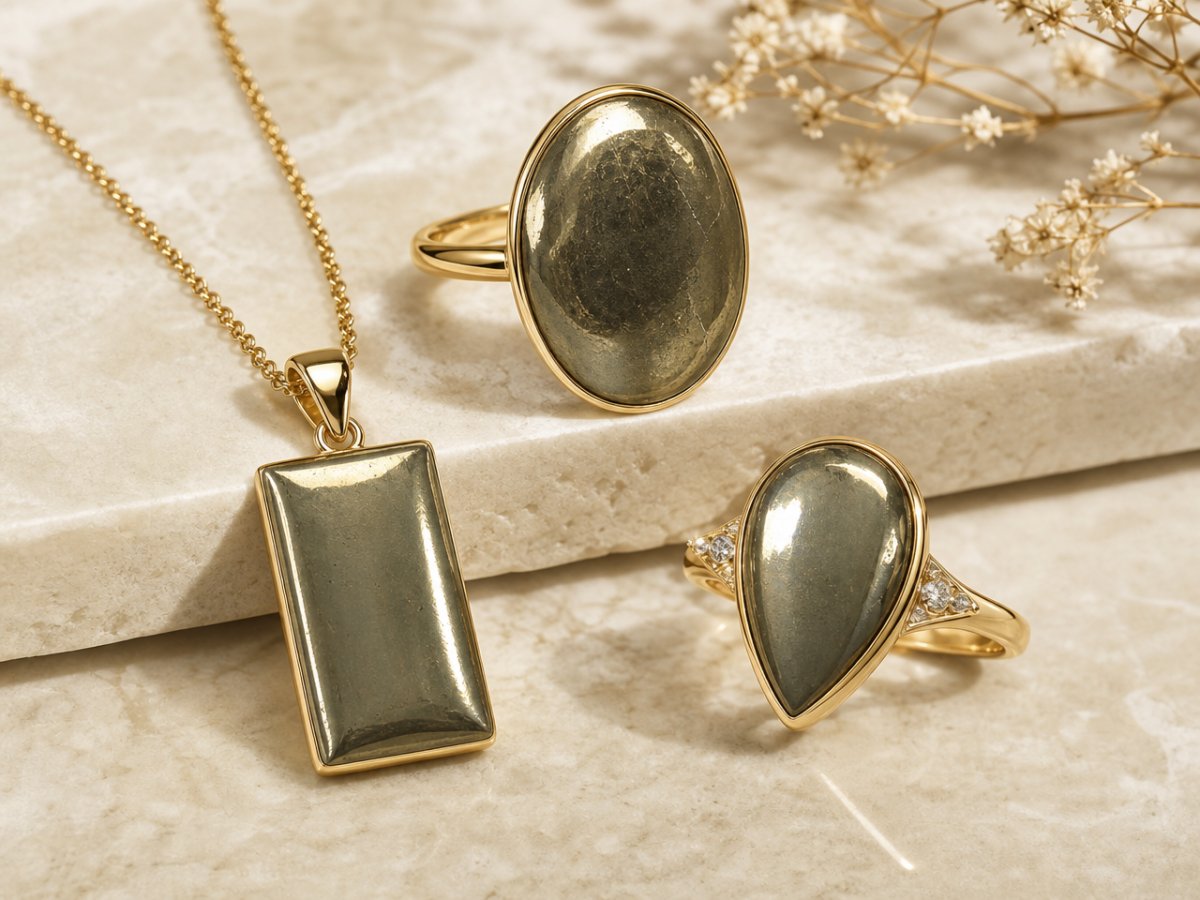
Although this guide is focused on meaning rather than buying advice, pyrite is commonly seen in necklaces, pendants, bracelets and earrings, and it may also be used in rings. It can be faceted or cut as a cabochon, but many people also value pyrite in freeform or crystal specimens because the natural form itself carries much of the stone's appeal.
A Balanced View of Pyrite Meaning
Pyrite is best understood as a gemstone whose symbolism comes from visible, memorable qualities: gold color, metallic shine, crystal geometry and the historic idea of sparks. Its meanings of abundance, confidence and energy are traditional or modern cultural associations, not scientific properties.
For gemstone enthusiasts, that distinction is important. Pyrite can be enjoyed as a meaningful object, a collector mineral, a design material or a personal symbol without overstating what it can do. Its lasting appeal comes from the way it invites reflection on ambition, value and the difference between surface appearance and deeper worth.
Summary
Pyrite has a powerful place in gemstone symbolism because it looks like gold but has its own identity. Known for its golden to yellow metallic appearance, iron sulfide composition and striking crystal forms, pyrite has become associated with prosperity, energy, confidence and opportunity. Its famous "fool's gold" reputation adds a thoughtful historical lesson: what shines is not always gold, but it may still be valuable in its own way.