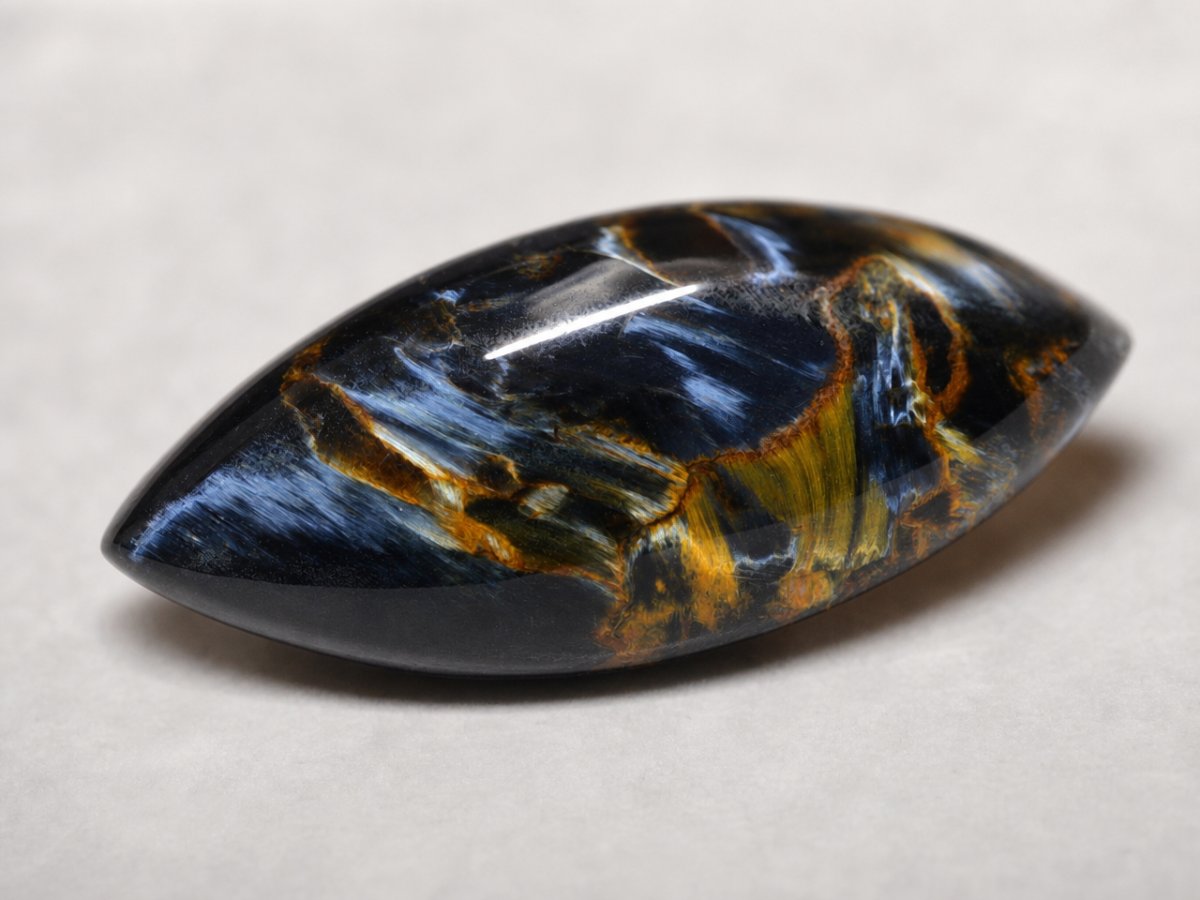


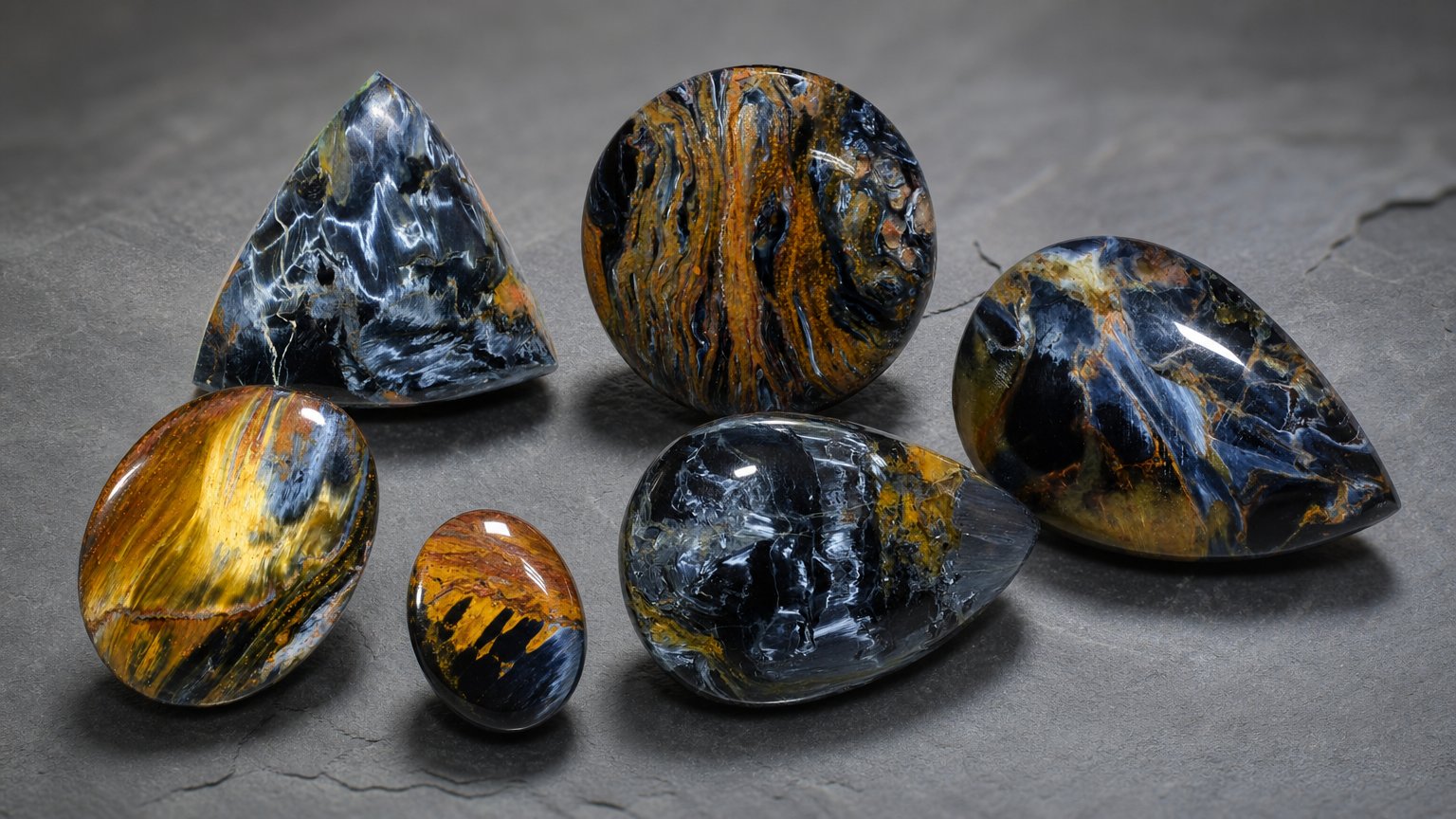
Pietersite is a distinctive multicolor gemstone chosen for bold, individual-looking jewelry. Buyers are usually attracted to its mix of blue, brown, black and blended tones, as well as the way each cut stone can look noticeably different from the next.
This guide focuses on the practical points that matter when selecting pietersite: color appearance, cut quality, size and shape, durability, treatment disclosure, origin and the best jewelry uses.
What Is Pietersite?
Pietersite is a brecciated aggregate quartz with fibrous crocidolite. In simple terms, it is a quartz-based gem material made up of broken or naturally fragmented components that have been cemented together over time. This structure is one reason pietersite is valued for patterned, mixed-color appearances rather than the transparent sparkle associated with faceted gems.
Gemologically, pietersite has a chemical formula of SiO₂, a trigonal crystal system, a refractive index of 1.530-1.540 and a specific gravity of 2.60-2.90. For most buyers, these measurements are mainly useful for identification and for understanding that pietersite is purchased for pattern, polish and overall visual character.
Color and Appearance: The Main Buying Factor
Color is the first thing to evaluate when buying pietersite. The most typical look is multicolor, often combining blue, brown and black areas in one stone. Some stones may appear darker and more dramatic, while others show stronger blue or warmer brown components.
Because pietersite is not usually selected according to a standardized color grade, choose the stone that has the most pleasing balance for your design. For a pendant or necklace centerpiece, a strong multicolor pattern can create immediate visual impact. For earrings or a matched jewelry layout, pay attention to whether the colors and patterns look harmonious from one stone to the next.
When comparing stones, look for an attractive face-up view, pleasing contrast and a clean polish. Avoid choosing only by color name; two pietersite gems described as blue, brown or multicolor can look very different in person or in photos.
Cut and Shape
Pietersite is most commonly cut as a cabochon. A cabochon has a smooth, domed surface rather than facets, making it well suited to gemstones valued for color pattern and surface appearance. A good cabochon should have an even outline, a smooth dome and a polished surface that shows the stone's pattern clearly.
Oval and round shapes are especially common choices because they are easy to set and work well in rings, pendants and necklaces. Cushion, pear and fancy shapes are also useful when a designer wants a more distinctive outline. Square, baguette and trillion shapes may appear as design options, but they are less central than classic ovals and rounds.
Pietersite may also be found as carvings or slices. Carvings suit artisan jewelry and collector pieces, while slices can be useful for creative designs where the natural pattern is the main feature. For most jewelry buyers, however, a well-polished cabochon is the most practical and familiar choice.
Size and Layout Considerations
Pietersite can make a strong impression even in modest sizes because its color pattern is visually active. For pendants and necklaces, larger cabochons give the pattern more room to show. For rings, choose a size that suits the setting and lifestyle of the wearer, since rings are more exposed to knocks than pendants or earrings.
If you are buying multiple stones, do not expect perfect matching unless the parcel has been selected for that purpose. Matching pietersite is more about compatible color mood and pattern scale than identical appearance.
Origins: Namibia and China
Important pietersite origins include Namibia and China. Origin can be of interest to collectors and may help organize a selection, but buyers should still judge individual stones by appearance, cut quality, polish and suitability for the intended jewelry.
If origin is important to you, look for clear product information from the seller. At GemSelect, origin and treatment information is provided where available so buyers can compare stones more confidently.
Treatments and Disclosure
Pietersite is commonly available untreated. This is helpful for buyers who prefer gemstones whose appearance has not been altered by routine enhancement.
Even when a gemstone type is generally untreated, it is still good practice to review the treatment disclosure for the specific stone you are buying. Clear disclosure supports confidence, especially when purchasing online or selecting stones for professional jewelry work.
Durability and Care
Pietersite has a Mohs hardness of 6.5-7. This places it in a practical range for many jewelry styles, but it should still be protected from hard knocks, abrasion and rough wear. Hardness describes scratch resistance, not overall toughness, so setting choice and care remain important.
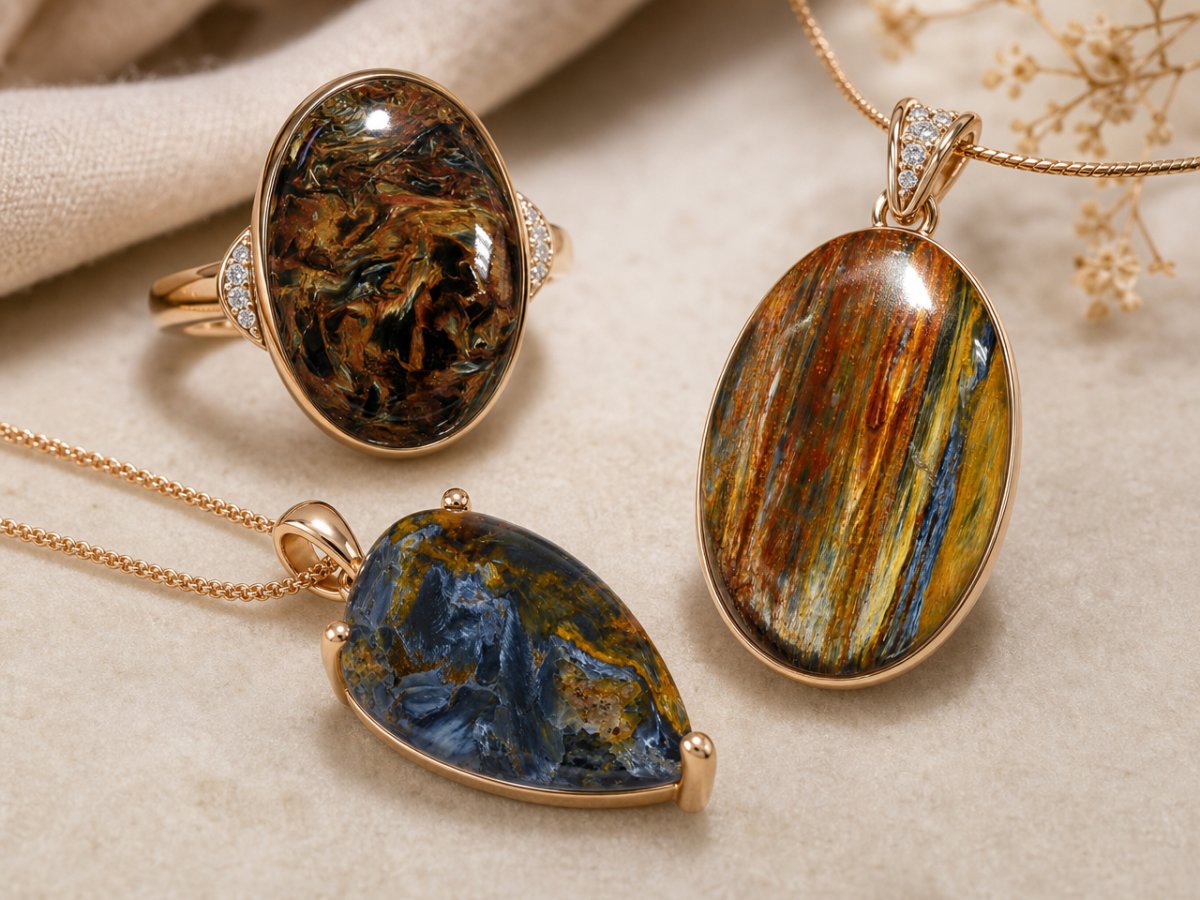
Pendants, necklaces and earrings are excellent uses because they are less exposed to impact. Rings are also possible, especially when the setting protects the stone and the wearer understands that gemstone rings need sensible care. Bracelets should be worn with more caution because they often receive more contact with surfaces.
Clean pietersite with mild soap, lukewarm water and a soft cloth. Avoid harsh chemicals, aggressive scrubbing and situations where the stone may be struck against harder materials. Store pietersite separately from harder gemstones to reduce the chance of scratches.
Best Jewelry Uses
Pietersite is particularly well suited to necklaces and pendants, where a single cabochon can display its color and pattern clearly. It is also a natural fit for artisan jewelry because every stone can contribute a different visual character to the finished piece.
For rings, choose protective settings and consider the wearer's daily habits. For earrings, lighter or smaller cabochons may be more comfortable. For bracelets, settings that shield the stone edges are preferable because bracelets receive more wear than neck jewelry.
Practical Buying Checklist
- Choose the color balance first: decide whether you prefer stronger blue, warmer brown, darker black contrast or an overall multicolor look.
- Inspect the face-up pattern: select a stone with an attractive layout from the front, since this is how it will be seen in jewelry.
- Prioritize cabochon quality: look for a smooth dome, even outline and good polish.
- Match shape to design: ovals and rounds are versatile; pear, cushion and fancy shapes create more individual designs.
- Check treatment information: pietersite is commonly untreated, but the specific listing should still disclose treatment status.
- Consider jewelry placement: pendants and necklaces are safer everyday choices than bracelets; rings need protective settings.
- Review origin if it matters to you: Namibia and China are important sources, but beauty and cut quality should guide the final decision.
Conclusion
The best pietersite is the stone that combines appealing multicolor character, good polish, a well-proportioned cabochon cut and a size suited to your jewelry design. Since pietersite is valued for individuality rather than uniform grading, take time to compare photos, shape, pattern and disclosure details before buying.
For most buyers, a carefully chosen oval or round cabochon for a pendant, necklace or artisan design offers the most reliable way to enjoy pietersite's distinctive appearance.