

Peridot is a green gemstone from the olivine mineral species, appreciated by buyers who want a lively natural green gem with a distinctive identity. It is also the birthstone for August, which makes it a popular choice for personal jewelry, birthday gifts and custom designs. A good peridot purchase is not only about choosing a beautiful color; it is also about understanding clarity, cut, size, durability, treatments and how the gem will be worn.
This buying guide explains the main points to consider before purchasing peridot, whether you are selecting a single loose stone, matching gems for earrings, or choosing a center stone for a ring or pendant. The aim is practical: to help you compare options confidently and choose a peridot that suits your design, budget and wearing expectations.
What Is Peridot?
Peridot is the gem variety associated with the mineral species olivine. Its chemical formula is (Mg,Fe)₂SiO₄, and it crystallizes in the orthorhombic crystal system. For buyers, the most important point is that peridot is recognized for its green color and is commonly sold as a transparent faceted gemstone, although cabochons are also available.
Peridot has a refractive index of 1.654–1.690 and a specific gravity of 3.27–3.37. These are gemological measurements used by professionals to help identify and separate gemstones. A refractive index describes how strongly a gem bends light, while specific gravity is a measure of density. Most buyers do not need to memorize these numbers, but they are useful indicators that peridot has a defined gemological identity and can be tested by trained gemologists.
Peridot Color: What Buyers Should Look For
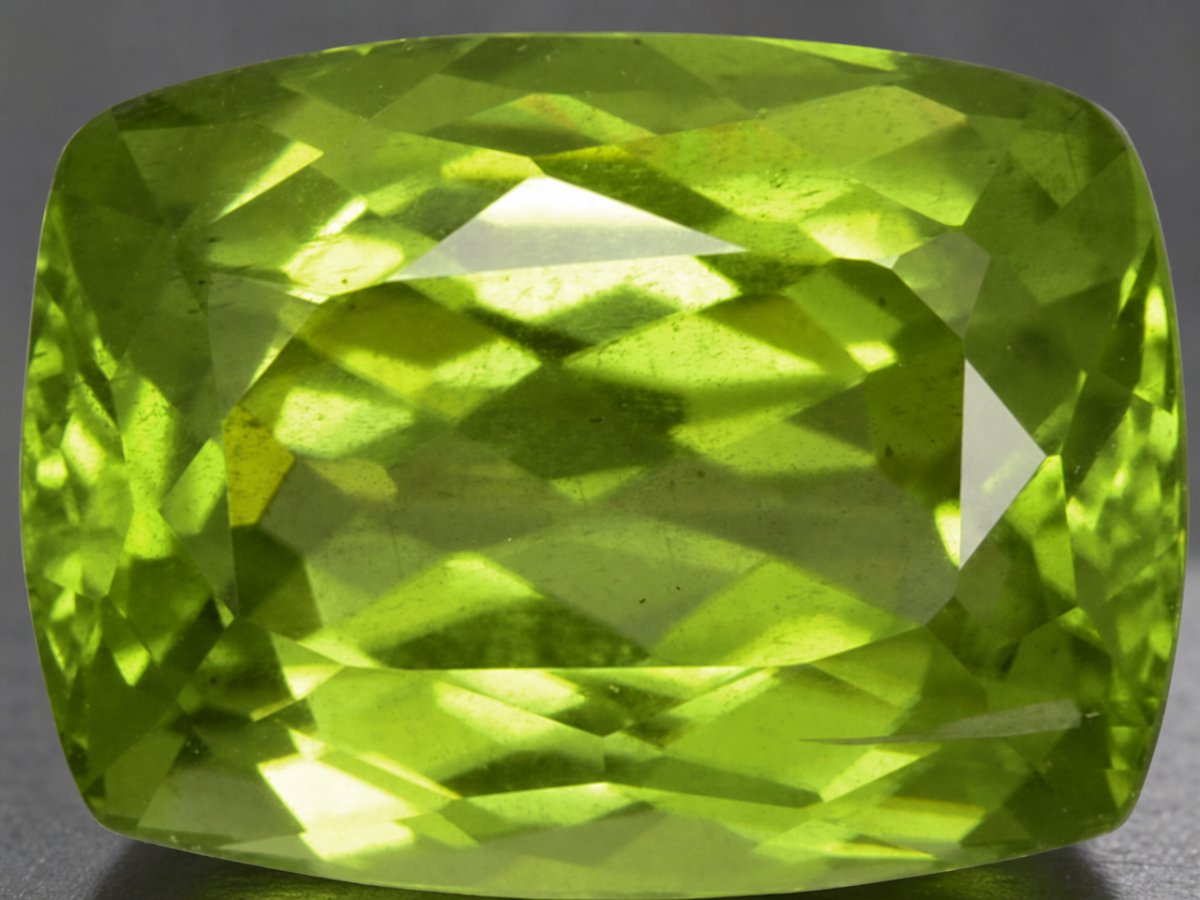
Color is the first feature most buyers notice in peridot. Peridot is a green gemstone, so your buying decision should focus on how attractive, balanced and lively that green appears to your eye. When comparing stones, look at the gem in different lighting conditions if possible. A stone that looks appealing under one light source may appear slightly different in another, so practical viewing is important.
Green Color Quality
Because peridot is known for green, buyers should concentrate on three visual factors: tone, saturation and evenness. Tone refers to how light or dark the stone appears. Saturation describes the strength or intensity of the green. Evenness refers to how consistently the color is distributed across the gem. A well-cut stone should show an attractive face-up appearance without looking dull or patchy.
Personal preference matters. Some buyers prefer a lighter, brighter green appearance, while others want a deeper green look. There is no need to rely on a complicated grading label when buying peridot. Instead, compare actual stones, review accurate photos and choose the gem whose green color best matches your design idea.
Viewing Peridot Before Buying
When buying loose peridot online, clear photos and reliable product details are important. Look for images that show the face-up color and the overall shape of the stone. If you are matching multiple peridots, such as for earrings or side stones, pay attention to color consistency as well as size and shape. GemSelect listings are designed to help buyers compare individual gems by visible appearance and key gem details.
Clarity and Transparency
Clarity describes how free a gemstone is from internal features and surface-reaching marks. In practical buying terms, the most useful question is whether the stone looks clean and attractive to the unaided eye when viewed face-up. For transparent faceted gems such as peridot, many jewelry buyers prefer stones that appear eye-clean, meaning inclusions are not easily visible without magnification.
Clarity should be judged together with size and cut. A small inclusion may be easy to overlook in a lively, well-cut gem, while a noticeable feature in the center of the stone may affect its appearance more strongly. In larger stones, internal features can be easier to see simply because there is more gem material to inspect. When comparing peridot, check whether clarity features distract from the green color and brilliance.
Cabochon peridot is judged differently from faceted peridot. A cabochon has a smooth domed surface rather than flat facets, so buyers usually focus more on color, surface polish, outline and overall visual appeal than on sparkle.
Cut Styles and Shapes
Cut has a major effect on how peridot looks. A good cut helps display the gem’s green color, supports brightness and creates an appealing outline for jewelry. Peridot is commonly faceted, and faceted stones are widely used in rings, pendants, earrings and other designs. Checkerboard cuts are also seen, especially where the designer wants a textured surface effect with many small reflective facets.
Common Peridot Cuts
Faceted peridot is the most common and versatile choice. The flat polished facets reflect light and can make the stone look bright and lively. Checkerboard cuts add a patterned surface, often giving the gem a distinctive contemporary look. Step cuts and princess cuts may also be used, offering cleaner geometric lines. Cabochons are less about sparkle and more about a smooth, rounded appearance.
When judging cut, look for symmetry, polish and balanced proportions. The stone should not appear overly deep or overly shallow when viewed in relation to its face-up size. A well-proportioned peridot will show its green color attractively across the top of the stone.
Popular Shapes
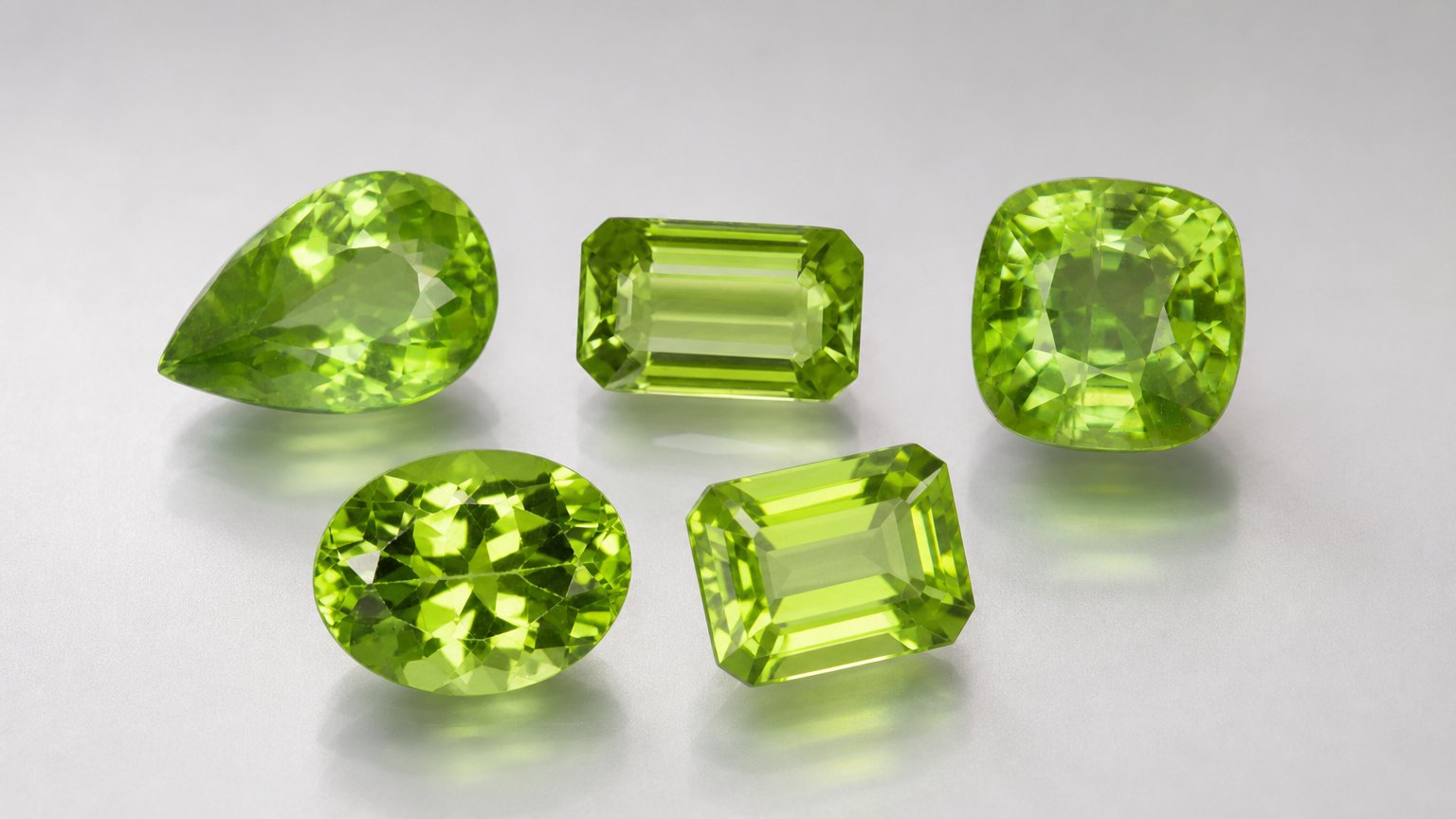
Peridot is available in a range of shapes. Cushion and oval shapes are especially common choices because they work well in many jewelry styles and show the green color attractively. Round and octagon shapes are also popular, particularly for classic or geometric designs. Marquise, pear, square and trillion shapes can be useful for more distinctive custom pieces.
Shape choice should be guided by the jewelry design. Ovals and cushions are flexible for rings and pendants. Octagons and step-cut styles can suit clean, architectural settings. Pears and marquise shapes can add length to pendant and earring designs. For matched pairs, such as earrings or cufflinks, consistency of shape, size and color is especially important.
Size and Carat Weight
Peridot is sold by carat weight, but buyers should also consider millimeter measurements. Carat weight tells you how heavy the gemstone is, while millimeter size tells you how large it will appear in a setting. Two peridots with the same carat weight can face up differently if one is cut deeper than the other.
For rings, the stone must fit the setting securely and suit the wearer’s lifestyle. For pendants and necklaces, buyers may have more flexibility because the gem is not exposed to the same level of impact as a ring stone. For earrings, weight and comfort matter, especially with larger stones. Always compare measurements, not just carat weight, when choosing peridot for a specific jewelry mounting.
Peridot Origins
Peridot is known from several origins, including China, Pakistan, Myanmar, Tanzania, the United States and Vietnam. Origin can be interesting to collectors and buyers who enjoy knowing where their gemstones come from, but it should be considered alongside the visible quality of the individual stone.
For most jewelry purchases, color, clarity, cut, size and overall appeal are more important than origin alone. A peridot should be evaluated as an individual gemstone. If origin information is important to you, review the seller’s product details and any available documentation, but avoid assuming that origin by itself guarantees a particular appearance.
Treatments: Is Peridot Treated?
Peridot is commonly associated with being untreated. This is a useful point for buyers who prefer gems that have not undergone enhancement. When comparing gemstones, treatment status is important because some gem varieties are routinely enhanced, while others are commonly sold without treatment.
As a buyer, you should still check the treatment information provided for the specific stone you are purchasing. Reliable sellers should disclose known treatments clearly. If you are buying peridot for a fine jewelry project, a collector’s piece, or a meaningful August birthstone gift, treatment disclosure helps you make a confident and transparent purchase.
Durability and Everyday Wear
Peridot has a Mohs hardness of 6.5–7. The Mohs scale measures resistance to scratching, not resistance to breaking. This means peridot is suitable for many types of jewelry, but it should be worn with reasonable care, especially in rings and bracelets where impact and abrasion are more likely.
Peridot in Rings
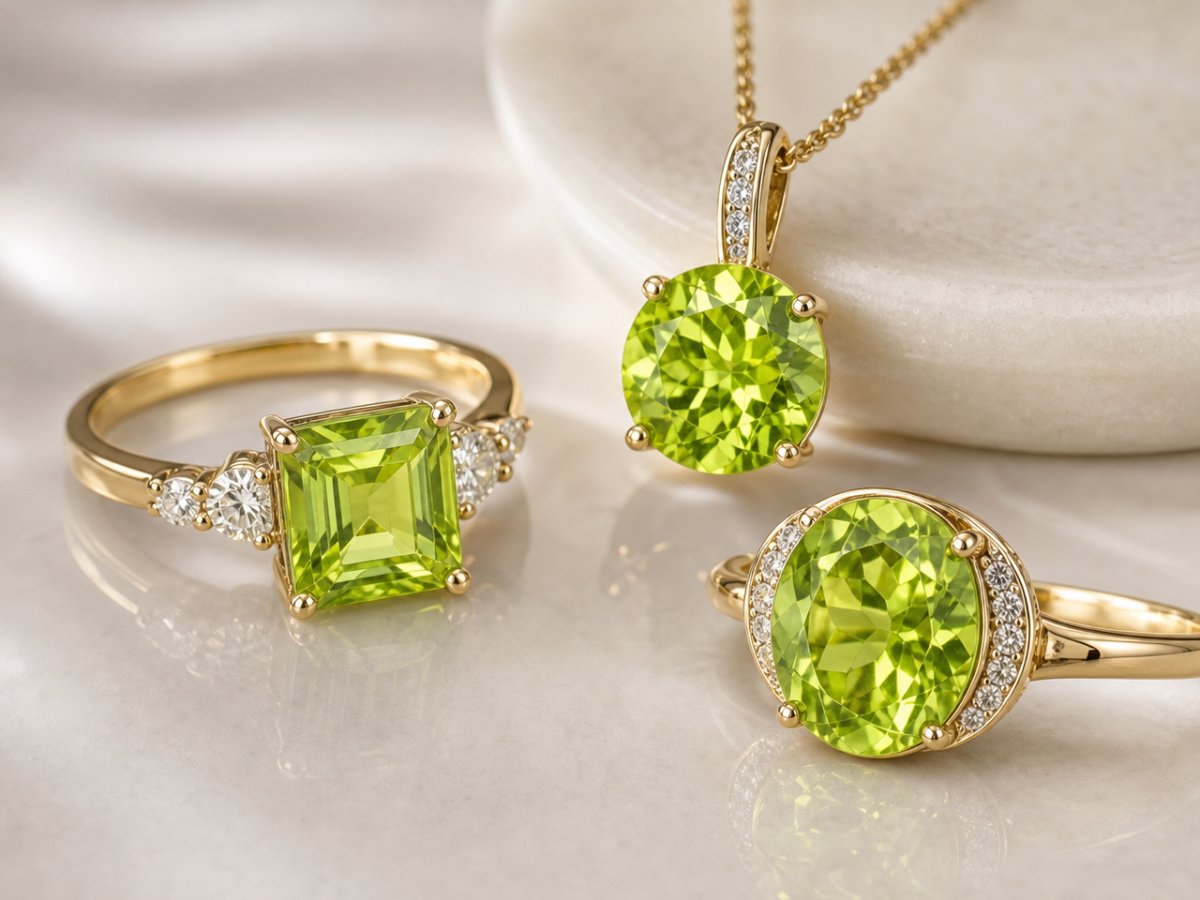
Peridot can be used in rings, including birthstone rings and custom designs, but the setting style matters. A protective setting can help reduce exposure to knocks. If the ring will be worn every day, choose a design that protects the gem’s edges and avoid wearing it during activities that may scratch or strike the stone.
Peridot in Pendants, Necklaces and Earrings
Pendants and necklaces are excellent uses for peridot because they usually experience less direct impact than rings. Earrings are also a practical option, particularly when matching pairs are selected for color and size. These jewelry types allow peridot’s green color to be displayed prominently while reducing wear compared with more exposed jewelry.
Peridot in Bracelets and Cufflinks
Peridot can also be used in bracelets and cufflinks, but buyers should consider the higher chance of contact with hard surfaces. Bracelets are especially exposed to knocks during daily movement. If choosing peridot for these designs, consider secure settings and mindful wear.
How to Choose Peridot for Jewelry
The best peridot for you depends on the jewelry piece, the setting and how often it will be worn. For a pendant, you may prioritize a larger face-up size and a vivid green appearance. For a ring, you may focus on cut, durability-conscious setting design and a size that fits comfortably. For earrings, matched color and dimensions are often more important than choosing the largest possible stones.
For Pendants and Necklaces
Choose a stone with attractive face-up color and a shape that suits the design. Oval, cushion and pear shapes can work especially well for pendant layouts, while octagon or square shapes can create a more geometric look. Since pendants are less exposed to impact, buyers often have flexibility in size and cut style.
For Rings
Look for a well-cut stone with good polish and an eye-clean appearance. Consider a setting that protects the gem, particularly if the ring will be worn often. Faceted oval and cushion shapes are versatile, while round, octagon, princess and step-cut stones can support more structured designs.
For Earrings
Matching is the key. Select stones with similar green color, size, shape and cutting style. Even small differences can be noticeable when gems are worn side by side. Round, oval and cushion peridots are practical choices, but many shapes can work if the pair is well matched.
Practical Peridot Buying Checklist
Before purchasing peridot, use a simple checklist to compare your options:
- Color: Is the green attractive, lively and evenly distributed?
- Clarity: Does the stone look clean and appealing to the unaided eye?
- Cut: Are the proportions, symmetry and polish pleasing?
- Shape: Does the outline suit your jewelry design?
- Size: Do the millimeter measurements fit the intended setting?
- Treatment: Is the stone disclosed as untreated or clearly described?
- Durability: Is the jewelry style appropriate for a gem with Mohs hardness 6.5–7?
- Origin: If origin matters to you, is the information provided clearly?
This checklist is especially helpful when comparing several loose peridots. The best choice is not always the largest stone; it is the one that offers the best balance of appearance, cut, size and suitability for your intended use.
Care Tips for Peridot Jewelry
Because peridot has a hardness of 6.5–7, it should be stored and worn with care. Keep peridot jewelry separate from harder gemstones that may scratch it. Remove peridot rings or bracelets before activities that involve impact, pressure or abrasive materials. For routine cleaning, use gentle methods appropriate for gemstone jewelry and avoid harsh handling.
Care is not complicated, but it should be consistent. A well-chosen peridot set in suitable jewelry can remain attractive with mindful wear, proper storage and occasional inspection of the setting.
Conclusion: Buying Peridot with Confidence
Peridot is a distinctive green gemstone and the birthstone for August. Buyers should focus first on the beauty of the individual gem: its green color, clarity, cut and shape. Faceted peridot is the most common choice, with cushion and oval shapes especially versatile, while checkerboard, step, princess and cabochon styles offer additional design options.
Peridot is commonly untreated and has a Mohs hardness of 6.5–7, making it suitable for many jewelry uses when chosen and worn thoughtfully. Pendants, rings, necklaces, earrings, bracelets and cufflinks are all possible applications, but the level of protection and expected wear should guide your decision. By comparing color, clarity, cut, size, treatment disclosure and setting suitability, you can select a peridot that is both beautiful and practical for your needs.