

Mother of Pearl is chosen for elegant, decorative jewelry rather than for sparkle or transparency. Buyers are usually looking for attractive color, a smooth surface, pleasing patterning and a shape that suits the design. This guide explains the practical details that matter when selecting Mother of Pearl for jewelry, collecting or custom design work.
What Is Mother of Pearl?
Mother of Pearl is a calcium carbonate gem material with the chemical formula CaCO₃. In gemological terms, it is associated with calcium carbonate and has an orthorhombic crystal system. It is appreciated for its soft visual character and its suitability for carved and polished pieces.
Unlike many transparent gemstones, Mother of Pearl is not typically bought for brilliance, fire or faceted cutting. Its appeal comes from surface beauty, color, carving and the way it works in jewelry such as pendants, brooches, earrings and necklaces.
Color and Appearance: What to Look For
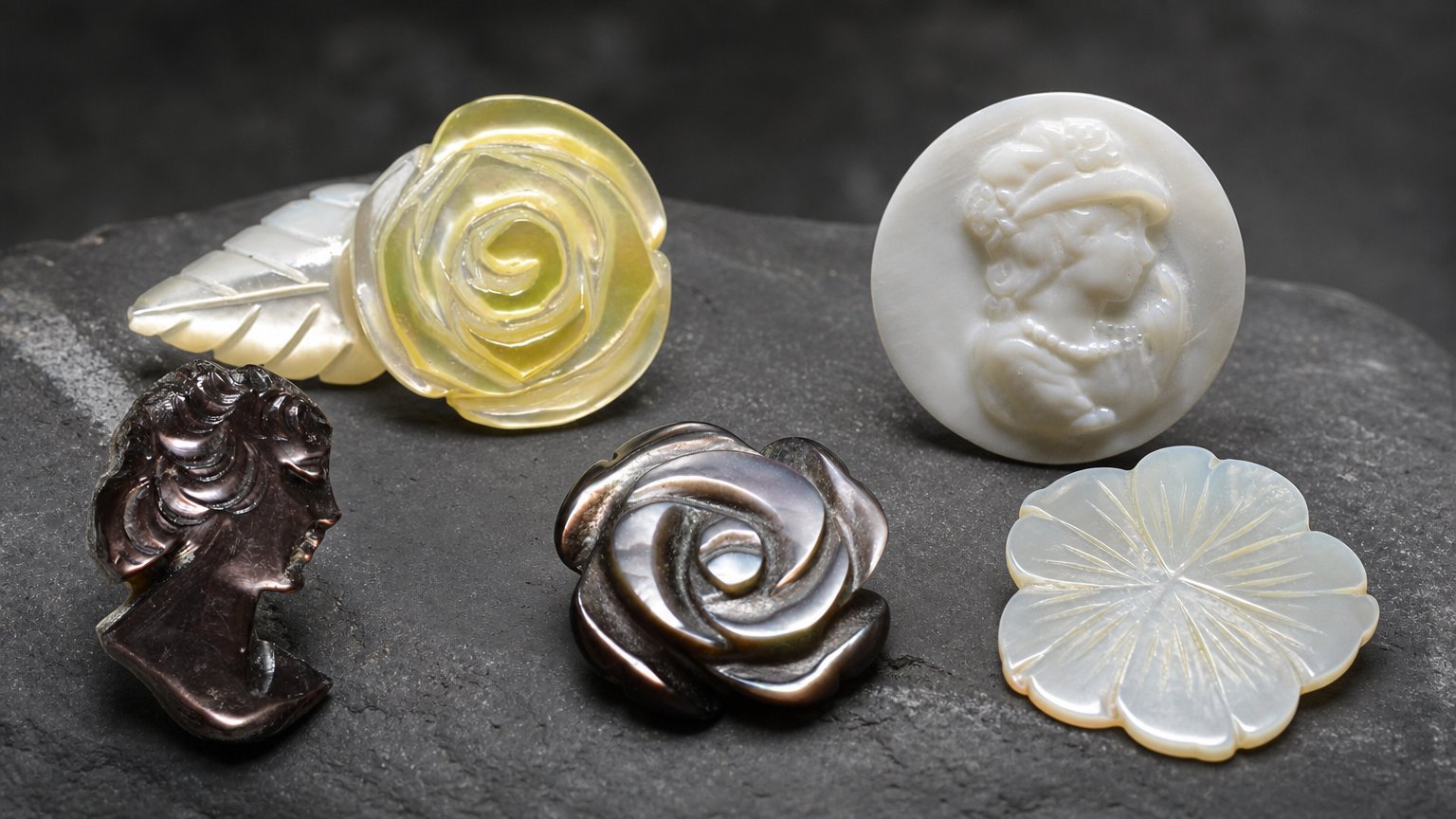
The most common and important colors for Mother of Pearl are white and yellow. These shades are versatile and work well in classic jewelry designs. Brown, pink and silver tones are also seen and can give pieces a warmer, softer or more contemporary appearance.
Gold, blue and green may also occur, though they are less central buying colors. When comparing pieces, focus on the overall attractiveness of the color rather than expecting a rigid grading scale. A good purchase should have a color that suits the intended jewelry style and looks balanced across the visible surface.
Practical color buying tips
- Choose white or silver tones for clean, classic designs and easy matching with many metals.
- Choose yellow, gold or brown tones for warmer jewelry styles.
- Choose pink tones for softer, more decorative pieces.
- Inspect the surface for visual harmony, especially in larger pendants, brooches or cameos.
Cut, Shape and Carving
Mother of Pearl is commonly fashioned as a cabochon, a smooth polished cut without facets. Cabochons are practical because they display the surface rather than relying on transparency or internal sparkle.
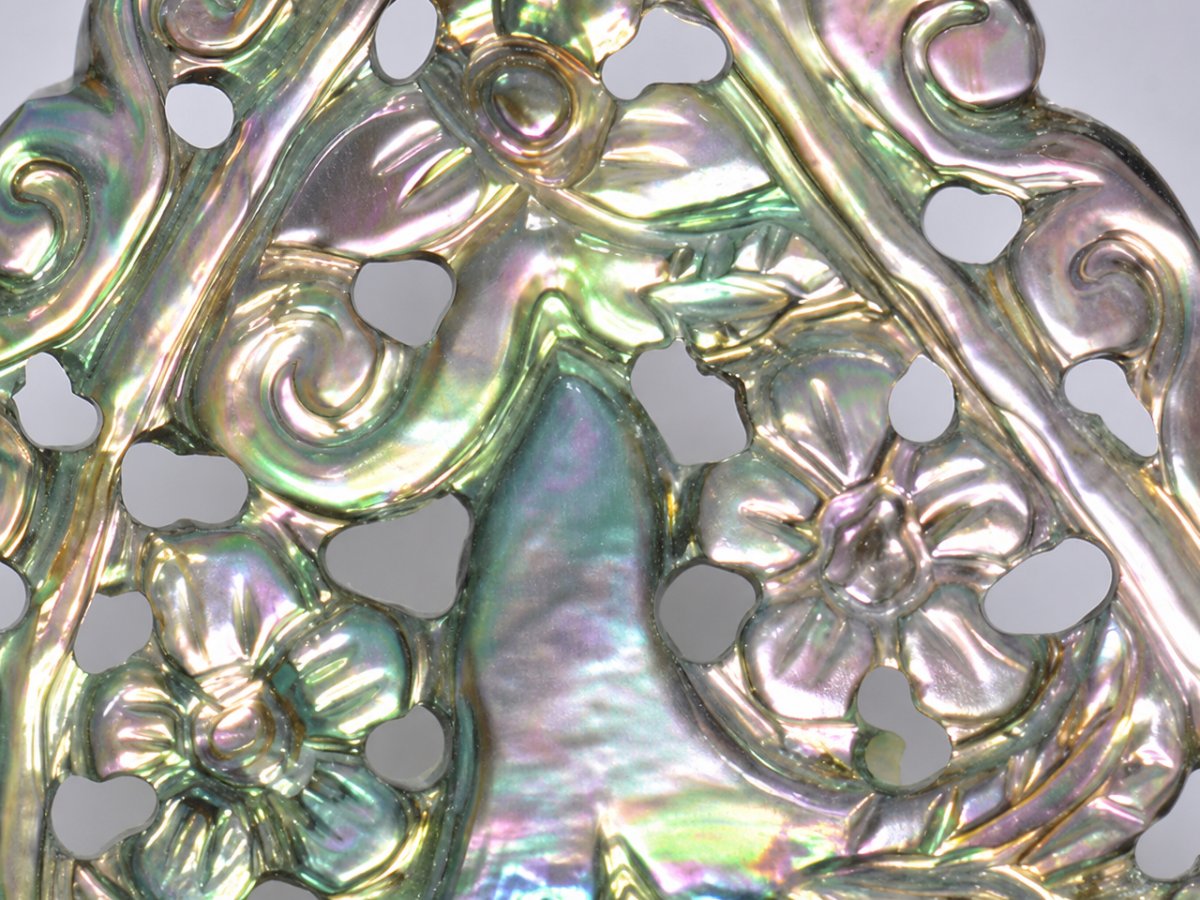
Carved forms are especially important for Mother of Pearl. Carved cameos and carved flowers are among the most characteristic shapes, while carved animals are also popular for decorative jewelry and collectible pieces. Oval and round shapes are useful for more traditional jewelry layouts, especially earrings, pendants and necklaces.
When buying carved Mother of Pearl, examine the detail and finish. The carving should look clean, intentional and well-polished, with no distracting rough areas on the visible surface. For matching pieces, such as earrings, compare color and shape side by side.
Durability and Everyday Wear
Mother of Pearl has a Mohs hardness of 2.5 to 4.5. This means it is considerably softer than many common jewelry gemstones and should be treated with care. It can be a beautiful jewelry material, but it is best suited to designs that avoid heavy knocks, abrasion and constant contact with hard surfaces.
Pendants, brooches, earrings and necklaces are especially suitable because they are less exposed to impact than rings. Mother of Pearl can be used in rings, but ring buyers should choose protective settings and wear them with more care than harder gemstone rings.
Care guidance for buyers
- Store Mother of Pearl separately from harder gemstones to reduce scratching.
- Avoid rough handling, sharp blows and abrasive cleaning methods.
- Remove Mother of Pearl rings before activities that may expose the stone to impact or scraping.
- Use gentle cleaning habits and a soft cloth for routine care.
Treatments and Authenticity
The treatment information for Mother of Pearl is straightforward: it is commonly offered untreated. For buyers, this makes the purchase decision easier, but it is still wise to review the product details before buying, especially when color or surface appearance is an important part of the design.
When shopping with GemSelect or another reputable seller, check whether the listing identifies the material clearly and provides relevant details such as size, shape, color and treatment status. Clear disclosure supports a more confident purchase.
Origins
Important origins for Mother of Pearl include Australia, with Indonesia also notable. China, Japan and Myanmar are also associated with Mother of Pearl. Origin can be interesting for collectors and designers, but buyers should avoid judging a piece by origin alone.
For most jewelry purchases, appearance, workmanship, size, shape and suitability for the intended setting are more useful than origin. A well-cut or well-carved piece with attractive color will usually be the better choice than a piece selected only because of where it is from.
Gemological Properties
Mother of Pearl has a refractive index of 1.52 to 1.69 and a specific gravity of 2.60 to 2.85. These gemological properties are mainly useful for identification and comparison rather than everyday buying decisions.
The most important property for jewelry buyers is hardness. With a Mohs hardness range of 2.5 to 4.5, Mother of Pearl requires thoughtful design and care. This does not make it unsuitable for jewelry; it simply means it is best used where its surface is protected from unnecessary wear.
Best Jewelry Uses
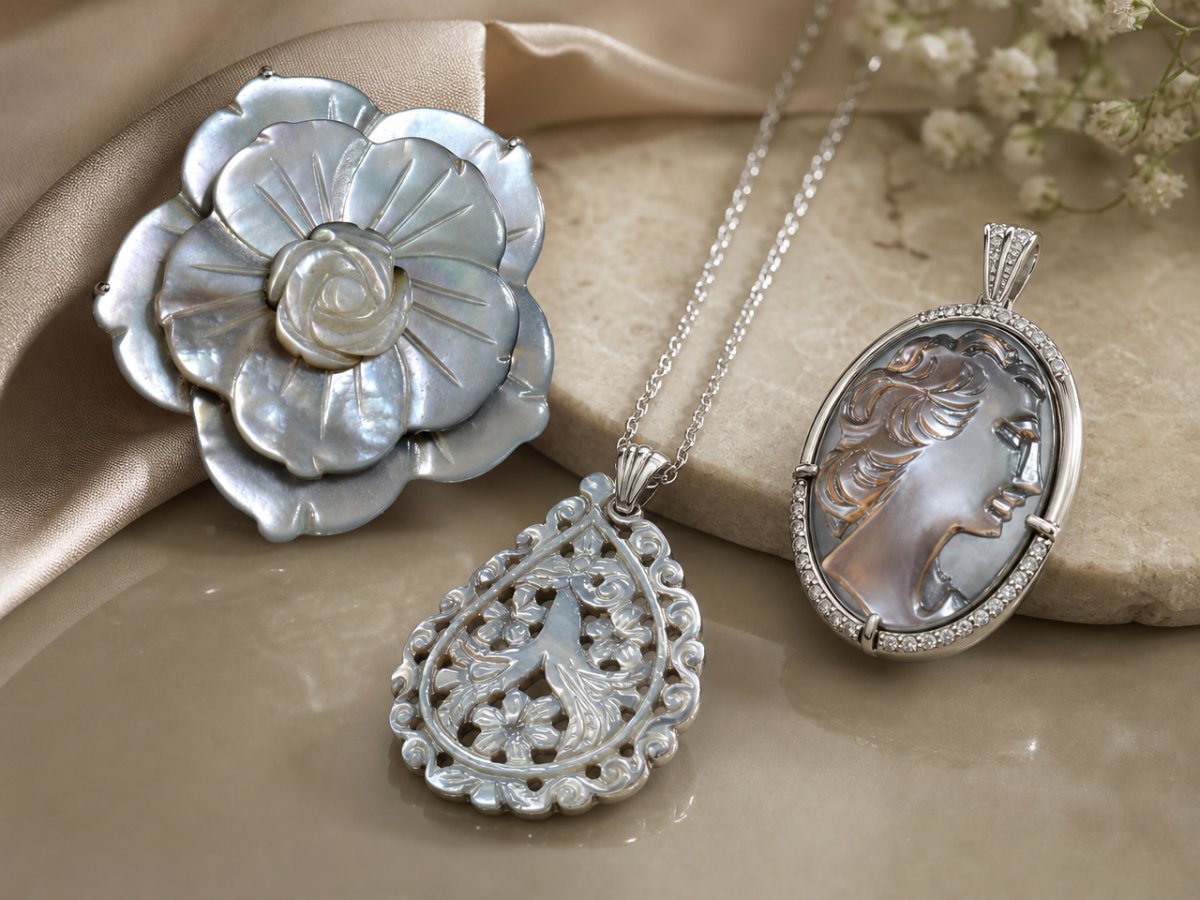
Mother of Pearl is especially well suited to brooches and pendants. These designs allow the material to be displayed prominently while reducing exposure to the abrasion that can occur in rings and bracelets. Carved cameos, flowers and decorative motifs are particularly effective in these jewelry types.
Earrings and necklaces are also strong choices. They allow color and carving to be enjoyed without the same level of wear that a ring may experience. Rings can be attractive, but they are best for occasional or careful wear rather than heavy daily use.
How to Choose Mother of Pearl: Buyer Checklist
- Start with jewelry type: pendants, brooches, earrings and necklaces are the safest choices for durability.
- Choose the color intentionally: white and yellow are classic; brown, pink and silver add different design moods.
- Inspect carving quality: carved cameos, flowers and animals should have clean detail and a pleasing finish.
- Check the surface: look for an attractive, even appearance without distracting visible flaws.
- Consider matching: for pairs or suites, compare color, size and shape carefully.
- Confirm treatment information: Mother of Pearl is commonly untreated, but disclosure is still important.
- Plan for care: because it is relatively soft, choose settings and wearing habits that protect the surface.
Conclusion
Mother of Pearl is a distinctive choice for buyers who value smooth surface beauty, subtle color and decorative carving. The best pieces are selected by balancing color, shape, finish, size and intended jewelry use. For most buyers, pendants, brooches, earrings and necklaces are the most practical choices, while rings require extra care.
If you focus on attractive appearance, clear treatment disclosure and a design that protects the material, Mother of Pearl can be a confident and rewarding purchase.