


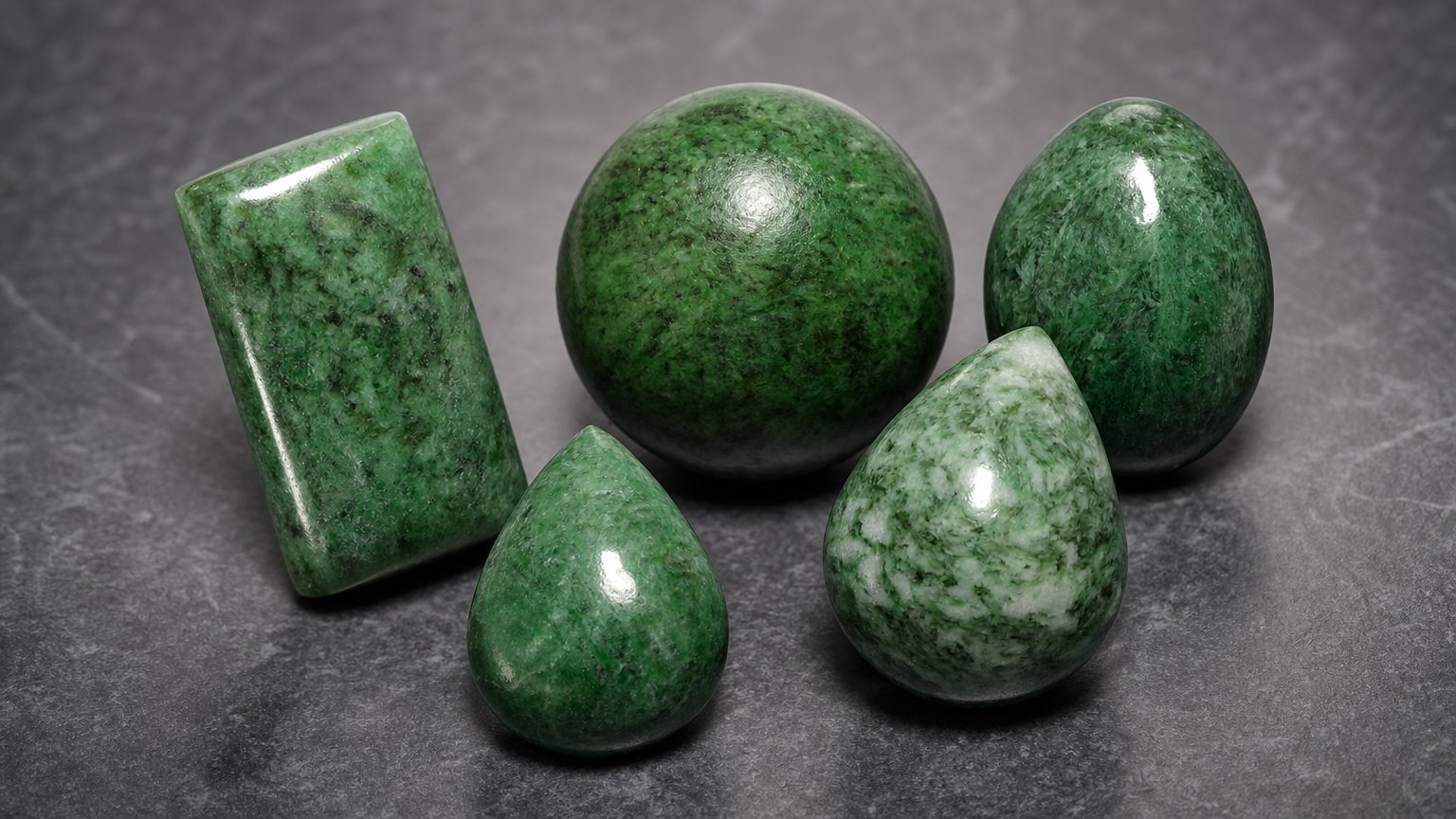
Maw-sit-sit is a distinctive green gemstone material chosen by buyers who want a bold, natural-looking gem rather than a conventional transparent faceted stone. It is most often bought for cabochons, pendants, necklaces and artisan jewelry where color, polish and shape matter more than brilliance.
This buying guide explains the main points to consider before choosing maw-sit-sit: what it is, how to judge appearance, which cuts and shapes are common, how durable it is for jewelry, and what to ask about treatments.
What Is Maw-Sit-Sit?
Maw-sit-sit is a metamorphic rock, not a single mineral species. This is important for buyers because its gemological properties can vary more than those of a single-mineral gemstone. Rather than judging it like a transparent faceted gem, it is better evaluated as an ornamental gemstone material where color, surface quality, shape and cutting style define the finished look.
Gemological data associated with maw-sit-sit includes a Mohs hardness of 6-7, refractive index of 1.52-1.74 and specific gravity of 2.50-3.40. Its listed chemical formula is NaCr(Si2O6)+Fe,Mg, and the crystal system is monoclinic. For buyers, the most practical takeaway is that maw-sit-sit is a green gem material with variable properties and a durable enough range for many jewelry designs when used thoughtfully.
Color and Appearance: What to Look For
Green is the defining color of maw-sit-sit. When comparing stones, focus on the overall impression of the green color: whether it suits your design, whether the tone is attractive to you, and whether the polish brings out the surface well.
Because maw-sit-sit is usually cut as a cabochon or decorative form, it is not evaluated for sparkle in the same way as faceted gems. A good-looking piece should have an appealing face-up color, a smooth polish and a shape that works with the intended jewelry setting.
Common Cuts and Shapes
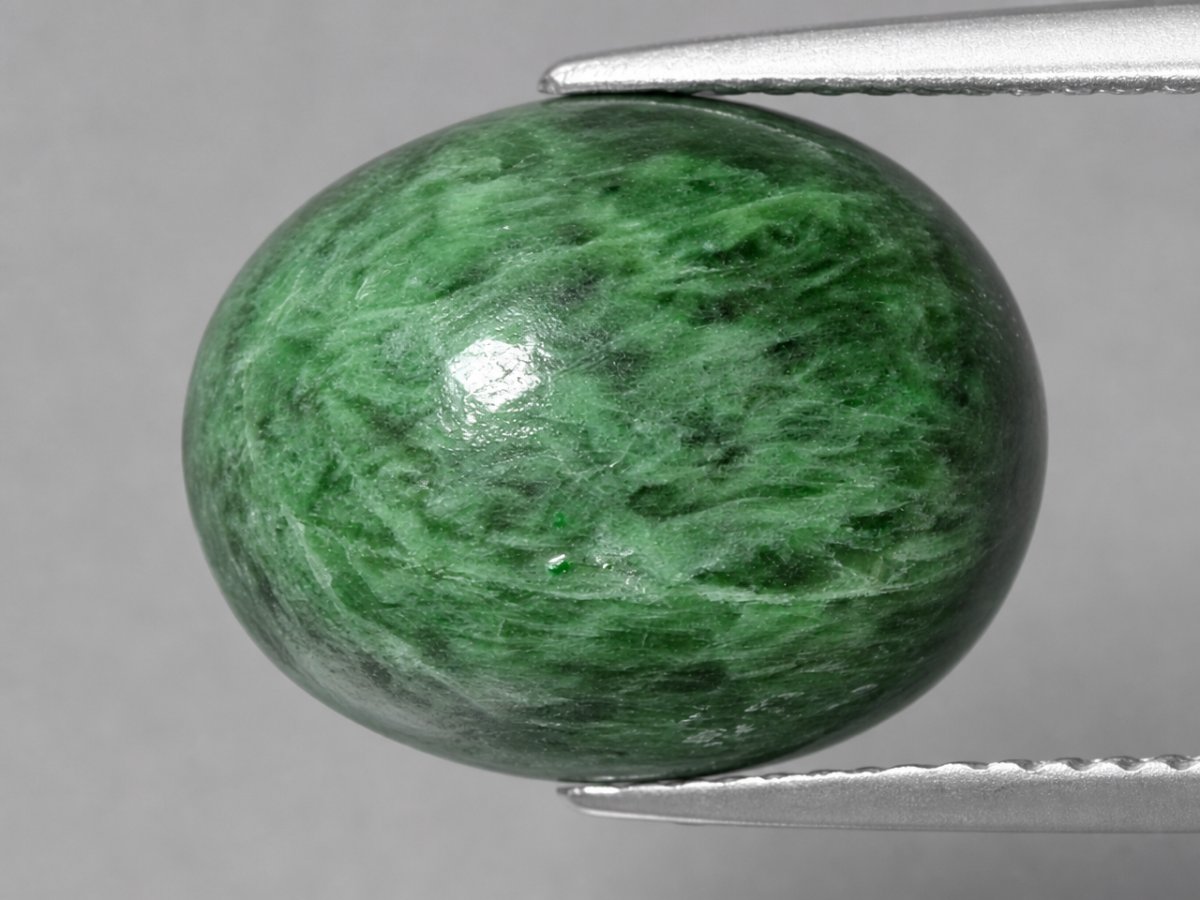
Cabochons are the most common and practical cutting style for maw-sit-sit. A cabochon has a smooth domed top and a flat or slightly curved base, which suits opaque to translucent gemstone materials and emphasizes surface color rather than internal brilliance.
Sugarloaf cabochons are also seen and can give maw-sit-sit a higher, more architectural profile. Carvings and slice cuts may appeal to collectors, designers and buyers looking for a more individual or artisan-style piece.
Oval and round shapes are especially useful because they are easy to set and visually balanced. Cushion, pear and freeform shapes can be excellent for pendants or custom jewelry, while square or ball forms may suit specific design ideas.
Durability and Everyday Wear
With a Mohs hardness of 6-7, maw-sit-sit has moderate to good resistance to scratching, but it should still be treated with care. It is suitable for many jewelry types, especially pieces that are less exposed to knocks and abrasion.
Pendants, necklaces and earrings are strong choices because they usually receive less impact than rings. Maw-sit-sit can be used in rings, but buyers should consider protective settings and avoid wearing it during activities where the stone may be struck, scraped or exposed to rough contact.
For care, clean maw-sit-sit gently with mild soap, lukewarm water and a soft cloth. Store it separately from harder gemstones to reduce the risk of surface scratches.
Treatments and Disclosure
Maw-sit-sit is commonly associated with untreated material. For a confident purchase, buyers should still check the treatment information supplied with the stone. Clear disclosure is especially important for any gemstone purchase because treatments can affect expectations, care and long-term satisfaction.
When shopping on GemSelect or from any reputable seller, review the product details carefully and ask for clarification if treatment status is not clear.
Best Jewelry Uses for Maw-Sit-Sit
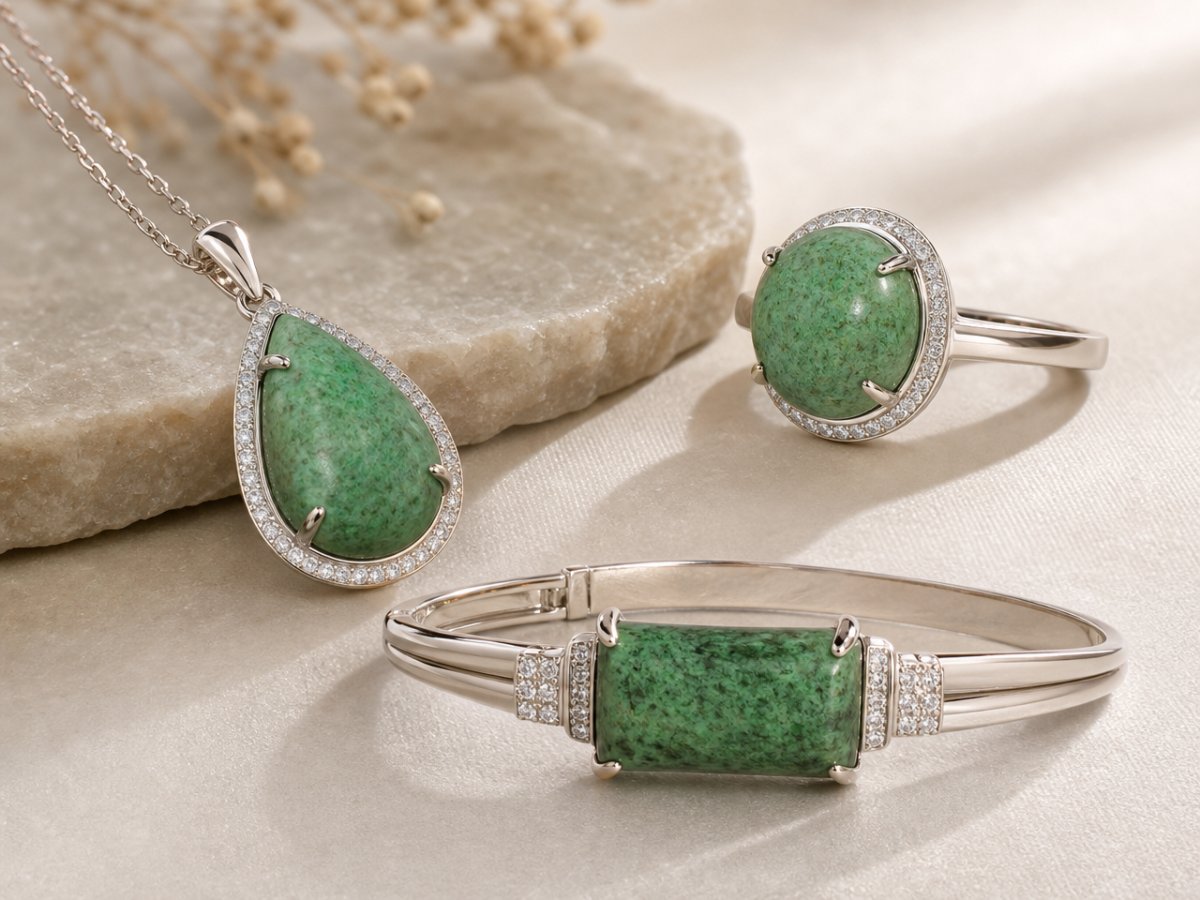
Maw-sit-sit is especially well suited to necklaces and pendants, where its green color and cabochon surface can be displayed prominently. Earrings are also a practical option, particularly when matched stones are available in compatible sizes and shapes.
For rings, choose the design carefully. A bezel or other protective setting can help guard the stone edge, especially for cabochons. Maw-sit-sit also works well in brooches and artisan jewelry, where freeform cuts, carvings or unusual shapes can become part of the design rather than a limitation.
How to Choose Maw-Sit-Sit: Practical Buying Checklist
1. Choose the Green You Like Best
Start with color. Since green is the key appeal of maw-sit-sit, compare stones by their face-up appearance rather than by technical grades. Select the tone and intensity that best fits your jewelry style.
2. Inspect the Cut and Polish
For cabochons, look for a smooth dome, good symmetry if the shape is meant to be regular, and an even polish. Freeform or carved pieces do not need perfect symmetry, but they should still look intentional and well finished.
3. Match the Shape to the Jewelry Design
Oval and round cabochons are versatile and easy to set. Pear, cushion and freeform shapes can add character to pendants and custom pieces. If you are buying for a ring, make sure the dimensions and profile are suitable for a secure setting.
4. Consider Size and Wearability
Larger cabochons can make dramatic pendants or statement jewelry, while smaller stones may be better for earrings or rings. Consider the height of the cabochon as well as its face-up dimensions, especially for rings and close-fitting designs.
5. Confirm Treatment Information
Because maw-sit-sit is commonly untreated, many buyers prefer clear untreated disclosure. Always review the seller's treatment information so you know exactly what you are buying.
6. Buy with Proper Gemstone Details
Since maw-sit-sit is a rock rather than a single mineral, ranges in properties such as refractive index and specific gravity are normal. Product photos, dimensions, weight, treatment status and accurate naming are more useful to most buyers than trying to apply a standard faceted gemstone grading approach.
Summary
Maw-sit-sit is best chosen for its green color, cabochon-friendly appearance and suitability for distinctive jewelry. Buyers should focus on color appeal, surface polish, cut quality, shape, treatment disclosure and the intended jewelry use. Pendants, necklaces and earrings are especially practical, while rings can work well with thoughtful protective settings and sensible care.
