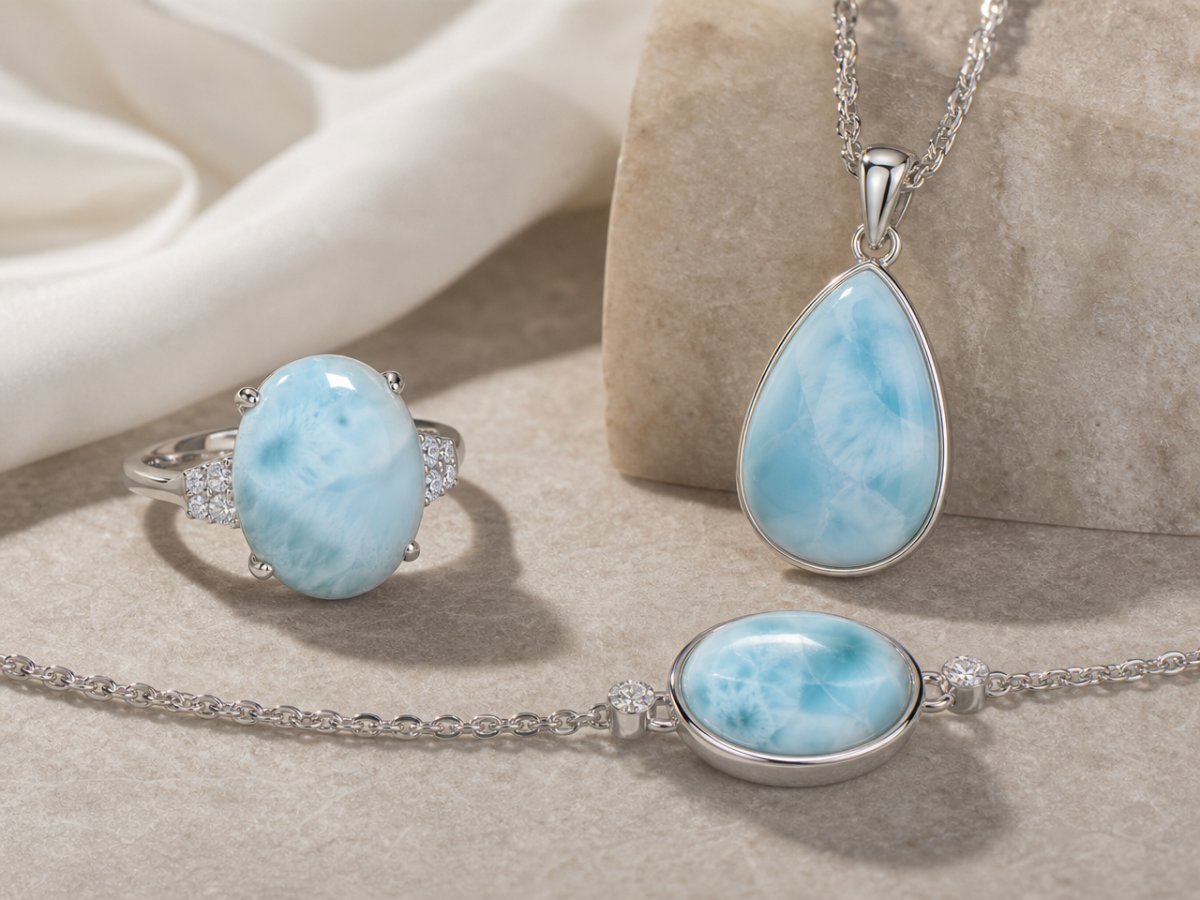


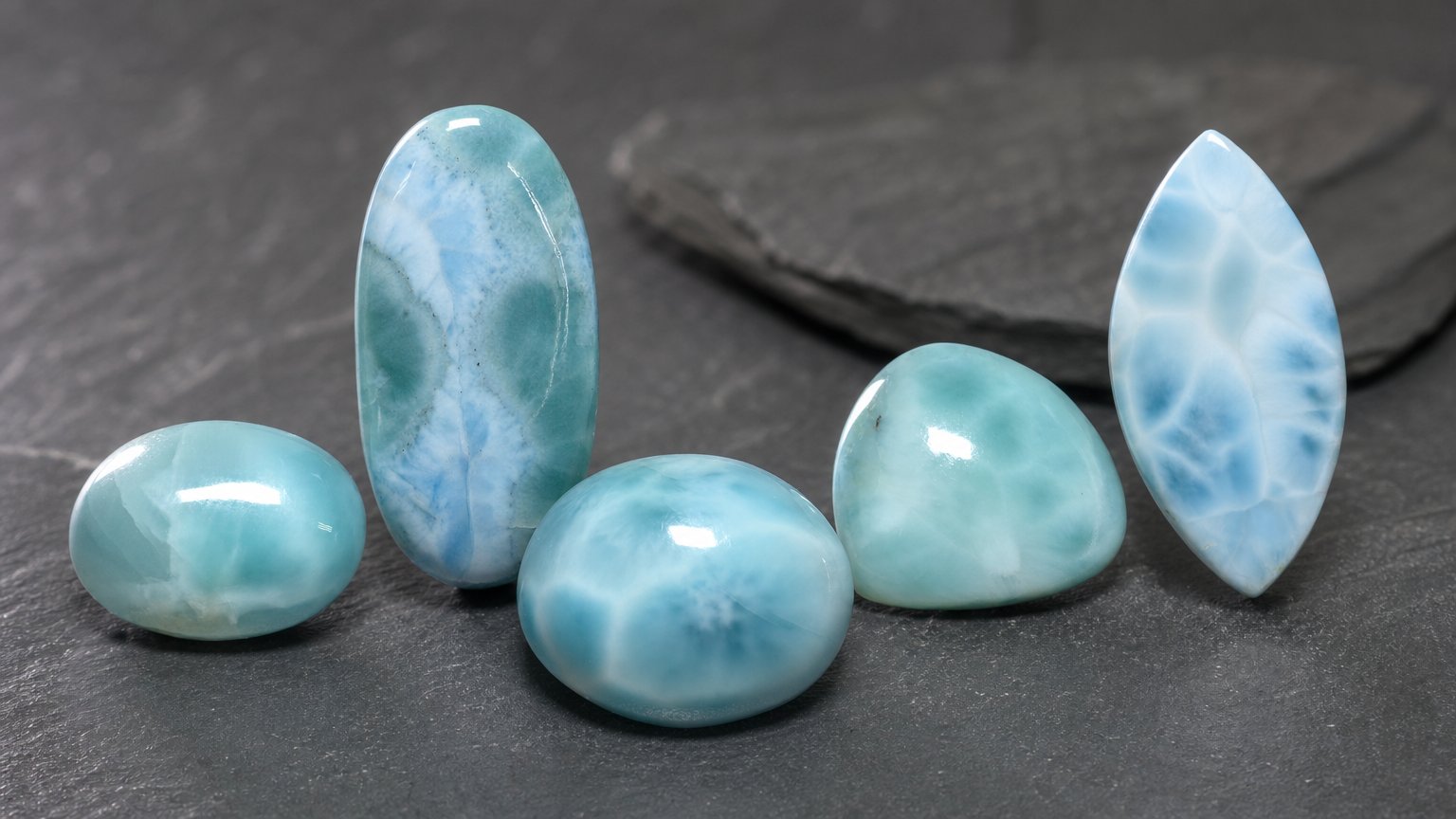
Larimar is a distinctive blue to teal gemstone variety associated with the mineral species pectolite. For buyers, its appeal is usually visual and immediate: a pleasing color, a smooth cabochon polish, and an attractive shape that works well in pendants, necklaces, earrings and other jewelry. Because larimar is not a very hard gemstone, an informed purchase should also consider durability, setting style and intended wear.
This buying guide explains the practical points to review before choosing larimar, including color, cut, shape, origin, treatment status, gemological properties and jewelry use. Whether you are selecting a single loose stone for a custom pendant or comparing calibrated-looking cabochons for a jewelry project, the goal is to help you buy with confidence and realistic expectations.
What Is Larimar?
Larimar is a gemstone associated with pectolite, a mineral with the chemical formula NaCa₂Si₃O₈(OH). Its crystal system is triclinic. In gem buying, those scientific details are useful mainly because they help identify larimar as a specific mineral material rather than just a trade name for any blue stone.
Gem-quality larimar is best known for blue coloration, with teal and green also represented in the color range. The most important origin associated with larimar is the Dominican Republic. When shopping, origin information should be considered alongside the stone itself: color, cutting, surface condition and suitability for the intended jewelry design remain essential.
Larimar Color: What Buyers Should Look For
Color is one of the first qualities most buyers notice in larimar. Blue is the most strongly associated color, while teal is also seen and green may occur. Since larimar is commonly cut as cabochons rather than faceted gems, color is usually judged by looking directly at the face of the stone under good lighting.
Blue Larimar
Blue larimar is the classic choice for many buyers. When comparing stones, look for a color that appeals to you in the actual size and cut you intend to use. A larger cabochon can show color differently from a smaller stone, and a pendant-sized stone may have a different visual effect than a pair of small earring stones.
Teal and Green Larimar
Teal larimar can be an attractive option for buyers who prefer a blue-green appearance. Green larimar is also part of the known color range, though it is a less central buying consideration than blue. The right choice depends on the jewelry design, metal color, and personal preference. For example, a teal cabochon may suit a contemporary design, while a softer blue stone may be preferred for a pendant or necklace with a calm, understated look.
Color Consistency and Face-Up Appearance
When buying any cabochon gemstone, inspect the face-up appearance carefully. The face-up view is how the gem looks from above when set in jewelry. Check whether the color is pleasing across the visible surface, whether any variations enhance the look, and whether the stone matches the design purpose. If purchasing online from GemSelect or another supplier, review the photos, dimensions and description rather than relying on color name alone.
Cut and Shape: Why Cabochons Matter
Larimar is most commonly cut as a cabochon. A cabochon has a smooth, polished, domed top rather than the flat facets seen on many transparent gemstones. This style suits gemstones chosen for body color and surface appearance. For larimar, cabochon cutting allows the blue, teal or green color to be appreciated in a clean and direct way.
Carving is also used for larimar, though it is less central than cabochon cutting. Carved pieces can be attractive for artistic jewelry or collectible objects, but buyers should inspect the workmanship carefully because carving quality affects the final appearance and how the piece can be set or worn.
Common Larimar Shapes
Freeform and oval shapes are especially common choices for larimar. Freeform shapes can make excellent design stones because they allow the lapidary to work with the natural gem material and create a unique outline. Ovals are practical, elegant and easy to use in pendants, rings and earrings.
Cushion, pear and round shapes are also found. Cushion shapes can offer a soft rectangular or square appearance with rounded corners, pears can create a graceful drop effect, and rounds are useful when symmetry is important. Before buying, consider whether the shape fits a ready-made setting or whether it will require custom jewelry work.
Assessing Cabochon Quality
For a cabochon, the cut should be balanced and attractive. Look for a smooth polish, a pleasing dome, and an outline that appears intentional rather than awkward. The base should be suitable for setting, and the stone should not look overly thin for its intended use. If buying for jewelry production, check dimensions carefully, since millimeter size can be more important than carat weight when fitting a mounting.
Clarity and Surface Condition
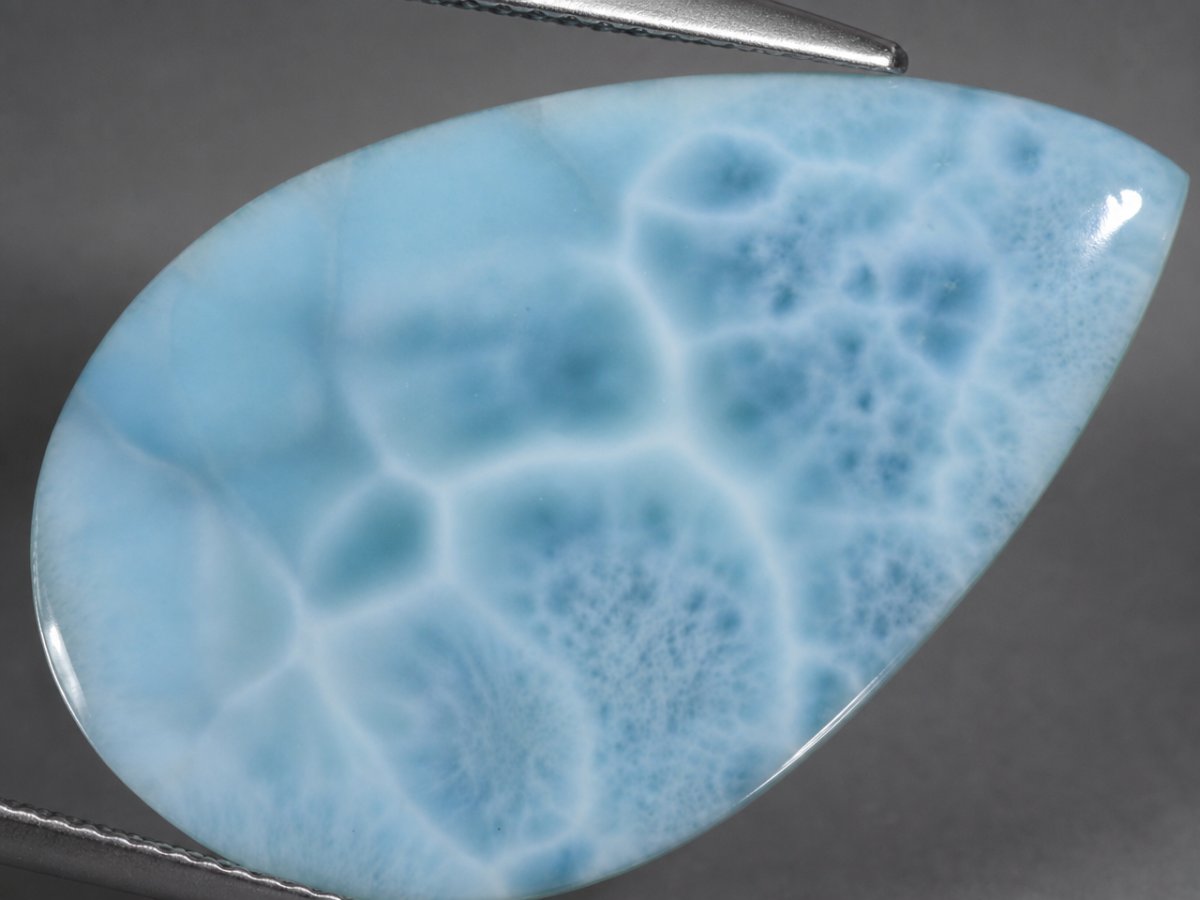
Larimar buying is usually more about color, cutting and surface appearance than about the clarity grading used for many transparent faceted stones. Since larimar is commonly sold as cabochons and carvings, buyers should focus on what is visible and practical: the quality of the polish, the overall surface, and whether any natural features affect beauty or durability.
Inspect close-up photos if available. Look for chips, cracks, open surface-reaching features or uneven polishing that may affect the stone when set. Minor natural visual variation can be part of the character of a cabochon gemstone, but damage or poor finishing is a different matter. If you are buying a stone for a ring or bracelet, be especially selective because those jewelry types are more exposed to knocks and abrasion.
Origin: Dominican Republic
The important origin associated with larimar is the Dominican Republic. For many buyers, origin is part of the gemstone’s identity and appeal. When origin is important to your purchase, choose a seller that provides clear product information and transparent descriptions.
Origin alone should not replace normal quality checks. Two larimar stones from the same origin can still differ in color, cut, shape, size and suitability for a project. A practical buying decision balances origin information with the visible qualities of the individual gemstone.
Gemological Properties of Larimar
Gemological properties help buyers understand how larimar behaves as a material. They are also useful for jewelers and designers who need to know how a gemstone may respond to setting and wear.
| Property | Larimar Information |
|---|---|
| Mineral species | Pectolite |
| Chemical formula | NaCa₂Si₃O₈(OH) |
| Crystal system | Triclinic |
| Mohs hardness | 4.5–5 |
| Refractive index | 1.594–1.645 |
| Specific gravity | 2.70–2.90 |
The Mohs hardness figure is especially relevant for everyday buyers. A hardness of 4.5–5 means larimar is softer than many common jewelry gemstones. It can be used successfully in jewelry, but it should be treated with care and protected from rough wear.
Durability and Everyday Wear
Durability is one of the most important buying considerations for larimar. With a Mohs hardness of 4.5–5, larimar is vulnerable to scratching from harder materials. It is best suited to jewelry designs and wearing habits that reduce direct impact and abrasion.
Best Jewelry Choices
Necklaces and pendants are among the best uses for larimar because they are generally less exposed to impact than rings or bracelets. A pendant allows the gem’s color and cabochon surface to be displayed prominently while keeping it away from much of the wear that hand jewelry receives.
Earrings are also a practical use, especially for smaller matching stones or coordinated pairs. Because earrings do not usually experience the same abrasion as rings, they can be a good way to enjoy larimar with less durability concern.
Rings and Bracelets
Larimar can be used in rings and bracelets, but buyers should choose designs carefully. Rings and bracelets are more likely to strike hard surfaces, rub against other objects or come into contact with abrasive materials. If you want a larimar ring, consider a protective setting and reserve it for occasional or mindful wear rather than demanding daily use.
For bracelets, setting style matters. A bracelet gemstone can be exposed to desk surfaces, door handles and other impacts during normal movement. A design that protects the cabochon edges and avoids high exposure is preferable.
Care Considerations
Good care extends the life of larimar jewelry. Store larimar separately from harder gemstones and metals that may scratch it. Avoid tossing loose stones or jewelry pieces together in a box. Clean gently and avoid aggressive scrubbing. If a larimar piece is set in jewelry, follow care practices suitable for both the gemstone and the metal setting.
Treatments and Disclosure
Larimar is commonly associated with untreated material in the supplied gemological information. For buyers, treatment disclosure matters because treatments can affect expectations and care. When buying, look for clear information stating whether the gemstone is untreated or if any treatment is disclosed.
Untreated status does not automatically mean every stone is equal in appearance or suitability. You should still compare color, cut, shape, size and surface condition. If treatment information is not clear, ask the seller before purchasing, especially for higher-value jewelry projects or matched sets.
Size, Dimensions and Matching
Larimar cabochons are often selected by visual size and shape as much as by carat weight. For jewelry design, millimeter dimensions are essential. A stone may have a pleasing carat weight but still be too wide, too narrow or too deep for a particular mounting.
For pendants and necklaces, larger freeform or oval cabochons can create a strong focal point. For earrings, buyers often need stones that are similar in outline, size and color. Perfect matching is not always necessary for artistic designs, but close matching is important for classic pairs. For rings, make sure the stone’s dimensions suit a setting that can protect the gem properly.
How to Buy Larimar Online
When buying larimar online, use the same practical process a jeweler would use when reviewing a stone in hand. Start with the color, then examine shape, dimensions, cut quality and surface appearance. Read the treatment and origin information carefully. If the stone is for a specific design, check that the dimensions match the setting requirements before you buy.
Photos and Descriptions
Photos are important, especially for cabochon gemstones. Look for images that show the face-up appearance clearly. A good product description should identify the gemstone, provide size information and disclose relevant details such as treatment status. GemSelect listings are designed to give buyers practical details for comparing loose gemstones, and those details are especially useful when selecting larimar for custom jewelry.
Questions to Ask Before Purchase
- Is the color blue, teal or green, and does it suit the intended jewelry design?
- Is the stone a cabochon, carving or another style?
- What are the exact dimensions in millimeters?
- Is the shape suitable for the setting: freeform, oval, cushion, pear or round?
- Is the origin information stated?
- Is the treatment status disclosed as untreated?
- Does the surface appear well polished and free from obvious damage?
- Is the jewelry use appropriate for a gemstone with Mohs hardness 4.5–5?
Larimar for Jewelry Designers
Designers often choose larimar for its color and cabochon-friendly appearance. Pendants and necklaces provide the most straightforward design opportunities because they can showcase larger stones while reducing exposure to abrasion. Freeform cabochons can be used as centerpieces in one-of-a-kind designs, while ovals are useful for more traditional mountings.
For earrings, consider overall weight, size and color balance. For rings and bracelets, discuss durability with the client and choose protective settings. Because larimar is softer than many gems, it is wise to design around protection rather than assuming the stone can tolerate hard everyday wear.
Common Buying Mistakes to Avoid
One common mistake is choosing larimar by color name alone. Always judge the actual stone, because blue, teal and green can each vary in appearance. Another mistake is focusing only on carat weight. For cabochons, the visible size, shape and proportions may matter more than weight.
Buyers should also avoid ignoring hardness. Larimar can be beautiful in rings and bracelets, but those uses require more care than pendants, necklaces and earrings. Finally, do not overlook treatment disclosure. Even when untreated material is expected, a reliable seller should still provide clear information.
Conclusion: Choosing Larimar with Confidence
A good larimar purchase starts with the qualities you can see and the way you intend to use the gem. Prioritize an appealing blue, teal or green color, a well-finished cabochon or carving, suitable dimensions, and a shape that works for your jewelry design. Remember that the Dominican Republic is the key origin associated with larimar, and that untreated material is commonly expected.
Most importantly, buy with durability in mind. Larimar’s Mohs hardness of 4.5–5 makes it better suited to pendants, necklaces and earrings than to hard-wearing rings or bracelets. With thoughtful selection and appropriate care, larimar can be a rewarding gemstone for jewelry buyers, designers and collectors.