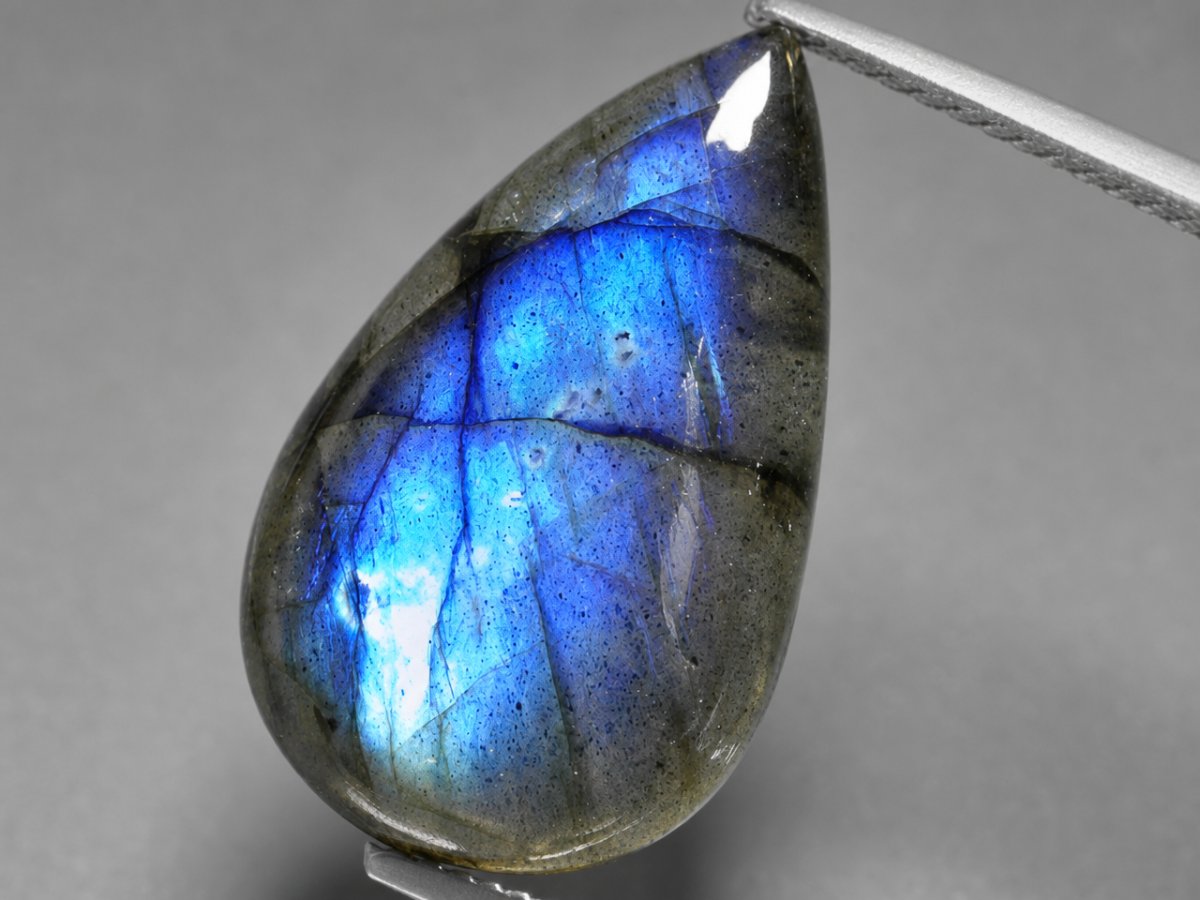


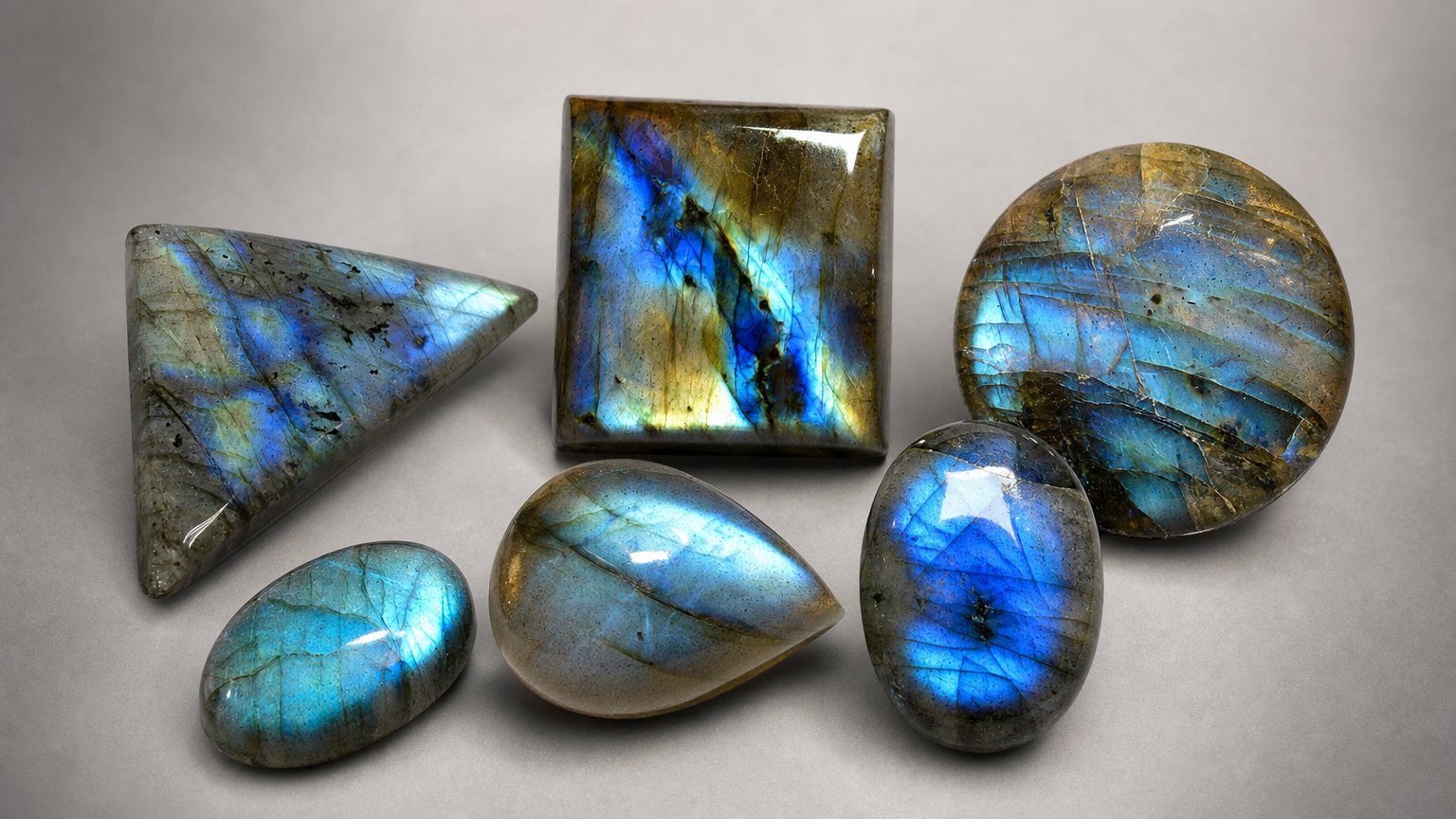
Labradorite is a feldspar gemstone chosen for its distinctive multicolor appearance and its usefulness in expressive jewelry designs. For buyers, the most important decisions are visual: how attractive the color is, how well the cut presents the stone, and whether the size and shape suit the intended jewelry.
This guide explains the practical factors to check before buying labradorite, including color, cut, durability, treatments, origin and suitable jewelry uses.
What Is Labradorite?
Labradorite is a member of the feldspar mineral group. Its chemical formula is (Ca,Na)(Al,Si)₄O₈ and it crystallizes in the triclinic crystal system. Gem-quality labradorite is commonly sold as loose cabochons, shaped stones, carvings and finished jewelry components.
From a buying perspective, labradorite is best assessed by appearance rather than by a standardized grading scale. Two stones of the same size and shape can look quite different, so clear photos and careful visual comparison are especially important.
Color and Appearance: What to Look For
Labradorite is known in the gem trade for a multicolor appearance, often seen against body colors such as brown, gray or black. When choosing a stone, look for a face-up appearance that appeals to you in normal viewing conditions, not only under ideal lighting.
Important visual points to consider include:
- Color coverage: A stone with attractive color visible across a larger area of the face may be more desirable for display jewelry.
- Color contrast: Multicolor areas can stand out strongly against darker gray, black or brown body color.
- Viewing angle: Because labradorite's appearance can change with angle and lighting, examine photos or videos from more than one direction when available.
- Matching: For earrings or multi-stone designs, choose stones with similar body color, shape and overall color presentation.
There is no single "best" color choice for every buyer. Some designs benefit from darker, dramatic stones, while others suit softer gray or brown tones with more subtle multicolor effects.
Cut and Shape Choices
Cabochons are the most common and important cut style for labradorite. A cabochon has a smooth, domed top rather than facets, which often suits stones chosen for broad color display. Oval and round shapes are especially common, with cushion and pear shapes also popular.
Checkerboard cuts are also seen in labradorite and can add a more decorative surface pattern. Faceted stones, carvings, pencil shapes and slice cuts may appeal to designers looking for a less conventional style. Freeform shapes are useful for artisan jewelry where the natural outline or unique look of the stone is part of the design.
Buying tip: choose the cut for the setting
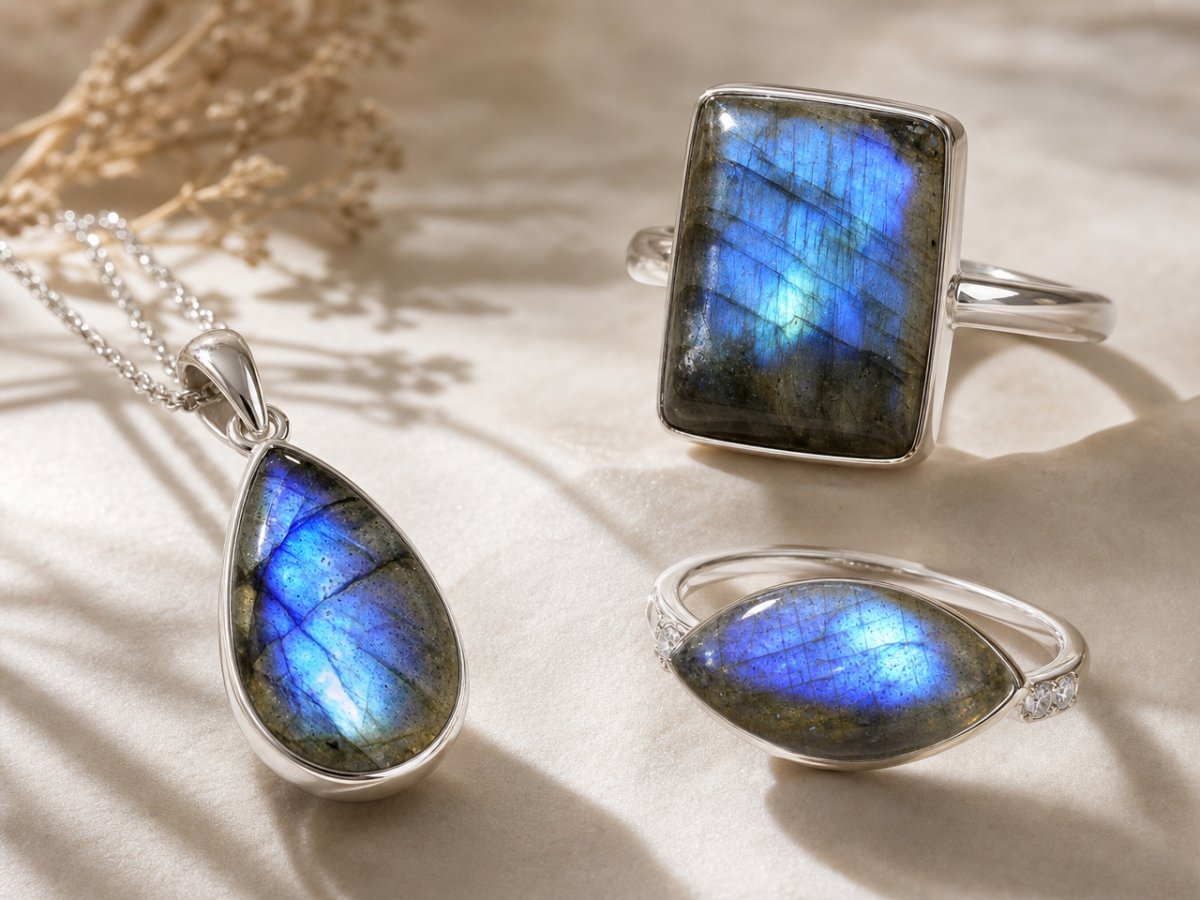
For pendants and necklaces, larger oval, round, cushion or pear cabochons often work well because they show the stone clearly. For earrings, consider weight and matching. For rings, choose a shape that can be set securely and protected from hard knocks.
Size and Layout Considerations
Labradorite is often selected as a focal stone, especially in pendants, necklaces and artisan jewelry. Larger stones can show more surface area and make the multicolor appearance easier to appreciate, but they should still be comfortable for the intended design.
For jewelry makers, calibrated shapes can be easier to mount in standard settings, while freeform, carving, slice or pencil cuts may require custom work. If you are buying a loose stone for a specific setting, confirm the millimeter dimensions rather than relying only on carat weight.
Clarity and Surface Quality
Labradorite is usually bought for its overall face-up appearance, so clarity should be judged practically. Check that the stone does not have distracting surface-reaching fractures, chips or abrasions that affect beauty or durability. Minor internal features may be acceptable if they do not interfere with the appearance you want.
For cabochons, inspect the polish, dome symmetry and outline. A well-finished cabochon should look smooth, balanced and suitable for secure setting.
Durability and Everyday Wear
Labradorite has a Mohs hardness of 6 to 6.5. This makes it suitable for many jewelry uses, but it still needs sensible care. It can be scratched by harder materials and may be damaged by sharp impacts.
Pendants, necklaces, brooches and earrings are especially suitable because they are less exposed to abrasion and knocks. Labradorite can be used in rings, but ring wear is more demanding; protective settings and occasional rather than heavy everyday wear are sensible choices.
Treatments and Buying Confidence
Labradorite is commonly offered as untreated. When buying, especially online, look for clear treatment disclosure from the seller. Untreated status is straightforward and desirable for buyers who prefer natural gemstones with no enhancement.
GemSelect lists gemstone details to help buyers compare stones accurately, including dimensions, shape, cut and other relevant product information. For labradorite, good images are particularly helpful because the visual character of each stone is individual.
Origins
Important sources of labradorite include Canada and Madagascar, with additional material associated with Russia, Mexico and the United States. Origin can be interesting to collectors, but buyers should avoid assuming that origin alone determines beauty or suitability.
For most jewelry purchases, prioritize the individual stone: its color presentation, cut quality, size, shape and condition matter more than the country name on its own.
Gemological Properties
The following properties help identify labradorite and place it within the feldspar group:
- Mineral group: Feldspar
- Chemical formula: (Ca,Na)(Al,Si)₄O₈
- Crystal system: Triclinic
- Mohs hardness: 6-6.5
- Refractive index: 1.559-1.573
- Specific gravity: 2.68-2.72
These values are useful for gemological reference, but visual inspection remains the main buying factor for most labradorite purchases.
Best Jewelry Uses for Labradorite
Labradorite is particularly well suited to necklaces and pendants, where the stone can be displayed prominently with less exposure to impact. It is also a strong choice for artisan jewelry, where cabochons, freeforms, carvings and slices can create individual designs.
Brooches and earrings are practical options because they are generally protected during wear. Rings are possible, but buyers should consider the setting carefully and avoid unnecessary rough wear.
Practical Labradorite Buying Checklist
- Choose the stone by overall face-up beauty, not by size alone.
- Look for appealing multicolor appearance with good contrast against the body color.
- Prefer cabochons for classic labradorite jewelry, especially pendants and necklaces.
- Check photos from different angles if available, because appearance can vary with viewing direction.
- Inspect the polish, outline, dome and any visible chips or cracks.
- Confirm dimensions in millimeters when buying for a setting.
- For rings, choose a protective setting and wear with care.
- Look for clear treatment disclosure; labradorite is commonly sold untreated.
Summary
The best labradorite for you is the stone that combines attractive multicolor appearance, suitable shape, clean finish and practical durability for your intended jewelry. Cabochons in oval and round shapes are classic choices, while freeform, carved, checkerboard and slice cuts offer more design flexibility. Focus on the individual stone's appearance and condition, and choose the setting according to how often and how actively the jewelry will be worn.