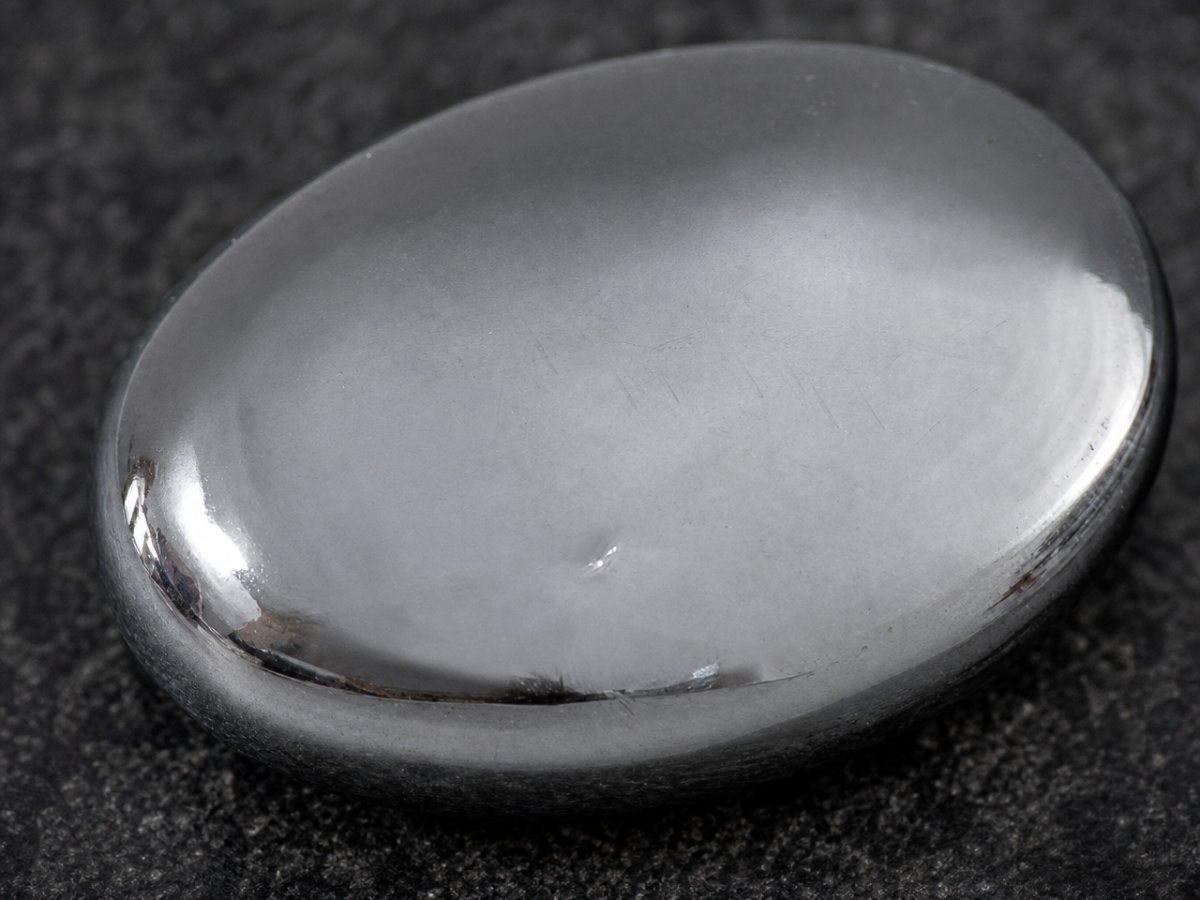


Hematite is a distinctive opaque gemstone chosen for its gray, silver and sometimes black appearance. For buyers, the most important decisions are not complicated grading categories, but practical factors: the quality of the polish, the evenness of color, the cut style, the intended jewelry use and whether the stone has been clearly disclosed as untreated.
This guide explains what to look for when choosing hematite for jewelry, collecting or design work, with emphasis on the characteristics that affect appearance, durability and buying confidence.
What Is Hematite?
Hematite is an iron oxide mineral with the chemical formula Fe₂O₃. It crystallizes in the trigonal crystal system and is opaque, so a refractive index is not typically measured for ordinary gem use. Instead of evaluating transparency and brilliance in the way buyers might with transparent gemstones, hematite is usually judged by its surface appearance, polish, shape and overall finish.
Its specific gravity of 5.20-5.30 means hematite is a relatively dense gem material. In finished jewelry, this can give the stone a noticeable, substantial feel compared with many lighter gemstones of similar size.
Color and Appearance: What to Look For
The most recognized hematite colors are gray and silver, with black also seen. When buying, look for a color that suits the design purpose: silver-gray hematite can give a clean, contemporary look, while darker gray to black stones can create a stronger contrast in jewelry.
Because hematite is opaque, clarity is not assessed by looking through the gem. Instead, inspect the visible surface. A well-finished hematite should have an attractive polish, clean outlines and a surface that is free from distracting chips, scratches or uneven areas. Small surface marks can be more noticeable on smooth cabochons and beads, so view the stone under normal lighting as well as close inspection.
Cut Styles and Shapes
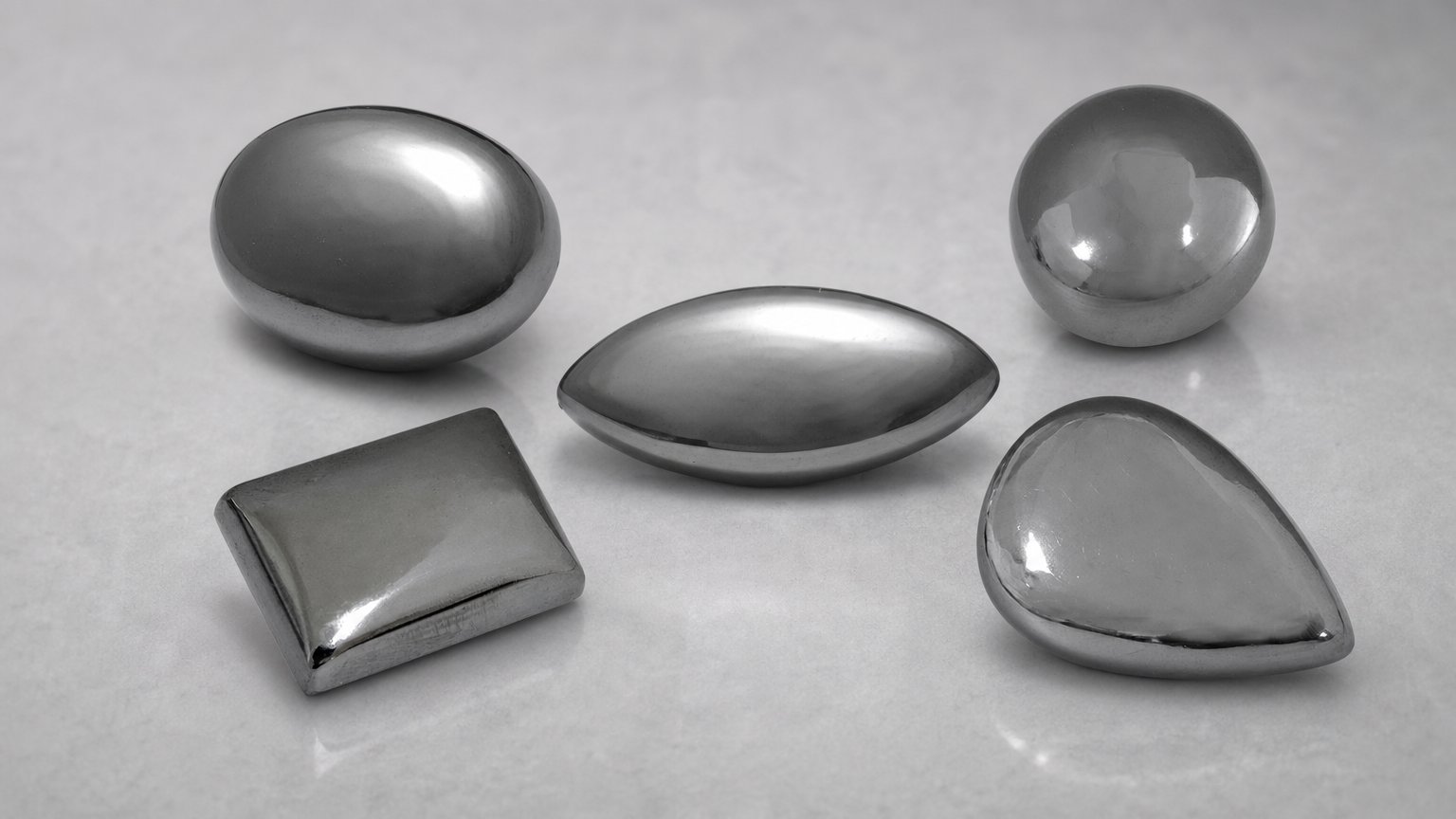
Cabochons are the most common cut style for hematite. A cabochon's smooth domed surface suits opaque gem materials well and places emphasis on polish, outline and color. When comparing cabochons, check that the dome is symmetrical, the base sits properly and the edge is neat enough for secure setting.
Faceted hematite is also available. Since hematite is opaque, faceting is used more for geometric style and reflective surface pattern than for internal sparkle. Make sure the facets are crisp and evenly arranged, especially if the stone will be used as a centerpiece in a pendant, brooch or ring.
Carved hematite may appeal to buyers looking for decorative or sculptural pieces. With carvings, examine the detail, balance and any thin or exposed areas that may be more vulnerable to damage.
Popular shapes include oval, along with baguette, cushion, pear and freeform designs. Ball shapes are common for bead-style jewelry, while heart and marquise shapes may suit more decorative pieces. Choose shape according to the setting: ovals and cushions are versatile, baguettes suit linear designs, and freeform stones work well in custom or artistic jewelry.
Durability and Wearability
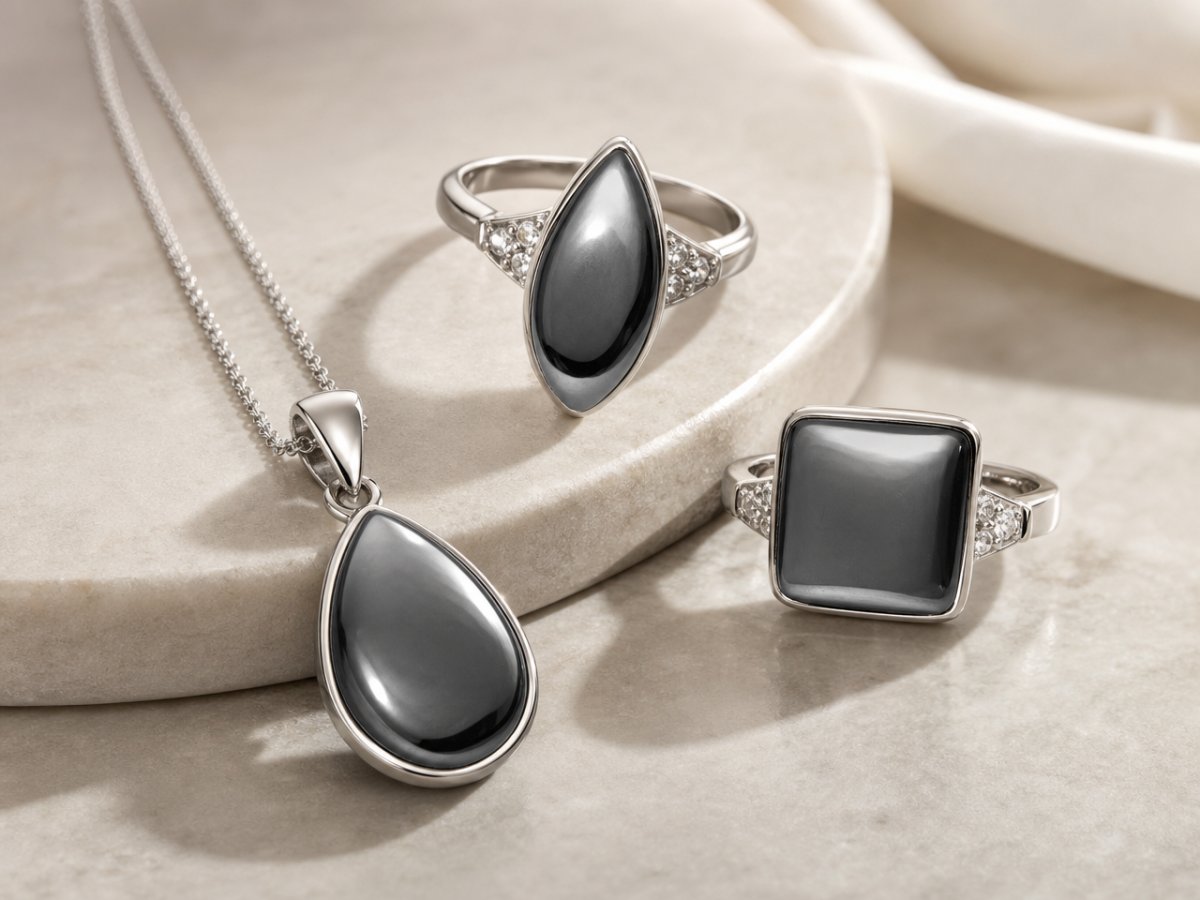
Hematite has a Mohs hardness of 5.5-6.5. This places it in a moderate durability range: it is suitable for many jewelry uses, but it should be worn with reasonable care. It can be used in necklaces, pendants, bracelets, brooches, earrings and rings, though the type of jewelry affects how much protection the stone needs.
Necklaces and pendants are especially practical choices because they usually receive less impact and abrasion than rings or bracelets. Brooches and earrings are also suitable when the settings protect the stone and the wearer avoids knocks. Rings and bracelets can be attractive, but they are more exposed to contact with hard surfaces; protective settings and careful wear are recommended.
Treatments and Disclosure
Hematite is commonly sold as untreated. For buyers, this is reassuring because the gemstone's appearance is typically appreciated as it is, without the need for enhancement disclosure beyond confirming its untreated status.
When purchasing, check that the seller provides clear treatment information. GemSelect lists treatment details where relevant, helping buyers compare stones with confidence.
Origins
Hematite is associated with several origins, including Brazil, Canada, the United States, China, Morocco and Australia. Brazil is an important source to be aware of, with Canada and the United States also notable. Origin can be interesting to collectors, but for most jewelry buyers the individual stone's appearance, cut quality, size and condition are more important than country of origin.
How to Choose Hematite: Practical Buying Checklist
1. Choose the right color tone
Decide whether you prefer a lighter silver-gray, a deeper gray or a darker black appearance. Match the color to the metal, design style and other gemstones in the piece.
2. Inspect the polish and surface
For opaque stones like hematite, surface quality matters. Look for a smooth, even finish without obvious scratches, chips or dull patches.
3. Select a cut for the jewelry purpose
Cabochons are ideal for classic gemstone settings and pendants. Faceted hematite suits modern geometric designs. Carvings are best when the artistry and condition of the piece are part of the appeal.
4. Consider size and weight
Because hematite has a high specific gravity, larger pieces can feel heavier than expected. This may be desirable in a pendant or bead strand, but it is worth considering for earrings or large bracelets.
5. Match durability to the setting
For frequent wear, necklaces, pendants, earrings and brooches are lower-risk choices. For rings and bracelets, choose settings that reduce direct exposure to knocks and abrasion.
6. Confirm treatment status
Look for clear disclosure that the hematite is untreated. This is a simple but important part of buying with confidence.
Care Tips for Hematite Jewelry
Clean hematite with a soft cloth and mild soapy water when needed, then dry it carefully. Avoid harsh abrasives, rough handling and storage against harder gemstones or jewelry parts that could scratch the surface. For rings and bracelets, remove the jewelry before activities that may expose the stone to impact.
Summary
Buying hematite is mainly about selecting the right visual style and ensuring the stone is well finished. Focus on attractive gray, silver or black color, a clean polished surface, an appropriate cut and a setting that suits the gem's moderate hardness. With clear treatment disclosure and sensible care, hematite can be a practical and stylish choice for many types of jewelry.