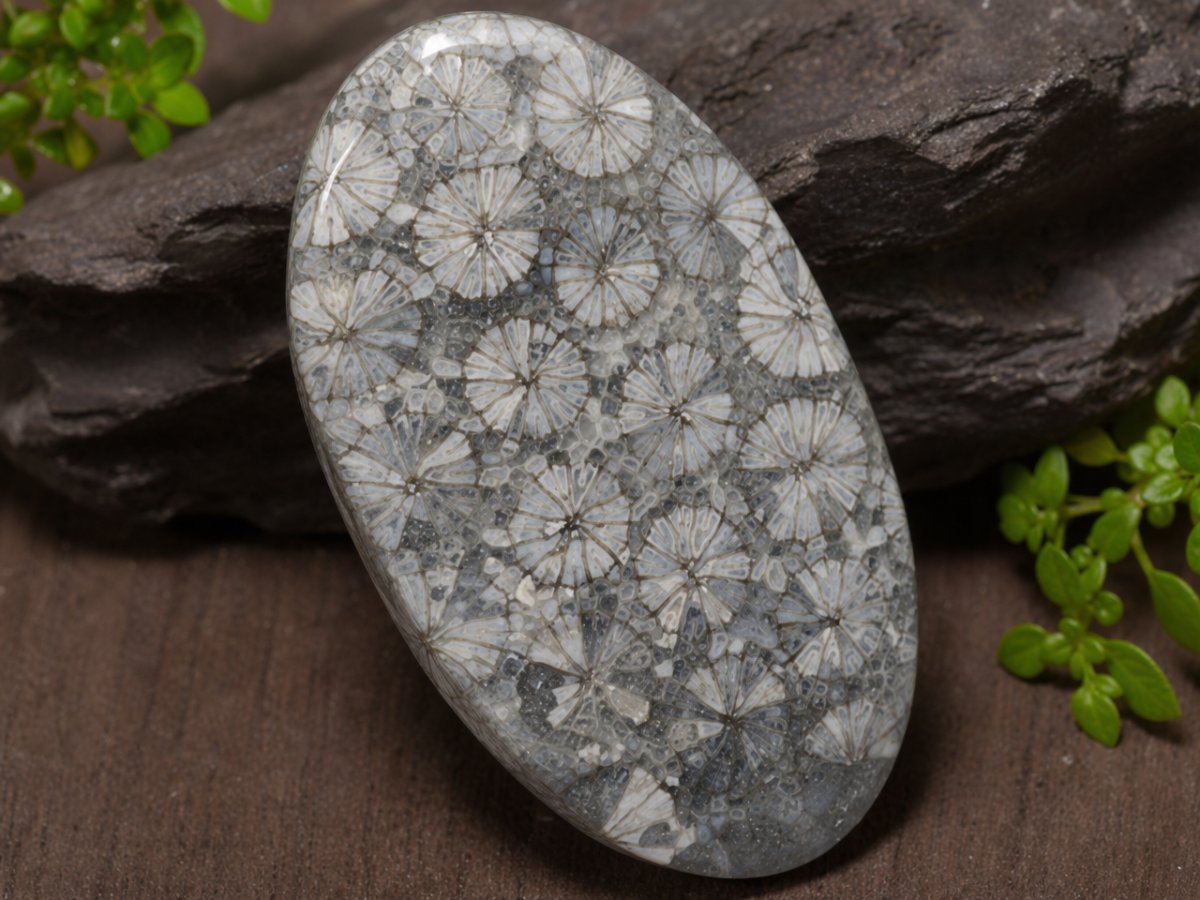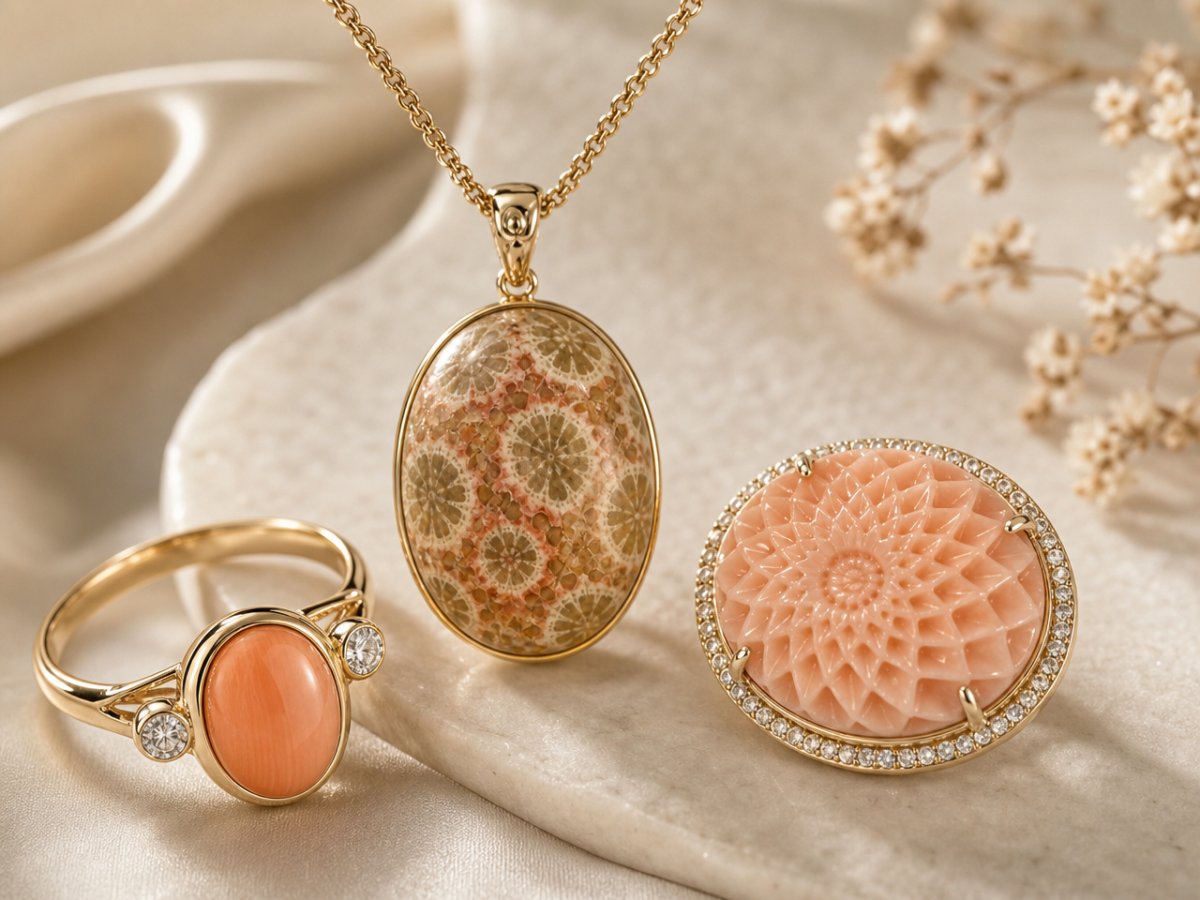


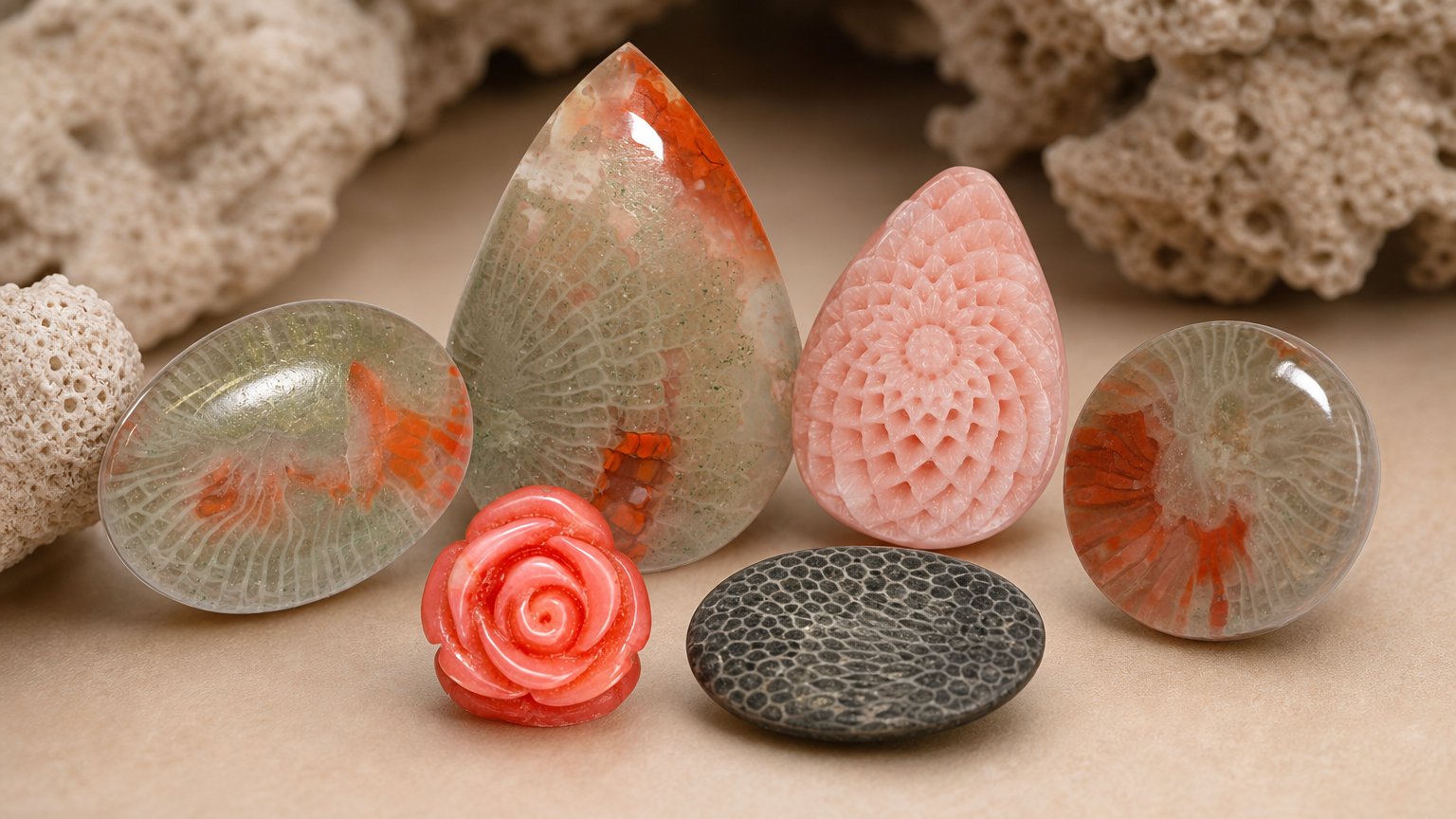
Coral has a very different character from transparent faceted gemstones. Its appeal comes from smooth color, organic-looking forms and a long-standing connection with personal adornment. In gemstone use, coral is best known in pink and red, with orange, salmon, white and black varieties also recognized. These colors give coral much of its emotional and symbolic identity.
This guide focuses on coral meaning, traditional associations and cultural appeal. Where symbolism is discussed, it should be understood as tradition, interpretation or modern belief rather than scientific fact.
What Is Coral in Gemstone Tradition?
Gem-quality coral is a calcium carbonate material, primarily calcite. Unlike gemstones valued mainly for brilliance or transparency, coral is appreciated for its body color, surface polish and ability to be shaped into rounded or carved forms. This is why coral is commonly seen as cabochons and carvings rather than as sharply faceted stones.
That physical character has influenced its meaning. Coral feels more closely connected to natural form, touch and ornament than to sparkle. For many collectors and jewelry lovers, this makes it a gem of warmth, softness and personal expression.
Coral Meaning and Symbolism
Coral is traditionally associated with warmth, vitality, affection and the beauty of the sea. These meanings are largely shaped by its most familiar colors. Red coral can suggest energy, passion and confidence, while pink coral is often interpreted as gentler, more affectionate and more nurturing in tone. Salmon and orange coral sit between these ideas, offering a lively but softer visual message.
White coral is generally read in a calmer and more understated way, while black coral has a stronger, more dramatic presence. These interpretations are symbolic and visual rather than scientific; they come from the way people respond to color, material and design.
The Symbolic Power of Coral Color
Color is central to coral's meaning. Red and pink are the most important colors in its gemstone identity, and they give coral much of its traditional emotional appeal. Red gemstones are commonly linked with life, strength and courage in jewelry symbolism, while pink gems are often connected with affection, tenderness and harmony.
Coral's orange and salmon shades bring a warmer, sunlit quality. These colors can feel cheerful, Mediterranean in mood and expressive without being as intense as deep red. White coral has a quieter elegance, while black coral is more unusual and visually bold.
Coral in Historical-Style Adornment
Coral's history as an ornamental gem is reflected in the ways it is shaped and worn. It is especially well suited to smooth cabochons and carved pieces, including floral forms. These formats emphasize color and surface rather than brilliance, giving coral a sculptural and decorative quality.
Because coral can be shaped into pendants, necklaces, earrings, brooches, rings and bracelets, it has long been associated with personal adornment rather than purely technical gem collecting. A coral pendant or carved brooch often carries a different feeling from a faceted gemstone: it appears intimate, tactile and expressive.
For a meaning guide, this matters because symbolism is not only about belief; it is also about how a gemstone is presented. A carved coral flower may suggest softness, beauty and natural growth, while a polished red coral cabochon may feel more direct, confident and classic.
Cultural Appeal and Modern Significance
Today, coral continues to be valued for its color and distinctive identity. GemSelect customers often look at coral not only as a colored gem but also as a material with personality. Its appeal is strongest for people who enjoy gems that feel natural, warm and expressive.
Important sources associated with coral include Indonesia, Australia, Japan and Spain. These origins help explain coral's wide international presence in the gemstone trade, though specific cultural or historical claims should be treated carefully unless they are supported by reliable evidence.
In modern jewelry culture, coral can symbolize individuality because it does not look like a typical transparent gemstone. It is often chosen by people who want color with a softer, more organic appearance. Red and pink coral in particular remain strongly associated with classic elegance and emotional warmth.
Folklore, Tradition and Responsible Interpretation
Like many gemstones, coral has gathered symbolic meanings over time. Some traditions and modern crystal interpretations may describe coral as protective, strengthening or emotionally supportive. These ideas belong to folklore and personal belief. They should not be presented as medical or scientific claims.
A practical way to understand coral meaning is to separate three things: documented material facts, visual symbolism and personal interpretation. The documented facts include coral's calcium carbonate composition, its recognized colors and its use in polished or carved gem forms. The visual symbolism comes from its red, pink, orange, salmon, white or black appearance. Personal interpretation depends on the wearer and the piece.
How Coral Is Viewed Today
Modern appreciation of coral combines tradition with design. It is admired for color, smooth texture and a natural-looking presence. Rather than representing one single meaning, coral can carry several related ideas: warmth, vitality, affection, natural beauty and expressive individuality.
This flexibility is part of coral's lasting charm. A red coral cabochon may feel bold and classic; a pink coral pendant may feel romantic and gentle; a carved coral flower may feel artistic and symbolic of nature. The meaning often comes from the meeting point between the gem's color, its form and the wearer's own associations.
Conclusion
Coral is meaningful because it is visually distinctive and emotionally expressive. Its best-known pink and red colors support associations with affection, warmth and vitality, while orange, salmon, white and black varieties offer different moods. Historically styled cabochons and carvings reinforce coral's identity as a gem of ornament, touch and personal symbolism.
When discussing coral meaning, it is best to treat folklore and modern symbolic ideas as traditions rather than facts. Appreciated in this way, coral remains a distinctive gemstone for people who value natural color, smooth form and jewelry with character.