


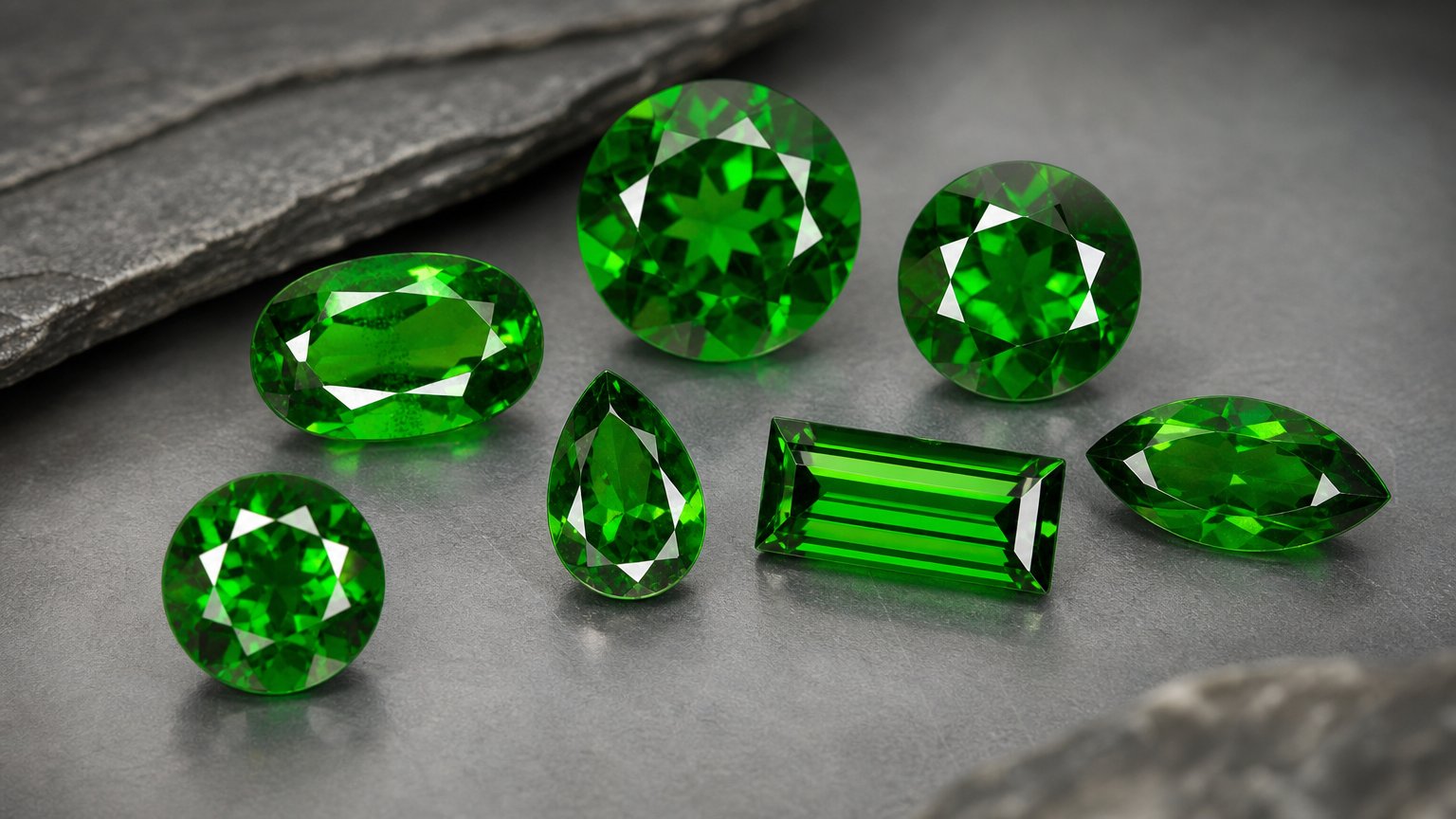
Chrome Diopside is a green gemstone from the diopside mineral species, valued by many buyers for its vivid natural appearance and its practical versatility in jewelry. If you are considering Chrome Diopside for a ring, pendant, necklace, earrings or bracelet, the most important buying points are color, clarity, cut quality, durability and whether the stone suits the intended jewelry design.
This buying guide explains what to look for before purchasing Chrome Diopside, with a focus on useful, buyer-oriented details rather than complicated grading terminology. You will learn how its green color affects appearance, why cut and shape matter, what its untreated status means, and how its Mohs hardness of 5.5–6.5 should influence jewelry choices and care.
What Is Chrome Diopside?
Chrome Diopside is a green gemstone associated with the mineral species diopside. Its chemical formula is CaMgSi₂O₆, and it crystallizes in the monoclinic crystal system. For buyers, the scientific details are useful mainly because they help distinguish Chrome Diopside from other green gemstones and explain some of its handling and durability considerations.
Unlike gemstone names that cover many colors, Chrome Diopside is known for green. This makes it especially appealing to shoppers who want a green gemstone with a direct, natural look. It is commonly cut as a faceted gem to show brightness and color, although cabochons are also seen.
When buying Chrome Diopside, it is best to evaluate each stone individually. Gemstones can vary in tone, saturation, clarity, cutting style and size, so two gems with the same name may have noticeably different appearances. Good product photos, accurate measurements and clear disclosure of treatment status are especially helpful when comparing stones online.
Color and Appearance: The Most Important Buying Factor
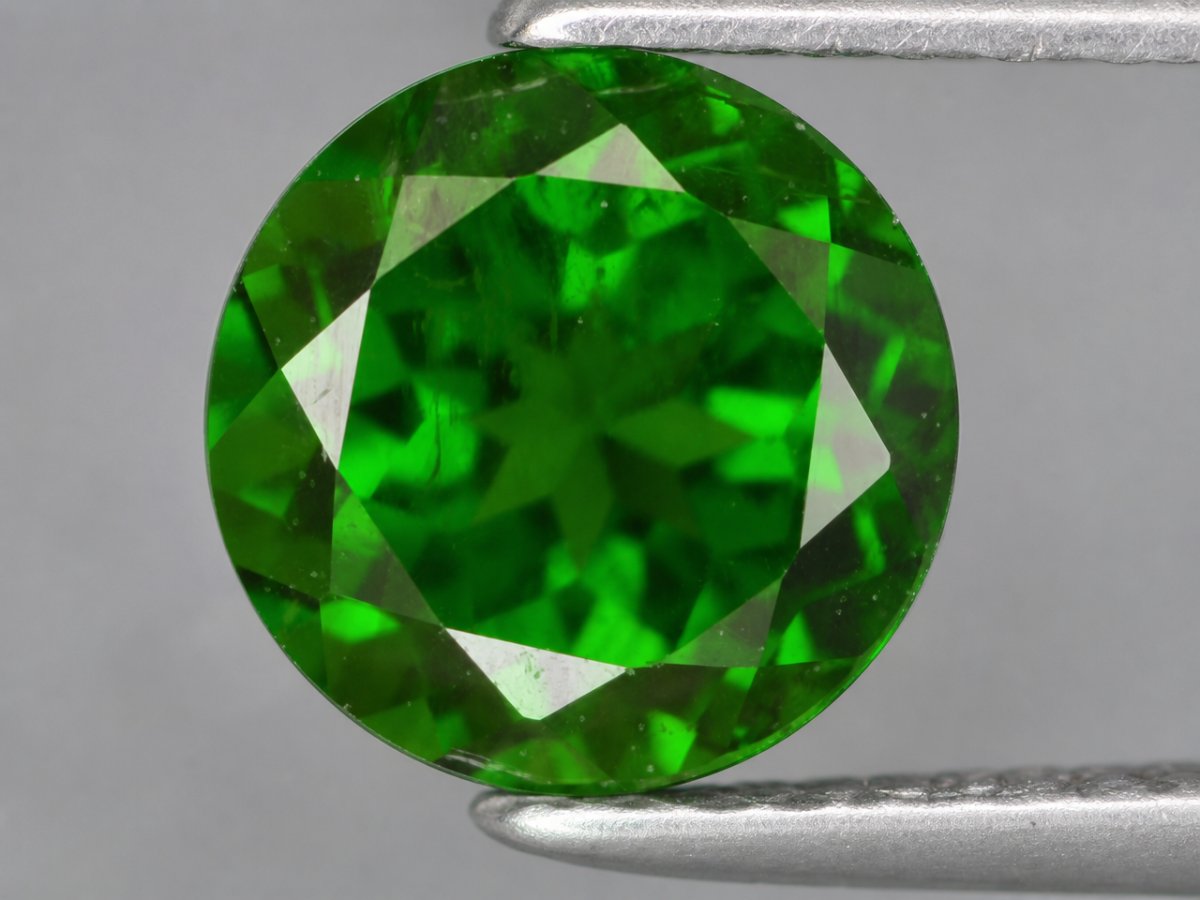
Color is usually the first feature buyers notice in Chrome Diopside. The gemstone is known for green, and the best choice depends on your personal preference and jewelry purpose. Some buyers prefer a brighter, lively green that stands out in smaller stones, while others prefer a deeper green that gives the gem a more dramatic appearance.
When comparing Chrome Diopside, look at three general color qualities:
Hue
Hue refers to the basic color family. In Chrome Diopside, the key color is green. When shopping, compare stones side by side if possible so you can decide which green appearance best suits your design. A green that looks attractive in a loose stone should also be considered in relation to the metal color and setting style you plan to use.
Tone
Tone describes how light or dark the gem appears. A very dark stone may look rich in some lighting but can lose visible detail if the cut does not return enough light. A lighter stone may show more brightness, especially in smaller jewelry pieces. Buyers should check images taken under different lighting where available, because green gemstones can appear different in daylight, indoor lighting and display lighting.
Saturation
Saturation describes the strength or intensity of color. Stronger saturation often creates a more vivid appearance, while softer saturation can look more subtle. For jewelry designers, saturation is also a design choice: a vivid green can become the focal point of a ring or pendant, while a more restrained green may pair better with accent stones or delicate settings.
Clarity: What Buyers Should Look For
Clarity refers to the presence or absence of visible internal features and surface-reaching characteristics. For a practical purchase, the most important question is whether the gem looks attractive to the unaided eye. Many buyers prefer stones that appear clean when viewed normally, especially for rings and pendants where the gemstone is seen up close.
When reviewing a Chrome Diopside listing, examine enlarged photos carefully, but remember that magnified images often show details that are not obvious in real life. A minor inclusion may not affect the beauty of the gem if it is small, positioned near the edge or hidden by the setting. However, visible features in the center of the gem may influence appearance more strongly.
For cabochon Chrome Diopside, clarity is judged differently from faceted stones. Cabochons are polished with a smooth domed surface rather than many facets. In this style, the overall color, polish and surface appearance often matter more than brilliance.
Cut and Shape: How Cutting Affects Beauty
Chrome Diopside is most commonly found as a faceted gemstone. Faceting uses flat polished surfaces to reflect light and show the stone's green color with brightness. A well-cut faceted stone should have pleasing symmetry, a balanced outline and a face-up appearance that does not look overly dark or lifeless.
Popular shapes for Chrome Diopside include oval and round. These are practical choices because they work well in many jewelry settings and are familiar to jewelers and designers. Cushion, marquise and octagon shapes are also seen and can give the stone a more distinctive style. Pear and trillion shapes may be selected when a design calls for a pointed or geometric look.
Faceted Cuts
Faceted Chrome Diopside is a strong choice when you want sparkle and light return. Round and oval faceted stones are especially versatile for rings, pendants and earrings. When comparing faceted gems, look for even color distribution, good symmetry and a pleasing outline. If a stone has a window, meaning a pale or see-through area in the center, it may appear less lively when mounted.
Step Cuts
Step cuts, including octagonal forms, emphasize broad flashes of light and a structured, elegant appearance. Because step cuts have larger, open facets, clarity and even color can be more visible. Buyers choosing a step-cut Chrome Diopside should look closely at the center of the stone and the precision of the facet pattern.
Cabochons
Cabochon Chrome Diopside offers a smoother, softer look than faceted gems. This style may be suitable for buyers who prefer a polished dome, a more understated appearance or a design where color is more important than sparkle. Check cabochons for a smooth surface, pleasing dome and consistent green appearance.
Portuguese Cuts
Portuguese cuts are also associated with Chrome Diopside, though less commonly than standard faceted styles. This cutting style uses many facets and can create a decorative, highly patterned appearance. Because the cut itself is visually complex, buyers should make sure the added facet detail enhances the stone rather than making the color appear too busy or dark.
Size and Measurements: Think Beyond Carat Weight
Carat weight is useful, but it does not tell the whole story. Gemstones of the same weight can face up differently depending on shape, depth and cutting style. For buyers, millimeter measurements are often more important than weight when choosing a gem for a specific ring, pendant or earring setting.
If you are replacing a stone or designing jewelry around a calibrated setting, compare the length, width and depth carefully. Round and oval Chrome Diopside stones are often easier to place into standard designs, while marquise, pear, trillion or unusual octagon shapes may require more specific setting work.
For earrings, matching size and color is important because the stones will be viewed as a pair. For pendants, a slightly deeper tone can work well because the gem is not exposed to the same impact risk as a ring. For rings, the balance between size, setting protection and daily wear should be considered carefully.
Origin: Where Chrome Diopside Comes From
Chrome Diopside is associated with several origins, with Russia being especially important. Finland and Pakistan are also known sources, while Madagascar and Myanmar are additional origins associated with this gemstone.
Origin can be interesting to collectors and buyers who appreciate provenance, but it should not replace direct evaluation of the gem itself. Color, cut, clarity, size and condition are usually more relevant to appearance and suitability for jewelry. If origin matters to you, look for sellers who clearly state the available information and avoid assuming origin based only on color or appearance.
Gemological Properties Buyers Should Know
The key gemological properties of Chrome Diopside help explain how it behaves as a gemstone:
- Mineral species: Diopside
- Chemical formula: CaMgSi₂O₆
- Crystal system: Monoclinic
- Mohs hardness: 5.5–6.5
- Refractive index: 1.663–1.699
- Specific gravity: 3.22–3.38
For most buyers, hardness is the most practical of these properties. Refractive index relates to how a gemstone bends light and can influence brilliance, while specific gravity describes density. These measurements are more important for identification and gemological testing than for everyday selection, but they form part of the gemstone's technical profile.
Durability and Everyday Wear
Chrome Diopside has a Mohs hardness of 5.5–6.5. This means it is not as hard as some gems commonly chosen for heavy daily wear. It can be used in jewelry, including rings, but buyers should think carefully about setting style, wear habits and care.
For rings, protective settings are a sensible choice. Bezels, partial bezels or designs that shield exposed edges can reduce the chance of knocks and abrasion. If the ring will be worn daily during active work, sports or household tasks, extra care is needed. Removing the ring before activities that may expose it to impact or scratching is a good habit.
Pendants and necklaces are excellent choices because they are generally less exposed to hard knocks than rings. Earrings are also practical for Chrome Diopside because they usually receive limited abrasion. Bracelets can be attractive, but they are more exposed to contact with desks, door handles and other hard surfaces, so protective design is important.
Treatments: Chrome Diopside Is Commonly Untreated
Chrome Diopside is commonly associated with untreated gemstones. For buyers, this is an important point because treatment disclosure is part of responsible gemstone purchasing. An untreated stone has not been enhanced by the common treatment methods used for some other gem types.
Even when a gemstone is typically untreated, it is still wise to check the treatment information provided by the seller. At GemSelect, treatment disclosure is included so buyers can compare stones with confidence and select the gem that fits their expectations.
Jewelry Uses: Choosing the Right Design
Chrome Diopside can be used in several types of jewelry, but the best choice depends on how often the piece will be worn and how much protection the setting provides.
Chrome Diopside Rings
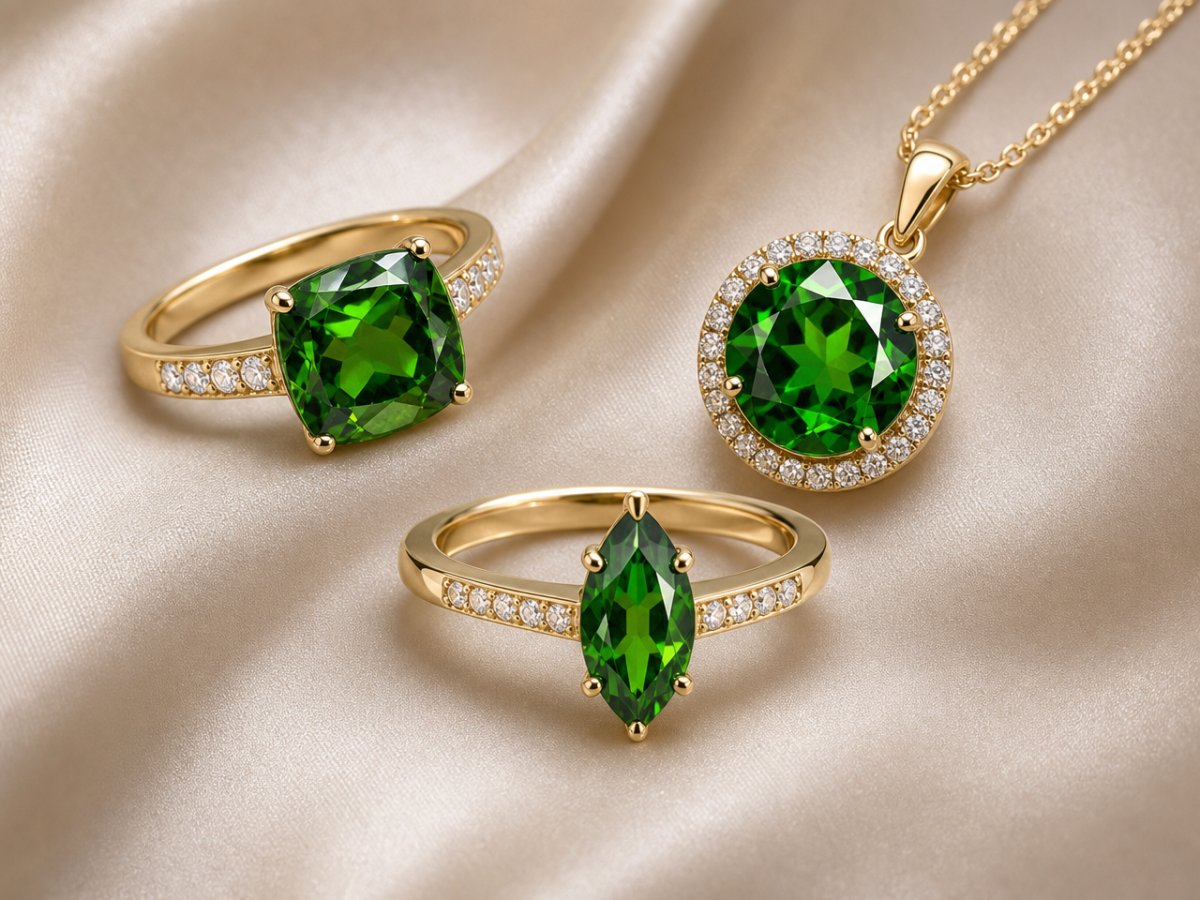
Rings are a popular use for Chrome Diopside, and the gemstone's green color can create a striking center stone. Because rings are exposed to frequent contact, choose a secure setting and consider the wearer's lifestyle. A ring intended for occasional wear can use a wider range of designs, while a frequently worn ring should prioritize protection.
Pendants and Necklaces
Pendants and necklaces are very suitable ways to enjoy Chrome Diopside. They display the green color clearly while keeping the gem away from much of the impact and abrasion that rings experience. Oval, round, pear and cushion shapes can all work well depending on the design.
Earrings
Earrings are a practical option for Chrome Diopside because they are usually protected from heavy wear. When buying a pair, focus on matching color, size, shape and cut. Even small differences can be noticeable when two gemstones are worn together.
Bracelets
Chrome Diopside can be used in bracelets, but buyers should be more cautious. Bracelets often strike hard surfaces during normal wear. If choosing Chrome Diopside for a bracelet, select a design that offers good protection and avoid wearing it during activities that could damage the stones.
Chrome Diopside Buying Checklist
Before purchasing Chrome Diopside, use the following checklist to compare options:
- Color: Choose the green tone and saturation that appeal to you and suit the intended jewelry design.
- Clarity: Look for a pleasing face-up appearance and decide whether any visible inclusions are acceptable.
- Cut: Check symmetry, outline, brightness and whether the cut supports the color well.
- Shape: Oval and round are versatile; cushion, marquise, octagon, pear and trillion shapes offer more distinctive design possibilities.
- Measurements: Review millimeter dimensions, especially if the gem must fit an existing setting.
- Treatment: Confirm that the stone is disclosed as untreated if that is important to you.
- Durability: Match the gemstone to the jewelry type and expected wear.
- Origin: Consider origin if it matters to you, but judge the individual gemstone on its visible quality and suitability.
How to Care for Chrome Diopside
Because Chrome Diopside has a Mohs hardness of 5.5–6.5, careful handling is recommended. Store it separately from harder gemstones to reduce the risk of scratches. Use a soft pouch or lined jewelry box, especially for rings and loose stones.
For routine cleaning, use mild soap, lukewarm water and a soft cloth or soft brush. Avoid harsh chemicals and avoid situations where the stone may be struck against hard surfaces. If the gemstone is mounted in jewelry, have the setting checked periodically, especially prongs or other parts that hold the stone in place.
Summary
Chrome Diopside is a green diopside gemstone that can make attractive and distinctive jewelry when chosen carefully. Buyers should focus first on color, then evaluate clarity, cut, size and setting suitability. Faceted oval and round stones are especially versatile, while cabochons and less common cuts can offer a different design character.
Its untreated status is a positive point for buyers who value natural presentation, but treatment disclosure should still be checked. With a Mohs hardness of 5.5–6.5, Chrome Diopside is best worn with sensible care, particularly in rings and bracelets. For pendants, necklaces and earrings, it can be an appealing green gemstone choice with practical wearability.
