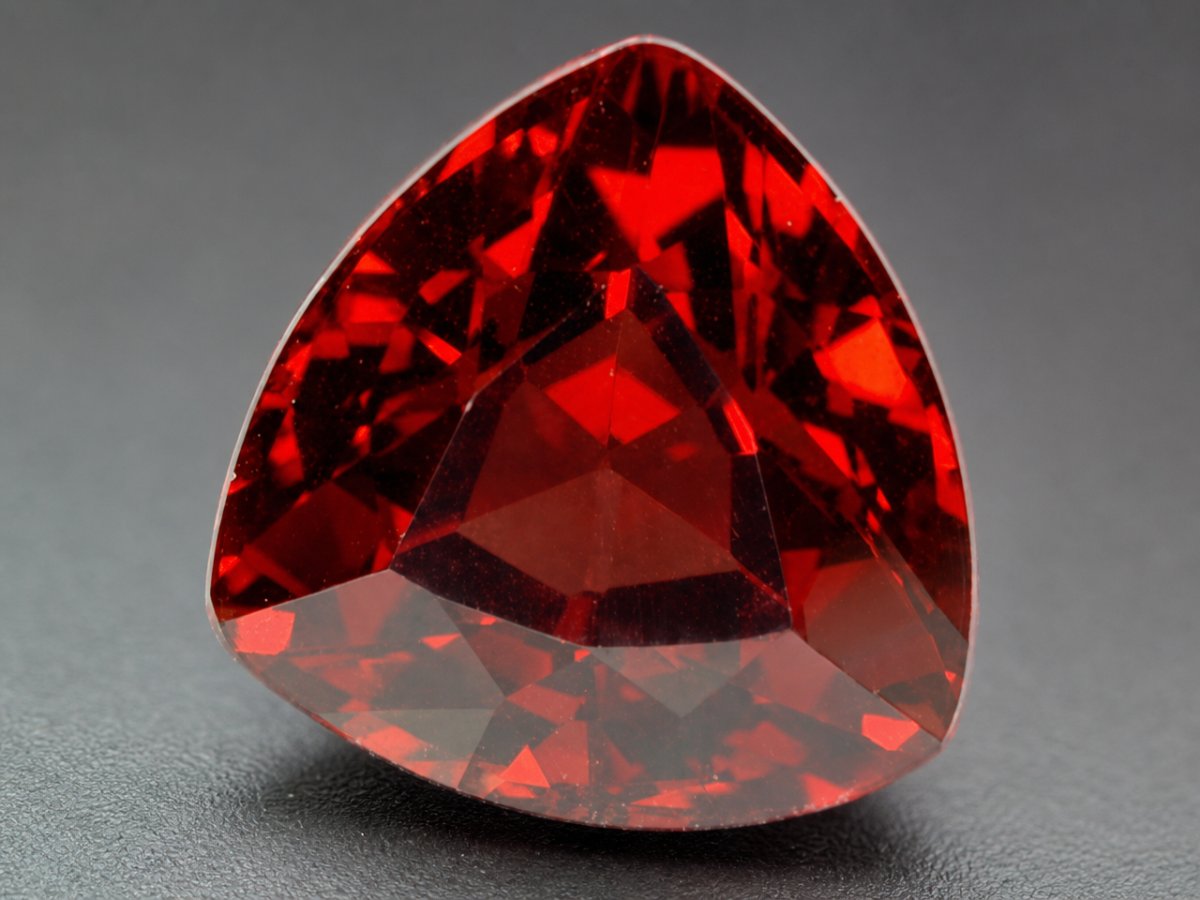


Almandine garnet is a red variety of garnet valued by buyers who want a classic gemstone with good durability, attractive brilliance and broad jewelry versatility. It is commonly sold as an untreated gem, which makes it especially appealing for shoppers who prefer natural gemstones without routine enhancement.
This guide focuses on the practical details that matter when choosing almandine garnet: color, cut, clarity, size, durability, treatments, origin and how the gem will be used in jewelry.
What Is Almandine Garnet?
Almandine garnet is a member of the garnet group and belongs to the almandine mineral species. Its chemical formula is Fe₃Al₂(SiO₄)₃, and it crystallizes in the cubic crystal system. For buyers, the most important point is simple: almandine is a red garnet with the toughness and appearance needed for many everyday jewelry designs.
It is also associated with January as a birthstone, making it a popular option for birthstone rings, earrings, pendants and gifts.
Color: The First Buying Decision
Almandine garnet is known for red color. When comparing stones, look for a red that appears attractive to your eye under the lighting conditions in which the jewelry will be worn. Color should look balanced, not lifeless, and the face-up appearance should be even across the gem.
Because color perception changes with lighting and setting style, view the gemstone in different light when possible. A stone that looks appealing loose may appear slightly different once mounted, especially in closed or heavy settings. For rings and men's jewelry, where the setting may cover more of the gem, it is especially useful to check that the red remains visible and lively from the top.
Cut and Shape: How Almandine Garnet Shows Its Best Face
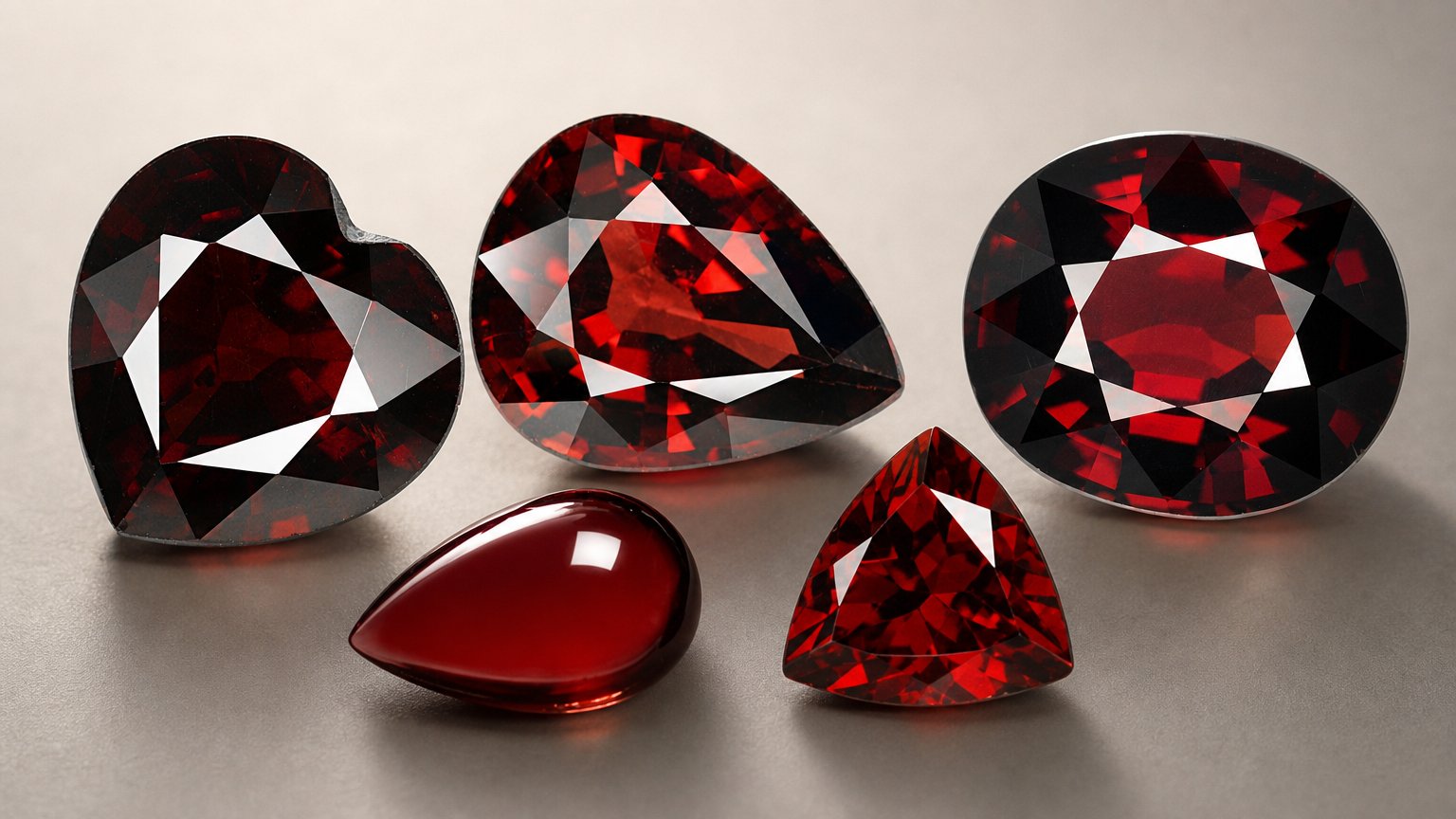
Almandine garnet is most often available as faceted gemstones. A well-cut faceted stone should show good brightness across the crown, with a pleasing outline and symmetrical appearance. Poor cutting can make any red gem look too dark or uneven, so cut quality should be considered alongside color.
Step cuts are also common and can give almandine garnet a clean, architectural look. They place more emphasis on symmetry, polish and the evenness of the red color. Cabochons, checkerboard cuts and occasional Portuguese cuts may also be available, each offering a different style. Cabochons have a smooth domed surface, while checkerboard and Portuguese cuts add extra facet patterns for a more decorative effect.
Popular shapes include oval and round, both of which are easy to use in rings, earrings and pendants. Cushion, pear and heart shapes are also seen and can suit more distinctive designs. Marquise, octagon, square and trillion shapes may be chosen when the design calls for a more specific outline.
Clarity and Transparency
For buying purposes, clarity should be judged by appearance rather than by a complicated grading term. Look at the gemstone face-up and ask whether any inclusions distract from the red color, sparkle or overall beauty. Minor internal features are common in natural gemstones, but they should not dominate the appearance or create obvious durability concerns.
In faceted almandine garnet, good transparency and clean-looking areas help the gem reflect light more effectively. In cabochons, the smooth surface and even color are usually more important than brilliance.
Size and Matching Considerations
Almandine garnet can work well as a single center stone or as matched pairs and suites. For earrings, matching color, shape and size is usually more important than choosing the largest possible stones. For rings and pendants, consider how the size will look on the hand or body and whether the setting will protect the gem appropriately.
When buying multiple stones, compare them together rather than separately. Even small differences in red color can become noticeable in earrings, bracelets or necklace layouts.
Durability and Jewelry Suitability
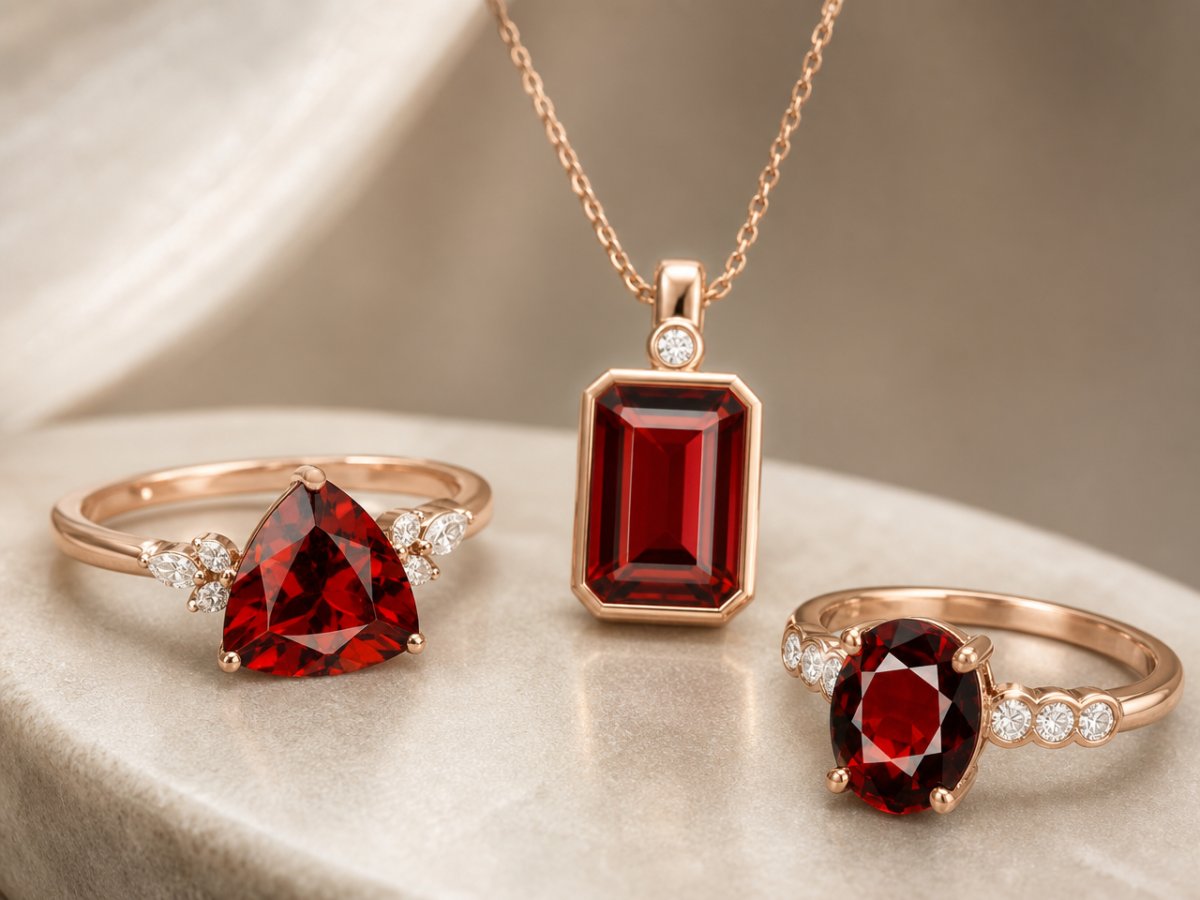
Almandine garnet has a Mohs hardness of 6.5 to 7.5. This makes it suitable for many types of jewelry, including earrings, pendants, necklaces, brooches, men's jewelry and rings. It can also be used in bracelets, though bracelets are more exposed to knocks and abrasion than earrings or pendants.
For rings, choose a setting that suits the wearer's lifestyle. Protective settings, secure prongs and designs that do not leave exposed corners vulnerable are sensible choices, especially for daily wear. As with most gemstones, almandine garnet should be protected from hard impacts and stored separately from harder gems that could scratch it.
Treatments and Buying Confidence
Almandine garnet is commonly sold untreated. This is a useful advantage for buyers because treatment disclosure is straightforward compared with gemstones that are routinely heated, filled or otherwise enhanced.
Even so, always buy from a seller that clearly states treatment status. At GemSelect, treatment information is provided on gemstone listings so buyers can compare stones with greater confidence.
Origin: Interesting, but Usually Secondary
Known sources for almandine garnet include Madagascar, Brazil, India, Mozambique, Sri Lanka and the United States. Origin can be interesting for collectors or for buyers who enjoy knowing where a gem was mined, but the visible qualities of the individual stone should remain the main priority for most jewelry purchases.
Unless origin is specifically important to you, focus first on color, cut, clarity, size and suitability for the intended jewelry design.
Gemological Properties at a Glance
Almandine garnet has a refractive index of 1.78 to 1.81 and a specific gravity of 4.0 to 4.3. In practical terms, its refractive index contributes to the bright appearance possible in well-cut stones, while its relatively high specific gravity means the gem can feel dense for its size compared with some other gemstones.
These properties are mainly useful for identification and gemological understanding, but they also help explain why cut quality is so important in bringing out the best face-up appearance.
How to Choose the Right Almandine Garnet
Start with the jewelry purpose. Earrings and pendants allow more freedom because they receive less wear than rings and bracelets. For a ring, pay closer attention to setting protection, stone shape and how often the piece will be worn. For men's jewelry, consider shapes and cuts that complement stronger setting designs, such as round, oval, cushion, octagon or step-cut styles.
Next, compare color and cut together. The most attractive almandine garnet is not simply the reddest stone in isolation; it is the stone whose red color, brightness, shape and proportions work well together. A well-cut gem with balanced red color will usually be more satisfying than a poorly cut stone of larger size.
Finally, check practical details before purchase: stated treatment status, accurate measurements, carat weight, photos and return options. If you are matching stones or designing custom jewelry, confirm dimensions carefully because millimeter size often matters more than carat weight for setting fit.
Care Tips for Almandine Garnet Jewelry
Clean almandine garnet with mild soap, warm water and a soft brush or cloth. Avoid harsh chemicals and protect the gemstone from sharp blows. Store it separately in a pouch or lined jewelry box to reduce the chance of scratches from harder gemstones or metal edges.
Summary
Almandine garnet is a practical and attractive red garnet for buyers who want an untreated gemstone suitable for a wide range of jewelry. Prioritize pleasing red color, good cutting, clean face-up appearance and the right shape for your design. For rings and bracelets, consider durability and setting protection; for earrings and pendants, focus on matching, color and overall style.