FREE SHIPPING
|
GemSelect Newsletter - September 2008In our newsletter this month:
The Ban on Burmese Gems Back to Top
We've had a number of questions from our customers about new legislation in the USA banning the import of Burmese gemstones. In this month's newsletter we consider the implications of the new law, since many people are confused about exactly what it means. 
Bush Signs Burma Gem Ban
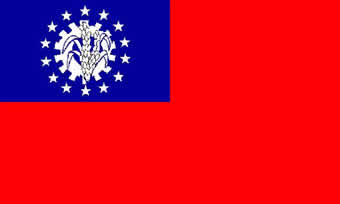
The new legislation, known as the Tom Lantos Block Burmese JADE (Junta's Anti-Democratic Efforts) Act of 2008, was signed into law by President Bush on July 29th, 2008, and will take effect 60 days from the signing. It extends previous legislation from 2003, which already banned the import of all gemstones from Burma. But a loophole in the existing law allowed the import of Burmese gems that were cut and polished in other countries such as Thailand. The new law closes this loophole, but not for every kind of Burmese gemstone. The new law only addresses ruby and jadeite. It doesn't affect any of the other varieties of gemstones from Burma, such as spinel, zircon, peridot, maw-sit-sit and kyanite. These can still be imported as long as they are processed outside Burma. The reason why the embargo covers only ruby and jadeite, we assume, is that these are the primary sources of gemstone revenue for the Burmese junta; trade in the other types of Burmese gemstones is so small as to be inconsequential. The enforcement effort is also simplified by restricting the ban to only ruby and jadeite. 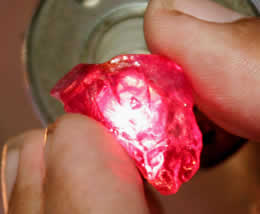
Burmese Ruby Rough
You may have read some news stories stating that the new law allows the import of Burmese ruby and jadeite for personal use. We have studied the language of the legislation and find no exception made for personal use. The only exception is for Burmese gems that were previously in the USA and were subsequently exported and reimported, or left the country with an individual for personal use and were then reimported. In our June 2008 newsletter we expressed the view that the ban on Burmese gemstones will have little impact on the junta's revenue, since Burma's largest customer, China, is a big buyer of valuable jadeite and ruby at government auctions in Burma. We do fear that the small independent Burmese miners and gem traders will suffer, since they depend on trade with Thailand. If Thailand can no longer export Burmese ruby and jadeite, it will impact the independent Burmese businessmen, not the government. New Content at GemSelect Back to Top
We add hundreds of new gems to our inventory every day and we also add new content to our site each week, in the form of articles and reference material. Recently we've added new articles on topics including gemstone labs, maw-sit-sit, alexandrite and kyanite. If you're interested in learning more about the gem and jewelry business, we've been adding short biographies of some of the most interesting figures. See our new piece on the infamous Jacob the Jeweler. Click the link to see all our gemstone articles. Rare and Unusual Gems Back to Top
Each month we feature a rare and unusual gem from our inventory. This month we feature a fine Burmese ruby. 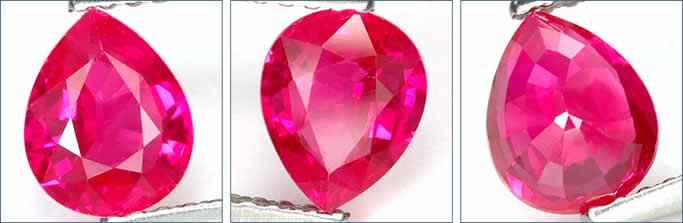
Natural Burmese Ruby
Burmese rubies of good quality have always been rare, but new sanctions against Burma will soon make them almost impossible to find in many places. Burmese rubies are indeed special - they have a unique fluorescent quality that is visible even under low light. Few gems have the intensity of color of a Burmese ruby. Our photos of this 1.12 ct stone nicely capture the fluorescence and the slightly violet undertone that is so distinctive of Burmese ruby. Customer Questions Back to Top
Every month we answer questions of general interest from our customers. Please feel free to send your questions or suggestions to our support team at help@gemselect.com! Question
I have selected a gem I want to buy from your website, watermelon tourmaline #187979. Is it possible to buy two of them? AV, USA.
Answer
All of our gems are unique natural products of the earth, so we have only one of each item displayed on our website. We do put together many matched pairs and lots in smaller sizes. But it's very difficult to do in the case of large watermelon tourmaline, where the color zoning is rarely the same in two different stones. This is why you will rarely find matching pairs in watermelon tourmaline.
Question
I would like to buy some gems from your website. Unfortunately, whenever I click on the "add to cart button", the cart is still empty. Could you please help me with this problem? Thank you in anticipation. J., USA.
Answer
You need to have JavaScript enabled to add items to our shopping cart. To enable JavaScript in Internet Explorer 7, select "Internet options" from the "tools" menu. Then click on the "security" tab. Click the "custom level" button and then scroll down to the scripting section and make sure that "active scripting" is enabled.
Keep up with our new arrivals before they hit the newsletter by joining our thousands of fans and followers on our social networking pages. We love interacting with our customers - you can visit us on Tumblr, LinkedIn, Twitter, Facebook or Pinterest! To ensure you can receive our emails, please be sure to add help@gemselect.com to your list of safe contacts, or you add us into your email address book! Please feel free to contact us with any questions, comments and queries! We respond to each and every email we receive. Happy Gem Hunting! This Page in Other Languages
About Us
Overall Rating -> 10 I was looking for a source for affordable genuine gemstones for my grandson who is currently very interested in rocks and gems. I was quite surprised and pleased to find GemSelect and finding the right stones at the right price couldn't have been simpler. Posted By Papa in December, 2023 Source: Bizrate Overall Rating -> 9 making my own jewelry for my birth stone Posted By LoveGeo in July, 2023 Source: Bizrate Overall Rating -> 10 Hello: You do have good website. Vast majority of folks would buy the Gems for its spiritual, physical / energy level, emotional level positive aspects. You have only very brief mention of this aspect of each Gem ..may be you can add little bit more about ways to leverage the beneificial effect of each gems i.e. some practical tips.ThanksRupen Patel Posted By EarthDeep in February, 2024 Source: Bizrate Overall Rating -> 9 My first purchase went well. I will purchase more gems in the future. Posted By NoHalalAl in March, 2024 Source: Bizrate Overall Rating -> 10 Great Job today! No issues! Posted By Samlovesgems777 in August, 2023 Source: Bizrate Overall Rating -> 10 I have used Gem Select many times over the past 10 years and have always been happy with the product & services Posted By Ordain in August, 2023 Source: Bizrate Overall Rating -> 10 Great website and information Posted By Moonshot in December, 2023 Source: Bizrate Related Articles Sapphire Info Sapphire Gemstone: What is Sapphire? Sapphire Color and more Tourmaline Gem Info Tourmaline Information - The most colorful gem on Earth Aquamarine Info Aquamarine Information - Get the facts, figures and stories behind... Emerald Info Emerald Information - Vivid green gemstones of unequaled quality Fire Opal Info Fire Opal Gemstone - A Mexican sunset captured in a gem Iolite Info Iolite Gemstone Information - Facts & Benefits Jade Info Jade Gemstone Information - GemSelect Kunzite Info Kunzite Gemstones - The must-have pink gem for evenings Orthoclase Info Orthoclase Gemstone Information: Unveil Its Natural Beauty Peridot Info Peridot: Properties & Value, Peridot Meaning & Healing Rhodolite Garnet Info Rhodolite Garnet Information - An elegant rose among thorns Ruby Info Ruby Information - The gemstone of passion and seduction Ruby-Zoisite Info Ruby-Zoisite Information - A unique gemstone mixture Spessartite Garnet Info Spessartite Garnet: The Best Orange Garnet, A Detailed Guide Sphene Info Sphene Gemstone Information - GemSelect Spinel Info Spinel Gemstone Information - An often overlooked Beauty Tanzanite Info Tanzanite Information - Africa's wonder risen from the ashes Topaz Info Topaz Gemstone Information – Take a look beyond the blue Zircon Info Zircon Information - A gemstone as old as the earth itself Lapis Lazuli Info Lapis Lazuli Information - The timeless deep blue gemstone Moss Opal Info Moss Opal Gemstones - Intriguing branch-like inclusions Mystic Topaz Info Mystic Topaz Information - A kaleidoscope of colors Star Ruby Info Star Ruby Gemstone Information - GemSelect Birthstones by Month Birthstones by Month, Every Birthstone, Zodiac & Anniversary Caring for Gemstones Gemstone Care - Gemstone Information - GemSelect Color Basics Gemstone Color - A Quick Guide to Colors Diffusion Treatment Diffusion Treatment for Gemstones - GemSelect Irradiation Treatment Irradiation Treatment - Gemstone Information - GemSelect Gemstone Hardness Explained Gemstone Hardness | Mohs Scale with Images and Charts Precious and Semi-Precious Gemstone Glossary Gemstone & Mineral Glossary - Gemstone Information - GemSelect Medicinal Gemstones Medicinal Gemstone Information - GemSelect Gem Market Chanthaburi International Gemstone Market in Chanthaburi, Thailand: Shopping f... Gemstone Prices Gemstone Prices - A review of what influences the amount you pay Loose Gemstones from Mine to Market Loose Gemstones From Mine to Market - Gems and Jewelry Information... Precious Stones Precious & Semi-Precious Gemstone History, Legends & Myths Rare Tourmaline Rare Tourmaline Gemstones - Unique and distinctive varieties The Secret of Spinel The Secret of Spinel Gemstones Allure of Yellow Sapphire Yellow Sapphire: Meaning, Properties, Details and More Kunz and Tourmaline Kunz and Tourmaline - Creating the colored gemstone market Sources for Fine Ruby Gems Sources for Fine Ruby Gems Gem Mining in Madagascar Sapphire and Ruby Gemstone Mining in Madagascar Healing Gemstones Healing Gemstones: Could Gems Have Special Powers? Rare Garnets Rare Garnets: Tsavorite, Spessartite and Rhodolite Colored Gemstone Business Understanding the Colored Gemstone Business Tanzanite Prices Tanzanite Prices - Limited supplies of this stunning stone Star Gemstones Star Gemstones Gemstone Names Gemstone Names | Gem Name Origins, History, Lists and More Fine Green Sapphire Fine Green Sapphire - A fancy gemstone colored from mint to forest Prong Vs. Bezel Settings Prong Vs. Bezel Settings Tension Settings Tension Settings Types of Gem Settings Types of Settings for Gemstones - Gem Settings Gems from Pakistan Gemstones from Pakistan Pink Kunzite Pink Kunzite - Perfect for a large cocktail ring History of Peridot Uncovering the Rich History of Peridot Gems Lilac Lepidolite Lilac Lepidolite |
| STAY IN TOUCH | NEWSLETTER |
| *You're signing up to receive GemSelect promotional email. |


Copyright © 2005-2024 GemSelect.com all rights reserved.
Reproduction (text or graphics) without the express written consent of GemSelect.com (SETT Company Ltd.) is strictly prohibited.
619